
Check out these articles
-
 Video article 4:41
The inner garden of Meiji Jingu Shrine in Shibuya Ward, Tokyo, is one of the most famous power spots in Tokyo, while the outer garden is a place of sports and culture! Popular events such as "Jingu Gaien Fireworks Festival" and "Jingu Gaien Icho Festival" are also held!
Art & ArchitectureTravel- 218 plays
- YouTube
-
Video article 2:50
Pray for a safe and successful year at “Kitano Tenmangu Shrine” in Kyoto City, Kyoto Prefecture! Hatsumode at the head shrine of Tenmangu, known as the god of learning!
TravelTraditional CultureArt & Architecture- 109 plays
- YouTube
-
Video article 5:19
Haruna Shrine - A Shinto Shrine and Power Spot in Gunma With Ancient Cedar Trees and Mysterious Rock Formations. Absorb the Power of the Earth via Video!
Art & Architecture- 366 plays
- YouTube
-
Video article 3:04
Kamishikimi Kumanoimasu Shrine: The Setting for a Popular Anime, This Shrine in Kumamoto Prefecture Is a Must-See for Anime Fans. Enjoy the Mystical Atmosphere That Will Transport You to Another World!
Art & ArchitectureTravel- 2.01K plays
- YouTube
-
Video article 2:22
Kibune Shrine in Kyoto City, Kyoto Prefecture, is one of the most famous power spots in Japan dedicated to the god of water! Watch a video of the deep green of early summer at the historic Kibune Shrine!
Art & Architecture- 285 plays
- YouTube
-
Video article 3:15
Gokin Shrine” in Kyoto City, Kyoto Prefecture, where a golden torii gate welcomes you, brings you good luck with money! The shrine's ginkgo trees in the middle of an office district bring you happiness!
TravelTraditional Culture- 149 plays
- YouTube
-
Video article 6:52
Video of "Heisenji Hakusan Shrine" in Katsuyama City, Fukui Prefecture, known as a moss temple, and its mysterious appearance is a sanctuary itself! What is the best time to see the beautiful green moss and its charm?
NatureTravelArt & Architecture- 394 plays
- YouTube
-
Video article 1:13
The Mysical Sunset From the Torii in the Sky at Takaya Shrine! A Place to Take Breathtaking Photos in Kagawa, Japan
TravelNature- 371 plays
- YouTube
-
Video article 14:00
Udo Shrine - Enjoy the Power and Healing of This Historic Shrine Located on a Rocky Cliff in Miyazaki Prefecture, in 4K!
Art & Architecture- 281 plays
- YouTube
How to Visit Meiji Jingu in Tokyo, Japan | Harajuku Station Access, Shrine Path Highlights & Goshuin Guide
Meiji Jingu Shrine in Harajuku, Tokyo
Meiji Jingu Shrine, located in Harajuku, Tokyo, is surrounded by a surprisingly deep forest you’d never expect to find in the middle of Tokyo. It attracts countless visitors from Japan and abroad throughout the year.
This article introduces the route featured in the 4K video、from Harajuku Station to the approach path and finally to the main hall,highlighting key sights, useful tips, and interesting background information to help first-time visitors enjoy their experience.
What Is Meiji Jingu Shrine?
Meiji Jingu enshrines Emperor Meiji and Empress Shoken and celebrated its 100th anniversary in 2020.
The forest that fills the shrine grounds is known as one of the largest man-made forests in the world. Around 100,000 trees were donated from across Japan, and forestry experts carefully planned the planting so the woods would grow into a natural forest after 100 years. Today, that vision has taken root: a lush ecosystem that feels worlds away from downtown Tokyo.
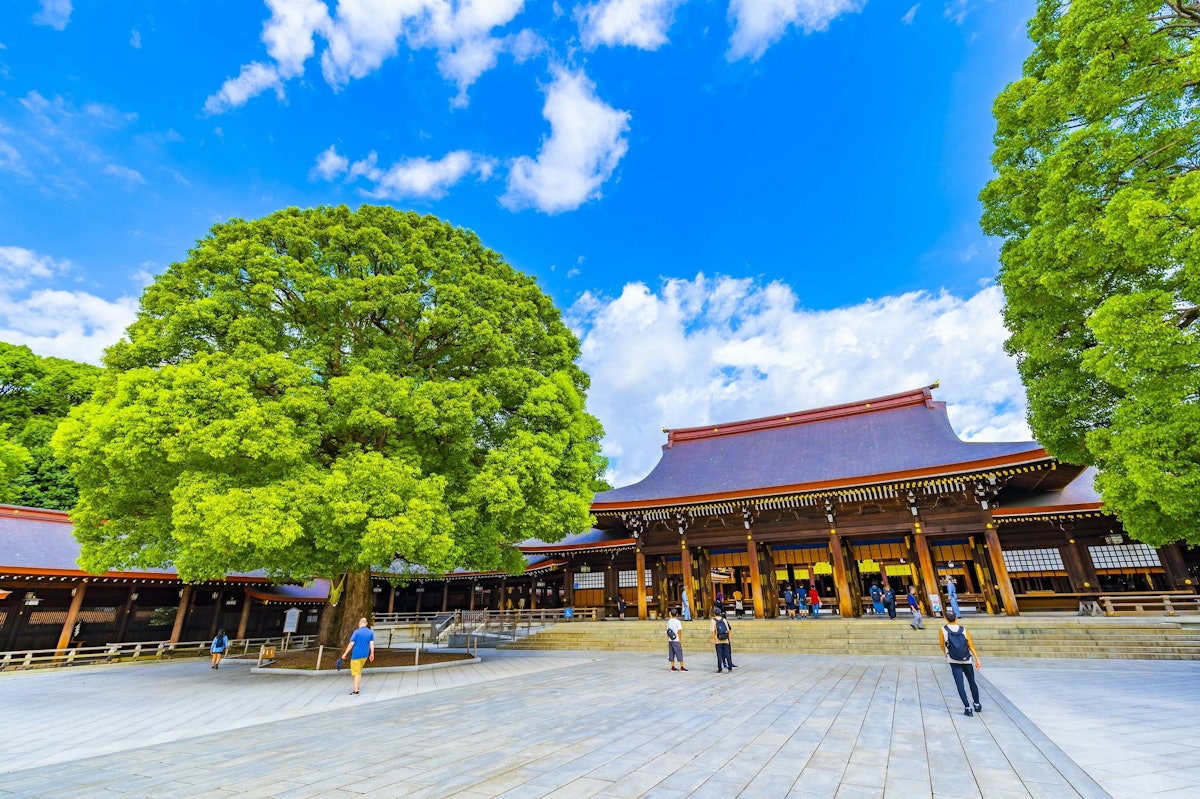
Its stillness and pure atmosphere soothe the hearts of visitors. In overseas videos, it is sometimes introduced as “Tokyo’s spiritual sanctuary.”
Walking Access from Harajuku Station to Meiji Jingu
When you exit Harajuku Station from the Omotesando Gate, the first torii gate of Meiji Jingu appears immediately in front of you. 【Video】3:20〜
It usually takes 10–12 minutes to walk to the main hall. The path is flat and easy to follow.

Harajuku Station was renovated in 2020 to better handle the huge crowds during the busy New Year shrine-visiting period. The busiest days are January 1–3, when the station takes on a special holiday atmosphere unlike any other time of year.
The Sacred Approach Beginning at the First Torii Gate
As you pass through the first torii at the Harajuku entrance, the noise of the city falls away, and the air itself seems to change、leaving only the soft crunch of gravel underfoot in a peaceful world.
Continuing along the path, you will encounter the massive second torii. Standing about 12 meters tall, it is the largest wooden Myojin-style torii in Japan, and its impressive scale naturally makes visitors look up. 【Video】4:23〜

Along the approach, you will find barrels of sak a well as wine barrels donated by wine cultivators from Burgundy, France, in honor of the Meiji Emperor's fondness for wine. This spot symbolizes cultural exchange between Japan and France, and often surprises international visitors who wonder why wine barrels are displayed here.
From a side path, you can also visit the well-known spiritual site Kiyomasa-no-Ido Spring, where the scenery changes beautifully with the seasons.
From the Second Torii to the Temizuya: A Gentle Walk Filled with Light
Near the second torii, sunlight and shadows weave together to create a picturesque scene. Some torii have been rebuilt using naturally fallen cypress trees, reflecting the shrine’s harmony with nature. 【Video】13:58〜

A short walk further brings you to the temizuya (purification pavilion). Meiji Jingu uses groundwater, allowing fresh, clean water to flow continuously. 【Video】17:30〜
The purification ritual involves holding the ladle with your right hand and cleansing in the following order: ① left hand, ② right hand, ③ rinse your mouth with water poured into your left hand, ④ left hand again, and ⑤ rinse the ladle’s handle. English instructions are provided, so visitors can follow the steps with confidence.
From the Third Torii to the Main Hall: Entering a Majestic Space
As you continue along the approach, the view opens up, revealing the third torii and the main hall. 【Video】18:01〜

The shrine buildings, including the main hall, were originally completed in 1920, but were destroyed in air raids in 1945. Reconstruction was made possible through donations from across Japan and overseas, and the current wooden structures were completed in 1958. The beautifully crafted eaves and copper roofs are impressive, often leaving first-time visitors speechless.
The standard method of worship is “two bows, two claps, one bow.” Take a moment in the quiet space before the main hall to center yourself before praying. 【Video】18:46〜
The Appeal of Goshuin, Omikokoro, and Charms
Meiji Jingu’s goshuin, known for its strong calligraphy style, can be received at the Choden (in front of the Kaguraden) near the main hall. Some waiting time may occur during busy periods.

The shrine’s unique omikuji, called “Omikokoro,” does not assign good or bad fortunes.Instead, it features waka poems by Emperor Meiji and Empress Shoken that offer thoughtful guidance. The positive and reflective messages make them especially popular among international visitors. 【Video】21:59〜
Forest Terrace Meiji Jingu: Souvenirs and Café
After your visit, take a relaxing break at Forest Terrace. Its café, Mori no Terrace, has even received a Wood City Tokyo Award for its harmonious architectural design.
You can enjoy warm drinks while looking out over the greenery, and the gift shop offers wooden goods and charms unique to Meiji Jingu—items that are especially popular among international travelers. 【Video】9:18〜
Hatsumode Information
Meiji Jingu records the highest number of Hatsumode visitors in Japan, attracting around three million people every year.

When the gates open at midnight on New Year’s Day, loud cheers fill the air. This moment has become a popular attraction for international visitors, often referred to as the “Tokyo New Year Experience.”
The peak hours are as follows, but visiting in the early morning allows for a smoother experience.
・January 1, 0:00–3:00
・Midday on January 1
・Afternoons during the first three days of the year
Tips for Visiting Meiji Jingu
・Soft morning light is ideal for photography.
・Wear comfortable walking shoes for the long approach.
・Some areas of the main hall are off-limits for photography; please check the signs.
・While English guidance has increased, some areas remain Japanese-only, so using the video as a reference is recommended.
Meiji Jingu Q&A: Helpful Information Before Your Visit
Q1: How long does it take to walk from Harajuku Station to Meiji Jingu?
A: Typically 10–12 minutes.
It takes about 1–2 minutes to reach the first torii gate from the Omotesando Gate and another 8–10 minutes along the approach to the main hall. During Hatsumode, the walk may take 30 minutes to over an hour.
Q2: What are the opening and closing times for Meiji Jingu?
A: Times vary by season.
Generally, the shrine opens around 6:40 from January to March, in the 5:00 hour from April to September, and closes between 16:20 and 18:30. Please check the official website’s “Opening and Closing Times” page for the latest information.
Q3: How crowded is Hatsumode?
A: Meiji Jingu experiences the largest New Year crowd in Japan.
The peak times are 0:00–3:00 on January 1 and midday on January 1. Around three million visitors come during the first three days of the year.
Q4: Where can I receive a goshuin?
A: At the Choden (in front of the Kaguraden) near the main hall.
There may be waiting times during busy hours.
Q5: Can international visitors pray at the shrine?
A: Yes, everyone is welcome to visit and pray.
Numerous English signs make it easy even for first-time visitors.
Q6: How do I get to Kiyomasa-no-Ido Spring?
A: It is about a 10-minute walk from the Garden (Gyoen) entrance.
Although slightly away from the main hall, it is a very popular spiritual spot.

Summary
With easy access from Harajuku Station, Meiji Jingu offers a beautiful forested approach and historic architecture.
Following the video as you walk makes it easy for first-time visitors to reach the main hall while deepening their appreciation of Tokyo’s cultural heritage.
Whether for Hatsumode, collecting goshuin, or enjoying a peaceful stroll, Meiji Jingu is a sacred place worth experiencing throughout the year.
【Official Website】https://www.meijijingu.or.jp/en
AccessMap (Google Maps)
-
Video article 26:45
How to Visit Meiji Jingu in Tokyo, Japan | Harajuku Station Access, Shrine Path Highlights & Goshuin Guide
Traditional Culture Travel- 481 plays
- YouTube
-
Video article 1:42
'Dou' or 'The Way' – Learn About Traditional Japanese Cultures and Understand the Spirit of Harmony in Japan Through Ancient Japanese Cultures Like Kendo and Archery!
Traditional Culture- 3.51K plays
- YouTube
-
Video article 2:10
How to Put on a Yukata for Men! A Must for Any Guy Looking To Wear a Yukata During Summer in Japan!
Traditional Culture Life & Business- 2.12K plays
- YouTube
-
Video article 1:53
Feel the Spirit of Japan With the Beautiful Prayer "Kagura," at Ise Shrine in Ise, Mie Prefecture! Introducing Highlights of Popular Sightseeing Spots That You Won't Want to Miss When Visiting Ise-Shima!
Traditional Culture History- 801 plays
- YouTube
-
Video article 6:44
Ki&Ki - A Female Shamisen Duo Performing Modern Arrangements of Traditional Japanese Music. Watch as They Perform "Tsugaru Jongara Bushi," a Popular Japanese Folk Song!
Traditional Culture Entertainment & Music- 798 plays
- YouTube
-
Video article 4:00
What is Hino Hinamatsuri Kiko 2026? The Charm of Adorable Hina Dolls Decorating the Showa-Era Streets and Hinamatsuri Events in Hino Town, Shiga Prefecture
Traditional Culture Festivals & Events- 185 plays
- YouTube
-
Video article 15:58
Learn About Japanese Swords at Wakeidō, a Sword Specialty Shop in Nagaoka, Niigata|The Third-Generation Owner Shares Its Appeal, History, and How to Enjoy It
Traditional Culture History- 79 plays
- YouTube
-
Video article 2:09
What Happens When You Translate the Honorific Into English? Rakugo Artist Katsura Sunshine Introduces Rakugo in English!
Traditional Culture- 44 plays
- YouTube
-
Video article 2:47
Karakuri Puppets With Delicate Movements: Traditional Japanese Technology, Realistic Movements, and All Done Without Electricity!
Traditional Culture- 935 plays
- YouTube
-
Video article 2:47
You'll Be Amazed at How Fast This Swordsman Draws His Katana! You'll Have Been Cut Down Before You Even See His Hands Move! Check out the Overwhelming Speed of Battojutsu in This Video!
Traditional Culture Sports- 1.08K plays
- YouTube
-
Video article 3:13
Agehama-style salt manufacturing is a salt-making method that has been used for 500 years in Noto, Suzu City, Ishikawa Prefecture.Designated as a national Important Intangible Folk Cultural Asset, this time-consuming and labor-intensive process produces delicious salt!
Traditional Culture- 336 plays
- YouTube
-
Video article 4:08
Step Into the World of Bonsai (盆栽), a Traditional Japanese Culture, at the Omiya Bonsai Art Museum in Saitama City, Saitama! Enjoy the Charm of Bonsai With 4K Images, and Experience the Harmony of Japan
Traditional Culture Art & Architecture- 399 plays
- YouTube



Comment