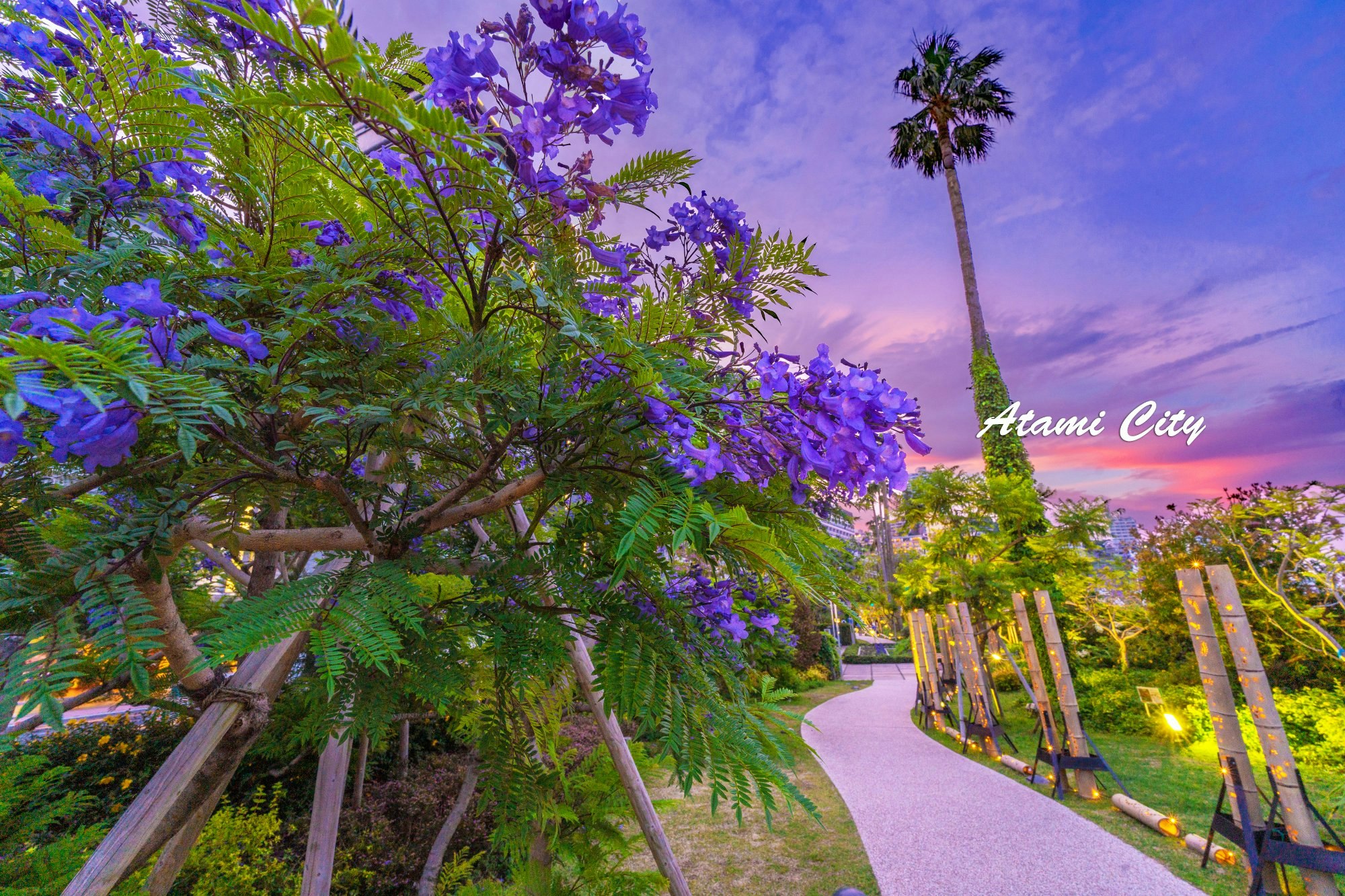
Hello! This is the Atami Tourism Association in Shizuoka Prefecture.
Atami City, located in the eastern part of Shizuoka Prefecture, is a tourist destination that many tourists visit because of its warm climate, where you can enjoy the sea, mountains, food, and hot springs, in addition to being easily accessible by Shinkansen, about 2 hours by car from Tokyo and 45 minutes by bullet train.
It is known as a hot spring resort with a history of more than 1,500 years, and historical greats such as Tokugawa Ieyasu loved the hot springs of Atami.
We will send out recommended information that will be the best memory of your trip to Atami, so thank you!
Atami City, located in the eastern part of Shizuoka Prefecture, is a tourist destination that many tourists visit because of its warm climate, where you can enjoy the sea, mountains, food, and hot springs, in addition to being easily accessible by Shinkansen, about 2 hours by car from Tokyo and 45 minutes by bullet train.
It is known as a hot spring resort with a history of more than 1,500 years, and historical greats such as Tokugawa Ieyasu loved the hot springs of Atami.
We will send out recommended information that will be the best memory of your trip to Atami, so thank you!
This text has been automatically translated.
Show original text
Show original text


Atami Tourism Association posted.
![[Image1]On April 17th, the azaleas on the sun deck and the wisteria at Atami Port Sunremo Park are in full b](https://img.cooljapan-videos.com/files/member_posts/image/8e85ec8e1fee748bd13f67aff88b4060f02ed242.jpg)
![[Image2]On April 17th, the azaleas on the sun deck and the wisteria at Atami Port Sunremo Park are in full b](https://img.cooljapan-videos.com/files/member_posts/image/6dd61c8901260e42da09376a271463a4c519a2be.jpg)
![[Image3]On April 17th, the azaleas on the sun deck and the wisteria at Atami Port Sunremo Park are in full b](https://img.cooljapan-videos.com/files/member_posts/image/be3acec0e4657f412d470760402ea9291401aa73.jpg)
![[Image4]On April 17th, the azaleas on the sun deck and the wisteria at Atami Port Sunremo Park are in full b](https://img.cooljapan-videos.com/files/member_posts/image/e239d2410cd3e7781895bf208457579efdef2552.jpg)
![[Image5]On April 17th, the azaleas on the sun deck and the wisteria at Atami Port Sunremo Park are in full b](https://img.cooljapan-videos.com/files/member_posts/image/2965b5466dbc4d492dff24e5b8549c124c05f24f.jpg)
![[Image6]On April 17th, the azaleas on the sun deck and the wisteria at Atami Port Sunremo Park are in full b](https://img.cooljapan-videos.com/files/member_posts/image/053284d53903d6ecce03a24496b02c8a6221fc40.jpg)
![[Image7]On April 17th, the azaleas on the sun deck and the wisteria at Atami Port Sunremo Park are in full b](https://img.cooljapan-videos.com/files/member_posts/image/eca6bf4bb0ea40ddc313661fc745f92ac69bb60c.jpg)
![[Image8]On April 17th, the azaleas on the sun deck and the wisteria at Atami Port Sunremo Park are in full b](https://img.cooljapan-videos.com/files/member_posts/image/9cd1ac363603daa1bee543086a95e7d91b8a6c32.jpg)
On April 17th, the azaleas on the sun deck and the wisteria at Atami Port Sunremo Park are in full bloom!
This text has been automatically translated.
Show original text
Show original text
Atami Tourism Association posted.
![[Image1]The additional dates for this year’s Atami Bay Fireworks Festival have been decided. We are sharing](https://img.cooljapan-videos.com/files/member_posts/image/36c353bd0c155d1f5e5eee84df0cd7cb818047e1.jpg)
The additional dates for this year’s Atami Bay Fireworks Festival have been decided. We are sharing them together with the dates already announced. (As of April 6, 2024)
[Atami Bay Fireworks Festival 2024 (Reiwa 6) Dates]
Spring: April 13 (Sat) and May 2 (Thu)
Summer: July 26 (Fri), August 5 (Mon), August 8 (Thu), August 18 (Sun), and August 23 (Fri)
Autumn: September 16 (Mon, public holiday), October 14 (Mon, public holiday), October 19 (Sat), and November 4 (Mon, substitute holiday)
Winter: December 8 (Sun) and December 22 (Sun)
2025: March 23 (Sun)
Note: The newly added dates are October 14, December 22, and March 23, 2025.
Time: 20:20–20:40 (In July and August only: 20:20–20:45)
Venue: Atami Bay ※The event will go ahead in rain.
Please note that the above dates and times are tentative and may change depending on future circumstances.
This text has been automatically translated.
Show original text
Show original text
Atami Tourism Association posted.
![[Image1]*The images are from past events.*From Tuesday, April 9 through Tuesday, April 16, the Ichimura Kiyo](https://img.cooljapan-videos.com/files/member_posts/image/276119667d5c1e6c5be02a5eb1797bb1cd54d505.jpg)
![[Image2]*The images are from past events.*From Tuesday, April 9 through Tuesday, April 16, the Ichimura Kiyo](https://img.cooljapan-videos.com/files/member_posts/image/09d39f28a23d2e957e208296cc4b3e15454a99ff.jpg)
*The images are from past events.*
From Tuesday, April 9 through Tuesday, April 16, the Ichimura Kiyoshi Technical Foundation Botanical Research Garden will open to the public for its spring viewing.
Seikeisō was the villa of the late Ricoh San-Ai Group founders Kiyoshi and Yukie Ichimura. Later used as a company retreat by the Ricoh San-Ai Group, it was bequeathed to the foundation in 1988 according to the late Mrs. Yukie’s wishes after her passing.
A mountain stream runs through the garden, and many trees, flowering plants and mosses form a rich plant ecosystem.
Below the garden you can see Sagami Bay and Hatsushima; farther out, Izu Oshima appears on the horizon, while surrounding mountains and trees shelter the site.
Normally the garden is used only by researchers involved in plant studies, but it opens to the public twice a year: in spring when fresh green leaves and flowers are at their best, and in autumn when the foliage turns vibrant.
Please take this opportunity to enjoy the beautiful spring garden.
Ichimura Kiyoshi Technical Foundation Botanical Research Garden — Spring Public Opening
Period: Tuesday, April 9 to Tuesday, April 16, 2024
Address: 11-8 Ainokahara-cho, Atami City
Phone: 0557-81-2656
Opening hours: 9:30 (gate opens) to 15:30 (gate closes)
Admission: Free
Access: From JR Atami Station or JR Kinomiya Station, take a bus bound for Ainokahara Housing Complex, get off at Kamiainekahara, then walk about 50 m downhill.
Please note that the schedule may change suddenly depending on circumstances, so check the foundation’s website before visiting.
This text has been automatically translated.
Show original text
Show original text
1 Comment(s)
-
ID:1I can't wait to visit it at least once!This text has been automatically translated.
Show original text
Atami Tourism Association posted.
![[Image1]I visited Atami City’s power spot, Kinomiya Shrine, for the first time in a long while.When I drew a](https://img.cooljapan-videos.com/files/member_posts/image/d8ddbcd72b2847d4de2b892a0462b6594f18a88c.jpg)
![[Image2]I visited Atami City’s power spot, Kinomiya Shrine, for the first time in a long while.When I drew a](https://img.cooljapan-videos.com/files/member_posts/image/fdffd081b718da8e454f8c69d55e0aa66019e681.jpg)
![[Image3]I visited Atami City’s power spot, Kinomiya Shrine, for the first time in a long while.When I drew a](https://img.cooljapan-videos.com/files/member_posts/image/332c2ade38438b48d61cf614f4ede3e47b2d35c6.jpg)
![[Image4]I visited Atami City’s power spot, Kinomiya Shrine, for the first time in a long while.When I drew a](https://img.cooljapan-videos.com/files/member_posts/image/4359c0bae1c86419a26318c87ebec4ed07610dd6.jpg)
I visited Atami City’s power spot, Kinomiya Shrine, for the first time in a long while.
When I drew a fortune by the more-than-2,100-year-old natural monument "Ookusu", a cute little leaf was tucked inside.🌿
This text has been automatically translated.
Show original text
Show original text
1 Comment(s)
Atami Tourism Association posted.
![[Image1]The 81st issue of Atami de Asobo, the magazine that introduces restaurants, souvenir shops, and othe](https://img.cooljapan-videos.com/files/member_posts/image/c966e823c16478dd2b74ecfa519017e338ef9150.jpg)
The 81st issue of Atami de Asobo, the magazine that introduces restaurants, souvenir shops, and other businesses in Atami City, has been published.
This free paper is packed with ways to enjoy Atami. It features 74 recommended spots, including trending eateries and shops offering special deals, Japanese, Western, and Chinese restaurants, safe nightlife venues, day-use hot springs, and specialty stores.
This issue also includes a special feature titled "Retro Atami Time: Savoring the Past at a Historic Western-Style Restaurant."
Copies of Atami de Asobo are available from the Atami City Tourism Association, the Atami Tourist Information Center (Lusca Atami station building, 1st floor), the Atami Chamber of Commerce and Industry, and other local shops, so please pick one up.
This text has been automatically translated.
Show original text
Show original text
Atami Tourism Association posted.
![[Image1]A gourmet guidebook collecting genuinely delicious local-favorite restaurants,](https://img.cooljapan-videos.com/files/member_posts/image/f6afb38bd81395e3d2d41aecc40cbd74d23f1270.jpg)
A gourmet guidebook collecting genuinely delicious local-favorite restaurants, "Jimoto Gourmet: Atami & Yugawara," will be published!
When the Izusan debris flow disaster struck in 2021, the publisher, Izukyu Cable Network Co., set out to return the support it had received from industry peers to the communities hit by that disaster and by the COVID-19 pandemic. This guidebook was produced as a token of gratitude and encouragement for those communities.
Under the principle of "no advertising fees whatsoever," the book is filled with crowd-sourced restaurant tips, interviews spotlighting local contributors, profiles of athletes from the area, and information on anime and manga set in Atami—offering a wealth of hometown knowledge.
If you’re interested or a fan of Atami, please pick up a copy♪
Jimoto Gourmet: Atami & Yugawara
Publisher: Izukyu Cable Network Co., Ltd.
On sale from April 1, 2024, at the following locations
- Bushu Yamakichi, Lusca Atami store (2nd floor, Lusca Atami building at atami station)
- Ishigaki Bookstore (1st floor, Atami Ekimae Daiichi Building)
- Iwakami Bookstore (1189-20 Yawatano, Ito City, along National Route 135)
Price: 500 yen (tax included)
This text has been automatically translated.
Show original text
Show original text
Atami Tourism Association posted.
![[Image1]Atami Station, operated by JR East and opened in 1925 (Taishō 14), celebrated its 99th anniversary y](https://img.cooljapan-videos.com/files/member_posts/image/5a93935aff963742e9cf5fde0f08a78cc8b51cee.jpg)
![[Image2]Atami Station, operated by JR East and opened in 1925 (Taishō 14), celebrated its 99th anniversary y](https://img.cooljapan-videos.com/files/member_posts/image/ea69aec6944c0ce3d09c4e60bfc2e120186c74e2.jpg)
![[Image3]Atami Station, operated by JR East and opened in 1925 (Taishō 14), celebrated its 99th anniversary y](https://img.cooljapan-videos.com/files/member_posts/image/06f21286a1ff4f6e89559db691104e9d9420894a.jpg)
![[Image4]Atami Station, operated by JR East and opened in 1925 (Taishō 14), celebrated its 99th anniversary y](https://img.cooljapan-videos.com/files/member_posts/image/14a071c91b8bfeb58607f1e15bcc5c956eb2ce82.jpg)
![[Image5]Atami Station, operated by JR East and opened in 1925 (Taishō 14), celebrated its 99th anniversary y](https://img.cooljapan-videos.com/files/member_posts/image/508eea2eccd044580afc97d1087b4681d774893c.jpg)
Atami Station, operated by JR East and opened in 1925 (Taishō 14), celebrated its 99th anniversary yesterday on Monday, March 25.
On the previous day, Sunday, March 24, a high-grade train not normally in regular service—the E655 series “Nagomi” (all seats are Green Car specification)—made a round trip between Shinagawa Station and Atami Station, carrying 105 passengers to Atami.
Tickets sold out within five minutes of sales opening, a phenomenal response.
Many rail fans gathered and photographed the special train as it arrived on the platform.
A welcome ceremony took place on the Atami Station platform, featuring a performance by the Atami High School Eisa Club and greetings from Mamekko, the official character of the Atami Geigi Okiya Union, and Atsuo, the official character of the Atami Onsen Hotel and Ryokan Cooperative.
This text has been automatically translated.
Show original text
Show original text
4 Comment(s)
-
ID:3The train in the photo is really coolThis text has been automatically translated.
Show original text
-
ID:1Colorful electronic display fresh 🤭This text has been automatically translated.
Show original text
-
ID:2Is the picture on the chalkboard chalk?
The picture of the train is detailed and amazing 👏This text has been automatically translated.
Show original text
Atami Tourism Association posted.
![[Image1]※There is a possibility of cancellation due to wind conditions, so please inquire in advance.A firew](https://img.cooljapan-videos.com/files/member_posts/image/950877e1a0db5293f01d51239cce751f647e3a76.jpg)
![[Image2]※There is a possibility of cancellation due to wind conditions, so please inquire in advance.A firew](https://img.cooljapan-videos.com/files/member_posts/image/60ce53f5eebed72fa873ddf5261fd99677b8f657.jpg)
※There is a possibility of cancellation due to wind conditions, so please inquire in advance.
A fireworks cruise will operate for the first 150 guests on a first-come, first-served basis on Wednesday, March 20, 2024, to coincide with the Atami Offshore Fireworks Festival.
With no obstructions and from the extraordinary setting of a ship, why not watch 3,000 fireworks light up Atami’s night sky?
It’s a perfect addition to your spring break memories.
We look forward to welcoming you aboard.
Date and time / Wednesday, March 20, 2024
Depart 19:50 – Fireworks viewing (20:20–20:40) – Return to port around 20:50
Boarding location / Atami Port (ticket booth for Hatsushima departures)
※Ticket sales begin at 19:10 (limited to the first 150 guests on the day)
Fare / Adults ¥2,800, Children ¥1,400 ※Preschool children free
How to purchase tickets /
Tickets will be sold at the waiting area ticket window on the day. Please visit the window between 19:10 and 19:40.
Vessel in service / Ild Vacances Premier
※The event may be canceled due to weather or other circumstances on the day. Thank you for your understanding.
Inquiries / Fujikyuu Marine Resort Tel 0557-81-0541
This text has been automatically translated.
Show original text
Show original text
Atami Tourism Association posted.
![[Image1]On Saturday, March 16, we released firefly larvae into Hatsukawa within Atami Plum Garden.As an annu](https://img.cooljapan-videos.com/files/member_posts/image/876df0a68783dd95ab7ea151efde1ea9518a42d0.jpg)
![[Image2]On Saturday, March 16, we released firefly larvae into Hatsukawa within Atami Plum Garden.As an annu](https://img.cooljapan-videos.com/files/member_posts/image/49d67e9af419fc3abd451d1964ce2be73be0db5c.jpg)
On Saturday, March 16, we released firefly larvae into Hatsukawa within Atami Plum Garden.
As an annual tradition, children from Umeenomachi helped us again!
Japan is said to be home to around 50 species of fireflies.
The species released in Atami is Japan’s representative firefly, the genji-botaru. We hatch the larvae, feed them kawanina (freshwater snails) about once a month while raising them, and release the final-instar larvae when they reach 2–3 centimeters.
These larvae leave the river on humid nights from mid to late April, burrow into the soil, and form oval “soil cocoons.”
Inside those soil cocoons they pupate and emerge as adults from late May to early June.
This year we will hold “Evenings for Firefly Viewing” from Saturday, June 1 through Sunday, June 9.
Please come and see the pale glow of the fireflies that can be seen only during this season.
This text has been automatically translated.
Show original text
Show original text
1 Comment(s)
-
ID:1It's a game that kids will love.This text has been automatically translated.
Show original text
Atami Tourism Association posted.
![[Image1]Photographed on February 26The early-blooming Oshima cherry in Nagisa Elementary Park is now at its](https://img.cooljapan-videos.com/files/member_posts/image/6d93d2942dd6d9c0401c4ede51aa9afd348c8366.jpg)
![[Image2]Photographed on February 26The early-blooming Oshima cherry in Nagisa Elementary Park is now at its](https://img.cooljapan-videos.com/files/member_posts/image/179d2a24a0b5a5e3053131a8441abc2cf7e4a708.jpg)
![[Image3]Photographed on February 26The early-blooming Oshima cherry in Nagisa Elementary Park is now at its](https://img.cooljapan-videos.com/files/member_posts/image/e8f1e8c4cf4eec2c1775dec54d32c1e4ea4553f6.jpg)
Photographed on February 26
The early-blooming Oshima cherry in Nagisa Elementary Park is now at its best.
This large cherry is said to be a cultivar created by crossing Oshima-zakura with Somei-yoshino, and it usually reaches peak bloom from early to mid-March each year.
Perhaps because temperatures have been high this year, it is already in full bloom! The tree has many flower buds and is truly impressive.
Nagisa Elementary Park Address / Nagisacho, Atami City (in front of the third section of the waterfront park)
This text has been automatically translated.
Show original text
Show original text
1 Comment(s)
-
ID:1There are really many types of cherry blossoms in Japan!This text has been automatically translated.
Show original text