-
Article
-
Channel
-
Region
-
Season
-
Tag
Articles
-
 Video article 10:50
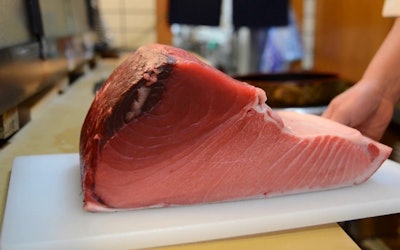
Showcasing the Brilliant Knife Work of the Chef! A Sushi Chef Creates a Masterpiece of Tuna, the Epitome of Japanese Cuisine, With Masterful Craftsmanship!
Food & Drink- 171 plays
- YouTube
板前の華麗な包丁さばきをご覧になれる動画について こちらの動画は「寿司マスターToshi」が公開した「寿司職人によるマグロの仕込みから握りまで〜How To Make Tuna Sushi〜」です。 日本人に親しみが深い、寿司。 マグロやブリといった新鮮な魚介類や海鮮食材を材料として使用して作られる握り寿司は、和食の代表格です。 近年では海外でも人気が高まっており、現地のスーパーでも見かけることが多くなってきました。 そんな寿司は職人がマグロを捌く処理部分から仕込みをしていることをご存知でしょうか? 今回は職人が仕込みから行う和食・海鮮料理の代表格、マグロの握り寿司について紹介いたします。 職人が1から仕込みを担当、マグロの寿司 寿司に使用されるマグロを始めとした寿司ネタ。 釣り上げられたマグロは解体され、板前さんのところに運ばれてきます。 そして部位ごとに捌くことに。 その手際は素晴らしいもので、動画でもご覧になれます。 熟練の職人技で磨き上げられた包丁捌きで大トロ、中トロ、赤身と捌くその姿はまさに職人。 ネタは部位ごとに切り分けられ、様々な料理へと使用されて行きます。 その手際の良さは和食・日本料理の魅力を再確認させてくれるほどです。 寿司以外にもたくさん!和食に欠かせないマグロ 寿司以外にもマグロを食材として調理された和食料理はたくさんあります。 代表的な握り寿司から、マグロや旬のネタの刺身を芸術作品のように見立てたお造り、マグロを保存が効くように加工し漬けたマグロ漬け丼など、どれも製法に工夫が見られるものばかり。 数え始めたらキリがありません。 日本料理にはマグロを始めとした、新鮮な魚介類や食材を使用した海鮮料理が多く存在しています。 海に囲まれた日本ならではの食文化で、和食と呼ぶに相応しいです。 寿司職人や日本料理のプロが仕込みから行う、マグロを使用した和食。 どの和食も日本を訪れた際に、必ず食べたい一品です。 板前の華麗な包丁さばき動画紹介まとめ 今回は和食の代表格、寿司をはじめとしたマグロ料理について紹介しました。 マグロの刺身やお造りなどの和食料理の数々は、日本料理の代表といっても過言ではありませんね。 板前さんによる職人技が光る仕込みの様子を見たいという方は、是非この動画をチェックしてみましょう! -
 Video article 5:40
The Japanese Experiment Module "Kibo," the Keystone of the International Space Station! Introducing Japan's Cutting-Edge Space Research Technology!
Life & Business- 86 plays
- YouTube
The Japanese Experiment Module “Kibo,” the Largest on the International Space Station The video "2019-2020 JAXA Manned Space Activities - "Kibo" and Beyond" (2019-2020 JAXA 有人宇宙活動~「きぼう」その先へ) uploaded by “JAXA,” introduces the Japanese experiment module “Kibo” of the International Space Station. The area known as Low Earth Orbit (LFO) (less than 2,000 km from the Earth), is said to be the gateway to space, and is where various satellites fly. As you can see from 0:33 in the video, Kibo, one of the largest space experiment facilities, was completed in 2009 on the International Space Station. It orbits at an altitude of about 400 kilometers. In terms of size, it is approximately 108.5 meter x 72.8 meters, weighs 420 tons, and flies at speed of about 27,000 km/h (~16,777 Mph). “Kounotori,” the cargo transporter, was also successfully launched, and Kounotori 8 has achieved a 100% mission success rate. Experiments Involving Kibo Source :YouTube screenshot The Japanese Experiment Module “Kibo” is “doing things for society that can only be done in space.” At Cell Biology Experiment Facility (CBEF), they are researching the effects of gravity on living things. This is shown at 1:37 in the video. In the fall of 2019, CBEF-L, which can equip larger devices, was also added. The Electrostatic Levitation Furnace (ELF) is a material testing device that melts materials by making them float, and can examine materials that are difficult to examine on the ground, such as glass and ceramics. The J-SSOD is a mechanism that releases small satellites using Kibo's airlock and robotic arm. The Small Optical Link for International Space Station (SOLISS), developed in collaboration with a private company, conducts experiments using optical disk technology to enable future inter-satellite and space-to-ground high-capacity communications. Beyond Low Earth Orbit Photo:Mars We're currently entering an era where exploring the moon and mars is possible. Environmental Control and Life Support System (ECLSS) technology is a system for purifying water and air. A water reclamation system based on Japan's outstanding water treatment technology is also being put to the test. The new H-II Transfer Vehicle (HTV-X) is Japan's original spacecraft that will improve Kounotori's transportation capability, and will allow for in-orbit missions that the Japanese sector is aiming for, with the goal of launching by 2021. The Astronauts of Kibo Source :YouTube screenshot There are Japanese astronauts working on the Japanese Experiment Module as well. Noguchi Soichi has maintained the Japanese Experiment Module Kibo and has conducted various experiments. He is responsible for operating the Inter-orbit Communication System (ICS), communicating with the ground through HD images, and preparing for spacecrafts and supply vehicles that visit the ISS. He also interacts with the ground by posting information, pictures, and videos on social media sites, such as Twitter. Doi Takao was in charge of installing and maintaining a storage module for “Kibo.” He organized cargo transfer between the space shuttle and the ISS as a loadmaster (cargo transfer supervisor). Hoshide Akihiko was selected for a long duration mission to the ISS in 2020 and he will lead as a captain at the end on the mission. Summary Photo:Satellite The Japanese Experiment Module "Kibo" is a key facility of the ISS. We are proud to say that Japanese technology is at the forefront of space activities. Let's think back to the Japanese engineers and astronauts who continue to play an active role in space, through this video! 【Official Website】JAXA https://global.jaxa.jp/projects/iss_human/kibo/ -
Video article 1:30
Osechi Cuisine Is an Essential Part of the Japanese New Year's Tradition! If You're Interested in Japanese Food Culture, You've Got to Try This Exquisite Dish at Least Once!
Life & Business Food & Drink- 332 plays
- YouTube
Traditional Japanese "Osechi Cuisine"! There's a lot of Japanese food that attracts the attention of foreign tourists in Japan, but nothing compares to the beautiful Osechi cuisine. Today, we have a video introducing Japanese osechi cuisine, titled "Japanese New Year's Dish, (Osechi Cuisine) An Introduction to Japan’s Osechi Cuisine" (Japanese New Year dish. (OSETI cuisine)日本のおせち料理紹介), produced by "Ordinary life channel." In Japan, the first three days of the New Year, starting on January 1st, are special days referred to as "San ga nichi." To celebrate the festive New Year, there is a custom in Japan to eat Osechi cuisine as shown in the video. What Kind of Food Is Osechi Cuisine? Photo:Osechi cuisine In ancient Japan, Osechi cuisine was prepared for New Year's festivities and seasonal festivals. Since New Year' was the most important day of the year, Osechi cuisine came to refer to New Year's dishes. It is said that by the Yayoi period, osechi cuisine had already become rooted in the culture. In the Edo period, Osechi cuisine came to be called "Horai Kazari" in Kansai, "Kuitsumi" in Kanto, and "Horaidai/Tekakemori" in Kyushu. Each of them have the meaning of offering food to the gods and praying for happiness. Varieties of Osechi and the Meanings of the Dishes Photo:Osechi cuisine You can see the osechi dishes at 0:33 in the video. Dishes, such as herring roe, tazukuri, fried sardine, black beans, burdock root, kamaboko, datemaki (egg), kurikinton (chestnuts), konbumaki (kelp), tai (red snapper), renkon (lotus root), shrimp, and arrowhead introduced in the video are all festive and suitable for New Year. Each ingredient is associated with meaning, including wishes for long life, good health, and more. How to Arrange Osechi Cuisine Photo:Osechi cuisine The ingredients for Osechi dishes are packed in a "kumiju" (multi-layered food box). Originally, it is said to have been a five-tiered box, but nowadays, four-tiered boxes are generally used. There is also a method for preparing the dishes called "Juzume." It's important to organize the food, including iwaizakana-sanshu (herring roe, tazukuri, and black beans), kuchitori (appetizer assort), vinegared dishes, grilled dishes, stewed vegetables, etc., in a beautiful arrangement. You can see a beautifully arranged set of Osechi dishes at the beginning of the video. Summary of Osechi Cuisine The Japanese Osechi cuisine shown in the video is also made and sold at restaurants all over Japan. Many people pre-order Osechi dishes from famous restaurants by ordering online. You can also make osechi cuisine at home. Use the recipe site as a guide to prepare the ingredients and arrange them beautifully over a bed of rice to enjoy the Japanese New Year. -
Video article 14:26
Learn How to Make Miniature Bonsai Using Teacups! Perfect for Interior Decoration! Add Some Japanese Culture to Your Home!
Traditional Culture- 451 plays
- YouTube
About the Video on Making Minature Bonsai This video, titled "Mini bonsai made with a cup of tea Easy for beginners How to make a mini bonsai Moss BONSAI Maple," was uploaded by "AS Channel -Bonsai,Mountain,Camera- tree for beginners." The video shows how to make a miniature bonsai in a teacup and the entire production process is easy to understand even for beginners. In this article, we'll go over the steps to making a miniature bonsai alongside the video. First, check out the video to see what kind of miniature bonsai you can make. What is Bonsai? Photo:Bonsai Bonsai is the appreciation of plants that have been carefully shaped to resemble natural scenery. It is characterized by the representation of a large tree or plant in a small pot. Bonsai has been enjoyed in Japan since ancient times, but in recent years, it has become so popular as an interior decoration outside of Japan and the term "Bonsai" is now well known. In bonsai, there are rules on how to trim trees and also set varieties. Here are some of the different types of plants that can be used. 【Shohaku Bonsai】: Conifers, a typical species of bonsai. Their greenery can be enjoyed year-round. 【Hamono Bonsai】: Deciduous trees, like the maple in the video, can be used to enjoy the changing seasons. 【Flowering Bonsai】: Plums, cherries, etc. whose flowers can be enjoyed. 【Fruiting Bonsai】: Bonsai that bear fruit and can be enjoyed in all four seasons. A Simple Video Guide To Teacup Bonsai That Even Beginners Can Try Source :YouTube screenshot 1. Since we'll be using a teacup as a pot, we'll start by making a hole in the bottom of the teacup for water drainage and four grooves in the base for air flow. Use an electric drill to make a hole in the teacup, being careful not to break it, and then use a diamond file to make grooves. This can be seen from 0:07 in the video. 2. Place a net or mesh at the bottom of the teacup. (Video 5:07~) 3. Put the large pieces of soil left over from sifting akadama soil into the bottom of the teacup. (Video 5:19~) 4. Next, make a soil mixture of 3 mulch to 7 akadama soil. (Video 6:34~) 5. Gently dig out the maple to be planted, being careful not to break the roots, and soak it in a vitalizer for about an hour. (Video 7:14~) 6. Hold the maple with one hand and add soil to stabilize it. (Video 9:12~) 7. Spread moss on the surface of the soil. (Video 11:45~) Raising Your Miniature Bonsai Maple Source :YouTube screenshot The best place for miniature bonsai is indoors in the sun. However, maple trees are sensitive to strong sunlight, so keep them in a semi-shaded area. Also, place them in a place where they will not be exposed to the wind of an air conditioner. Be sure to water generously when the moss on the surface is dry. Water your plants about once a day in spring and winter, three times a day in summer (morning, afternoon, and evening), and once or twice a day in autumn. Summary of Making Teacup Bonsai Source :YouTube screenshot The video gives a detailed introduction on how to make teacup bonsai, so be sure to check it out if you still haven’t yet. Stylish miniature bonsai can also be purchased online, so if you don't have the time to make one you can always purchase a pre-made bonsai. Consider incorporating miniature bonsai into your interior design to give your home a hint of Japanese culture and enjoy the fun of growing them! -
Video article 4:25
This Is the Epitome of Craftsmanship! Enjoy the Charm of Tokyo's Quintessential Traditional Japanese Craft, "Edo Kimekomi Dolls"!
Traditional Crafts- 109 plays
- YouTube
江戸の文化の象徴としての江戸木目込人形を動画で存分に堪能! こちらの動画は「伝統工芸 青山スクエア」が公開した「手技TEWAZA「江戸木目込人形」EDO KIMEKOMI NINGYO Kimekomi Dolls/伝統工芸 青山スクエア traditional crafts Aoyama Square」です。 日本独自の伝統工芸で、まさに江戸の文化の象徴ともいえるのが動画で紹介されている「江戸木目込人形」。 日本の職人ならではの文字通り「きめ細かい」丹念な作業で造り上げられる見事な人形です。 日本の、歴史ある芸術品の制作工程がこの動画で紹介されています。 「原型づくり→かま詰め→木地ごしらえ→筋彫り→木目込み→面相描き→仕上げ」という江戸木目込人形の作業手順動画は必見ですよ。 手造りの伝統的技法で職人の魂が込められた人形 江戸木目込人形とは、日本の江戸時代にその制作技法が確立された和服を着た木製の木目込手造り人形です。 和紙を筆頭に、日本の伝統工芸は日本にしかない技術が職人に代々受け継がれてきた伝統的技法があり、江戸で確立した木目込み人形もその代表格の文化財。 江戸木目込人形には、ひな人形・五月人形・親王飾り・招き猫などの種類があり、その小さな人形に日本伝統の文化の粋が凝縮されています。 全ての工程が熟練の職人による手仕事で、しかも特殊な技法によって作られるのが江戸木目込人形の特徴。 そして、その作り方そのものに、日本の伝統工芸と手造りの文化を大切にする職人の魂が込められているといってもよいでしょう。 江戸木目込人形の老舗としては、塚田工房・一秀・柿沼人形などの工房が有名で、塚田工房には施設内に江戸木目込人形の博物館が併設されており、人形の実物だけでなく、材料や原料の見学と共に制作を体験するができるのが嬉しいですね。 外国人も感激!日本伝統の美しい芸術品 江戸木目込人形の別称は賀茂人形または賀茂川人形。 起源は江戸時代初期の元文4年(1739年)に京都の上賀茂神社に奉納された人形といわれています。 京都から始まった人形造りの伝統文化が江戸に伝わり、今ではすっかり華やかな江戸の文化を象徴する人形として親しまれているのです。 全てが手造りの作品なので大量に生産することができず、それゆえに希少な日本文化を伝承した美術品として、あるいは日本にしかない美しい芸術品として、さらには匠の技を示す逸品として、近年外国人観光客からの人気も急激に高まっています。 ギフトにプレゼントに最適!小さな人形に込められた日本文化の紹介まとめ 日本の伝統工芸と日本独自の文化が詰まった可愛らしい小さな人形に込められた江戸木目込人形は、誰もが思わず笑顔になる伝統的工の芸美術品です。 誕生日のギフトに、記念日のプレゼントに、そして観光のお土産にとこれほど喜ばれる商品も少ないでしょう。 動画をご覧になり、江戸木目込人形の魅力にじっくりと触れてください。 -
Video article 4:55
Traditional Japanese Crafts: Akita Woodworking. The History and Culture of Japanese Craftsmen Culminate to Create Beautiful Works of Art in Akita Prefecture
Traditional Crafts- 431 plays
- YouTube
Akita's Traditional Cedar Buckets and Barrels This time, we'll introduce how Akita's traditional Japanese crafts, cedar buckets and barrels, are made. The origin of making craft arts using Akita cedar dates back to before the Edo period (1603A.D.-1868), and after hundreds of years of craftsmanship, a skilled traditional culture had been established. Source :YouTube screenshot Industry in Akita's winter months is harsh, as it is covered in deep snow. Because of this, the people developed woodworking skills, and they mastered the process of making everyday households goods. Because of the high quality and the beautiful appearance of these goods, they have become popular as souvenirs as well. There are many different types as well, not only cedar barrels, but also candy dishes, flower vases, sake barrels, beer mugs, sushi buckets, bathtub buckets, umbrella stands, wooden containers for cooked rice, and more. Many are sold online as well. You can have a look at completed versions of these goods at 4:00 in the video. You can see how the traditional craft is made in the video. The amazing footage is not something you get to see everyday. What Is Akita Cedar? Source :YouTube screenshot The production process of Akita cedar crafts by proficient artisans is shot at a workshop in Odate, Akita. At 1:03 in the video, the artisan describes how Akita cedar is know for its "good color softness, and pleasant fragrance. It can be said that Akita cedar crafts are a suitable material to make a container for preserving foods and daily products. The rich forest in Akita, covered in deep snow, has made the woodworking culture of Akita flourish. Traditional Japanese Crafts- Akita Woodworking Source :YouTube screenshot 1. Cutting panels (0:44). Artisans cut the log to the correct size, and chop the dried materials with various tools. This process is important to make the side of the finished products. Source :YouTube screenshot 2. Formatting panels The tool to shave the planks is called a "sen" (銑). This technique is derived from traditional Japanese sword crafting. Source :YouTube screenshot 3. Fine planing the panels (1:41) The craftsman describes how the "bonded surfaces with no gaps and precise angles are what give the container its integrity." Of the steps in the production process, this is the most important. This delicate step relies on expert handling, experience, and muscle memory. This is where you see the truly amazing skills of Japanese artisans shine. Source :YouTube screenshot 4. Assembling the panels (2:05) Since Akita's traditional wood-works are often used as everyday tools that hold necessities, such as water and other liquids, bamboo nails are used. If you iron nails are used to join the boards, they would rust and eventually break. After the boards are joined, metal hoops are fitted on both the inside and outside surfaces to keep it stable. After the panels are tightened, the metal hoops are removed. Source :YouTube screenshot 5. Fitting the hoops (3:11) A groove is carved out to fit the bottom hoop. Several hoops are fitted on the barrel and firmly tightened. Source :YouTube screenshot 6. Bottom plate adjustments (3:30) The last fine adjustments are made on the bottom plate, removing more gaps, and sanding it the surface is smooth. This traditional Japanese craft truly displays the depths of Japanese craftsmanship. Summary of Akita Woodworking What did you think? Did you enjoy watching the precise craftsmanship of these skilled artisans? These artisans do not take their craft lightly, and as you saw in the video, every step in the process is carefully executed to ensure the highest level of quality. When cutting planks from a log, each plank is categorized as either straight grain or cross grain, based on it's appearance. Each type is properly used for both aesthetic purposes and practicality. The "Akita Woodworking Summit" sponsored by the Akita University Cooperative Society, was held at the Akita Castle ruins near the university in 2019. Many people were able to experience the beauty of Akita woodworking and the skills of traditional artisans. Consider picking up your own traditional Akita woodworking goods and experience the profound culture of Japanese artisans. 【Official Website】JAPAN TRADITIONAL CRAFTS AOYAMA SQUARE https://kougeihin.jp/en/ -
Video article 3:22
The First Japanese Person to Win the Academy Award for Best Makeup and Hairstyling! Kazuhiro Tsuji's Special Make-Up Technique Is Absolutely Astounding!
News- 87 plays
- YouTube
Kazuhiro Tsuji's Academy Award for Best Makeup and Hair Styling! The video, “Kazuhiro Tsuji, [So Excited to Have Received the Award] Academy Award Report(辻さん、アカデミー賞報告 「うれしかった」),” was released in 2018 by “KyodoNews.” It's news coverage of Kazuhiro Tsuji receiving the Academy Award for Best Makeup and Hairstyling at the 2018 Academy Awards. Kazuhiro Tsuji was in charge of the special effects make-up of Gary Oldman, who played the role of Winston Churchill in the film “Darkest Hour,” released in 2017. The make-up he did on Gary Oldman received recognition and he became the first Japanese person to win the Academy Award for Best Makeup and Hairstyling. In the video, you can see him giving an elated speech during his interview. In this article, we'll talk about Kazuhiro Tsuji, winner of the 2018 Academy award for hair and makeup. Be sure to follow along with the video! Kazuhiro Tsuji- Personal History and Career Source :YouTube screenshot Kazuhiro Tsuji is a make-up artist and contemporary artist from Kyoto city, Kyoto prefecture in Japan's Kansai region. He is an American citizen, living in Los Angeles, and goes by the name “Kazu Hiro.” During his high school years, he happened to look at a film magazine that had an article of special effects make-up done by the world-renowned make-up artist Dick Smith, and from that, he became interested in make-up. Thus, he began learning about special effects make-up. He was a teacher at the Yoyogi Animation Academy, and was in charge of make-up on the Japanese film “Sweet Home.” He emigrated to the United States in 1996. He studied under Dick Smith and worked on many Hollywood movies such as “Men in Black” and “Planet of the Apes.” He was also in charge of the make-up for movies such as “How the Grinch stole Christmas,” “Click,” and “Norbit.” He became an American citizen in 2019, and after naturalizing in America, he also changed his name to Kazu Hiro. He has an Instagram account where you can see some of his make-up and art as well. Kazuhiro Tsuji's Academy Award for Best Makeup and Hairstyling Source :YouTube screenshot Kazuhiro Tsuji was in charge of actor Gary Oldman’s special effects make-up in the English film, “The Darkest Hour,” released in 2017. This can be seen at 0:26 in the video Kazuhiro Tsuji had actually retired from the film industry in 2012 and had been active as a contemporary artist but after receiving a passionate offer from Gary Oldman, he decided to return to the industry. It took more than 4 hours to put on the special effects make-up that transformed Oldman into the former prime minister Winston Churchill. The transformation of Oldman to look like former prime minister Churchill, was recognized and as it's shown in the video, he received the Academy Award for Best Makeup and Hairstyling at the 90th Academy Awards in 2018. This is the first time a Japanese person has won an Oscar at the Academy Awards since the film “Okuribito” won the Foreign Language Film Award at the 81st Academy Awards. From 1:03 in the video, you can see Kazuhiro Tsuji’s delighted expression as he comments on his achievement. He also comments on the Oscar statue at 1:59. In 2019, he was in charge of the special effects make-up on "Scandal" at the request of Hollywood actress, Charlize Theron. This was also recognized as high quality, near-perfect make-up and he received the Academy Award for Best Makeup and Hairstyling, for the second time, at the 92nd Academy awards. Summary of Academy Award Winner Kazuhiro Tsuji Source :YouTube screenshot In the video “Kazuhiro Tsuji, [So Excited to Have Received the Award] Academy Award Report(「辻さん、アカデミー賞報告 「うれしかった」),” produced by “KyodoNews” in 2018, you can see Kazuhiro Tsuji at a press conference held when he returned to Japan for a visit. At the end of the footage, he says that he will be holding an exhibit in 2020. His exhibition is something to look forward to seeing, as he is also a renown contemporary artist. 【Official Website】The Darkest Hour http://www.bitters.co.jp/churchill-movie/ -
Video article 2:23
The Popular Gyaru Magazine "Popteen" Is Like the Bible for Japanese “Kawaii” Culture! Check out the Video That Includes the Precious Photo Shoot of the Three Charismatic Reader Models!
Modern Culture- 140 plays
- YouTube
The Popteen Cover Photo Shoot This video introduces "The making of the Popteen cover(人気ギャル雑誌『Popteen』の表紙ができるまで!)". Popteen is a teenage fashion magazine published by the Kadokawa Haruki Corporation. The first issue was published in 1980. These three gorgeous girls in kimono appearing in the video made the cover of the 2012 January issue. The video captures their cover photo shoot scene. This article is to introduce the Gyaru culture and reader models alongside the video. What Are Reader Models? Source :YouTube screenshot The models who appear from 0:37 are Mizukitty (Mizuki Nishiyama), Kumikky (Kumiko Funayama) and Pikarin (Hikari Shiina). They were the active reader models for Popteen when the video was made in 2011. Many of the former Popteen models, such as Moe Oshikiri, Nicole Fujita, Tsubasa Masuwaka, and Rola, later made a success break into the TV industry or got a big break as an exclusive model or even an actress, and have been active to this day. How Did They Become Models? Photo:Shibuya 109 In many cases, they became models after being recruited by a magazine editor while walking down the streets of Shibuya or Harajuku. These three cover girls also used to be just ordinary teenagers who hung out in Shibuya or Harajuku. "Popteen": The Kawaii Bible! Source :YouTube screenshot Shibuya and Harajuku are the epicenter of Kawaii culture. These areas represent Japan's youth culture, and serve as the source of numerous teen slang such as "Agepoyo" which is slang to describe that you're pumped up or excited about something. The magazine Popteen plays a leading role in Japanese teen culture. The freebies attached to the magazine is another reason for its popularity among teens who need to have the latest fashion. The Summary of the Popteen Cover Shoot Video Source :YouTube screenshot This article introduced the Popteen cover photo shoot, and the role that the magazine plays to inspire the Gyaru culture. Dressed in the gorgeous kimonos, the models with Gyaru makeup do kawaii poses, as seen from 0:16. The actual magazine cover appears at 2:04. Check out the latest issue of Popteen if you like Kawaii culture or want to get inspired by cute charismatic reader models. -
Video article 6:53
Ryoko Yonekura - The Popular Japanese Actress' Success on the International Stage Has Earned Her the Nickname "Ratings Queen"! Learn the Secrets Behind Her Incredible Acting Ability!
Celebrities Entertainment & Music- 621 plays
- YouTube
An Interview With the Popular Japanese Actress, Ryoko Yonekura! This video, released by "FCI NY," is called "artist pop : 米倉涼子." It's a special interview video with popular Japanese actress Ryoko Yonekura. Ryoko Yonekura is the leading actress in numerous TV dramas and reigns as the "Ratings Queen." Here, we'll introduce who she is! Who Is Ryoko Yonekura? Source :YouTube screenshot Ryoko Yonekura, was born in August, and was named with the idea of "her name alone is cool." She has a slender build and is 168 cm tall. She is 44 years old as of April 2020. She used to have long hair, but now prefers the mature atmosphere of a shorter style. Ryoko Yonekura won the Judge's Special Prize at the 6th All Japan Bishojo Contest in 1992, and debuted as a model the following year. After working as a top model in famous magazines such as CanCam, she announced she would pursue a career in acting in 1999 and has since devoted herself to the industry. Ryoko Yonekura's Masterpiece Source :YouTube screenshot Actress Ryoko Yonekura's best known work is "Doctor X," where she plays a freelance surgeon that doesn't fail. She is also known for her leading roles in "The Black Leather Notebook," "Kemonomichi," and "Warui Yatsura." In the drama series, she attracted attention not only for her excellent acting skills, but also for her sensible clothing. In recent years, she has gained a large international fan base for her role as Roxie Hart, the lead actress in the New York City Broadway musical CHICAGO, as shown at the beginning of the video and at 1:40. This is the first time in 54 years that a Japanese person has played the lead role on Broadway. She was selected by Musical magazine as No. 7 on its list of top ten musical performers in 2008, the first Japanese person to make the list. An Interview With Ryoko Yonekura Source :YouTube screenshot You can see the interview with Ryoko Yonekura from 0:10 in the video. At 0:50, you can see her walking through the streets of New York City, and at 1:35, you can see her acting in the musical "CHICAGO." At 1:52, she talks about the charm of "CHICAGO" and how the story is easy to understand and the combination of songs and story is simple, but makes for an awesome performance. She is at the forefront of the Japanese theater scene and has been awarded by the fashion world as one of the brightest and most powerful women today. Her coolness has become something many women aspire to, but Ryoko Yonekura talks about her own strength, which she says is easy to think of as scary, but she's scared herself so she just has to"go for it"! She talks about this in the interview at 4:18. In the interview she's asked a variety of questions, such as"What have you achieved so far?," "Do you ever fail?," and "What is it you like about acting?" Is Ryoko Yonekura Married? Is It True She's Leaving Her Agency? Source :YouTube screenshot Ryoko Yonekura married in 2014, but two years later, she divorced, with the cause allegedly stemming from the husband. She has been with Oscar Promotions for many years, but was announced to leave in March 2020. There are rumors of her retirement and remarriage to her current boyfriend, but nothing is known for certain at this time. Summary of Actress Ryoko Yonekura The video shows an interview with actress Ryoko Yonekura and gives a glimpse of what she's like off stage. If you're interested in learning more about Ryoko Yonekura, be sure to follow her on Instagram or check out the video if you still haven't yet! -
Video article 1:40
Check Out the Documentary Film About World Famous Japanese Composer and Musician, Ryuichi Sakamoto. What Was It That So Drastically Changed His Musical Expression?
Celebrities Entertainment & Music- 102 plays
- YouTube
The Documentary Film About Japanese Musician and Composer, Ryuichi Sakamoto This video, titled "[Ryuichi Sakamoto CODA] Trailer – Released November 4th (Sat)" (「11/4(土)公開『Ryuichi Sakamoto CODA』予告編」), introduces the documentary produced by the world-famous Japanese musician Ryuichi Sakamoto. The film "Ryuichi Sakamoto:CODA (2017)," directed by Stephen Nomura Schible, introduced in this video, is a valuable work that portrays how Ryuichi Sakamoto pursues his music creativity. In this video, we'll go into detail about Ryuichi Sakamoto, a musician and composer who has produced numerous famous songs that touched the hearts of many. Ryuichi Sakamoto Source :YouTube screenshot Ryuichi Sakamoto was born in Tokyo, and his ex-wife and daughter are also musicians. Ryuichi Sakamoto is characterized by his center-part hairstyle and glasses, and is known as "the world’s Sakamoto" and "Professor." In 2014 he revealed that he was diagnosed with stage three throat cancer. More About Ryuichi Sakamoto Source :YouTube screenshot Ryuichi Sakamoto is a former member of YMO (Yellow Magic Orchestra) as a keyboard player and synthesizer. He is also a pianist, drummer, composer, songwriter, singer, record producer, actor, and TV star. In addition to being a guest professor at his alma mater, Tokyo University of the Arts, he is also an environmental activist, music critic, political commentator, and social activist, and is known for his participation in demonstrations against the restart of nuclear power plants. Ryuichi Sakamoto’s Most Famous Piece Source :YouTube screenshot Ryuichi Sakamoto works in a diverse range of styles, including classical music, techno-pop, rock, folk music, and contemporary. He has also held numerous concerts and world tours. His most successful work was The Last Emperor, which won the 31st Grammy Award for Best Original Score, a Golden Globe Award, and an Academy Award. Merry Christmas Mr. Lawrence, which can be heard in the video around 0:20, is another masterpiece of his that won a British Academy Film Award. He is also known for the soundtrack of the movie Nagasaki: Memories of My Son, and the song of the well-known TV commercial "Energy Flow." About the Documentary Film Ryuichi Sakamoto: Coda Source :YouTube screenshot The film 『Ryuichi Sakamoto: CODA』is a documentary that follows Ryuichi Sakamoto for five years, starting from 2012. The trailer begins with a piano that was damaged by the tsunami that followed the Great East Japan Earthquake on March 11, 2011. Inspired by the piano, Ryuichi donned a protective suit and went to the area near the Fukushima Daiichi nuclear plant wearing protective gear. The film gives us a glimpse into Ryuichi Sakamoto as a musician and social activist. Ryuichi Sakamoto: CODA was an official entry in the 74th Venice International Music Festival and is also available on DVD. Summary of Composer and Musician Ryuichi Sakamoto Ryuichi Sakamoto: CODA is a documentary film that captures the journey of his musical and speculative pursuits. From 0:37 , you can see rare footage of him in his younger days. The in-depth video includes plenty of private footage and photos of the musician Ryuichi Sakamoto, so be sure to check it out! -
Video article 3:47
Kishin Shinoyama - See the Japanese Photographer's Works and Learn About His Famous Exhibit "THE PEOPLE"
Celebrities- 102 plays
- YouTube
Kishin Shinoyama’s Exhibit! This video, titled "[Gallery AaMo] A Kishin Shinoyama Exhibition|THE PEOPLE by KISHIN The Last Show" (【Gallery AaMo】篠山紀信展 写真力 THE PEOPLE by KISHIN The Last Show), is presented by “Tokyo Dome City.” The video is about the exhibit "THE PEOPLE" by genius photographer, Kishin Shinoyama. Kishin Shinoyama's photo exhibit "THE PEOPLE" was held at 32 venues across Japan for 7 years starting in 2012, and achieved the remarkable feat of having more than one million visitors. Who is Kishin Shinoyama? Source :YouTube screenshot Kishin Shinoyama is a photographer from Tokyo. He graduated Nihon University College of Art Photography Course and Tokyo College of Photography. He shoots a wide range of work in various genres and themes, from kabuki to nude. After divorcing his ex-wife, a model, he married idol singer Saori Minami. In recent years, he has released a number of photo books, including "Gekisha" and "digi+KISHIN," in which he photographed not only the aforementioned Saori Minami, but also other actresses and models, such as Rie Miyazawa, Suzu Hirose, and more. He also released "MAGIC," a photobook with a Disney theme. Kishin Shinoyama's panoramic photography technique, which uses multiple cameras, is known as "Shinorama. Kishin Shinoyama's photographs, taken using a highly original technique, have gained the support of people of all ages. "THE PEOPLE" Source :YouTube screenshot In an interview at 0:32 in the video, Kishin Shinoyama talks about the live nature of the exhibit. At a time when it was difficult to find a venue, information about the exhibit spread by word of mouth, and he was able to hold it in Osaka and Nagoya, making it a positive experience for him. Shinoyama's exhibit "THE PEOPLE" includes photos of Yukio Mishima, John Lennon, Yoko Ono, Shigeo Nagashima, and Kirin Kiki. At 2:32 in the video, you can see an exhibit featuring photographs depicting the Great East Japan Earthquake in 2011. The "Power of Photography" exhibit, which began at the Kumamotoshi Gendai Museum in 2012, reached 1 million visitors at the Tokyo Dome City Gallery AaMo in Suidobashi. Summary of Kishin Shinoyama Source :YouTube screenshot As you can see in the video interview, he continues to take on new challenges with a lot of ingenuity. If this video has piqued your interest in Kishin Shinoyama's work, be sure to check out his work! You can also check out Kishin Shinoyama's Instagram page to see more of his work. -
Video article 0:51
Traditional Japanese Food, AKA "Washoku," Has Officially Been Added to UNESCO's Intangible Cultural Heritage List! Washoku Is Popular All Over the World and Is One of the Top Things Tourists Look Forward to When Visiting Japan!
News- 167 plays
- YouTube
Washoku Added to UNESCO's Intangible Cultural Heritage List This video, titled "[Washoku] Added to Unesco's Intangible Cultural Heritage List. Health and Beauty Evaluation (12/13/05)" (「和食」世界無形文化遺産に決定 健康・美しさ評価(13/12/05) ), is a news report about washoku being approved as a UNESCO Intangible Cultural Heritage, in December, 2013. As shown in the video, "Washoku: Traditional Dietary Cultures of the Japanese" (「和食 日本人の伝統的な食文化」) was formally approved to be added to UNESCO's Intangible Cultural Heritage list at a meeting of the UNESCO Intergovernmental Committee held in Azerbaijan in 2013. You see the moment of the announcement in the video around 0:05. The fascination with washoku is, as shown in the video at 0:30, it's beauty. Japanese cuisine is characterized by its beautiful display, respect for nature, and how healthy it is, which led UNESCO to place it on its Intangible Cultural Heritage list. What Is Washoku? The History and Style of the Dishes Photo:Washoku Washoku is a traditional eating practice of Japan, also referred to as Nihon-shoku (日本食, Japanese food) or Nihon-ryouri (日本料理, Japanese style cooking). Traditionally, in Japan, washoku was made using seasonal ingredients for particular annual events. The history of Japanese food dates back to the Yayoi period (~300 B.C - ~250 A.D.), more than 2,000 years ago, and by the Asuka period, the unique Japanese diet, consisting of main dishes (主菜, shusai), side dishes (副食, Fukushoku), and one soup, three sides (一汁三菜, Ichiju-sansai), had already been established. What is a UNESCO Intangible Cultural Heritage? Photo:Traditional Spanish cuisine UNESCO's Intangible Cultural Heritage is different from UNESCO's World Heritage Sites, which aim to protect buildings and tangible cultural properties. UNESCO's Intangible Cultural Heritage was established to ensure better protection of important intangible cultural heritages, such as folk culture, folklore, oral literature and social practices, traditional crafting techniques, and festivals. Some examples of this include the gastronomy of France, the Mediterranean cuisine of Spain, Italy, Greece and Morocco, traditional Mexican cuisine, and the Ceremonial Keşkek tradition of Turkey. In Japan, Traditional Ainu dance, Nôgaku Theatre, and Kabuki have also been approved as UNESCO Intangible Cultural Heritages. Summary of Washoku Photo:Kaiseki cuisine As you can see in the video, Japanese food culture, which has been around since ancient times, has been recognized by the world and is attracting a great deal of attention. When you're visiting Japan, be sure to stop by a Japanese restaurant and enjoy the delicious food of an itamae chef! There are websites that offer instructions on how to make Japanese food, so you can use the recipes as a guide to make nutritious and balanced Japanese food as well! -
Video article 1:30
From Today, It's My Turn!!: The Movie - The Hilarious Japanese Drama About Delinquents!
Modern Culture- 203 plays
- YouTube
The Movie Version of the Popular TV Drama "From Today, It’s My Turn!!" Premiers in Theaters Summer, 2019! The video introduced in this article is titled "From Today, It’s My Turn!! Movie Version Preview" (【In theaters from July 17 (Fri)】(『今日から俺は!!劇場版』予告【7月17日(金)公開】). It's a trailer for the movie of the same name, posted by "Toho MOVIE Channel." "From Today, It’s My Turn!!," is a popular drama that aired in 2018, and this film adaptation was also highly anticipated. It is based on the legendary delinquent manga "From Today, It's My Turn!!," by Hiroyuki Nishimori, and was published in Extra Shonen Sunday from September 1988 to August 1990, and then moved to Weekly Shonen Sunday where it was serialized from issue 40 in 1990 to issue 47 in 1997. The Popular Drama, "From Today, It’s My Turn!!" Source :YouTube screenshot The story of "From Today, It’s My Turn!!" is a yankee battle gag manga set in 1980s Nanya High School in Chiba Prefecture. It's considered the gold standard for delinquent manga, with a total of 40 million copies sold in 38 volumes of its comics edition. It is unique in that, unlike other delinquent manga, there are no characters who are members of biker gangs, and there are no scenes of violence, vulgarity, or scenes that involve killing. The Long-Awaited Movie Version of "From Today, It’s My Turn!!" Source :YouTube screenshot "From Today, It’s My Turn!!," is written and directed by Yuichi Fukuda, just like the drama, and the episode "VS Hokunei High School" which was popular in the original, is brought to life on the big screen by the regular cast members. Regarding the characters and cast, main characters Takashi Mitsuhashi, introduced at 0:14 in the video, and Shinji Ito, introduced at 0:17, are played by Kento Kaku and Kentaro Ito respectively, with the heroine Riko Akasaka played by Nana Seino and Kanna Hashimoto as Kyoko Hayakawa. In addition to this, Yuya Yagira plays Eiji Yanagi, the principal of Hokunei High School (0:24), Maika Yamamoto plays Sukeban Ryoko Morikawa, Tsuyoshi Muro plays Mr. Mukunoki, and Professor Sorimachi is played by Shinobu Hasegawa of SISSONE. Questions about hidden cast members, such as whether Kento Yamazaki, who appeared in the final episode of the TV drama series will appear in this movie, is also a hot topic. Created in response to many voices asking for a sequel after it gained popularity on TV, "From Today, It’s My Turn!!" is set to be released in theaters, and it will also be revived as a special drama. The Rising Excitement for the Movie Release of "From Today, It’s My Turn!!" Source :YouTube screenshot Upon the release of "From Today, It’s My Turn!! Movie Version," the poster blew up on social media sites. The movie was designed with a "Tribute to the Great Movies of the 80s," feel, with 22 cast members taking part in its creation. It's sure to attract the attention of movie lovers! The preview introduced here also features many comedic scenes and powerful fight scenes. There are many attractive scenes in the video, such as full-on war at 0:51. Summary of "From Today, It’s My Turn!!" Source :YouTube screenshot What did you think of the introduction video for "From Today, It’s My Turn!!"? It'll be exciting to see how the movie turns out. Are you planning on watching it? Enjoy the legendary yankee manga, with its humanistic storyline, charming characters, and gags that will have you dying from laughter! -
Video article 1:00
The Japanese Take Home the Gold Medal at the RHS Chelsea Flower Show in London! A Look at the Two Gold Medalists at Their First Appearance at the Event!
News Celebrities- 74 plays
- YouTube
The Winners of the RHS Chelsea Flower Show! This video, titled "Japanese Designers Take Home Gold at the RHS Chelsea Flower Show in the UK! (19/05/24)" (イギリスの園芸大会で日本人デザイナーが金賞受賞(19/05/24)), was produced by "ANNnewsCH." It's a short news clip about Japanese designers Miki Sato and Kazuto Kashiwakura who placed first at the RHS Chelsea Flower Show in London. Miki Sato and Kazuto Kashiwakura are young gardeners working in Hokkaido (北海道, Hokkaido). In this article, we'll introduce Chelsea Flower Show 2019, a gardening event that the gardening duo participated in in London. Before we go any further, check out the video to see what the competition is all about! The RHS Chelsea Flower Show Photo:Gardening The Chelsea Flower Show is a gardening event held at the Royal Horticultural Society (RHS) in the UK. The flower festival, the largest in the world, has a history as the oldest flower show in the UK. It's held every year in May, and landscaping craftsmen, carpenters, and plasterers gather from all over the world to attend it. There is also a shop that sells various gardening products. The eligibility requirements to join the contest and do exhibition sales are not easily met, so exhibiting one's own works is not an easy task. One of the highlights of the Chelsea Flower Show is the Garden Design Contest. The contest's show garden categories include a "Show Garden" category, an "Artisan Garden" category, and a "Space To Grow Garden" category. Each category varies in size and is judged on display, construction and planting techniques. If you're a gardening enthusiast, this is a must-attend event and the venue is packed with people. The Japanese Duo That Took Home Gold! Source :YouTube screenshot At the 2019 UK gardening competition, Miki Sato and Kazuto Kashiwakura took home the Gold Medal in the "Space To Grow" category at their first ever challenge. Their entry, "Kampo No Niwa," (The Garden of Chinese Herbs), was inspired by the nature of Hokkaido and depicted the flow of water as snow melted. The concept of the garden was "a garden for health and happiness" and it incorporated feng shui and included medicinal plants. The model garden of the Gold-award-winning garden is shown at 0:13 in the video. In 2018, Kazuyuki Ishihara also won the Gold Medal award for his "Omotenashi no Niwa" (Garden of Hospitality), exhibited in the Artisan Garden category. Kazuyuki Ishihara is a veteran of many gold awards and has been exhibiting at the Chelsea Flower Show since 2006. Summary of the RHS Chelsea Flower Show Source :YouTube screenshot The video introduces Miki Sato and Kazuto Kashiwakura, the Japanese duo who won the Gold Medal award at the RHS Chelsea Flower Show. It also shows the site of the venue where their exhibition "Kampo No Niwa" is displayed. The video also includes an interview with visitors, so you can feel the atmosphere of the Chelsea Flower Show for yourself! If you're interested in gardening be sure to check out the video to see the award winning exhibit, "Kampo no Niwa"! 【Tripadvisor】RHS Chelsea Flower Show https://www.tripadvisor.com/Attraction_Review-g186338-d10020593-Reviews-RHS_Chelsea_Flower_Show-London_England.html -
Video article 3:40
Ai Tominaga: The Allure of the Japanese Supermodel Admired by Women Around the World
Celebrities- 437 plays
- YouTube
Introducing Ai Tominaga at the “Vogue Japan Women of the Year 2019” awards ceremony The video "Ai Tominaga Overcome With Emotion While Receiving the " Vogue Japan" Award, Sparking Her Debut / Vogue Japan Women of the Year 2019 Awards Ceremony(冨永愛、デビューのキッカケとなった「VOGUE JAPAN」の賞を受賞し感極まる/VOGUE JAPAN WOMEN OF THE YEAR 2019 授賞式),” was produced by “moviecollection.jp”. Shown in the video is, Ai Tominaga being interviewed on stage at the fashion magazine “Vogue Japan” awards ceremony after being nominated for the “Women forging their careers without forgetting passion and objectivity” category in 2019. In this article, we'll comment on the relationship between VOGUE and Ai Tominaga, as well as her charming allure. Watch the video to see the overwhelming beauty of the popular supermodel Ai Tominaga donning her black Givenchy dress and short, sleek black hair. Who Is the Top Model AI Tominaga, and How Did She Reach the Forefront of Her Field? Source :YouTube screenshot Ai Tominaga was born in 1982, in Kanagawa prefecture of Japan's Kanto region. She is 179 cm tall and has an outstanding figure. As of April 2020, she is 37 years old. She started out as an amateur model for the fashion magazine “PuchiSeven”, but having a picture of her in her school uniform during her high school years featured in VOGUE expanded her opportunities astronomically. She made her debut on the world stage as a runway model in 2001 at New York Fashion Week and gradually became a top model representing Japan, working runways such as Paris Fashion Week. In the video, she talks about her relationship with VOGUE on the stage at the awards ceremony. You can see the interview from 0:45 in the video. Presently, she not only works as a supermodel, but has also moved into television, radio, and is featured in some commercials as well. She even makes guest appearances at events. In 2019, she appeared in the television drama “Grand Maison Tokyo” featuring Takuya Kimura. This became a very hot topic, and attracted a lot of media attention. As for her personal life, she got married to a pastry chef but they later divorced and she now raises their son. She also published her first beauty book “The Rules of Beauty” in March of 2020. This book details Ai Tominaga’s personal life, including things such as diet and makeup routines. About “VOGUE JAPAN Women of the Year 2019” Source : YouTube screenshot The “VOGUE JAPAN Women of the Year” award, as shown in the video, is an award that is handed out to remarkable women by the fashion magazine “VOGUE JAPAN’. Besides the “Women of the Year” award, they also created a new category called “Women of our Time” to celebrate the 20th anniversary of the magazine. This category was meant to acknowledge women who have worked a long time at the forefront of their fields but that have also continued to increase their appeal over the years. The trophies handed out to the awardees was designed by the artist, Asami Kiyokawa. The women nominated for the 2019 “Women of the Year” award were: the celebrity Rino Shinohara, singer/songwriter Rina Sawayama, the organizing consultant Marie Kondo, professional golf player Hinako Shibuno, the actress Hana Sugisaki, and the model Mika. In contrast, the nominees for the “Women of Our Time” award, were the actress Haruka Ayase, the model Ai Tominaga, the singer Yumi Matsutoya, and Tetsuko Koyanagi. Each awardee shone on stage in outfits that displayed their individuality. A Summary of AI Tominaga at the “Vogue Japan Women of the Year 2019” Awards Ceremony Source :YouTube screenshot The video "Ai Tominaga Overcome With Emotion While Receiving the " Vogue Japan" Award, Sparking Her Debut / Vogue Japan Women of the Year 2019 Awards Ceremony" shows Japanese top model Ai Tominaga giving her thank-you-speech, saying “I am grateful to have been able to work as a model for the past 20+ years. I’m tearing up….”. Her superb figure that she has maintained after all these years, as well as her moving thank-you-speech show that she has the radiance of someone deserving of this award. Take a look at the video showing the continued brilliance of Ai Tominaga. You can also see the latest information on Ai Tominaga by following her on Instagram! 【Official Website】Ai Tominaga http://www.tominagaai.net/en/ -
Video article 7:08
Kyo-Shikki - Traditional Japanese Lacquerware From Kyoto. Check Out the Awesome Techniques Used to Create the Simple Yet Elegant, Deep Black Craft!
Traditional Crafts- 233 plays
- YouTube
"Kyo-Shikki" and "Zohiki Natsume" - Traditional Japanese Craft Culture This video, titled "Zohiki Natsume Lacquering" (象彦なつめ塗り) was uploaded by Masao Kudo. It introduces how "Natsume" (棗), traditional Japanese lacquerware containers used during Japanese tea ceremony, are made. The video was taken at the Kyo-Shikki store "Zohiko" in Kyoto which has been in business for more than 350 years. As you watch the master craftsman at work throughout the video, you can learn more about the technical skills that have been passed down over the years that are so critical to preserving Japanese culture and traditional crafts. "natsume" are lidded containers used to store matcha tea used during traditional Japanese tea ceremony. In order to preserve the high quality of the tea, the natsume must be made in a way that leaves no gap between the main body of the container and the lid. Japanese lacquerware can be decorated using techniques such as Maki-e (蒔絵), however, the natsume you see in this video is simply covered in a coating of black lacquer, a simple yet beautiful finish that really shows off the skill of the craftsman. How are Zohiko's Natsume Made? Source :YouTube screenshot In this video, third generation lacquer craftsman of Zohiko, Keiko Nishimura (西村圭功), demonstrates the traditional craft of lacquering natsume. The video begins with the craftsman coating a container made of ultra thin Japanese zelkova (欅, keyaki) with a base coat of "Kiurushi" (生漆), which is the unrefined sap of the lacquer tree. This can be seen at 0:55 in the video. The brim of the container is covered with washi tape in a process called "Kamihari" (紙張り) which strengthens the edge. Sand, water and lacquer from Japan's Kyoto region are then mixed together and applied to the container in a step called "Jizuke" (地付け). The craftsman then moves on to perform "Kukuri" (ククリ), a technique characteristic of Zohiko's Natsume. "Kukuri" is a process which involves combining powdered sharpening stone and lacquer, referred to as "Sabi," and then applying the mixture to the corners of the container and lid. The edges are then polished to produce a smooth finish and ensure that the lid and body of the container fit together perfectly. This is shown at 2:20 in the video. The lacquer is strained through a filter to ensure it contains no impurities before moving on to the "Nakanuri" (中塗り), Nakanuritogi" (中塗り研ぎ) and "Uwanuri" (上塗り) steps. The natsume are then placed in a "Furo" (a space with a high level of humidity) to dry, after which the Zohiko Natsume is complete. You'll be amazed at the number of steps and high level of skill involved in making these simple-looking, black lacquer coated natsume tea containers. Preserving Japanese Culture Through Kyo-Shikki Lacquerware Source :YouTube screenshot Zohiko, which has inherited the culture of Kyo-Shikki lacquerware, offers a wide variety of products, from "Suzuribako" (硯箱) and "Temotobako" (手許箱, small storage boxes) that are more like works of art than traditional crafts, to "Jubako" (重箱) and "Zoni-wan" (雑煮椀) bowls used for New Year's, "Marubon" (丸盆) and "Yohobon" (四方盆) that are essential to Japan's hospitality culture and daily life, and trays and plates with modern designs that can be used for everyday purposes. There are also many luxury items decorated with gold and silver available for purchase as well. Gold or silver powder is sprinkled on top of a lacquer design before it completely dries, a technique called "Maki-e," which gives the lacquerware a beautiful finish. Summary of Zohiko Natsume Source :YouTube screenshot Lacquerware is a traditional Japanese craft and if properly stored and maintaned, items can last for generations. Zohiki's natsume are a great example of Japan's "Kyo-Shikki" lacquerware culture and demonstrates the amazing talent of lacquerware craftsmen. We highly recommend experiencing the beauty of Kyoto's lacquerware first hand! 【Official Website】Kyo-Shikki Zohiko - Zohiko Lacquerware Art – https://www.zohiko.co.jp/global/en/ -
Video article 4:13
An Introduction to a Traditional Japanese Kokeshi Doll Production Workshop in Naruko, Miyagi Prefecture. These Cute Dolls, Made by Master Artisans, Make Great Souvenirs!
Traditional Crafts- 587 plays
- YouTube
宮城県鳴子で作られている伝統工芸「こけし」の紹介動画について こちらは「Esther Bellido」が公開した宮城県鳴子の伝統工芸こけしを実演で製作する様子がご覧になれる動画「Relaxing & Calm - Making a traditional Japanese wooden Kokeshi Doll」です。 こけしとは東北地方で作られている伝統工芸品。 日本へ観光の際にはお土産として購入すりのも良いでしょう。 こちらの動画では職人が匠の技を披露し、こけしを手仕事で作る様子がご覧になれます。 日本の伝統工芸品!こけしの歴史・由来・意味とは? こけしの起源は江戸時代、東北地方の温泉へ来た観光客にお土産として木の人形「こけし」を販売したのが発祥。 こけしは地域により形に違いがあり、津軽系・南部系・木地山系・鳴子系・作並系・遠刈田系・弥治郎系・肘折系といった多くの種類があり技術・技法も違います。 値段は1000円ほどから高級なものは数万円になります。 芸術品こけしの制作工程 こちらの動画の舞台は宮城県鳴子にあるこけしの岡仁。 ここではこけしを作る様子を実演で見ることができます。 近年では、こけしは可愛いと、若い女性や訪日観光客を中心に人気となり、ブームとなりました。 インテリアとしてこけしを自宅に飾る人も。 こけしの製作の工程は0:26からご覧になれます。 こけしの原料となる原木を切る玉切り。 次に余分な木を切る木取り、木地挽きという作業では回転させて削っていきます。 最後はカンナで仕上げ挽きをして、形が出来上がったら絵付け。 高速で回転するこけしに丁寧に色をつけていきます。 鳴子のこけしの特徴は蝋引き(ろうひき)をすること。 蝋引きをすることで色が鮮やかになります。 頭と胴体を別々に作製したものを、最後に頭と胴体を繋げ作品の完成。 宮城県鳴子で伝統工芸のこけしを楽しむ! 鳴子には多くのこけし職人がおり、職人によって技法・作り方も独自のものであり、こけしも作る人によって形が違うとも言われています。 日本の伝統工芸品「こけし」紹介まとめ 今回は日本の伝統工芸品のこけしの制作風景の動画を紹介いたしましたが、一つ一つが手作りだということがわかったと思います。 また、今回動画で取り上げたこけしの岡仁はお店でこけし作りの体験ができ、通販サイトで商品の販売をしています。 こちらの動画では4分ほどでこけしづくりの職人の技を感じることができます。 日本の伝統工芸品「こけし」の魅力をこの動画で堪能ください! -
Video article 5:36
A Close Look at the Raden Craftsmen Who Preserve the Traditional Japanese Craft of Takaoka, Toyama Prefecture. Made of Brightly Colored Seashells, They're Truly Works of Art!
Traditional Crafts- 135 plays
- YouTube
日本の伝統工芸螺鈿職人紹介動画 こちらの動画は「ニッポン手仕事図鑑」が公開した「螺鈿職人になる旅 / 武蔵川工房」です。 螺とは螺旋状の殻をもつ貝のことを指し、鈿とは金属や貝による飾りのことを指します。 アワビやヤコウガイ(夜光貝)シロチョウガイ(白蝶貝)クロチョウガイ(黒蝶貝)カワシンジュガイ(青貝)などの材料で幾何学模様を刻むという点で、螺鈿(らでん)は蒔絵や卵殻などとは異なります。 貝の厚さは0.4~1㎜で花鳥風月のデザインを刻むという点でも日本の伝統工芸らしさが際立ちます。 日本有数の伝統工芸螺鈿職人として最も有名な方が、動画で紹介されている武蔵川工房の親方である武蔵川剛嗣さんです。 螺鈿職人を育てた高岡漆器という日本の伝統 日本の伝統工芸である螺鈿職人を育てた歴史背景には、高岡漆器という日本の伝統工芸があります。 高岡漆器の特徴は町人文化のなかで日用品へ職人たちが技術を磨くため漆を塗り、それぞれの技法を乗せたという起源があります。 それらの匠の技として、象嵌という技法が挙げられます。 これは一つの材料に異質の原料をはめ込む種類の作り方で作られた美術品や工芸品を言います。 明治時代になると石瀬松次郎が青貝螺鈿加飾という伝統工芸漆器を始め、青貝塗という日本伝統文化を広めました。 やがて伝統工芸として螺鈿師という立場が確立され、武蔵川工房の武蔵川さんは国指定の伝統的工芸品の認定者となります。 螺鈿は光の加減によって様々な色に映るため、武蔵川工房では暑さを0.1mmまで削り加飾を行います。 高岡漆器独自のこの工程を踏むのが武蔵川工房様の特徴でもあります。 貝の輝きをいかに引き出し、コントロールできるかが伝統工芸を作る螺鈿職人の腕の見せ所であるとも言えます。 現代に活きる日本の伝統文化・螺鈿 現代においても螺鈿職人は様々な工夫を凝らして螺鈿の文化を進化させています。 ペーパーウェイトや帯留め、髪飾りや箸、時計やガラスに細工された螺鈿の作品は見ているだけでも楽しいものばかりです。 武蔵川工房でも皿や飾箱、茶器などへの螺鈿装飾を行ったものが多く制作されています。 動画では2:24よりご覧になることができます。 スマートフォンケースやスマートフォンリングといった現代の生活に即した螺鈿作品を作る螺鈿職人もいます。 日本の伝統文化螺鈿職人紹介まとめ 螺鈿職人は日本には数多くいますが、高岡漆器の歴史を組む武蔵川工房の螺鈿作品は他に類を見ない美しさを持っています。 ぜひ日本の富山県へ訪れた際には螺鈿にも触れてみてはいかがですか。 -
Video article 12:26
Bring the Japanese Garden Indoors! Lanterns, Stone Bridges, Bonsai... How to Make a Super-Realistic Miniature Garden in 12 Minutes!
Traditional Culture- 112 plays
- YouTube
This video, titled "Build a Japanese Garden" (日本庭園を作る), was released by "Plant Man Asu" (植物男子 Asu). The miniature garden introduced in this video is a garden that was created as a kind of interior design so that you can feel the Japanese atmosphere in your home. Although it's difficult to prepare a real garden, you can enjoy a miniature garden with just a little bit a of time and the right parts. They're also popular as interior decorations. In this video, you can see a miniature garden with a quaint Japanese atmosphere. -
Video article 7:17
Why Does a Japanese Sauna Help You Get Fit? Learn About the Activities of the Japan Association of Sauna, Which Investigates the Effects of Sauna on the Body, and How to Use a Sauna Effectively!
Life & Business- 28 plays
- YouTube
This video, titled "The Benefits of Saunas|The World's First Study Begins" (サウナで「ととのう」ワケ 世界初の研究始まる), was released by "HTB News" (HTBニュース). Most hot springs and public baths in Japan are equipped with a sauna. Many people go to hot springs and public baths to enjoy sauna. The people introduced in the video are members of the Japan Association of Sauna, which was established to study sauna. They go into the sauna after tests to examine brain activity and see how it changes. Sauna has blood circulation-boosting properties, and it is said that by relaxing in them, your body will be readjusted. Spend some quality time in a Japanese sauna, which is both comfortable and good for you. Sometimes you just need to sweat it out! -
Video article 9:43
The Scabbards That Hold Japanese Swords Are Made by Skilled Japanese Craftsmen! A Look at the Handiwork of Japanese Scabbard Makers, Who Drew Attention at a Traditional Craft Demonstration at Yasukuni Shrine
Traditional Crafts- 66 plays
- YouTube
This video, titled "Jan. 2, 2020|Yasukuni Shrine|Scabbard Maker|Mizuno Miyuki|Plain Scabbards!" (2020年1月2日「靖国神社」鞘師「水野美行」白鞘実演!), was released by "Kimunao News" (きむなおニュース). In January of 2020, demonstrations by sword sharpeners, scabbard makers and engravers were held at Yasukuni Shrine in Tokyo. Scabbard makers are traditional craftsmen who make scabbards, the cases used to store swords. The scabbard is made from materials such as magnolia, which is split once, the insides are hollowed out, and then the two scabbards are laminated together. The appearance of the scabbard varies according to the design of the sword, from simple scabbards to decorated scabbards. In the video clip, scabbard maker Mizuno Miyuki shows how he creates beautiful-looking scabbards. -
Video article 5:31
Enjoy Some Japanese Sake While Cooking Delicious Food Over a Hibachi Grill! Savor the Delicious Flavors That Can Only Be Made on a Hibachi!
Food & Drink- 23 plays
- YouTube
This video, titled "Tuna/OnionHot Pot [Edo Hibachi|Episode 49]" (ねぎま鍋【江戸長火鉢 49杯目】), was released by "てこ蔵・TEKOZO." The ingredients for Negima nabe (Tuna/Onion hot pot) are onions and bigeye tuna belly. It's cooked in a pot with dashi broth, soy sauce, mirin, and sake. The video shows how a "bekohai" (a sake cup that can't be set down until finished) is heated over the hibachi. Negima nabe is cooked slowly in the sunken hearth, and it is a superb dish. It's important to choose bigeye tuna with good fat to bring out the flavor in the hot pot. If you put rice in the leftover soup stock and put an egg in it, you can make zosui to finish the dish. If you want to try the delicious negima nabe, which has been eaten in Japan for hundreds of years, be sure to take a look at the video! -
Video article 4:38
Japan's Ancient Yokai - Learn About the Ghosts and Other Monsters and Their Importance in Japanese Culture!
Travel Things to Do Traditional Culture History- 161 plays
- YouTube
Introducing a Video on Japanese Yokai This video, titled "Yokai - The Monsters That Ward off Plagues With the Wishes of the People" (妖怪 〜疫病退散 ! 人々の願いを込めて〜), was uploaded by "Japan Video Topics - Japanese" (Japan Video Topics - 日本語). In Japan, there is a culture of yokai, Japanese folklore which believes in the existence of numerous supernatural monsters and ghosts. The yokai introduced from 0:19 are the ones that most Japanese people are familiar with. The first one is the Tengu. Tengu, who roam the mountains, are probably the most well-known yokai. Next, there's Hitotsume kozo, a monster that appears out of thin air to scare and play with people. The third yokai is Zashiki warashi, a monster that appears in the form of a child and is known as a yokai that brings prosperity to one's home. Yokai Depicted in the Past and Present Photo:An image of yokai The International Research Center for Japanese Studies has been conducting research on yokai, and one of the documents, the Hyakki Yagyo Emaki, depicts many yokai and appeared in the 16th century. As time passed, these once feared monsters became a part of Japanese people's daily life. You can see the Hyakki Yagyo Emaki at 0:48 in the video. Even today, yokai are seen in a number of different works. Gegege no Kitaro, which can be seen from 1:04 in the video, is a famous manga featuring yokai, and has also been made into an anime. In addition, there are many other popular works in which yokai appear, such as "Natsume's Book of Friends." Fukusaki, Hyogo - Revitalizing a Town Through Yokai Photo:A statue of a kappa emerging from the water, Fukusaki, Fukushima In Fukusaki, Hyogo, the birthplace of the folklorist Kunio Yanagita, author of "Yokai Story" (妖怪談義), the town is being revitalized with the help of yokai. When a statue of a kappa jumping out of a pond was installed, it attracted attention from all across Japan. On the benches of the town, visitors will find fascinating yokai sculptures, including kappa, oni, and many others. There are also some unusual and humorous yokai sculptures on display, such as a yokai relaxing on a convenience store bench, an oni taking a selfie with a smartphone, and a tengu working in a suit. Since then, the town has held the "National Yokai Modeling Contest" and sold plastic models of kappa and other yokai, leading to an increase in the number of tourists. The Many Yokai Towns of Japan Fukusai is not the only town in Japan with yokai. The town of Yamashiro in Tokushima Prefecture is known as Oboke Yokai Village, where yokai folklore is still passed down to this day. In addition, yokai have appeared in various places such as Mizuki Shigeru Road in Sakaiminato, Yokai Street in Kyoto, and in Yokaichi , Shiga, yokai are being used to revitalize towns. Amabie - A Yokai as a Symbol to Ward off Plagues Photo:An Amabie Amabie, introduced from 2:30 in the video, are yokai that are said to have appeared in the sea in Higo Province, present-day Kumamoto Prefecture, during the Edo Period (1603-1868 AD) in Japan. They are said to have predicted good harvests and warded off epidemics, saying, "If an epidemic should appear, show the people my image, that their plagues shall spread unto me," before disappearing into the sea. Amidst the difficult situation caused by the spread of the novel coronavirus, information about Amabie began to spread. The cute Amabie, a half-human, half-fish, but not in a ghost story kind of way, triggered the Amabie boom. The boom, known as the "Amabie Festival," is just as Amabie once said it would be, and people have been posting pictures and illustrations of Amabie on social networking sites. Using the hashtag "#アマビエチャレンジ" (#AmabieChallenge) it has become an internet phenomenon. Many amabie goods have also appeared, including figurines, Japanese sweets, cafe items, origami, and even coloring books. The mascot craze has become so popular that it has even made the news outside of Japan. Summary of Japan's Yokai Culture With the Amabie boom, shrines around Japan, including Gokoku Shrine in Himeji, began to hand out charms depicting Amabie to worshippers. In addition to Amabie, there are also Amabiko and Arie, yokai that are very similar to Amabie. In the past, when there was an epidemic of cholera in the late Edo Period, Amabie was also popular as a way to ward off cholera. Japan's yokai culture has been around for hundreds of years. From the distant past to the present, they continue to be a part of Japanese people's lives. -
Video article 1:50
Enjoy Japanese Sushi Culture by Making Hand-Rolled Sushi! A Look at Popular Ingredients and Varieties of Hand Rolled Sushi and How To Make It Yourself!
Food & Drink- 124 plays
- YouTube
Check Out the Video on How To Make Hand-Rolled Sushi! This video, titled "A Sushi Chef Teaches You in 2 Minutes! Learn How To Roll Your Own Beautiful Sushi Rolls!" (寿司職人が2分で教える!手巻き寿司を激的に綺麗に巻くコツを伝授), was released by "Sushi Technology Channel" (寿司の技術チャンネル). Sushi is a Japanese food with which you can feel Japan's unique traditional culture. Sushi comes in a variety of shapes, sizes, and styles, but the hand-rolled sushi shown in the video is one of the most popular recipes among people of all ages. In this article, we'll introduce the ingredients and how to make delicious hand-rolled sushi alongside the video. How to Make the Beautiful Hand-Rolled Sushi Shown in the Video Photo:Hand-rolled sushi First, check the front and back of the seaweed as shown at 0:17 in the video, and place it on the makisu (bamboo mat) with the rough side (back) facing up. The key to making a good wrap is to put rice on this seaweed in a triangular shape, covering about a quarter of the area of the seaweed. This can be seen from 0:25 in the video. Following this, add wasabi, spreading it over the rice evenly and then add the other ingredients. After that, roll up the seaweed, taking the bottom right corner of the seaweed and folding it over the rice. It's recommended that you add soy sauce to the finished sushi. Making hand-rolled sushi requires skill, but after a few tries and some dedication to flavor anyone can make it. At 1:19 in the video, the hand-rolled sushi that was made is disassembled once more to show how simple it is to make. Various Ingredients to Make Your Very Own Delicious, Hand-Rolled Sushi! Photo:Ingredients for hand-rolled sushi The appeal of hand-rolled sushi is that you can enjoy making different variations by using a wide variety of ingredients. Ingredients that can be used for hand-rolled sushi include popular ingredients like tuna, salmon, thinly fried eggs, and cucumber, as well as chopped perilla and Japanese ginger, salad vegetables, and natto. It's also fun to make hand-rolled sushi using out of the ordinary ingredients, such as fried chicken, flavored ground chicken or beef, etc. The hand-rolled sushi shown in the video uses medium fatty tuna as its main ingredient. Suimono (clear broth soups) and miso soup are two dishes that go great with hand-rolled sushi. Another fun thing you can try is getting a bunch of different ingredients together and have a rolled sushi making party with friends! Summary of Japan's Delicious Rolled-Sushi Photo:Hand-rolled sushi In this article we introduced a video that shows how to make tasty hand-rolled sushi. Hand-rolled sushi is a popular dish that can be enjoyed in a variety of ways, from standard ingredients like sashimi and fried egg to slightly more unusual main ingredients. If you want to enjoy Japanese food unique to Japan, we recommend getting some ingredients you enjoy and making your own hand-rolled sushi to enjoy!