-
Article
-
Channel
-
Region
-
Season
-
Tag
Articles
-
 Video article 5:18
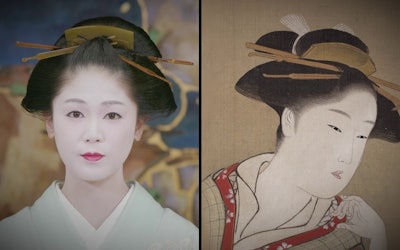
The Hairdressers Recreating Beautiful, Traditional Japanese Ukiyo-e Hairstyles. Be Amazed by the Skills of Tomiko Minami, a Master of Her Craft!
Traditional Culture- 693 plays
- YouTube
The Hairdresser Recreating Ukiyo-e Hairstyles This video, titled "Recreating Ukiyo-e Hairstyles," was created by "The Art Institute of Chicago." From 0:27 in the video, professional hairdresser Tomiko Minami appears. She is highly skilled at recreating the hairstyles portrayed in ukiyo-e prints of the Edo Period. Ukiyo-e prints were created by Edo-era artists such as the famous Katsushika Hokusai (葛飾北斎). The beautiful renditions of women in ukiyo-e prints have gained admiration not only in Japan but also worldwide. As seen in the video, hairdressers like Tomiko Minami use the techniques of old to bring ukiyo-e hairstyles to life in the present day. More About Professional Hairdresser Tomiko Minami Source :YouTube screenshot The video introduces Tomiko Minami of Minami Hairdressing. She is part of a group of Japanese hairdressers known as "yusoku biyoshi" (有職美容師), who specialize in studying and maintaining historical traditions of the imperial court and samurai families with regards to hair and clothing. Tomiko Minami is not only proficient in traditional Japanese hairstyles, but also well-versed in the ornaments and clothing styles of each era. She is even responsible for hairdressing and garments at the Ise Jingu Festival (伊勢神宮祭). At the Aoi Matsuri (葵祭) and the Heian Shrine (平安神宮) Jidai Matsuri, she is in charge of more than 150 different types of hairstyles. Her recreations of ukiyo-e hairstyles are extremely detailed and intricate. With participants strolling around with their beautiful hairdos and traditional garments, these festivals of Kyoto are a wonderful sight, bringing to life the atmosphere of times past. The Amazing Hairstyles Yusoku Biyoshi Can Recreate Source :YouTube screenshot During the early Edo Period, people generally let their hair flow freely without tying it up. However, from the mid-Edo Period, hairstyles, such as those seen in ukiyo-e prints, began to increase in popularity. There were styles such as the the kamome tabo (鴎髱, Seagull's Tail), the yoko-hyogo (横兵庫, Butterfly), and the torobin (燈籠鬢, Lantern Locks) resembling a traditional lantern. In the later Edo and Bakumatsu Periods, elaborate hairstyles ,especially for high-ranking courtesans, were created as well. The hairdressers skillfully make use of combs and hairpins to create traditional Japanese hairstyles, such as suberakashi (垂髪), as well as the shimada and katsuyama styles favored by geisha and maiko. At 1:37, 3:19, and 5:02 in the video, you can see the finished hairstyles carefully dressed by the talented hairdresser. Summary of the Hairdressers Recreating Ukiyo-e Hairstyles The hairdressers shown in this video make use of techniques used in the Edo Period to accurately recreate the hairstyles of that period. Their incredible skill has gained attention from around the world. Be sure to take a look at the video and take in the skills of the hairdressers and understand the depth of Japanese culture! -
 Video article 5:07
A Rare Shrew in Someone's Garden! He Wasn't Feeling Well, but After Giving Him Some Killifish He Chowed Down and Made His Way Back To the Bushes... Take Care Mr. Shrew!
Living Things- 53 plays
- YouTube
This video, titled "A Rare Shrew Found Its Way Into a Garden! After a Few Snacks He's Back to the Bushes!" (庭にいたトガリネズミにメダカのエサをやりました), was released by "pxh01252." This video captures a shrew in the wild! The shrew is not a mouse, but a member of the mole family, and is said to be the smallest mammal in the world. The shrew that lives in Hokkaido is listed as an endangered species on the Red List of the Ministry of the Environment. They are small, at only about 2 cm in length (their tail is about 3 cm), and you can easily understand how small they are when compared to the clover in the video. They look adorable as they eat, moving their narrow, pointy snout around like a cute character in a picture book. There are many things about shrews that we don't know about, so take this chance to see what they're like! -
Video article 1:01
Blue Impulse, a Team of Acrobats From the Japan Air Self-Defense Force, Show Us an Amazing Takeoff of the #5 Aircraft. From a Low, Smoke-Filled Flight to the Sky in One Fell Swoop!
Transportation- 41 plays
- YouTube
This video, titled "Over 3 Million Views! Blue Impulse 5 Is off the Ground!" (再生回数300万回越え!!ブルーインパルス5番機のすご過ぎる離陸!), was released by "kumao0526." This is a video of the moment Blue Impulse's fifth plane takes off. Blue Impulse is made up of planes 1 to 6, and the 5th one leads the formation as the 2nd Wing Commander, and also takes part in the "solo mission" which is performed by a single plane. In this video, you can see the amazing acrobatics of the number 5 as it takes off, flies low through the smoke of the other planes, and then climbs in one fluid motion, performing a 360-degree roll. In addition to the performance in the air, be sure to watch the intricate takeoff that shows the pilots skill. -
Video article 16:03
A Professional Racing Driver Shows Us What Makes Japanese Cars So Special! Check Out the Speed of the Nissan 30Z!
Transportation- 35 plays
- YouTube
This video, titled "Trying the STAR ROAD special make with Akira Iida and Daijiro Inada |Full Throttle on the Winding Road and Nighttime Street Driving in the 30Z!" (飯田章 と 稲田大二郎 の STAR ROAD 特製 極上30Z で ワインディング全開走行 & 夜のストリート爆走), was released by "VIDEO OPTION." Akira Iida, one of Japan's leading racers, and Daijiro Inada, a car tuning commentator, test drive the 30Z tuned by STAR ROAD and introduce the ride quality. This is a fascinating video that allows you to enjoy the amazing techniques of the racers. If you want a Japanese car, but don't know which one to buy, we recommend checking out this video! Even if you're not planning to buy a car, check out the video to get a taste of what it's like to drive a Japanese car! It's an action packed video that's well worth the watch! -
Video article 1:00
A Real Life Version of the Popular Character From the Popular Railroad Animation "Chuggington"! Wilson and Brewster Introduce Okaden Chuggington, a Sightseeing Streetcar!
Transportation- 36 plays
This video, titled "Chuggington train," was released by "NHK WORLD-JAPAN." In this video, we see the start of the "Okaden Chuggington" streetcars. "Wilson" and "Brewster," the characters from the popular British-born cartoon "Chuggington," will show children around the city of Okayama. They were designed by Eiji Mitooka. The interior of the car is designed to excite children, and a navigator will hold events inside the car during its journey. Take a ride on the tram that runs between Okayama Station and Higashiyama Okaden Museum Station! It's a 50 minute journey your kids will love! -
Video article 7:51
This Is What the Kyoto Tachibana High School Marching Band Is All About! Don't Miss the Marching That Brings Smiles to the Faces of the International Crowd at Disneyland!
Festivals & Events- 41 plays
- YouTube
This video, titled "Kyoto Tachibana SHS Band - Disneyland Anaheim 2017 京都橘高校吹奏楽部," was released by "慶次郎前田." The Kyoto Tachibana High School Marching Band is a strong school that ranks high in the marching competition every year. The Tachibana High School Marching Band, which is known for its technical and dancing skills, performed at Disneyland in 2017. This Disneyland is not the one in Japan either, but rather the Disneyland in Anaheim, USA. The strength of Tachibana High School is supported by the initiative of the club members, and the dance, which is the highlight of the performance, was composed by the students' suggestions. Their energetic performance amazes the international audience at Disneyland! -
Video article 3:47
What's Hidden Inside This Puzzle Box? A Look at the Tricky Karakuri Box!
Art & Architecture- 22 plays
- YouTube
This video, titled "Miyagi University Graduation Project 'A Glimpse at the Karakuri Box'" (宮城大学卒業制作 「からくりを覗く」), was released by "Minoru Suzuki" (鈴木実訓). A karakuri box is a box with an opening mechanism on its surface and inside that can only be opened through certain actions. In ancient times, people used to hide important things in these secret boxes. In this several-minute video, titled "A Glimpse at the Karakuri Box," the filmmaker unravels the mechanism by taking out a smaller box out of a square box and opening the box in a nonchalant manner. How does this box open? The best part of the karakuri box is not so much the storage itself, but the process of unraveling the karakuri and opening the box. Enjoy stimulating your curiosity with this video! -
Video article 21:58
Safe, Comfortable and Convenient - The Three Best Things About the Shinkansen to Osaka! Enjoy USJ and Dotonbori While Learning About the History of the Shinkansen!
Transportation- 192 plays
- YouTube
This video, titled "BULLET TRAIN - Riding Japan's Super Shinkansen - 新幹線に乗りましょ!," was released by "American Rail Club." The shinkansen is indispensable when it comes to travel in Japan. In this video, young train enthusiasts from the U.S. experience the Japanese shinkansen. In contrast to the U.S., where airplanes and cars are the main means of transportation, the Japanese shinkansen is a passenger service that is highly regarded around the world for its safety, comfort, and convenience. What particularly surprises people abroad is the on-time, no-delay operation schedule. Since delays are an everyday occurrence in railroads overseas, the Japanese railway system, which is almost never late, leaves quite an impression. Check out the video to see what they think about the Shinkansen! -
Video article 2:16
Kofu City, Where the Warlord Takeda Shingen Is Still Well Known and Loved by the Local People! Celebrating the 500th Anniversary of Its Founding!
Local PR- 41 plays
- YouTube
This video, titled "PR Video for the 500th Anniversary of Kofu's Founding "Furin Kazan" (こうふ開府500年観光PR動画『風林火山』), was released by "kofu-shingen." In 2019, Kofu City, in Yamanashi Prefecture, celebrated its 500th anniversary since its founding. The video introduces the sights and sounds of Kofu City, named after the Japanese idiom "Furin Kazan" (風林火山, "as fast as the wind, as quiet as the forest, as daring as fire, and immovable as the mountain") which was a favorite of the warlord Takeda Shingen. The movie shows Gomi Shoyu, which has been in business for more than 150 years, Koshu Daruma, which is characterized by the carved face of Takeda Shingen, Kai Zenkoji Temple, which is associated with Shingen, and Takeda Shrine. The video also features Houtou, a local cuisine of Yamanashi, the professional soccer club, Ventforet Kofu, and the Daijingu Festival of Kofu. -
Video article 8:52
Torii Gates at the Entrance of a Teppanyaki Izakaya?! A Look at Teppan-jinja in Osaka!
Food & Drink- 31 plays
- YouTube
Teppan-jinja - A Teppanyaki Izakaya With a Shrine Theme This video shows what Teppan-jinja Soemoncho, a restaurant in Osaka City, is like. Teppan-jinja Soemoncho is a relatively new restaurant that opened in December 2016. A torii gate you'd find at a shrine is attached to the exterior, and as the restaurant's name suggests, the concept is based on a shrine. *"Jinja" means shrine in Japanese. The dishes are grilled skewers of vegetables and meat cooked on a teppan (griddle), and they are made with olive oil for a refreshing taste. They're open until late at night, so if you're ever in Osaka looking for a late night snack, give it a try. ◆Teppan-jinja Soemoncho Store Information◆ 【Address】2 Chome-3-14 Shinsaibashisuji, Chuo Ward, Osaka, 542-0085 【Access】A 3-minute walk from Namba Station on the Subway Midosuji Line / A 3 minute walk from Namba Station on the Subway Sennichimae Line / A 3-minute walk from Osaka Namba Station on the Kintetsu Namba Line / A 5-minute walk from Namba Station on the Nankai Main Line / A 5-minute walk from Namba Station on the Nankai Koya Line / A 5-minute walk from Nihonbashi Station 【Avg. Cost】1 skewer ¥250+, ¥3,000 avg. 【Hours】17:00-05:00 (the following day) ※17:00-03:00 on Mondays 【Closures】None 【Parking】None 【Phone】06-6213-7011 【TripAdvisor】Teppan-jinja Soemoncho https://www.tripadvisor.com/Restaurant_Review-g14127623-d9675545-Reviews-Teppan_Jinja-Chuo_Osaka_Osaka_Prefecture_Kinki.html -
Video article 4:30
Is This Really a Standard Dish at Festivals in Japan's Kyushu and Chugoku Regions?! "Hashimaki," a Delicious Chopstick Treat!
Food & Drink- 35 plays
- YouTube
Hashimaki, a Standard Food at Festivals in Japan's Chugoku and Kyushu Regions This video shows hashimaki being made at a festival stall. Hashimaki is a standard dish at festivals in the Chugoku and Kyushu regions, in which thinly cooked okonomiyaki is wrapped around chopsticks. Since it's wrapped around chopsticks it's easier to eat than normal okonomiyaki. It's not very famous in the regions east of Osaka unfortunately. There is a theory that this is because people in Osaka prefer okonomiyaki to hashimaki. If you find a hashimaki stall at a festival or other event, be sure to try it! -
Video article 6:22
Hot off the Grill! Kabayaki Eel Over Fluffy Dashi-Maki Tamago! Eating Around "Osaka's Kitchen" at Kuromon Market.
Food & Drink- 46 plays
- YouTube
Fluffy Dashi-Maki Tamago Topped With Kabayaki Eel! This video shows the shops lining Osaka's Kuromon Market. The video shows fluffy dashi-maki tamago being cooked at a one of the shops. In Japanese cuisine, there is a dish called "umaki," which is a dashi-maki tamago (rolled Japanese-style omelette) with kabayaki eel at the center, but this restaurant sells eel on top of the egg instead. Known as "Osaka's Kitchen," Kuromon Market is where you can get a variety of foodstuffs, including seafood, fruit, and processed foods. As you can see in the video, eating around is one of the best parts of the market. Consider stopping by if you're in Osaka! 【Official Homepage】Kuromon Market https://kuromon.com/en/ 【Tripadvisor】Kuromon Market (黒門市場) https://www.tripadvisor.com/Attraction_Review-g14134994-d1896861-Reviews-Kuromon_Market-Nippombashi_Chuo_Osaka_Osaka_Prefecture_Kinki.html -
Video article 2:11
Ingredients From All Over the Country! Stroll Through More Than 150 Shops in the Kuromon Market, AKA "Osaka's Kitchen"!
Food & Drink- 23 plays
- YouTube
Eating Around Osaka's Kitchen - Kuromon Market This video shows the shops lining Osaka's Kuromon Market. Kuromon Market is known as "Osaka's Kitchen," and as you can see in the video, there's plenty of food purchase for walking around and eating while perusing the shops. At Kuromon Market you can get a variety of foodstuffs, from fresh seafood, to fruit and processed goods. In the video they order baby octopus. It's a good place to buy souvenirs when you visit Osaka. Consider stopping by if you have the chance. 【Official Homepage】Kuromon Market https://kuromon.com/en/ 【Tripadvisor】Kuromon Market (黒門市場) https://www.tripadvisor.com/Attraction_Review-g14134994-d1896861-Reviews-Kuromon_Market-Nippombashi_Chuo_Osaka_Osaka_Prefecture_Kinki.html -
Video article 8:12
Eating Around in "Osaka's Kitchen"! Oysters, Fresh Sea Urchins, and More at a Fish Restaurant in Osaka's Kuromon Market!
Food & Drink- 34 plays
- YouTube
Shelling Oysters Like Crazy! Fresh Oyster and Sea Urchin! This is a video of a chef at a fish market in Osaka's Kuromon Market, shelling oysters and opening sea urchin and also shows taste testing them. Kuromon Market is known as "Osaka's Kitchen" because of the variety of foodstuffs available there, including seafood, fruit, and processed foods. The 580-meter-long market is made up of 150 shops that offer a wide variety of carefully selected ingredients from all over the country. In the video, you can see a chef shelling oysters one after another, as well as opening sea urchins. His hands are so dexterous that you can't help but notice his skills, so be sure to check out the video to see how he does it. 【Official Homepage】Kuromon Market https://kuromon.com/en/ 【Tripadvisor】Kuromon Market (黒門市場) https://www.tripadvisor.com/Attraction_Review-g14134994-d1896861-Reviews-Kuromon_Market-Nippombashi_Chuo_Osaka_Osaka_Prefecture_Kinki.html -
Video article 2:29
This Is How Yatsuhashi, Kyoto's Most Popular Sightseeing Souvenir, Is Made!
Food & Drink- 22 plays
- YouTube
Yatsuhashi- One of Kyoto's Most Popular Sightseeing Souvenirs This video shows how to make "Yatsuhashi," a representative souvenir of Kyoto. Yatsuhashi is a Japanese confectionery that has established a firm position as a tourist souvenir of Kyoto. In general, there are two types of yatsuhashi: nama yatsuhashi (non-baked yatsuhashi) and katayaki yatsuhashi (hard-baked yatsuhashi), both are equally popular. The standard flavor is cinnamon, although it is now available in a variety of flavors, such as matcha, strawberry, and black sesame. In the video, you can see the katayaki yatsuhashi being made in the store, so be sure to check it out. -
Video article 2:55
The Visual of It Being Grilled at a Stall Is Mouthwatering! "Gohei Mochi," a Local Cuisine of the Chubu Region
Food & Drink- 20 plays
- YouTube
Gohei Mochi From Japan's Chubu Region This video shows gohei mochi being cooked and taste tested at a stall. Gohei-mochi is a local dish from the central region of Japan. It's made by wrapping rice crushed into powder around a skewer, toasting it, and finally dipping it in sauce and cooking it again. There are two types of sauce, one with a soy-sauce base, and the other with a miso base. These vary by season and region, but both are sweetened with sugar. Some of the sauce includes sesame seeds, walnuts, peanuts, and other ingredients, and there are many variations. You can find them at highway service areas and roadside stations in Japan's Chubu region, so be sure to keep your eyes peeled! -
Video article 3:15
Kawaguchi Sengen Shrine, Now a World Cultural Heritage Site! A Look at the Beautiful Traditional Dance, "Kawaguchi Chigo no Mai"!
Festivals & Events- 70 plays
- YouTube
This video, titled "[4K] "Chigo No Mai" in Yamanashi, Fuji-Kawaguchiko| The Elegant Dance of Girls Who Tell of the Faith of Mt. Fuji| nippon.com" (【4K】富士山信仰を伝える少女たちの優美な舞:山梨・富士河口湖町「河口の稚児の舞」| nippon.com), was released by "nippon.com." "Kawaguchi Chigo no Mai" is a dance performed at Kawaguchi Sengen Shrine in Yamanashi Prefecture. During the regular festival on April 25th and the festival on July 28th, elementary school girls who will train at monasteries perform "Gohei no Mai," "Ougi no Mai," "Tsurugi no Mai," and "Miyameguri" in dedication to the shrine. The dances are beautiful and stylized in the style of Kagura and performed in front of the followers of Fujikou (an Edo-period Shinto sect dedicated to the worship of Mt. Fuji). Kawaguchi Sengen Shrine was built to suppress the eruption of Mt. Fuji in the late 9th century. In 2013, Mt. Fuji was inscribed on the World Cultural Heritage List as one of the constituent properties of "Mount Fuji - Object of Faith and Source of Art." -
Video article 1:10
Spectacular Views for Only Two Weeks of the Year! A Dragon's Eye on the Surface of the Lake in Kagami-Numa, Akita Prefecture
Nature- 44 plays
- YouTube
This video, titled "A Dragon's Eye That Appears at Hachimantai in Early Summer: Akita-Iwate Border [nippon.com]" (初夏の八幡平に現れる「ドラゴンアイ」:秋田・岩手県境 | nippon.com), was released by "nippon.com" Hachimantai, which lies near the border of Akita and Iwate prefectures, is a mountain range in the northern part of the Ou Mountains dotted with rolling lakes and swamps at 1,600 meters above sea level. One of the lakes, Kagami-numa in Senboku City, Akita Prefecture, is called "Hachimantai Dragon Eye" because the snow on the surface of the lake melts into a doughnut shape, making it look like the eye of a dragon. The dragon's eye is only visible for two weeks, and heavy equipment is required to climb the mountain during the snowy season. Seeing a scene like the one in this video is extremely rare, so it's a must-see! -
Video article 2:56
Unique Taste and Flavor! The Miraculous, Fermented Kabura Sushi and "Konka Iwashi" Produced by the Climate of Japan's Hokuriku Region!
Food & Drink- 18 plays
- YouTube
This video, titled "Flavors of Kaga and Noto (Fermented Food): Kabura Sushi, Konka Iwashi - nippon.com" (加賀・能登の美味「発酵食」:かぶら寿し・こんかいわし | nippon.com), was released by "nippon.com." Fermented foods made from fish and shellfish have been made in Japan's Hokuriku region since ancient times. An environment where it is cold enough to maintain low temperatures is ideal for food fermentation. Kabura sushi, a Kanazawa specialty, is said to have originated as a preserved food made from fermented vegetables and fish. Nowadays, yellowtail fillets caught on the Sea of Japan are placed in between salted turnips. The turnip is then enclosed in a vat and the space between the two is filled with koji, and the koji bacteria ferments the turnip to produce a delicious taste. The crunchiness of the turnip and the flavor of the yellowtail are combined with the aroma of koji to create a complex taste. On the other hand, sardine soaked in bran is called "konka iwashi" and is eaten lightly grilled with bran on top. This is also eaten with sardines and bran neatly spread in a tub and fermented. -
Video article 1:55
A Long-Established Ryokan That's Been Around for More Than 140 Years! The History of Mukaitaki at Aizuwakamatsu's Higashiyama Onsen in Fukushima Prefecture
Traditional Culture- 58 plays
- YouTube
This video, titled "Mukaitaki Ryokan, Higashiyama Hot Springs (3) | nippon.com," was released by "nippon.com." Aizuwakamatsu is a tourist destination in Fukushima Prefecture in Japan's Tohoku region. In addition to famous scenic spots, such as Mt. Bandai and Lake Inawashiro, there are also many historical and archaeological sites from the Warring States period and the last days of the Tokugawa shogunate. However, due to the reputational damage caused by the nuclear power plant accident, many inns and other businesses began to struggle to get by. However, there is one ryokan that has endured the hard times and improved. That is, the long-established ryokan called Mukaitaki in Higashiyama Onsen, located about 10 minutes from Aizuwakamatsu Station. Since its establishment in the Edo period as a health resort for the Aizu clan, it has been visited by many celebrities, and its wooden sukiya-zukuri architecture is a nationally registered tangible cultural property. The charm of this ryokan lies in the fact that it retains the atmosphere of the time when Hideyo Noguchi and Hirobumi Ito stayed there. Rather than adding new facilities, the inn has become a thriving ryokan with regular visitors as a result of valuing the fact that the space from that time period can be shared with others. -
Video article 3:30
The "Kanazawa Odori" (Kanazawa Dance) is a gorgeous stage, as well as tea ceremony and tatami rooms in Kanazawa City, Ishikawa Prefecture.
Traditional Culture- 366 plays
- YouTube
Kanazawa Odori, traditional performing arts of Kaga Hyakumangoku, Kanazawa, Ishikawa, Japan Video Introduction This video, titled "Geisha Performing Kanazawa Odori: Kaga Domain, Castle Town Kanazawa" (芸妓衆が舞う金沢おどり:加賀百万石の城下町 金沢 | nippon.com), was created by "nippon.com". Kanazawa was previously a castle town known as "Kagahyakumangoku" (加賀百万石), located in the Chubu region (中部地方) of Japan and ruled by the Maeda clan during the Edo Period. The area was very prosperous during this time and traditional arts, performing arts, and culture also flourished. Kanazawa Odori was one such performing art. In the video, you can watch the beautiful dance performance and learn more about the history of Geisha. Learn More About the Geisha Who Perform Kanazawa Odori! Photo:Kanazawa, Ishikawa Prefecture・Higashi Chaya District Kanazawa Odori is performed during a festival in September each year by the Geisha who work on Kazuemachi Tea House Street in Kanazawa City. The festival is usually held in Ishikawa Ongakudo (石川音楽堂) and lasts a total of 4 days. The three chaya districts (teahouse districts) of Kanazawa date back to the Bunsei Era (文政) of the Edo Period. The expansion and development of art and culture was highly supported throughout the Kaga Domain (加賀藩) and Noh theater became very popular at this time. The words "Sora kara utai ga futtekuru" (空から謡が降ってくる, Songs Will Rain From the Sky) which can be seen in the video from 0:44, refer to the singing that could be heard all over the town of Kanazawa during a period in which Noh theater was extremely popular. The Geisha continued to perfect the art of hospitality and entertainment over the years eventually becoming an integral part of the culture of Kanazawa City. The three remaining chaya districts of Kanazawa City are an important piece of Japanese history and are a good demonstration of the atmosphere and lifestyle of the Kanazawa Geisha of the time. The three chaya districts of Kanazawa City are called the Higashi Chaya District (東茶屋街), Nishi Chaya District (西茶屋街) and Kazuemachi Chaya District (主計茶屋街). Seijirou Shimada (島田清次郎), the author of the Taisho period (大正時代) (1912AD-1926AD) bestselling novel "Chijo" (地上), was said to have lived here when he was a young boy. The Higashi Chaya District and Kazuemachi Chaya District were added to the list of "Preservation Districts for Groups of Traditional Buildings" (重要伝統的建築物群保存地区) in 2001 and 2008, respectively. Kanazawa Geisha have also had a great impact in areas of writing and architecture in Japan. If you'd like to try an ozashiki experience (Geisha dinner experience), you have to make sure you follow proper etiquette. For the Kanazawa Geisha, these experiences are a serious part of their training. There are set times when alcohol and food may be enjoyed and also times where one must refrain from eating or drinking to fully enjoy the performance. The Three Highlights of Kanazawa Odori! The Grand Finale "Kanazawa Fuuga," Ozashiki, and Tea Ceremony! Source :YouTube screenshot Teahouses have a tradition of generally turning away first-time customers, therefore it may be difficult to try Ozashiki as a tourist. However, you can purchase a ticket called "Kaga no Utage" (加賀の宴) which allows you to experience the Geisha dining experience easily. You can also take part in a tea ceremony during the Kanazawa Odori festival. Taking part in these experiences will help you learn more about the life of Geisha. The real pleasure in Kanazawa Odori is that there are a variety of programs to enjoy. These include "Icchoichibu" (一調一舞) which is a dance performed to a small hand drum, "Subayashi" (素囃子) which is a song and dance performed to shamisen and taiko drums, and "Ozashikidaiko" which is performed using drums called "Shimedaiko," "Odaiko" and more. From 2:31 in the video, you can take a look at "Kanazawa Fuuga," which is performed by a group of Geisha in unison. It's a must see for those interested in Kanazawa Odori! The lyrics were written by Naoki Prize (直木賞) winner Tomomi Muramatsu (村松ともみ), the music was written by Hisamatsu Yamato (大和久松), the head of the Yamatogaku School (大和楽), and Ukon Nishikawa (西川右近), the head of the Nishikawa Nihonbuyo School, (日本舞踊西川) was in charge of choreography. Summary of Kanazawa Odori Source :YouTube screenshot Kanazawa Odori is highly praised and admired not only in Japan but also overseas. Enjoy watching the Geisha demonstrate the spirit of Japanese "omotenashi" through their elegant dance and other performances in the video! -
Video article 9:53
An Introduction to Shoko Kanazawa's Calligraphy Exhibition, Where She Shows off Her Bold Calligraphy! A Glimpse at the Works of the Genius Calligrapher With Down Syndrome!
Traditional Culture- 30 plays
- YouTube
This video, titled "Shoko Kanazawa, a genius calligrapher with Down's Syndrome - Inori no Zouko - nippon.com" (ダウン症の天才書家・金澤翔子 ー 祈りの造形 | nippon.com), was produced by "nippon.com." In this video, you can see a calligraphy exhibition by Shoko Kanazawa, a calligrapher with Down syndrome, at the Ueno Royal Museum in September 2017. Shoko Kanazawa began her calligraphy career at the age of five with her mother, a calligrapher, as her teacher. At the age of 20, she made her debut as a calligrapher, and is now considered a genius calligrapher! Check out the video to see the many wonderful works and thoughts of her mother. -
Video article 1:53
Aizome Is a Traditional Dyeing Technique That Has Been Handed Down in Tokushima for Generations. Experience the Depth of Traditional Japanese Dyeing!
Traditional Crafts- 211 plays
- YouTube
Aizome Dyeing - A Traditional Japanese Craft This video, titled "A Traditional Aizome Dyeing Experience|nippon.com" (昔ながらの藍染め体験 nippon.com), was released by "nippon.com." The video shows the traditional Japanese dyeing and weaving technique called "Aizome" (藍染, lit. "indigo dyeing") that has been passed down since ancient times in Japan. Those of you interested in traditional Japanese cultures have probably heard of it at one time or another. Kimono and other clothes dyed in indigo blue with "Ai-shiru" (liquid gathered from the leaves of the indigo plant) are resistant to fading and meet the demands of many people. It is also known outside of Japan as JAPAN BLUE. In this article we'll introduce the dyeing process. Be sure to follow along! Aizome Dyeing Source :YouTube screenshot This video shows an Aizome dyeing experience, and provides an easy-to-understand summary of the key points of Aizome. The Aizome dyeing experience shown in the video was taken at "Ai-no-Yakata" in Tokushima Prefecture. You can learn how to create beautiful works using the "Ai-Shiru." Ai-no-Yakata displays resources related to indigo, and is one of Tokushima Prefecture's most popular tourist sites. The Museum is closed on Tuesdays (excluding holidays) and December 28th to January 1st. What is Aizome? Photo:Aizome Aizome refers to dyeing products using indigo, a plant of the Persicaria family. In Japan, indigo dyeing is made from fermented "Persicaria tinctoria," or the Japanese indigo. Aizome was most widely spread in the Edo period (1603-1868). Tokushima Prefecture, as seen in the video, is particularly famous for its Aizome. There are also a number of facilities related to Aizome in Tokushima Prefecture. One of the characteristics of Aizome is that, despite it using one color, there is a wide range of colors used for it, including pale blue-green, light indigo, katsu-iro (a shade of blue darker than dark blue), tome-kon, and Usuai (light blue). Indigo contains polyphenols, and many manufacturers produce supplements and vegetable juice drinks with it. Facilities for Aizome in Tokushima Prefecture Photo:Aizome Workshop There are several facilities related to Aizome in Tokushima Prefecture, so if you want to learn about the history of Aizome, we recommend checking them out. In addition to "Ai-no-Yakata" shown in this video, the following places are also worth checking out. ・AIZOMEKOUGEIKAN (藍染工芸館) ・Awa Aizome Shijira-kan (阿波の藍染しじら館) ・Furusho-zome Kojo (古庄染工場) ・Waza-no-Yakata (技の館) "AIZOMEKOUGEIKAN" (Aizome Craft Workshop) in Tokushima City (徳島市), Tokushima Prefecture in Japan's Shikoku region, is the factory exhibition hall of Takumi Kagawa, the holder of the traditional technique of Awa Ai-gata dyeing. You can experience Aizome at the factory. The factory also sells gifts, like scarves and T-shirts. Awa Aizome Shijira-kan, located in Tokushima City, Tokushima Prefecture, offers a tour of the Awa Shijira weaving factory. You can enjoy an indigo dyeing experience here too. Furusho-zome Kojo, located in Tokushima City, Tokushima Prefecture is a factory owned by Toshiharu Furusho. You watch aizome dyeing at the factory. Waza-no-Yakata in Itano District (板野郡), Tokushima Prefecture, is a facility where you can enjoy observing the process of Aizome and the making of Awa-wasanbon sugar, as well as hands-on experiences. Items Made With Aizome Aizome products range from hand towels, yukata, purses, stoles (shawls), dresses, and masks. They are available at shops at the craft museums and online shopping sites. The Process of Aizome - Learning From the Aizome Experience Video Source :YouTube screenshot "Ai-Shiru" (indigo liquid) is used for Aizome. From 0:19 in the video, you can see how a pattern is made by rolling the cloth around the chopsticks and squeezing it with rubber. Next, the cloth is soaked in the Ai-Shiru for approximately 60 seconds. You can see this step at 1:53 in the video. The process of taking it out of the Ai-Shiru and exposing it to air for roughly 60 seconds is repeated several times. When the fabric is sufficiently dyed with the Ai-Shiru, it is rinsed and then ironed. And the handkerchief is completed! No two pieces are the same when made with Aizome. You can see the completed work at 1:44 in the video. Aizome Summary Photo: Aizome Aizome has a long history as one of Japan's traditional cultures. If you're interested in learning more about this beautiful culture, consider visiting one of the facilities listed above and trying an Aizome experience. Don't forget to check their business hours and details. For those unable to visit the facilities, be sure to watch the video to see what Aizome is all about! 【Tripadvisor】Ai-no-Yakata https://www.tripadvisor.com/Attraction_Review-g1121420-d3531647-Reviews-Ai_no_Yakata-Aizumi_cho_Itano_gun_Tokushima_Prefecture_Shikoku.html -
Video article 5:00
Noh - A Popular Traditional Performing Art That Has Been Handed Down in Japan Since Ancient Times. Learn More About Noh With the Head of the Kanze School of Noh Theater!
Traditional Culture- 313 plays
- YouTube
Learn About Noh Theatre With the Kanze School of Noh! This video, titled "Manners and Etiquette Handed Down Through Generations of the Kanze School of Noh|nippon.com" was created by "nippon.com." Noh is a traditional performing art of Japan. It has a long history in Japan, much like Kabuki, tea ceremony, and Buyo. There are many schools of Noh, including the Kanze school of Noh featured in the video. Style and performance can vary greatly depending on the school that an actor belongs to. In this video, we'll introduce the Kanze school of Noh. If you're interested in traditional Japanese performing arts, we highly recommend checking out this article and video! The Ever Popular World of Noh Theatre Photo:Noh stage In this video, the 26th head of the Kanze School of Noh, Kiyokazu Kanze (観世清和), talks about Noh and the importance of passing on the art to next generation. At 2:38 in the video we see Saburouta Kanze (観世三郎太) performing as a heron, one of the highlights of the video! From 1:00 in the video, Kiyokazu Kanze talks about teaching his son Saburouta. Then, at 2:20, he goes on to say that "to learn Noh, it is not enough to simply imitate a performance, one must make the performance their own and elevate it to another level." From 3:53, he explains how constantly improving one's performance until their full potential is reached is the most important aspect of Noh. You can hear Kiyokazu Kanze talk about his feelings towards his son throughout the entirety of this 5 minute long video. A Closer Look at the Traditional Performing Art, Noh Photo:Noh "Nougaku" (能楽) is the general name given to the performing arts Noh and Kyogen (狂言). It is one of Japan's oldest traditional performing arts and is registered as an Intangible Cultural Asset. There are six important features of any Noh play: ・Shosa (所作): Performance ・Utai (謡): Chanting ・Hayashi (囃子): Musical accompaniment ・Men (面): Masks ・Shozoku (装束): Costumes ・Kodogu (小道具): Props Movements in Noh involve standing up straight with ones chin tucked in in a posture called "Kamae" (カマエ). Walking without lifting one's heels off the ground, called "Hakobi" (ハコビ), is another characteristic feature of Noh plays. Back when Noh was first being performed by Kan'ami (観阿弥) and Zeami (世阿弥) in the Muromachi period (1336 AD - 1573 AD), "Kamae" had yet to even be established. "Utai" refers to the lines or speech in a Noh play performed by the lead role called the "Shitekata" (シテ方). This is important in correctly portraying the feelings of the characters in the play. "Hayashi" refers to the musical accompaniment, which usually include a flute, small and large hand drums, and taiko drums (太鼓). In some cases, the taiko drum may not be used. The music is often played at a low volume as not to interfere with the performance. "Men" refers to the masks worn during a Noh play. There may be times when masks are not worn as well. "Shozoku" is the term used for Noh costumes. White is often worn by nobles, whereas young women are often dressed in red. Many props are used on stage during Noh performances. In contrast to the larger props which must be prepared well in advance of the performance, many small, simple props are often repurposed for each performance. More About the Kanze School of Noh Source :YouTube screenshot The Kanze school is but one of many different schools of Noh Theatre. Its name originates from the Yuzaki guild (結崎座) of Yamato Sarugaku (大和猿楽). "Kanze" was the childhood nickname of Kan'ami, the founder of Noh. The Sarugaku performances of Kan'ami Kiyotsugu were what led to the creation of the Kanze School. The Kanze School of Noh's traditions and performances continue even today. Summary of Japan's Noh Theatre Performers of the Kanze school of Noh are continually working hard to perfect their performances in the hope that the traditional art continues for generations to come. If you're interested in watching a Kanze school performance, we highly recommend watching the video to get a taste of Noh theatre! There more you learn about the family trees and schools of Noh, the more interesting it becomes! 【Official Website】Kanze School of Noh https://kanze.net/en/publics/index/