-
Article
-
Channel
-
Region
-
Season
-
Tag
Articles
-
 Video article 1:40
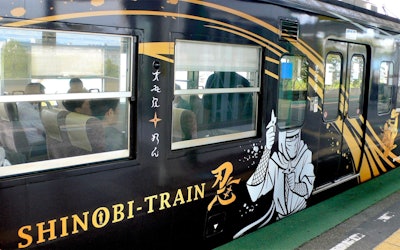
Japan's World-Famous Ninja Welcome You in the Form of a... Train? Take a Ride on the Limited Time Ninja Train in Shiga Prefecture, That's Been Extended by Popular Demand!
Transportation- 89 plays
- YouTube
Introducing SHINOBI-TRAIN, a Limited-Time Event Train on the Jr Kusatsu Line What do you think of when it comes to Japan's most popular content overseas? Anime? Godzilla? Geisha? Mt. Fuji? Japan has a lot of content popular overseas. But aren't you forgetting something important? NINJAS! Overseas, the ninja is said to have been incorporated into the training of the military as well. In this article, we'll introduce the "SHINOBI-TRAIN," a limited-time "wrapping train" operated by the JR Kusatsu Line, in the video "JR Kusatsu Line PR video [SHINOBI-TRAIN]" (JR草津線PR動画【SHINOBI-TRAIN編】), released by the Kusatsu City Office of Shiga Prefecture. JR Kusatsu's SHINOBI-TRAIN Photo:SHINOBI-TRAIN The JR Kusatsu Line, on which SHINOBI-TRAIN runs, runs from Tsuge Station in Iga City, Mie Prefecture, to Kusatsu Station, Shiga Prefecture. This area originated from what used to be called the Ninja Town, the birthplace of Iga Ninja and Kouka Ninja, resulting in the birth of the uniquely designed ninja train shown in the video. You can see the attractive exterior of SHINOBI-TRAIN at 0:10 in the video. The SHINOBI-TRAIN uses the vehicle that has been used since the Kosei Line began operations, and the Shinobi logo on the lead car is designed with a shuriken, the symbol of ninjas. As you can see at 0:26 in the video, ninjas and Sengoku warlords welcome guests inside the SHINOBI-TRAIN car. JR Kusatsu Line SHINOBI-TRAIN Operation Schedule Source :YouTube screenshot The JR Kusatsu Line SHINOBI-TRAIN is a 4-car, 1-set train that operates irregularly. Originally, it was scheduled to be in operation until the end of September 2020, however, the impactful design serves as a good advertisement for the JR Kusatsu Line, and there have been many requests from the local people for the continuation of the line, so they decided to extend the period of operation until the end of June 2021. In Shiga Prefecture, they are also planning a monitor tour where you can ride SHINOBI-TRAIN. For details, please check the official SHINOBI-TRAIN site of Shiga Prefecture. JR Kusatsu Line SHINOBI-TRAIN Summary Source :YouTube screenshot The SHINOBI-TRAIN is not only wrapped in ninja decal on the exterior, but the interior is also a literal ninja train full of ninja-esque design. Ninja curtains are displayed on the hanging ads, and the electronic display board is also specific of the SHINOBI-TRAIN. It all makes for a very fun experience. The crew members cosplay as ninjas, and at 1:04 in the video, you can see the local Mascot greeting tourists at the station. It's well received by children and foreigners. The JR Kusatsu Line has direct service from Kyoto Station in the morning and evening, so transportation access is excellent! However, the SHINOBI-TRAIN schedule is irregular and rare, so check the timetable on the official JR Kusatsu Line website for details. -
 Video article 2:22
Experience a Work Vacation in Tokushima Prefecture! the Luxury of Working While Vacationing in the Great Outdoors!
Local PR Things to Do- 33 plays
- YouTube
徳島県にし阿波でのワーケーションに興味がありませんか? こちらの動画は 「徳島県チャンネル」が公開した「徳島県にし阿波地域プロモーション動画~Nishi-Awa, ideal Workation area in Japan~」です。 ワーケーションとは「ワーク(仕事・勤務)」と「バケーション(休暇)」を組み合わせた造語で、「仕事とバケーションを一緒にする」 という意味です。 旅行先やリゾート地でバカンスを楽しみながら働きたい!と考えている人には徳島県にし阿波でのワーケーションはおすすめです。 徳島県にし阿波ってどんなところ? にし阿波は徳島県の北西部に位置し、美馬市、三好市、つるぎ町、東みよし町をエリアとする観光圏域です。 その8割以上を北部の阿讃山脈や南部の四国山地の森林が占め、中央部には日本三大暴れ川の1つとして数えられ四国三郎の異名を持つ吉野川が西から東へ流れています。 四季折々の表情を見せる美しい自然環境を有する地域として、にし阿波ではその自然を生かしたアクティビティ体験を行うことができます。 森林では山登りやトレッキング、河川では急流を利用したラフティングが特に人気です。 にし阿波ではグルメも歴史観光も欠かせません。 にし阿波にはそば米雑炊、でこまわし、ひらら焼きといった郷土料理があります。 これらは祖谷地方の水はけの良い急峻な斜面で栽培されたジャガイモやソバ、吉野川や祖谷川などで取った川魚等を利用したものです。 徳島県にし阿波のワーケーションで地域・国際交流 徳島県にし阿波は全国の13観光圏とともに滞在プログラムの誘致に取り組んでいます。 にし阿波にITサテライトオフィスを開設し、IT企業などがテレワークでのワーケーションを実践しています。 コワーキングスペースとして日本家屋をリノベーションしたオフィススペースがあり、Wi-Fi、プリンター、プロジェクターとスクリーンなどが利用できます。 そして、一部の施設では宿泊設備スペースも完備。 地域の人々との交流を楽しみながら新しいワークスタイルに挑戦するなら、にし阿波はベストな選択といえるでしょう。 オフィススペースの様子は、こちらの動画の0:14から紹介されています。 実際にコワーキングスペースで働く人たちの姿もご覧になることもできます。 徳島県にし阿波のワーケーション紹介まとめ 日本有数の美しい自然に恵まれているにし阿波のある徳島県は、東京から飛行機で2時間、大阪からは車で3時間の距離にあります。 地域の人々との交流、歴史ある街並み、伝統文化との触れ合いが、人生においての貴重な経験と何事にも代えがたい感動を与えてくれるに違いありません。 徳島県にし阿波でのワーケーションに興味があるなら今すぐ行動に移すことをおすすめします。 -
Video article 2:02
The Diamond Route - A Tour of Historical Sites and Natural Scenery in Tochigi, Ibaraki, and Fukushima Prefectures. Introducing the Best Sightseeing Routes to Discover the Charms of Japan!
Travel- 45 plays
- YouTube
The Diamond Route of Tochigi, Ibaraki, and Fukushima Prefectures! This video, titled "【4K】Digest : Diamond Route Japan 2019 - Fukushima, Tochigi, Ibaraki |" was published by Diamond Route Japan. While the "Golden Route" is a popular route for sightseeing in Japan, the "Diamond Route," which travels through the tourist areas of Tochigi, Ibaraki, and Fukushima prefectures, has become a hot topic of conversation as a way to experience the profound aspects of Japanese culture. By touring around Tochigi, Ibaraki, and Fukushima prefectures, you can experience Japan's history, culture, natural scenery, food, and outdoor sports in luxury. In this article, we'll introduce a video full of recommendations and attractions of the Diamond Route! Open Your Mind to the Ways of the Samurai Amidst the Diamond Route's Historical Landmarks and Spectacular Natural Scenery The video introduces historical sites and tourist attractions in each prefecture, along with traditional Japanese kendo, iaido, and the Japanese culture of Noh theatre, as areas where the spirit of Japanese Bushido is still very much alive. From Fukushima Prefecture, we have Aizu-Wakamatsu Castle, commonly known as Tsuruga-jo, Aizu Butokuden, the Aizu nohgaku do theater, and Okawa-so in Aizu Ashinomaki Onsen, located in Aizu-Wakamatsu city. In Ibaraki Prefecture, there's Kashima Jingu Shrine and Oarai Isosaki Shrine in Kashima City, and the Oya History Museum in Utsunomiya City. In Tochigi Prefecture, you'll see Butokuden at the Tochigi City Kendojo (kendo hall), Butokuden at Nikko Tosho-gu Shrine, Taiyuin at Rinnoji Temple in Nikko, and Uramino Falls in the upper reaches of the Arasawa River. Each of these sacred and majestic sightseeing areas, combined with traditional culture, such as kendo and iaido, and traditional performing arts such as Noh and shamisen, will leave you speechless. A Collaboration of Soccer, Nature, and Temples and Shrines on the Diamond Route! The video also shows the unique challenge of visiting tourist spots in Fukushima, Ibaraki, and Tochigi prefectures while juggling a soccer ball. The performance is by the freestyle soccer team, CUBE (球舞). In Fukushima Prefecture, there's Ouchi-juku in Minami-Aizu, Tsuruga-jo, and the Aizu Railway in Aizu-Wakamatsu, the Abukuma Caves in Tamura, and J-Village, a soccer training center in Futaba. In Ibaraki Prefecture, tourist attractions include the Oarai Isosaki Shrine and the Ushiku Buddha. In Tochigi Prefecture, you can visit the Oya History Museum in Utsunomiya City, Kura no Machi and the Uzumagawa River in Tochigi, the Kanmangafuchi Abyss in Nikko City, Edo Village in Nikko, and Taiyuin at Nikko Rinnoji Temple. Historical temples, shrines, natural scenery, and other tourist attractions are stylishly collaborated with sports. Eat up All the Delicious Food in Fukushima, Ibaraki, and Tochigi Prefectures! In the video, world-renowned Japanese chef Nobu Matsuhisa can be seen cooking gourmet food made from the bounty of Japan's beautiful mountains and rivers. The setting is the town of Shimogo in Fukushima Prefecture. Trout from the Kiyotaki Trout Farm (清滝養鱒場) in Nikko, Tochigi Prefecture and mushrooms grown in the great outdoors of Shimogo Town, Tochigi Prefecture are used to create delicious dishes. As the term "local production for local consumption" is used in Japan, each area has a wealth of delicious gourmet food. Fukushima, Ibaraki and, Tochigi prefectures, all rich in natural landscapes, offer many delicious foods thanks to the blessings of the rivers and mountains. Summary of the Diamond Route of Tochigi, Ibaraki, and Fukushima Prefectures The Diamond Route of Fukushima, Tochigi and Ibaraki prefectures, where you can experience Japanese history and culture, is becoming a popular sightseeing route in Japan. We invite you to watch the video and find your next travel destination! -
Video article 4:03
You've Never Seen a View Quite Like This! The Beautiful Tulip Fields Covering Alps Azumino National Government Park in Azumino, Nagano Prefecture, Are a Sight You’ve Got to See to Believe!
Travel Local PR- 997 plays
- YouTube
National Alps Azumino Park, Azumino City, Nagano Prefecture, Japan Video Introduction This introductory video of the tulip fields in Alps Azumino National Government Park was created by AQUA Geo Graphic. It's titled "[ 4K UltraHD ] 国営アルプスあづみの公園 - Alps Azumino National Government Park in Spring - (shot on Samsung NX1)." The beautiful 4k images of the brilliantly colored tulips that cover the fields of Alps Azumino National Government Park are a sight quite like no other! Did you know Japan had such picturesque scenery? The beauty caught on camera is a sight you can't afford to miss! What is Alps Azumino National Government Park? Photo:The countryside culture zone at Alps Azumino National Government Park, Azumino, Nagano Alps Azumino National Government Park is a park located in the Koshinetsu region that covers an area from Azumino plateau (安曇野高原, Azumino kougen) in Azumino city (安曇野市, Azuminoshi) to Mount Jonen (常念岳, Jounendake). The park covers a vast area of land, approximately 353 hectares, with superb views that change from season to season as a variety of flowers such as tulips and rhododendron bloom. The park is divided into two areas: Horigane, Hotaka district, and Omachi, Matsukawa district. You can access Horigane, Hotaka district by taking a tour bus from JR Hotaka station (穂高駅, Hotakaeki) which takes around 13 minutes. The Omachi, Matsukawa district, is accessible by the Gururin-go bus from Shinano Omachi station (信濃大町駅, Shinano oomachi eki) and takes around 15 minutes to arrive. Alternatively, you can take the Fureai-go bus which should arrive in around 25 minutes. There is also free parking available at the park for those who are travelling by car. As you can see in the video, in spring the fields are covered by approximately 240,000 tulips of 95 different varieties, along with approximately 5,000,000 rapeseed flowers. The Flowers of Alps Azumino National Government Park Photo:Tulips at Alps Azumino National Government Park, Azumino, Nagano Making use of the high and low grounds of the plateau, from early spring to summer you can enjoy viewing flowers such as cherry blossoms, tulips, rhododendron, and more. Alps Azumino National Government Park is one of the leading flower viewing spots in Japan, and the magnificent scenery is something that's sure to look great on Instagram! There are lots of activities and experiences at Alps Azumino National Government Park to keep you entertained; Please make the most of the beautiful landscape and climate of the Shinshu region. Throughout the video, you can see various flowers blossoming with the with the snow-capped Alps (アルプス山脈, Arupusu sanmyaku) in the background. Red, pink, yellow, white, purple, blue... Here you can find a park covered in what looks like a carpet of colorful flowers. When are the "cherry blossoms" and "tulips" in the National Alps Azumino Park at their best? Cherry blossoms in the National Alps Azumino Park are usually at their best from early April to mid-April. Tulips are usually at their best from late April to mid-May. If you want to enjoy the collaboration of cherry blossoms and tulips, why not visit in April? According to the cherry blossom forecast for 2024, Nagano Prefecture will be in bloom six days earlier than usual, and the full bloom is expected five days earlier than usual. Looking at the official Instagram, we saw a post of cherry blossoms and tulips in full bloom on April 7, 2023. Please check out our Instagram before you go. Sightseeing Spots at Alps Azumino National Government Park Photo:The countryside culture zone at Alps Azumino National Government Park, Azumino, Nagano Horigane, Hotaka district is divided into two separate zones: a countryside culture zone (田園文化ゾーン, Denenbunka zoon) and a woodland culture zone (里山文化ゾーン, Satoyamabunka zoon). Horigane, Hotaka district was an area designed to conserve and restore the beautiful Azumino countryside so that we may continue to enjoy the scenery for many more years to come. The Countryside Culture Zone recreates the bountiful nature of the Japanese Alps and there are facilities and parks where you can take part in various cultural and nature experiences. On the other hand, the Woodland Culture Zone recreates the traditional woodland scenery of Japan. The area is equipped with facilities where you can experience traditional woodland culture and learn of the natural Azumino environment. The Omachi, Matsukawa district is also divided into several zones: the Center Zone, Conservation Zone (保全ゾーン, Hozen zoon), Forest Recreation Zone (林間レクレーションゾーン, rinkan rekureeshon zoon), Mountain Stream Recreation Zone (渓流レクレーションゾーン, keiryuu rekureeshon zoon) and lastly the Nature Experience Zone (自然体験ゾーン, shizen taiken zoon). Through various hands on experiences you can learn more about the stunning landscape and environment of the area. Alps Azumino National Government Park Area Dining Guide Photo:Kurobe Damn curry Azumino soba and mountain vegetables are foods associated with the Azumino National Park area, and the local delicacy Kurobe Dam curry (黒部ダムカレー, Kurobe damu karee) is especially popular at the moment. In hotel restaurants around the nearby JR Hotaka station (穂高駅, Hotaka eki) and Shinano Omachi station (信濃大町駅, Shinano oomachi eki), you can enjoy regional cuisine packed with locally grown produce typical of the rural Shinshu area. We hope you enjoy the local cuisine on your next trip to Shinshu! Alps Azumino National Government Park Event Information Various events are held throughout the year in the Alps Azumino National Government Park area. The most special of these events is the Summer Alps Adventure (夏のアルプス大冒険, natsunoarupusu daibouken)! There are many family-friendly events and fun experiences planned every year that you can take part in! In the winter months you can enjoy the illuminations at night! For more information, please check the official home page. Alps Azumino National Government Park Summary We highly recommend visiting Alps Azumino National Government Park during spring on your next trip to Shinshu. The traditional Japanese scenery in this vast national park is ever changing due to the different variety of flowers that bloom in each season and with the dramatic Japanese Alps in the background it's a destination you're sure to want to visit again and again. The beautiful tulip fields of Alps Azumino National Government Park are a sight you have to see to believe! Please enjoy the beautiful scenery brought to you in the video. ◆Alps Azumino National Government Park◆ 【Address】33-4 Horiganekarasugawa, Azumino-shi, Nagano Prefecture 399-8295 【Access】20 minutes drive from Nagano Motorway Toyoshina Interchange (長野自動車道豊科IC, Naganojidoushadou toyoshina IC) 【Hours】9.30am - 5pm (Mar 1st – Jun 30th, Sep 1st – October 31st), 9.30am - 6pm (July 1st – Aug 31st), 9.30am - 4pm (Nov 1st – last day in Feb) 【Holidays】Dec 31st, Jan 1st, every Monday (or Tuesday when Monday is a public holiday) 【Parking】Available 【Official Website】Alps Azumino National Government Park http://www.azumino-koen.jp/en/ 【Official Website】Azumino City Hall https://www.city.azumino.nagano.jp/site/userguide/foreign.html -
Video article 5:00
Beautiful Natural Scenery, Hot Springs, and Delicious Food in Hyogo Prefecture. A Look at the Wonderful Attractions of Tajima!
Local PR Travel- 294 plays
- YouTube
Introducing Tajima in Hyogo Prefecture This aerial video, titled “Tajima Sightseeing Promotion Aerial Walk- Tajima Sky Road(但馬観光プロモーション空中散歩~但馬空ノ道~)” was created by “e Video production.com.” There are a lot of tourist attractions where you can enjoy the beautiful landscape of Japan in the Hyogo area. Let's take a look at some of the recommended locations, activities, and food! This video is taken by drone, making it feel as if a stork is introducing Tajima. We hope you enjoy it! Refreshing Tourist Destinations in Tajima ©rikky_photography Modifying The most famous spot in the Tajima are is without a doubt the Takeda Castle Ruins (竹田城,Takedajou), located in Asago city. The castle is called "The Castle in the Sky" and many people come here to see fantastical scenery. The beautiful scenery is shown at the beginning of the video. We recommend stopping by Mikobata Senkoujo in Asago city. Amarube Viaduct (余部橋脚, Amarubekyoukyaku) “Sora-no-Eki” was built in the Meiji era (1868-1912) and it was used as a JR Sanin Main Line train station for about a century. Looking at the Sea of Japan from the Amarube Viaduct makes for a refreshing experience. Tourist Attractions in Tajima Photo:Stork Yabu city in Hyogo prefecture was selected as a National Strategic Special Zone, and is a center for agricultural reform. There are many rice paddies in the Tajima area, such as Bekku in Yabu city; the natural scenery here is breathtaking. In the spring, you can enjoy cherry blossom at Tarumi-no-Ozakura and the Tajima tulip festival. In fall, the leaves of the enkianthus perulati of Ankoku Temple (安国寺, Ankokuji) change to a deep red. In winter, you can enjoy winter sports in Kannabe. There are other popular tourist destinations, such as Hyogo Park of the Oriental White Stork, which reintroduces stork to the area, and Kamiyama Plateau, where you can enjoy outdoor leisure activities. The beautiful and seasonal views of tourist attractions in the Tajima area is introduced from 3:19 in the video. Enjoy the Geopark, and the Local Cuisine of Tajima! The Japan Sea coast in Hyogo prefecture is listed as a Global Geopark, and the natural scenery of the mountains and of the sea is truly a sight to behold. We highly recommend sea kayaking at Sanin Geopark. We recommend trying Tajima beef and queen crab, both of which are raised free range. These foods can be seen at 4:34 in the video. Izushi city is called " The Little Kyoto of Tajima." There is a local specialty here called Izushi Sara Soba, served in small portions on tiny dishes. Relaxing in Tajima Photo:Kinosaki Onsen There are places where you can relax in the Tajima area, such as Kinosaki Onsen. This hot spring is 1,300 years old, and you can enjoy a hot spring tour while wearing a yukata. Staying at a hotel at Yumura Onsen, a well-kept-secret in the Tajima area, and enjoying a relaxing overnight stay, is another great way to enjoy your trip. Summary of Tajima There are lot of hidden gems in the Tajima area, north of Hyogo prefecture. The 5-minute-long video is full of the charm of the Tajima area. Be sure to check it out! Enjoy delicious food and beautiful natural scenery in Tajima. Are you packing your bags yet? 【Official website】Kobe City Hall https://web.pref.hyogo.lg.jp/fl/index.html -
Video article 1:06
The World of Iga and Koka Ninja! What Is It About Ninja That Fascinates People Around the World? Enjoy Realistic Ninja Experiences in Mie and Shiga Prefectures, the Homes of Ninja!
Local PR Things to Do- 729 plays
- YouTube
Video introduction of “Koga-style Ninja” in Iga City, Mie Prefecture and Koka City, Shiga Prefecture This video, produced by "Shinobi no Sato Iga Koka Ninja Council" is titled "KOKA NINJA PR 4K HD- 甲賀流忍者PR." Koka Shinobi no Sato is a popular spot designated as a Japanese heritage site. You can visit the training grounds of the Koka school of ninja, the Karakuri house, a ninja meeting place and other sites where you can learn about the ways of the ninja! If you're a fan of ninjas, check out this video! The History and Names of Ninjas Photo:Ninja The ninja shown in the video is an entity that served the feudal lords of Japan from the Muromachi period (1336 to 1573 AD) to the Edo period (1603 to 1868 AD) through the use of ninjutsu. Besides the name "ninja," they have also been called or are known as "Shinobi" (忍び), "Rappa" (乱破), "Suppa" (素破), "Sou" (草), "Dackou" (奪口), and "Kamari" (かまり). Ninjas used tools such as shuriken, kama, and kunai, and mainly worked in espionage, sabotage, infiltration tactics, conspiracy, and assassination. It is said that there were also female ninja called "kunoichi." The Birthplace of Ninja and Their Styles Source :YouTube screenshot As introduced in the video, there are two schools of Japanese ninja- the Iga style and the Koka style. The Koka school of ninja were active in the region of Koka in the province of Omi (present-day Shiga Prefecture). The Iga school of ninja were active in the Iga province (today's Mie Prefecture). There is a slight difference in the use of techniques between the Koka and Iga schools. The physical prowess of the ninja was quite high, and the Iga school of ninja is said to have organized groups of a hundred men and used a variety of techniques to fight in the dark during conflicts such as the Tensho Iga War and the Tensho Iga Rebellion that occurred during the Warring States period (c. 1467-1615). It is said that they took a leap forward. It is said that even today, in 2020, there are survivors of the ninja in Japan. Summary of the Koka and Iga Ninja Village Source :YouTube screenshot At 0:24 in the video, you can enjoy sightseeing at the Ninja Village in Koka City, Shiga Prefecture, including things like visiting the Ninja Mansion and taking a Koka Ninja test. There are other hands-on experiences in Japan where you can dress up in samurai and warrior costumes as well. On top of that, there are comics, anime, and movies that feature ninja, so be sure to check them out if you're interested. If you enjoy learning about Japanese history, or are just a fan of ninjas, be sure to take a look at the video! 【Official Website】Shinobi no Sato Iga/Koka https://www.shinobinosato.com/en/index.html -
Video article 6:06
Gifu City in Gifu Prefecture, the Very Center of Japan- Where Oda Nobunaga Aimed to Unify the Country. A City With a Wide Variety of Food, History, Culture and Beautiful Natural Scenery!
Local PR Travel- 121 plays
- YouTube
The center of Japan! What is Gifu City, Gifu Prefecture? Gifu City Sightseeing Spots Video Introduction This video is titled “Gifu City Promotional Video [Original Version],” and is produced by "Gifu City Official Channel." Gifu City, Gifu in the Tokai region of Japan, is located in pretty much the dead center of Japan. Therefore, the city is sometimes referred to as “the belly of Japan.” Being the capital of Gifu Prefecture, the city is full of tourist spots, such as the clear Nagara River flowing through the city center, and the verdant Mt. Kinka. Gifu has many traditional crafts, including Gifu Wagasa (Japanese umbrellas), Gifu Chochin (lanterns) and Gifu Uchiwa (fans). These crafts have helped the everyday life of locals and are perfect for souvenirs! It's only about 18 minutes from Nagoya City on the JR Tokaido Line, and with easy access to the city, it's become popular in recent years as a good spot for domestic travel. This article introduces the tourist spots, traditional events and food in Gifu. Enjoy famous tourist spots in Gifu to your hearts content. Be sure to follow along with the video! Recommended Tourist Destinations in Gifu Photo:Mt. Kinka (金華山, kinkazan) Gifu has many scenic spots and popular places like Mt. Kinka (金華山, kinkazan), Nagara River (長良川, nagaragawa), Gifu Castle (岐阜城, gifujo), also known as Inabayama Castle (稲葉山城, Inabayamajo), Nagaragawa Ukai (cormorant fishing), latticework architectures, and the Great Buddha Hall of Shohoji Temple (正法寺, shohoji), and many more. The Gifu Great Buddha here is known as one of the "Three Great Buddha" of Japan. The Gifu Great Buddha appears at 2:56 in the video. You can feel the godliness of his gentle stare, as if he was smiling down at you, just by watching the video. A lot of events and festivals, such as the firework festival at Nagara River, Tejikara Fire Festival, Gifu Half Marathon, Dairyuji Lantern Festival and Ayu-kuyou are also held here, and the city is attracting an increasing number of both domestic and overseas tourists. The footage of the Tejikara Fire Festival starts at 3:37 in the video. You can see a spectacular pillar of flame spread across your screen! The History and Traditional Ceremonies of Gifu Photo:Nagaragawa Ukai At Nagara River in Gifu, the 1300-year-old Nagaragawa Ukai is held. During the evening, fishermen in traditional garments climb aboard boats with fishing fires and fish sweetfish in the clear river. Nagara River appears at 0:31 in the video. You can see the beauty of the river through the footage. Gifu has played an important role in connecting Kyoto and Nagoya (Owari) since ancient times, and the city developed as the Rakuichi Rakuza market was established in the city center during the Azuchi Momoyama period (1573 – 1598 AD). The market was a part of the economic policies made by Oda Nobunaga and Toyotomi Hideyoshi with the aim of revitalizing the economy by opening a market in the castle town of Gifu and reducing taxes. Oda Nobunaga, one of the most famous warriors of the Sengoku period, appears with Gifu Castle at 0:56 in the video. Thanks to the success of the market, many historical sites, post-towns and red-light districts appeared around Gifu, and you can still see geisha and geiko, a reminder of the prosperity of those days. The Azuchi Momoyama period is an important turning point in the history of Japan, with the relationship between samurai and townspeople, the Rakuichi-Rakuza market system is said to have become a model for the economic policies that brought about the era of peace in the Edo period (1603 – 1868 AD). Local Food in Gifu Photo:Hida beef Gifu is also renowned for its hot springs. Gifu Grand Hotel in the city center has a hot spring facility, and similar inns and hotels with hot spring facilities are dotted around Gifu Station. The footage of the relaxing hot spring facility starts at 3:52 in the video. When it comes to food in Gifu, Hida beef is something you have to try. Tourists can enjoy Japanese cuisine using ingredients from the local mountains, including Hida beef steak/hot pot, sweetfish dishes and Botan nabe in Gifu. Summary of Sightseeing in Gifu Located in deep mountains, the large city of Gifu is surrounded by a rich natural landscape. The video shows a lot of tourist spots that we weren't able to cover in the video. Please enjoy the attractive city of Gifu city, in Gifu Prefecture, through the video! As Gifu is located near Nagoya, be it as a stepping stone in your trip to Nagoya or your main destination, definitely come visit Gifu and experience delicious food, history, culture, and beautiful scenery! 【Official Website】Website of the Gifu City Office https://translate.google.co.jp/translate?hl=ja&tab=wT&sl=auto&tl=en&u=https%3A%2F%2Fwww.city.gifu.lg.jp%2F -
Video article 2:46
Superb Seasonal Views and Hot Springs! With Red Autumn Leaves in the Fall and Pure White Snow in the Winter, the Many Different Faces of Akita Prefecture's Towada Hachimantai National Park Make It One of Japan's Most Scenic Places to Visit!
Local PR Travel- 290 plays
- YouTube
Enjoy the Natural Scenery of Tohoku at Towada-Hachimantai National Park! If you're thinking about visiting Japan's Tohoku region but aren't quite sure where to go, then this is the video for you! Akita Prefecture (秋田県, Akitaken) is the epitome of natural scenic beauty! Let's take a look at what it has to offer. The video "Towada-Hachimantai National Park, Japan 4K (Ultra HD)," created by "National Parks of Japan," is a promotional video for Towada-Hachimantai National Park, a tourist site rich in nature, stretched over a vast area in Aomori Prefecture (青森県, Aomoriken), Iwate Prefecture (岩手県, Iwateken), and Akita Prefecture. Beautiful natural scenery, various onsen spots… the video is filled with the charms of Towada-Hachimantai National Park. This video will surely leave you craving to travel to Towada-Hachimantai National Park! This article will provide relevant information about attractions at Towada-Hachimantai National Park, where you can indulge in the nature of Japan, along with the contents of the video. Towada-Hachimantai National Park Photo:Aerial view of Lake Towada Towada-Hachimantai National Park, a tourist site in Japan, offers numerous spots where you can enjoy the amazing natural environment. Mt. Hakkoda (八甲田山, Hakkodasan), introduced at the beginning of the video was selected as one of the "100 Famous Japanese Mountains," and is a signature scenic site in Akita Prefecture. The view of Mt. Hakkoda from Hakkoda Ropeway is a must-see, particularly in the autumn when the autumn leaves decorate the mountain in beautiful colors. Besides that, the Hakkoda area also provides places where tourists can see peculiar views, such as Japanese beech forests, Lake Jigokunuma (地獄沼, Jigokunuma), and more. You can see the Mt. Hakkoda covered in autumn leaves in the video as well. It makes a great backdrop for photos as well. Be sure to take some pictures and post them on your Instagram! We recommend stopping by Lake Towada (十和田湖, Towadako) when you visit Towada-Hachimantai National Park as well. If the weather is nice, you can witness an entrancing view of the sky and clouds reflecting off of the surface of the water. It's a famous sight in the Tohoku Region (東北地方, Tohokuchiho). In addition, the lake is well known for kokanee fishing and canoeing, and many people visit there to indulge in these activities. This can be seen at 0:12 in the video. There are many places where you enjoy the natural landscape around the national park such as Towada Gold Line, Kakkonda Valley (葛根田渓谷, Kakkondakeikoku), Mt. Iwate (岩手山, Iwatesan), the Snow Monsters of Mt. Hakkoda, Oirase Stream (奥入瀬渓流, Oirasekeiryu), and so forth. The video introduces many of these sites where you can witness the breathtaking nature of Towada-Hachimantai National Park. Hot Springs at Towada-Hachimantai National Park Photo:Tamagawa Hot Springs in autumn Towada-Hachimantai National Park is, as we mentioned rich in nature, and also has a variety of natural hot springs in the area. Tamagawa Onsen is the best strong-acid spring in Japan, located at the foot of Mt. Akitayakeyama (秋田焼山, Akitayakeyama). It is an onsen for recuperation, making it a rare onsen worldwide. It is also notable for its abundant water supply. Its spring is effective at fighting high blood pressure, arteriosclerosis, women’s diseases, neuralgia, dermatitis, asthma, and more. It takes a while to get used to the water as it is a strong-acid spring, but we recommend giving it a try, especially if you're feeling fatigued. In addition, the national park is home to other onsen spots such as Kamanoyu Onsen, Amihari Onsen (Video 0:40), Kunimi Onsen (0:47), Tsuta Onsen (0:58), Nyuto Onsen (乳頭温泉郷, Nyuto Onsenkyo) (1:02, 1:39), and more. Other Sightseeing Locations at Towada-Hachimantai National Park Source :YouTube screenshot "Hirakasa Naked Pilgrimage" (平笠裸参り, Hirakasahadakamairi), introduced at 1:10 in the video, is a female-led festival where people in white clothing walk roughly 8 km from Miyata Shrine (宮田神社, Miyatajinja) in Hirakasa to Yasaka Shrine (八坂神社, Yasakajinja) in Obuke to pray for health, family security, and fertility. We recommend trying the local cuisine when you visit Towada-Hachimantai National Park as well. Kiritanpo Hot Pot (きりたんぽ鍋, Kiritanponabe), a local specialty of Akita, is shown at 1:45 in the video. You can indulge in superb seasonal views, including autumn leaves in the Fall and snow corridors in the winter, at Hachimantai Aspite Line, a highland-road introduced at 1:49. There are many more places to visit, such as Dragon Eye Lake Kagaminuma (ドラゴンアイ・鏡沼, Dragon Eye・Kagaminuma) where you can see the mystical scenery resembling a dragon’s eye, Towada Shrine (十和田神社, Towadajinja), Lake Suirennuma (睡蓮沼, Suirennuma), Lake Tsutanuma (蔦沼, Tsutanuma), Lake Onuma (大沼, Onuma), and more! Summary of Towada-Hachimantai National Park So, what did you think of Towada-Hachimantai National Park? There are a number of attractive sightseeing locations at Towada-Hachimantai National Park that we couldn’t cover in the article, so be sure to check out the video! Towada-Hachimantai National Park, is a popular tourist destination in Akita. Enjoying the rich natural landscapes of Japan as well as the various hot springs in the area, will surely make for a fulfilling vacation. ◆Towada-Hachimantai National Park◆ 【Access】About 170 minutes from Aomori Station by bus, about 110 minutes from Morioka Station by bus 【Parking】Charged parking area nearby 【Telephone No】Tohoku Region Environment Administration Office 022-722-2870 【Official Website】Towada-Hachimantai National Park https://www.env.go.jp/en/nature/nps/park/towada/index.html 【Tripadvisor】Towada-Hachimantai National Park https://www.tripadvisor.com/Tourism-g319096-Towada_Hachimantai_National_Park_Tohoku-Vacations.html -
Video article 5:00
Yugawara Onsen in Yugawara City, Kanagawa Prefecture! Check out the Fireworks Festival, Yukake Festival, Hotaru Festival, and other events to fully enjoy!
Local PR Travel Things to Do- 153 plays
- YouTube
Kanagawa Yugawara Onsen", Yugawara City, Kanagawa Prefecture, Video introducing festivals and other events This video, titled "Yugawara Onsen, SIghtseeing PR Video," was made by "yugawaraonsenkanko" to introduce events at Yugawara Onsen Kanagawa, in Japan's Kanto region. Yugawara Onsen in Yugawara machi, Kanagawa, takes about 60 minutes to get to from Yokohama. It has gained popularity as an Onsen resort among tourists in the Kanto region. Yugawara Onsen is a scenic tourist resort overlooking Sagami Bay and surrounded on three sides by the Hakone Outer Rim Mountains, Izu, and Atami. Yugawara Onsen is also known as the "City of Four Seasons," with its beautiful seasonal scenery, and many events are held throughout the year. It’s especially popular among women because of its easy access by train. Here we introduce recommended sightseeing locations and events where you can experience Japanese culture to your heart’s content. The video introduces a lot of events and festivals. While it's of course an attractive sightseeing spot year round thanks to its hot springs and natural scenery, but in this article we'll mainly be focusing on events shown in the video. Without further ado, let's take a look at what Yugawara has to offer! Yugawara's historical sightseeing event "Samurai Procession The video from the beginning shows the "Minamoto no Yoritomo Flag-raising Samurai Procession". Usually held on the first Sunday of April, the 2024 event was held on Sunday, April 7. About 200 warriors parade through the town from Gosho Shrine to Sakuragi Park, imitating the flag raising of Minamoto no Yoritomo and Dohi Sanpei. The Dohi Festival is also held on the same day at Joganji Temple. Yukake Matsuri, a festival unique to hot spring resorts The "Yukake Matsuri" is a festival unique to the hot spring resort where people pour hot spring water over each other while carrying portable shrines. You can watch it from 0:27 of the video. Barrels and pails filled with hot water are set up along the streets of the hot spring resort, and spectators pour hot water over the portable shrine and its bearers with great vigor. The festival is said to be a reenactment of the ritual of pouring hot water on the portable shrine to pray for its safety during the Edo period (1603-1868). The "Yugake Matsuri" is usually held on the fourth Saturday in May, and in 2024 it was held on Saturday, May 25. Firefly Festival "Firefly Party" in Yugawara The Firefly Festival "Firefly Party" is usually held at Manyo Park from late May to mid-June. Fireflies are nurtured in firefly huts and released by local elementary school students, creating a fantastic sight as they cast their beautiful light along the water's edge in the park. Don't miss the heroic Tezutsu Fireworks! Fireworks Display in Yugawara Onsen In summer in Yugawara, visitors can enjoy the powerful and heroic Tezutsu Hanabi (handheld fireworks) and Uchiage Hanabi (fireworks launched by hand). The Enshu Tezutsu Fireworks number about 100, and the sight of them shooting high into the air supported by the hands of the pyrotechnicians is sure to impress! The fireworks launched from the park are so close that they are said to be the closest fireworks display in Japan. Date: Saturday, July 27, 2024 Time: Tezutsu fireworks 20:20-20:40 Fireworks 20:40~21:00 Before the fireworks begin, visitors can watch a taiko drum performance. Yassa Festival, a summer festival in Yugawara Onsen Photo:Yugawara station Yugawara Onsen, overlooking Sagami Bay and surrounded on three sides by Hakone's outer rim, Izu, and Atami, is a scenic, nature-rich tourist destination. Yugawara Onsen, with its beautiful seasonal scenery, hosts many events and flourishes year round. The summer festival of Yugawara Onsen is the Yugawara Yassa Festival in early August.During the festival, a dashi (festival car) and dancers wearing yukata (informal cotton kimono) walk around in an Ohayashi (Japanese orchestra) among the refreshing sea breeze in the night of Yugawara. It's truly an awesome sight. This can be seen at 3:04 in the video. Be sure to watch the video to see the summer festival, a long held tradition in Japan. The 2023 event was held on August 2 and 3, 2023; information on the 2024 event has not been announced at this time, so please check the official Yugawara Onsen tourist website. Seasonal Views at Yugawara Onsen, Kanagawa Photo:Yugawara Plum Garden There are many places where you can feel the changing of the seasons in Japan. Nearly 4,000 plum trees bloom in early spring at the Yugawara Plum Garden in Makuyama Park. You can see fireflies around Oku Yugawara during the summer solstice as well. In autumn, you can enjoy the beauty of the crimson foliage at sightseeing locations, such as Manyou Park and Gojo shine. There are a lot of Instagrammable spots in Yugawara Onsen area as well, thanks to the rich in natural scenery. Apollo sou in Yugawara Onsen has a mandarin bath, and you can also enjoy taking a foot bath in Manyou Park. Create unforgettable memories by visiting these hidden gems in Yugawara. Yugawara is also home to some of the delicious ramen in the country, so if you're looking to grab a bite to eat, definitely consider adding some noodles to your trip. Summary of Yugawara Onsen, Kanagawa Yugawara Onsen is an attractive tourist spot where you can enjoy a taste of good old Japanese culture. One of the charms of the Yugawara Onsen area is that you can stay at a hotel or Japanese inn or even visit it on a day trip from the Kanto region. Come sightseeing in Yugawara Onsen, and see with your own eyes the picturesque scenery and spectacular festivals introduced in the video. In the past, a samba parade was also held, parading through the hot spring resort area at night with spectacular dancing. When you visit Yugawara Onsen in Kanagawa Prefecture for sightseeing, why not check the official Yugawara Onsen tourist website for the schedule of events and festivals to be held, and make your own plans? There's a million different ways to enjoy your trip to Yugawara Onsen! 【Official Website】Kanagawa Prefecture, Yugawara Town Hall Official Website http://www.town.yugawara.kanagawa.jp.e.td.hp.transer.com/ 【Official Website】Yugawara Hot Spring Resort http://yugawara-resort.com/ -
Video article 19:38
A Trip to the "Great Snow Corridor," a Stunning Landscape Created by Nature That Towers Over the Tateyama Kurobe Alpine Route! Enjoy the Great Outdoors of Japan With a Panoramic View of the Northern Alps in Toyama and Nagano!
Local PR Travel- 112 plays
- YouTube
About the Tateyama Kurobe Alpine Route Promotional Video This video, titled "(TKAR010) Long Version 'Tateyama Kurobe Alpine Route Promotional Video' Japan" ((TKAR010)立山黒部アルペンルート long version "Tateyama Kurobe Alpine Route promotional video" JAPAN), was released by "[Official] Tateyama Kurobe Alpine Route Video Channel" (【公式】立山黒部アルペンルート絶景動画チャンネル). The Tateyama Kurobe Alpine Route is a popular mountain sightseeing route with a series of 3,000-meter tall mountains. It offers observation decks with incredible views of the Tateyama Mountain range, a sightseeing route through a massive snow wall that appears at 0:48 in the video, and the stunning scenery of the Northern Alps. Check it out in the video! The Tateyama Kurobe Alpine Route Sightseeing Route Photo:Kurobe-daira, cable car The Tateyama Kurobe Alpine Route is a 37 km long mountain sightseeing route that starts from Tateyama Station in Toyama Prefecture and ends at Shinano-Omachi (信濃大町, Shinano-Omachi) in Nagano Prefecture. The route starts by taking the cable car from Tateyama Station on the Toyama Prefecture side, seen at 0:58 in the video, to Bijodaira (美女平, Bijodaira), and then to Tateyama Murodo (立山室堂,Tateyama Murodo) via Midagahara (弥陀ヶ原, Midagahara. Murodo is known as the highest station in Japan. You'll be able to enjoy a panoramic view of the Northern Alps from the sightseeing observation deck on Mt. Murodo (室堂山, Murodo-Yama). Explore the Tateyama Kurobe Alpine Route Using Local Transportation! Photo:Kurobe Lake and a ropeway Take the Tateyama Tunnel Trolley Bus from Murodo to Daikanbo Station, which can be seen at 1:42 in the video. The Tateyama Ropeway takes you to Kurobe-daira (黒部平, Kurobe-daira) from Daikanbo (大観峰, Daikanbo) in just 7 minutes. Take a ride on Japan's longest ropeway, a single-span ropeway with no aerial lift pylons, and experience the beautiful scenery. You can also take the Kurobe Cable Car from Kurobe-daira to Kurobeko (黒部湖, Kurobeko). The Highlight of the Tateyama Kurobe Alpine Route - The Great Snow Corridor Photo:Toyama Prefecture, Yuki no Oya The area around Snow Corridor of the Tateyama Kurobe Alpine Route has the most snowfall on the route. The snow that falls in winter forms two massive wall of snow, and even in mid-May, visitors can walk through a wall of snow more than 10 meters tall. The buses that run through the snow corridor were discontinued in April 2019, but you can still enjoy touring the sights on an environmentally-friendly hybrid bus. The bus may be cancelled depending on the weather, so be sure to check ahead of time and make reservations before your journey. After passing through the Kurobe Dam area of the Tateyama Kurobe Alpine Route, you'll be heading to Shinano Omachi, passing through the scenic landscape of Ogisawa (扇沢, Ogisawa) and the Hinatayama Plateau (日向山高原, Hinatayama Kougen). Summary of the Tateyama Kurobe Alpine Route Photo:Kurobe Dam and Tateyama Tourism on the Tateyama Kurobe Alpine Route peaks from winter through spring. You should expect there to be a large number of visitors on the route during the peak of the season, as many people will come to see the massive snow corridor. When the weather is nice in the summer, try the sightseeing route from the Tateyama Kurobe Alpine Route to the summit of Mt. Tsurugi (剱岳, Tsurugi-dake). We also recommend sightseeing in the fall when the Northern Alps are covered in beautiful autumn colors. As shown in the video, wildflowers, birds, and other wildlife that can only be seen here will make your trip unforgettable. 【Official Website】Tateyama Kurobe Alpine Route Official Guide https://www.alpen-route.com/en/ 【Tripadvisor】Tateyama Kurobe Alpine Route https://www.tripadvisor.com/Attraction_Review-g1121155-d1220498-Reviews-Tateyama_Kurobe_Alpine_Route-Tateyama_machi_Nakaniikawa_gun_Toyama_Prefecture_Ho.html -
Video article 4:40
Autumn foliage video of Yase Ohara area in Kyoto City, Kyoto Prefecture! Feel the autumn in Japan with the spectacular view of the whole area turning red!
Local PR Travel- 401 plays
- YouTube
Autumn Foliage Video Introduction of Yase Ohara Area in Kyoto City, Kyoto Prefecture This video, titled "【Kyoto, Yase, Hieizan】Yase Path of Maple, Ruriko-in Temple, Eizan Cable, Sanzen-in Temple|Kyoto Yase Mt. Hiei" (【京都 八瀬 比叡山】 八瀬もみじの小径、瑠璃光院、叡山ケーブル、三千院 Kyoto Yase Mt.Hiei), was uploaded by "Hieizan and Lake Biwa: A Corridor of Mountains, Water, and Light" (比叡山・びわ湖-山と水と光の廻廊-). The Yase Ohara/Mt. Hiei area, popular as a royal route for sightseeing in Kyoto, offers breathtaking views of autumn leaves in the fall. Check out the video and enjoy the garden scenery and autumn foliage of Japan's beautiful four seasons. A Closer Look at Rurikoin Temple Photo:Rurikoin Temple, Kyoto Prefecture The popular sightseeing spot, Rurikoin Temple in the Yase area, called the "inner sanctum" of Kyoto, is introduced from 1:55. Here, you can enjoy fresh green leaves in the spring, and beautiful autumn foliage in the fall. The reflection of the autumn leaves in the garden on the desk of the Shoin (study) is especially beautiful and will leave you speechless. The Yase Path of Maple, introduced at 1:13 in the video, is lit up in autumn, making it the perfect place for taking Instagram photos. Sanzen-in Temple - A Famous Historical Temple! Photo:Autumn leaves at Sanzenin Temple in Ohara, Kyoto Sanzen-in Temple was established by Saicho sometime between 767 and 822. It is one of the three Tendai Monzeki and has a long history. We recommend seeing the statue enshrined in the moss garden and visiting the Amida Hall to see statues of the Amitabha Triad. Experience all the charms of the beautiful garden, which can be seen only in Kyoto, in this amazing video. The "Eizan Cable" Ropeway Photo:Kyoto Prefecture, Eizan Ropeway If you're looking to go sightseeing around Enryakuji Temple, located on the border between Kyoto and Otsu, Shiga, we recommend using the the Eizan Cable (ropeway), introduced at 3:19 in the video, as it's a convenient way to get around. It travels the highest elevation in Japan at 561 meters and it takes about nine minutes to reach its destination. From the windows, you can enjoy the natural and seasonal scenery of Mt. Hiei. From the top of the mountain, you can enjoy a beautiful view of Otusu's Lake Biwa in the distance. Summary of Kyoto's Scenic Beauty Photo:Rurikoin Temple, Kyoto Prefecture There are many places where you can see the beautiful autumn leaves in Kyoto, such as Rurikoin Temple and Sanzen-in Temple. In Kyoto, the weather cools down in the fall which makes the leaves turn beautiful shades of red and orange. Enjoy the beautiful scenery of Japan with a sightseeing trip to Kyoto! -
Video article 2:53
A Panoramic View of the Beautiful Natural Scenery of Kagoshima! Be Sure to Throw This on Your Itinerary for Your Next Vacation!
Local PR Travel- 70 plays
- YouTube
A Bird's Eye View of Kagoshima This video, titled "Drone Footage of Amazing Islands in Kagoshima, Japan 4K (Ultra HD) - 鹿児島" gives an aerial view of Kagoshima's islands, taken by drone. It was released by "egawauemon." Are you looking for beautiful your next summer getaway? If so, then you came to the right place. In this article, we'll introduce tourist information and travel tips for those traveling to the islands of Kagoshima Prefecture! This video shows aerial views of the remote islands in Kagoshima prefecture, which are overflowing with natural beauty. There are six remote islands introduced in this video: Yakushima, Yoronjima, Tanegashima, Koshikijima, Kakeromajima, and Amami Oshima. The Best Remote Islands to Enjoy Water Sports! If you're looking to enjoy water sports and activities on a remote island in Kagoshima Prefecture, we recommend Yoronjima and Kakeromajima. Yoronjima is an island full of flowers and coral reefs. It has Terasaki Beach, which became famous as a location featured in the movie "Glasses" (めがね), and Yurigahama Beach, a pure white sandy beach that appears only during low tide. The sea is crystal clear, and in the summer months it's crowded with water sports enthusiasts. The main tourist attraction on Kakeromajima is the 300-year-old Indian coral tree trees that line the street near the beach. The bright red flowers on these trees bloom from May to June. There is also the beautiful beach Surihama, which is called the White Village. Water sports are very popular here. It's a small island, about 20 minutes by ferry from Amami Oshima, and the main spots on the island can be visited on a day trip. The Best Remote Islands to Enjoy the Ocean, Mountains and Villages! If you want to enjoy the beauty of the sea, mountains, and countryside of Kagoshima Prefecture, we recommend Koshikijima and Amami Oshima. There are many viewing points, such as a coastline with bizarre rock structures and the ruins of a village from the Edo period. We recommend going for a drive while looking out at the breathtaking scenery. Koshikijima is located just 50 minutes from Sendai Harbor (川内港) by high speed boat, and it's easily accessible from Kagoshima City, so a day trip to the island is possible. Amami Oshima is famous for its beautiful blue waters. The subtropical oceanic climate has led to the emergence of virgin forests, which are home to rare plant and animal species. The island is home to a wealth of rare flora and fauna, and you can even go on a canoeing adventure through a mangrove forest! Special Experience on Kagoshima's Islands If you're looking for a unique experience you wont find anywhere else, then we recommend Yakushima and Tanegashima. Yakushima was registered as a World Heritage Site in 1993, and trekking is very popular here. You can feel the mystical power of Yakushima by walking along popular routes, such as Shiratani Unsui Gorge. Yakushima also has hot springs, and the Hirauchi Kaichu Natural Onsen (hot springs), which emerge from the sea for just two hours before and after low tide, are a tourist attraction not to be missed! Tanegashima is famous as the birthplace of guns in Japan. A visit to Tanegashima Space Center, which sits at the forefront of space research and development, is another experience you don't want to overlook. Once You've Had Your Fill of the Remote Islands, It's Time to Grab a Bite to Eat! After visiting the islands of Kagoshima, you'll want to try some of the delicious food and go sightseeing in the area. There's delicious Berkshire pork, Japanese black (a Japanese cattle breed), and Shochu (Japanese liquor)! In the city center, you can buy souvenirs and enjoy delicious gourmet food, including Kagoshima ramen, satsuma-age (fried fish cakes), and kibinago (Silver-stripe round herring). Kagoshima was the birthplace of Saigo Takamori, and it is also home to many famous samurai residences and more. Take a trip to the area and learn about the history of Kagoshima! Summary of Kagoshima's Remote Islands This video, "Drone Footage of Amazing Islands in Kagoshima, Japan 4K (Ultra HD) - Kagoshima," shows the beautiful scenery of the remote islands of Kagoshima. For those looking to enjoy the natural beauty of Kagoshima's remote islands, be sure to check out the video! -
Video article 2:07
Things to Do in Ogimi, One of the Three Yanbaru Villages in Okinawa Prefecture! Experience Nature, Food, History, and Culture in the Village With the Longest Life Expectancy in Japan!
Travel Nature Things to Do- 426 plays
- YouTube
■Table of Contents Overnight Tours in Ogimi, Okinawa: Video Introduction Ogimi Village – One of the Three Yanbaru Villages in Northern Okinawa Ogimi Village, Known as the "Village of Longevity" Ogimi Village, the "Village of Bashofu" Ogimi Village, the "Village of Shikuwasa" Ogimi Village, the "Village of Bunagaya" Enjoy an Overnight Tour and Experience the Lifestyle of Yanbaru in Ogimi Village! 1 Night/2 Day Overnight Plan Recommendations 2-Day/1-Night Overnight Plan – Schedule & Experience Details 2-Day/1-Night Overnight Plan – Tour Details The Best Experience Plans in Yanbaru, Starting From 2 Hours! Ta Waterfall Trekking E-Bike Tour E-Bike Tours & Sabani Boat Cruises Cycling Tour Plan Canoe Tour Yanbaru Forest Starry Sky Tour Popular Spots When Sightseeing in Ogimi Village, Okinawa Kijoka Seven Waterfalls Ishiyama Observatory Roadside Station Ogimi Yanbaru Forest Visitor Center Ogimi Village Tour Plan Summary Overnight Tours to Enjoy Ogimi, Okinawa: Video Introduction The video introduced in this article begins with lighthearted cycling footage that showcases the great nature of Ogimi Village in Okinawa, Japan. It shows how you can experience the food and activities of Ogimi Village with a local guide, and enjoy the sound of a sanshin while camping under a starry night sky, and more! The contents of this video are a condensed version showcasing only a handful of things to do in Ogimi Village. With a tour to Ogimi Village, you can experience the culture and lifestyle of the people of Ogimi Village in a relaxed and casual manner. We hope you'll experience the wonderful time that these exciting tours can provide! Photo:Ogimi Village In this article, we'll introduce things to do in Ogimi Village, as well as some stay plans. After reading this article, you'll be captivated by Ogimi Village and will want to experience what life is like in this village in Northern Okinawa! Ogimi Village – One of the Three Yanbaru Villages in Northern Okinawa Ogimi Village, located in the northern part of Okinawa's main island in Kunigami, consists of 17 villages with a total population of 3,034 and a total of 1,716 households (as of March 2023). The village is about 64 square kilometers (15,800 acres) in size. Ogimi is approximately 87 km (54 mi.) from Naha City and can be accessed in about 2 hours via National Route 58 or about 1 hour and 30 minutes via expressway. Ogimi Village and the neighboring villages of Kunigami and Higashi are called the three villages of Yanbaru (Yanbaru means "the forested northern area of Okinawa"), which was recognized as a World Natural Heritage site in 2021, and is home to many endemic species that can only be seen here, such as the Okinawa rail and Okinawa woodpecker. Photo:The Okinawa rail Ogimi Village is also called the "Village of Longevity," "Village of Bashofu," "Village of Shikuwasa," and "Village of Bunagaya." Ogimi Village, Known as the "Village of Longevity" Ogimi Village is known as the village with the highest longevity in Japan, with a very high percentage of the total population aged 65 years or older (32.5%) as well as people who are 90 years old or older (4.2%), according to the 2015 census. ※The percentage of people over 90 years old in Japan as a whole is 1.6%. Photo:An elderly man in Ogimi Village In 1987, the area was declared the "Village of Longevity" as the area with the highest percentage of elderly people in Japan, and in 1996, it was recognized as the "World's Longest Living Region" by the World Health Organization (WHO). The book "IKIGAI," published in Spain in 2016 and covering the secrets of longevity in Ogimi Village, became an international bestseller, selling more than 5 million copies. The text of the book introduces the ideal life as "the sight of a grandfather or grandmother living a vibrant and rewarding life in Ogimi Village." The book has led to an increase in the number of foreign tourists visiting Ogimi Village and in the number of foreigners who know about Ogimi Village even if they don't know much about Japan. Ogimi Village, the "Village of Bashofu" In Kijoka, an area in Ogimi Village, Kijoka Bashofu, a cloth woven from the fibers of the plantain plant, has long been popular as a fabric for kimono. It's considered a fantastic type of cloth because of how thin and light it is, almost like the wings of a dragonfly. In Okinawa, a place with high humidity, this breathable, light-as-air fabric has been very useful. It takes about three years to grow to a height taller than a person, and each stalk of plantain yields only about 20 grams of fiber, so 200 stalks are needed to weave one roll of Bashofu cloth. Photo:The plantain plant The history of Bashofu dates back to the 13th century, and during the Ryukyu Dynasty (approximately 450 years from the 1400s to the 1800s), there was a position called "Basho Toushoku" (芭蕉当職, lit. "Bashofu Manager") who managed a Basho garden exclusively for the nobility so that they could wear high-quality Bashofu. During the Meiji period (1868-1912), plain or striped Bashofu began to be decorated with kasuri patterns, and developed into a craft. Bashofu was designated an Intangible Cultural Property of the prefecture in 1972, the year Okinawa was returned to Japan, and two years later, in 1974, it was designated an Intangible Cultural Property by the Japanese government. Ogimi Village, the "Village of Shikuwasa" Most of the shikuwasa (flat lemons) distributed in Japan are produced in Okinawa, with Ogimi Village accounting for approximately 60% of the total. Photo:Shikuwasa Shikuwasa is a food rich in nutrients and is considered one of the foods for health and longevity in Okinawa. The nobiletin contained in shikuwasa is said to have the following effects: ・Helps prevent rheumatism, osteoporosis, and cancer ・Lowers blood sugar and blood pressure ・Burns fat, strengthens liver function, improves urination, and improves cognitive function ・Helps relieve complications from urinary disorders, such as frequent urination and enuresis. ・Helps prevent diabetes The secret to Ogimi Village's longevity may be its shikuwasa. Shikuwasa is one of the most popular Furusato Nozei tax return gifts as well. If you're a resident of Japan, be sure to visit the Ogimi Village Furusato Nozei website (※Japanese). Ogimi Village, the "Village of Bunagaya" It's said that Bunagaya, spirits of the forest, live in Yanbaru, a rich natural environment that has been registered as a World Natural Heritage site. Photo:A Bunagaya forest spirit These mysterious bunagaya are said to love peace and nature, and use nature's bounty to show us what they look like. Since World War II, due to the modernization of postwar reconstruction, it's said that they can only be seen in Ogimi Village. Bunagaya live amongst banyan trees and are said to have red hair and are covered with grass and trees. In 1998, Ogimi Village was declared the "Village of Bunagaya" to commemorate the 100th anniversary of Ogimi Village's establishment. Life in Ogimi Village is full of charms, from its longevity, traditional culture, and unique food, to its ancient legends. Overnight tours to Ogimi Village are growing in popularity as a way to experience the secrets of longevity while interacting with local people. Enjoy an Overnight Tour and Experience the Lifestyle of Yanbaru in Ogimi Village! Overnight tours to Ogimi Village are trips to enjoy the nature, food, culture, and history that Ogimi Village has been carefully cultivated throughout the years. This plan allows you to experience the history and culture of Ogimi Village and its people, who live a happy and joyful life in the great outdoors, and to enjoy activities such as cycling, canoeing, trekking, BBQ camping, and a home-stay accommodation, allowing you to choose how you experience Ogimi Village. A basic tour plan is provided, but customers can also consult with the tour guide in advance about a plan that suits them and what they would like to experience. You can choose between private accommodations or camping, and also choose from a variety of exciting activities. There are also experience plans that allow you to fully enjoy Ogimi Village in a short time (2 hours to half a day), so those who cannot stay overnight can also take advantage of these plans. Those who choose the overnight plan can choose to camp overnight at the Miyagi Community Center Plaza, or stay overnight in a home with elderly residents. Those who choose to stay at a private home can experience harvesting in the fields managed by the private home as a member of the family (depending on the season), and enjoy chatting over Okinawan dishes prepared together with the private home owner while learning from him or her. You can see what a meal is like at 0:56 in the video. ※Be sure to consult with the staff in advance if you are a vegan or allergic to any foods. Photo:Homestay Farm Life Experience Tour This Ogimi Village overnight plan is a popular tour among students from all over Japan who are on school trips. There are agricultural experiences to learn the challenges of farming, farm life experiences where you stay in a farmer's home and spend time as a member of the family, nature experiences that make the most of Ogimi Village's natural environment, and cultural experiences where you are taught how to make Okinawan cuisine and play the sanshin (an instrument similar to a banjo). The days spent experiencing the environment, customs, and culture of Ogimi Village and interacting with the elderly residents of the village are a great asset to the students. There are also school trips and educational trips that can accommodate up to 280 people at a time, which are also utilized by the general public. Families with children can enjoy learning during summer vacation, and friends can experience the traditions of Ogimi Village while camping under the starry skies! There are a million ways to enjoy Ogimi Village. One of the charms of the overnight tours is that they not only follow a fixed plan, but can also be tailored to fit your ideal plan through prior consultation. 1 Night/2 Day Overnight Plan Recommendations This plan lets you enjoy canoeing and trekking in the jungle-like subtropical forests and rivers of Yanbaru. You can also look for endemic species of creatures and plants that can only be found in Yanbaru. Outdoor activities will be accompanied by local guides, so you can also learn things that only the locals know about! ※Optional plans must be requested separately. Photo:Yanbaru In the evening, enjoy a barbecue using local ingredients with your host grandmother and grandfather. Enjoy singing and chatting around the campfire while listening to the sound of the sanshin with your host family. Before bedtime, enjoy the grandeur of nature while gazing up at the starry night sky over Yanbaru! 2-Day/1-Night Overnight Plan – Schedule & Experience Details Here is an example of the schedule and activities of the basic plan for the 2-Day/1-Night Overnight Plan in Ogimi Village. ※This is an introduction to the camping plan. ■Day 1: 1:00 p.m. - 11:00 p.m. (Tour base: Miyagi Community Center Plaza and Shioya Bay) [1:00 p.m.] ・Gather at Shioya Miyagi Community Center Plaza ・Self-introductions and explanation of the tour by the staff ・Camp preparations (tent setup, etc.) Photo:Setting up camp [2:00 p.m.] ・Tour around the villages by e-bike with staff guide (choose from Kijoka or Shioya villages) Photo:E-bike village tour [5:00 p.m.] ・Free time after returning to Miyagi Community Center Plaza [6:00 p.m.] ・Start preparing a BBQ dinner made with local ingredients - Enjoy the delicious flavors of Yanbaru with outdoor camping utensils and offal soup. ・Dinner with a view of the sunset ・Enjoy chatting with locals while listening to the sound of the sanshin and watching kachasi (traditional Okinawan dance) ・Stargazing with commentary by a starry sky sommelier who is well versed in the night sky above Yanbaru ※You can see what camping is like at 01:25 in the video. Photo:Camping at night [11:00 p.m.] ・Bedtime prep ■Day 2: 9:00 a.m. - 11:00 a.m. [8:30 a.m.] ・Wake up ・Prepare breakfast ・Camp equipment clean up [10:00 a.m.] ・Miyagi Community Center beach cleanup (SDGs) [11:00 a.m.] ・End of tour In the afternoon, you can apply for various experience plans. ※The above is the schedule for the basic model plan, so you can choose the plan that best suits your preferences by consulting with the tour guide in advance. ※If you wish to stay overnight, please specify this in the inquiry details when you apply. Multiple night stays are available as well. For inquiries about tour plans, please contact the guide through the application and inquiry form on the official website. Yonna-Ogimi【Official Website】 2-Day/1-Night Overnight Plan – Tour Details Here, we'll provide you with the details of Ogimi Village's 2-Day/1-Night Overnight Plan tour price and duration. [Price] 2 persons・・・43,500 yen (tax included・per person) 3 persons・・・43,000 yen (tax included・per person) 4 persons・・・40,000 yen (tax included・per person) 5 persons・・・40,500 yen (tax included・per person) ※Transportation to the meeting place (airfare, rental car, bus, etc.), drinks, alcohol, etc. are charged separately. For those who choose to stay at a private residence, drinks and alcohol may be provided by the private residence. Optional experience plans require a separate application. Please refer to the bottom of this article for details regarding the experience plans. [Tour Period] February - November (※Tours are not available in December and January). [Group Sizes] 2-5 people Tents are limited to up to 5 tents, each of which accommodates 5 people (up to 25 people). ※The number of people who can stay in one house is limited, so large groups may be divided into several houses. [Meeting Place] Meeting place: Roadside Station Ogimi Yanbaru Forest Visitor Center Address: 95 Tsunami, Ogimi Village, Kunigami District, Okinawa Prefecture [Clothing] We recommend that you bring clothes and shoes that can get wet and are easy to move around in for the different activities you might take part in. [What to Bring] Drinks, towel, toiletries, sandals, overnight amenities The Best Experience Plans in Yanbaru, Starting From 2 Hours! These experience plans allow those who cannot stay overnight but want to enjoy Ogimi Village to fully enjoy Ogimi Village in a short time (2 hours to half a day), or they can be incorporated into a 2-day/1-night plan. Choose the activities that are right for you and experience Ogimi Village to the fullest! Ta Waterfall Trekking & Playing Around the Basin [Tour Outline] Enjoy trekking at Ta Waterfall, located in the upper reaches of the Heinan River where tropical and subtropical plants grow. You can also play in the waterfall basin of the mysterious 15-meter-tall waterfall. Enjoy the nature of Ogimi Village, experience the sounds and smell of the forest and the earth, and listen to the singing birds while the trees dance in the wind. You may even come across flora and fauna that can only be found in Yanbaru. ※Life jackets must be worn when playing in the waterfall basin. You can see the what trekking is like at 0:43 in the video. Photo:Ta Waterfall trekking [Price] 7,000 yen/person [Time Required] 2 hours [Group Sizes] 2-20 people [Tour Period] January, February, March, July, August, September [Relaxed Stay With a Local Guide] Ogimi Village/Kijoka Village: The Key to Longevity on an E-Bike Tour [Tour Outline] This is a cycling tour around the world's longest-lived region. A local guide will accompany you on the tour, so you will be guided to places of interest that only locals know about, which you wouldn't be able to see on a regular tour. Cyclists who aren't confident in their physical abilities will be able to use e-bikes (sports-type bicycles with electric power assistance) for the tour. Learn the secrets to longevity in Kijoka village! This plan is included in the basic plan of the 2-day/1-night tour. You can see the cycling from 0:12 in the video. Photo:E-bike tour [Price] 6,000 yen/person [Time Required] 3 hours [Group Sizes] 2-6 people [Tour Period] Year-round (closed during the year-end and New Year holidays from December 29 to January 4) Tour From a Local Guide and Shipbuilder! Shioya Bay E-Bike Tour to Discover the Traditional Event "Ungami" & Sabani Boat Cruises [Tour Outline] On the first day of the Boar after the Kyu-Bon (Old Bon) Festival (September 2, 2023), Shioya Bay will host "Ungami," a traditional event to pray for a good harvest and good health. The men of the village row a haarii boat (a traditional Okinawan dragon boat) to the goal in Shioya Bay. The women, waist-deep in the sea, cheer enthusiastically while beating drums and welcoming the competitors with songs and dances. Ungami, held in Shioya Bay, is designated as an Important Intangible Folk Cultural Property by the government of Japan, and is a festival that has continued for more than 400 years without change. Visitors can explore the spirituality and mystique of the festival by e-biking around the area where Ungami is held. You can also cruise the clear blue waters of Shioya Bay on a Sabani (a boat used in Okinawa and surrounding islands since ancient times). Photo:Ungami [Price] 9,000 yen/person (※Minimum of 2 people) [Time Required] 3 hours [Group Sizes] 2-6 People [Tour Period] Year-round (closed during the year-end and New Year holidays from December 29 to January 4) [Yanbaru World Natural Heritage Site] A Cycling Tour Around the Area Where the Traditional Event Ungami Is Held [Tour Outline] Cycling through the traditional area where Ungami is held, you can explore the spirituality and mystique of the area. Guided by local guides, the tour will take you along paths known only by the members of the community. Photo:Cycling around the village [Price] 6,000 yen/person [Time Required] 2 hours [Group Sizes] 2-20 people [Tour Period] January, February, March, July, August, September Canoe Trip Around Miyagi Island [Tour Outline] Travel around the small island in Ogimi Village's Shioya Bay by canoe. This is a rare experience with which to explore Ogimi Village, the Village of Longevity, from the open sea! A local guide will take you around, so first-timers need not worry. You can see the canoe tours at 01:10 in the video. Photo:A canoe tour [Price] 7,000 yen/person (Tax included) [Time Required] 2 hours [Group Sizes] 2-20 people [Tour Period] January, February, March, July, August, September The Best Place to See the Southern Cross! Yanbaru Forest Starry Sky Tour With a Local Guide [Tour Outline] Local guides, who are certified starry sky sommeliers, will provide commentary that will allow you to enjoy the starry sky of Yanbaru, which stretches as far as the eye can see. Binoculars and telescopes are provided, so you can enjoy a real starry sky tour without any equipment. Okinawa is the only place in Japan where the Southern Cross can be seen, and this beautiful starry sky keeps watch over the residents of Ogimi Village. ※This plan is included in the basic 2-day/1-night tour plan. You can see the starry skies of Yanbaru at 01:51 in the video. Photo:The starry sky above Yanbaru [Price] 6,000 yen/person [Time Required] 2 hours [Group Sizes] 2-6 People [Tour Period] Year-round (closed during the year-end and New Year holidays from December 29 to January 4) Guided tours to activities and sights not listed above are also available by consultation. For inquiries about tour plans, please inquire using the application and inquiry form on the official website of Yonna-Ogimi. Yonna-Ogimi【Official Website】 Popular Spots When Sightseeing in Ogimi Village, Okinawa There are a ton of places to check out when visiting Ogimi Village! From famous sightseeing spots to spots hidden gems, Ogimi Village is full of scenery that will make for lifelong memories. Kijoka Seven Waterfalls The Kijoka Seven Waterfalls is a popular power spot in the Kijoka area. It's called "Seven Waterfalls" because the water changes its course seven times before cascading down into the basin. Since it's an object of worship for the local people, there is a sacred torii gate at the entrance to the waterfall and a place of worship to view the waterfall from. The clear water is sold as the mineral water "Okinawa no Meisui, Nanataki no Mizu" (沖縄の命水 七滝の水, Life Water of Okinawa, Water of the Seven Falls). Photo:Kijoka Seven Waterfalls General Information 【Address】2234, Kinyuka, Ogimi-mura, Kunigami-gun, Okinawa, Japan 【Access】Approximately 1 hour and 10 minutes from the Kusuda IC on the Okinawa Expressway. 【Parking】Available Ishiyama Observatory The Ishiyama Observatory is located at the top of Mt. Ishiyama in Ogimi Village. The forests and villages of Yanbaru lie below, and the blue waters of the East China Sea and the Pacific Ocean can be seen beyond. A large parking lot is available as well, so feel free to drop by with a rental car or other vehicles. Photo:Ishiyama Observatory General Information 【Address】2268-1 Nejime, Ogimi-mura, Kunigami-gun, Okinawa Prefecture 【Access】Approximately 40 minutes from the Kusuda IC on the Okinawa Expressway 【Parking】30 cars Roadside Station Ogimi Yanbaru Forest Visitor Center Opened in 2020, Roadside Station Ogimi has a shop selling vegetables, meat, fish, and other specialties of Ogimi Village and northern Okinawa, as well as Restaurant Yanbaru Seaside, so you can enjoy lunch or a café and buy some souvenirs from Ogimi Village. At the 360° Dome Theater, visitors can learn about the flora and fauna of Yanbaru and life in Yanbaru through images. The top of the building is an observatory where you can view the beautiful sea. Photo:Roadside Station Ogimi Yanbaru Forest Visitor Center General Information 【Address】95 Aza-tsunami, Ogimi-mura, Kunigami-gun, Okinawa Prefecture 【Access】Approximately 40 minutes from the Kusuda IC on the Okinawa Expressway 【Parking】Oversized vehicles: 9 cars, regular vehicles: 109 cars 【Business hours】 Direct sales counter: 9:30 a.m. - 6:30 p.m. Restaurants: 11:00 a.m. - 4:00 p.m. weekdays, 11:00 a.m. - 5:00 p.m. weekends and holidays Tourist Information Center: 9:00 a.m. - 5:00 p.m. Ogimi Village Tour Plan Summary Ogimi Village has been recognized as the "World's Longest Living Region." What is the secret behind its longevity? What is the "Ikigai" that captivates people from around the world? The Ogimi Village tours introduced in this article offer experiences that you won't find when traveling in Okinawa normally. Sightseeing at major tourist attractions in Okinawa and staying at a resort hotel is sure to make for a great trip, but, if you're looking to get to know the people of Okinawa and the culture and history of Okinawa, then a stay in Ogimi Village is the best way to do so. Learning about the culture, history, and daily life of Ogimi Village through a tour, you might start to understand why Ogimi Village is known as the "Village of Longevity." It'd be no exaggeration to say that this trip could change your outlook on life. The local staff is looking forward to welcoming you! Photo:Ogimi Village, Okinawa For more information about the Ogimi Village tour plans introduced in this article, or if you have any questions, concerns, or would like to apply, be sure to inquire via the application and inquiry form on the Yonna-Ogimi official website. 【Official Website】Yonna-Ogimi The COOL JAPAN VIDEOS social media account for the Ogimi Marugoto Tourism Association, where you can apply for Ogimi Village tour plans is as follows: For the latest information on Ogimi Village, check out these posts. COOL JAPAN VIDEOS, a Social Networking Site Dedicated to the Beauty of Japan .caption-heading-2 { font-weight: bold; font-size: 1.7rem; margin-bottom: 15px; max-width: 800px; margin-left: auto; margin-right: auto; margin-top: 60px; } .mod-article-caption .caption-text { margin-bottom: 40px; } .caption-information-table { background-color: #efefef; margin-top: -20px; margin-bottom: 50px; padding: 20px; border-radius: 8px; width: 90%; margin-left: auto; margin-right: auto; } .caption-information-table.blue { background-color: #fffaef; } .caption-information-table .title { font-weight: bold; font-size: 1.7rem; } @media screen and (max-width: 1024px) { .caption-information-table { width: 95%; padding: 30px 15px 30px 15px; } } .caption-heading-table .caption-text li { line-height: 2.5rem; margin-top: 1.3rem; } .mod-article-caption .caption-heading { position: relative; border-left: 5px solid #ff1300; padding-left: 10px; margin-top: 60px; } .mod-article-caption .caption-text { margin-bottom: 50px; } .mod-article-caption .caption-heading-table { width: 95%; padding: 30px 15px 1px 15px; margin-left: auto; margin-right: auto; } .caption-heading-table ul{ counter-reset: listnum; /* カウンターをリセット */ list-style: none; /* 標準のスタイルは消す */ font-size: 1.5rem !important; } .caption-heading-table ul.list-style-number-jp>li{ margin-left: 1.1em; text-indent: -1.1em; font-weight: bold; } .caption-heading-table ul.list-style-number-jp>li::before{ counter-increment: listnum; /* counter-resetと同じ文字列 */ content: counter(listnum); /* カウントした数に応じて番号を表示 */ content: counter(listnum) ". "; } /*.list-style-dot { list-style: "↓"; }*/ .list-style-dot>li::before{ content:"↓ "; } .list-style-dot>li { padding-left: 1.8rem; margin-left: 1.1em; text-indent: -1.1em; line-height: 2rem !important; margin-top: 1rem !important; } .separation_line { border-width: 0 0 8px; border-style: solid; border-image: url('data:image/svg+xml,') 0 0 100% repeat; width: 216px; margin:auto; margin-bottom: 50px; } .line-height-text { line-height: 3.7rem !important; } -
Video article 11:56
Located in Ise, Mie Prefecture, "Ninja Kingdom Ise" Is a Theme Park Full of Japanese History! You Can Learn About the History of Japan, Enjoy an Exciting Ninja Experience, and Even Enjoy Gourmet Cuisine! Enjoy a Trip Back to Japan's Sengoku Period!
Travel Art & Architecture History- 476 plays
- YouTube
Ise Ninja Kingdom, Tomoiki no Kuni Ise Ninja Kingdom, Ise City, Mie Prefecture, video introduction This is a video titled "From the sky above Ise Azuchi-Momoyama Castle Street," created by Ise Azuchi Momoyama Shopping Street. It introduces an aerial view of the facilities of Ninja Kingdom Ise (former name: Ise Azuchi Momoyama Castle Street). Ninja Kingdom Ise (Ninja Kingdom Ise) is a theme park where you can learn about Japanese history while having a great time. Let’s check out the recommended sightseeing information of Ninja Kingdom Ise, with this video. The video introduces the realistic theme park that shows the scenery of the Sengoku period from every angle. Which attractions are you interested in? The Sights of Ninja Kingdom Ise Source :YouTube screenshot Ninja Kingdom Ise is located in Ise City (伊勢市, Ise-Shi), Mie Prefecture (三重県, Mie-Ken), in Japan's Tōkai Region. It’s a popular theme park with the theme of Japanese history and culture. In this park, there are recreations of sites such as the colorful, historical Azuchi Castle central tower, once built by Oda Nobunaga, and the cityscape of the Azuchi Momoyama Period. If you rent a Kimono or Ninja costume for walking around inside Ninja Kingdom Ise, you'll feel like you've gone back in time as you enjoy historical sightseeing. Activities at Ninja Kingdom Ise Source :YouTube screenshot At the Sengoku Skill Competition Hall of Ninja Kingdom Ise, introduced in the first part of the video, you can try historic activities such as shooting a bow and arrow, blowgun shooting, and Shuriken throwing. The Betting Zone, where you can play Japanese games such as Cho-han Bakuchi, and Chinchirorin (Cee-lo), is another great place to spend your time. Also in the park, you can see a performance of traditional Japanese “Nankin Tama Sudare” where performers make fancy shapes using a bamboo screen, and you can also meet the mascot character Nyanmage! You can see the performance at 1:44 in the video. Also be sure to visit theaters, such as the Daininja Theatre, where History dramas are played, the Yamada Magistrate Office, and the Martial Arts House, where you can experience the history of Kobudō in Japan. We also recommend touring the Arita porcelain workshop, where you can experience historic pottery. The Arita porcelain workshop is introduced at 8:50 in the video. Enjoy Gourmet Cuisine and Shopping at Ninja Kingdom Ise! If you use the “Walk-and Eat Ticket” in the park, you can enjoy the gourmet eat-around in a gastronomic town, including seafood dishes from Ise Toba (鳥羽, Toba). The Charcoal-grilled Seafood Grill Gassen Grand Dining Room (炭火海鮮焼き 合戦大食事処) is an especially popular place to eat fresh seafood. At nearby shops, you can buy souvenirs such as leather products from the popular brand “AMATERAS.” We also recommend checking out the Ise Natural hot spring "Azuchi Castle Hot Spring." The hot springs are shown at 4:31 in the video. There's no better way to end your day than soaking in a relaxing hot spring after enjoying an amazing time at Ninja Kingdom Ise. Summary of Ninja Kingdom Ise Source :YouTube screenshot In Ninja Kingdom Ise, sometimes exhibits of popular Japanese movies or mystery solving events are held for a limited time. Definitely check them out if you get the chance. As shown in the video, this is a theme park that can be enjoyed all day long thanks to the historic cityscape, culture, gourmet food, shopping, hot springs, and more. Take a tour of Ninja Kingdom Ise, and enjoy the deep history of Japan! The colorfully decorated Azuchi Castle, introduced at 6:13 in the video, is a must-see! ◆Ninja Kingdom Ise◆ 【Address】1201-1 Futami-Chō Mitsu, Ise City, Mie Prefecture 519-0603 【Access】9 Minutes from Ise EXPWY, Ise I.C. 【Admission Fee】Day Passport for Adults: 4,900 JPY (As of November, 2019) 【Hours】9:00~17:00 【Parking 】Available 【Tel】+81 596-43-2300 【Official Website】Ninja Kingdom Ise http://www.ise-jokamachi.jp/en/ -
Video article 3:06
Everyone in Kyushu Prays for the End of Corona. Cheer up and Wait for That Day With a Smile!
Local PR- 23 plays
- YouTube
This video, titled "Until That Day, Let's Do Our Best Together" (その日まで、ともにがんばろう), was released by "Until That Day, Let's Work Together [JR Kyushu]" (その日まで、ともにがんばろう【JR九州】). The video was created by JR Kyushu to support the fight against corona. The novel corona virus (Covid-19) that is sweeping the world today shows no sign of abating in Japan either, and we are forced to live in fear and threat of the virus every day. However, human beings have survived many epidemics in the past. Although the number of cases of new coronaviruses is increasing day by day, the number of critical condition patients and deaths in Japan is very low compared to the rest of the world, so let's do our best to believe that we can return to a safe and secure life again in the near future, as shown in this video. -
Video article 5:48
Feel the Charm of Oita Prefecture's Rokugo Manzan, Celebrating Its 1300th Anniversary. The Magnificent Temples and Historic Festivals Dating Back to Ancient Times Create a Fascinating Sightseeing Spot Where You Can Learn About Japanese Culture
Art & Architecture Local PR- 69 plays
- YouTube
Introducing Rokugo Manzan in Oita Prefecture This video, titled "Rokugo Manzan Kaisan 1300 Years PV (long)" (六郷満山開山1300年PV(long)), was released by "Rokugo Manzan Kaisan 1300 Kunisaki Peninsula Usa Area" (六郷満山開山1300年国東半島宇佐地域). The video introduces a large number of temples that make up Rokugo Manzan in the Usa Jingu area of Oita prefecture in Japan's Kyushu region. Usa Jingu in Oita Prefecture, is the main shrine of Hachiman shrines nationwide and is revered as the guardian deity of the nation. In 2018, many events were held at Oita's Usa Jingu to commemorate the 1300th anniversary of the opening of the shrine, and it was visited by many worshipers and tourists. Oita Prefecture's Rokugo Manzan - 1300 Years Since Its Founding Photo:Ashibiki Futagoji Temple, Kongo Rikishi Statue Approximately 1300 years ago, Usa Jingu built a number of temples called Rokugo Manzan in the Kunisaki Peninsula area of Oita Prefecture. Many historical shrines and temples still remain in the surrounding area, making it one of the best tourist spots in Oita prefecture. Hachiman Nadagu (八幡奈多宮), an annex temple of Usa Jingu, houses the statues of the three gods, which are designated as national important cultural properties. From 2:22 in the video, the Buddha statue and manor of Bungotakada can be seen, so be sure to check it out. Explore the Temples of Oita Prefecture's Rokugo Manzan With a Tour of Sacred Sites Photo:Usa Shrine, Oita Prefecture If you want to see Rokugo Manzan, we recommend going along the route that visits the 31 sacred sites and enjoying the beautiful natural landscapes that the area offers. The sacred site pilgrimage that starts from Usa Jingu goes through Fukiji Temple, Denjoji Makiodo, Choanji Temple and Monjusenji Temple. At the end of the pilgrimage you'll find Futagoji Temple. Enjoy exploring the temples while getting Goshuin and Kishuin stamps. Sightseeing at a Historic Festival Held at a Temple in Rokugo Manzan, Oita Prefecture Photo:fire-walking (walking over fire or burning coals) Many festivals with a long history are still held at the temples of Rokugo Manzan. At Gansei-ji Temple, which is introduced at 3:03 in the video, events such as historic firewalking rituals are held. The temple in Kunisaki, introduced at 3:51, also shows the images of a fire worshipping festival. At Usa Jingu, a festival called Gyokoe has been held since the Nara period. You can also observe Rokugo Manzan Mineirigyo, an ascetic practice performed by monks. Summary of Rokugo Manzan in Oita Prefecture Photo:Kure Bridge at Usa Shrine Usa Jingu, which has now celebrated its 1300th anniversary, has many hidden tourist spots where you can enjoy the Instagrammable scenery. The video introduces images of a majestic temples and a rare events. If you're planning a trip to Kyushu, consider a visit to Rokugo Manzan in Oita prefecture to enjoy traditional Japanese culture. 【Official Website】Rokugo Manzan Kaisan 1300 Years ~ The Birthplace of Shinbutsu Shugo|The Usa Area of Kunisaki Peninsula ~ https://www.millennium-roman.jp/rokugou1300/english/ -
Video article 3:00
Okushiri Island, Hokkaido: An Attractive Island Surrounded by Nature! Enjoy an Amazing Trip to the Clearest Sea in Hokkaido!
Local PR Nature- 251 plays
- YouTube
Okushiri Island, Hokkaido The video “Okushiri Promotional Video (3 minutes)” is a sightseeing video introducing Okushiri Island, one of the remote islands of Hokkaido. This video was produced by "Okushiri Sightseeing Channel" (奥尻観光チャンネル). Okushiri Island is an island located in the Japan Sea, at the southwestern part of Hokkaido. The island's area is 143 km², making it the 5th largest island in Hokkaido. The population is 2,707 (as of April 2018). Most of the island is a beechwood forest, and it is noted for its pristine nature. This video is about 3 minutes long and introduces marine activities that can be enjoyed in the crystal clear waters of Okushiri Island. Please enjoy the sea of Okushiri Island, the clearest waters in Hokkaido! Activities to Enjoy on Okushiri Island Photo:Paddle surfing The Okushiri Sea is said to be the clearest in Hokkaido. And due to its beauty, it is often called "Okushiri Blue." Scenes of people enjoying sea kayaking in Okushiri’s beautiful sea is introduced in the video at 0:18. Chartered mini cruising, or enjoying the popular SUP (Stand Up Paddleboat) on the sea surface during sunset introduced at 1:22, are 2 activities that we recommend trying. Trying the Okushiri Foot Path, a leisurely walk through the rich natural beauty of Okushiri Island, is sure to make for a memorable experience. People wildly jumping into the beautiful sea from the cliff of rocks is shown at 0:46. Famous Sightseeing Spots Nearby Okushiri Island Photo:Nabetsuru Rock “Nabetsuru Rock,” shaped like the handle of a pot, is a symbol of Okushiri’s sea. Check out the view of the sea from Tamashimayama Observatory, great for taking Instagram pics. Standing by at the historical Miyatsubentengu or Okushiri Island Tsunami Memorial Hall is also recommended. Okushiri Island hosts the Okushiri Moonlight Marathon in June and the Murotsu Festival in July to pray for safe sailing and good fishing. We recommend visiting the island when these events are taking place. Popular Local Cuisine in Okushiri, Hokkaido! Photo:Seafood ingredients When traveling to Hokkaido, you can't miss out on the fresh seafood they have to offer. In Okushiri Island, you can try "fisherman's rice" with fresh sea urchins and abalone, the sea urchin rice bowl, and half-boiled Atka mackerel "shabu-shabu." Local gourmet foods such as Okushiri wine and Nabetsuru curry are also popular. Okushiri wine is Japan's only wine produced as a recovery effort after the 1993 Hokkaido Southwest Earthquake that struck Okushiri Island. Okushiri Winery is the only winery in Japan located on a remote island. Everything from grape cultivation to shipping is done on Okushiri Island, and you can also visit the factory. Okushiri Island is home to the comical local character named "Unimaru," who is based on a sea urchin. “About 2km from the ferry landing is Unimaru Park, where you can see the Unimaru statue in the shape of a sea urchin. There is a circular monument with 120 spikes that are lit up at night. As souvenirs of your trip, you can purchase “Unimaru” goods as well as seafood. Summary of Sightseeing at Okushiri Island, Hokkaido Enjoying the beautiful views and the marine activities at the amazing Okushiri Island are sure to make for an unforgettable experience. As you can see in the video, the appeal of Okushiri Island is that you can fully enjoy nature in a way that is hard to find nowadays. Access to Okushiri Island is about 2 hours by ferry from Esashi, if you come by the Hokkaido Esashi route. At Okushiri Island there are hotels and Japanese style inns (ryokan), as well as camping areas. Take your time and enjoy the natural beauty of Okushiri Island. 【Official website】Hokkaido Okushiri Town Town Hall website http://www.town.okushiri.lg.jp/hotnews/category/8.html 【Official website】Okushiri Island Sightseeing Association https://okushiri-imacoco.com/ -
Video article 2:08
“Misaki Morning Market” in Miura, Kanagawa Prefecture: Check Out Its Fresh Seafood and Local Cuisine!
Shopping- 256 plays
- YouTube
Misaki Morning Market in Kanagawa Prefecture This is a promotional video titled “Kanagawa Prefecture, Miura City Tourism PR, (Misaki morning market)”(神奈川県三浦市観光PR「三崎朝市」),” featuring the morning market in Miura, Kanagawa prefecture. Misaki Morning Market (三崎朝市, Misaki Asaichi) is very popular in that you can get local food, including fresh seafood, around Miura Peninsula, at a great price. The sales start at 5 a.m. every Sunday, but shoppers gather in front of the market as early as 3 a.m.! From 0:37 in the video, you can see the store selling pieces of local Misaki tuna at crazy low prices. Usually there is a long line in front of the store from 4 a.m, and sometimes all the merchandise is sold out as soon as the sales begin. What is Misaki Morning Market? Source :YouTube screenshot Misaki Morning Market, near Misaki Fishing Port (三崎漁港, Misaki Gyoko), is an event certified as the “local resource” by Kanagawa prefecture. It opens every Sunday. The market is so popular that it even attracts tourists outside of the city. Many people bring their pets with them as well. The market has seasonal local fish and seaweed, as well as local vegetables, eggs, and fruits. You can see this from 1:01 in the video. In 2019, the national morning market summit "2019 in Misaki Asaichi" was held there, and many tourists came to visit it. Special Deals and Shop Information of Misaki Morning Market Photo:Tuna Sometimes a sale called “Iki Iki Sale” is held. At this sale you can buy freshly caught fish at bargain prices. Also, Miura Tsunanosuke, the local character in Miura city, sometimes appears in the market, so definitely keep an eye out for him. After looking around the stores in the market, you can also drop by the market cafeteria “Misaki Asaichi Shokudo,” which is quite popular. You can try some dishes that are perfect for breakfast, such as Soba (buckwheat) noodles, tuna soup, and tuna rice bowls. You can even try Kurobatei’s rice bowl with tuna and galbi, Korean style short rib. This rice bowl called “Maguro Galbi Rice Bowl (まぐろカルビ丼, Maguro Galbi Don)” is very popular and actually won the grand prize in the local Gourmet contest “M-1.” At the smoke farm, you can also get freshly grilled sausages that are cooked to order. Summary of Misaki Morning Market Photo:Misaki Morning Market As you can see in this video, the vibrant atmosphere is the best characteristic of Misaki Morning Market. Many stores open in this market, so it’s easy to find what you're looking for. You can go to the market by train, but keep in mind that it opens before the first train starts to run so there's a chance you'll miss out on some specials. If you really want to get what you're looking for, it’s better to drive to the market if you can. ◆Misaki Morning Market Information◆ 【Address】5-3806 Misaki, Miura-shi, Kanagawa, Japan 【Hours】Open from 5 a.m. 【Access】A short walk from Keikyu Misakiguchi Station 【Parking】Yes 【Number】+81-(0)46-881-4488 【Official Website】Misaki Asaichi https://misaki-asaichi.com/ 【Tripadvisor】Misaki Asaichi https://www.tripadvisor.com/Attraction_Review-g1021284-d8181258-Reviews-Misaki_Asaichi-Miura_Kanagawa_Prefecture_Kanto.html -
Video article 8:39
What Is the Land of the Water Kamuy Tourism Area? A Complete Guide to Scenic Routes, Model Itineraries, and Access for Exploring Akan-Mashu National Park and Kushiro Shitsugen National Park
Travel Local PR Things to Do- 61 plays
- YouTube
■Table of Contents Introduction The Mizu-no-Kamuy Area: A Connected Journey Through Eastern Hokkaido's Akan-Mashu and Kushiro Shitsugen National Parks Who the Mizu-no-Kamuy Area is for: A Journey to Slow Down and Take It In Exploring Kushiro: Wetlands, Wildlife, and Wide-Open Skies — Canoeing, Observation Decks, Red-Crowned Crane Watching, and One of the World's Three Great Sunsets Things to Do in Kushiro Shitsugen National Park What Are the Highlights of Lake Akan? The Appeal of a Stay-Based Area Where Marimo, Akanko Ainu Kotan, and Lake Akan Onsen Come Together Akanko Ainu Kotan: A Place to Encounter Ainu Culture Spending a Blissful Moment at Lake Akan Onsen What Are the Highlights of Lake Mashu? Introducing the Sea of Clouds, Observation Decks, Teshikaga, and Kawayu Onsen Lake Mashu's Fog and Sea of Clouds Useful Nearby Information for Enjoying Lake Mashu More Deeply What Foods Should You Try in the Mizu-no-Kamuy Area? Eastern Hokkaido Cuisine Nurtured by the Blessings of Water and the Local Climate Kushiro Area: Seafood and Robatayaki Lake Akan Area: Lake Blessings and Ainu Food Culture Teshikaga and Mashu Area: Inland Blessings and Local Foods of a Hot Spring Region How Can You Enjoy Each Season? Seasonal Highlights of the Mizu-no-Kamuy Area Spring to Summer (May to August): A Season of Green and Blue, Easy for First-Time Visitors to Explore Autumn (September to October): Autumn Leaves, Clear Air, and a Season You Will Want to Photograph Winter (November to March): Red-Crowned Crane Watching, Snowy Scenery, and a Sacred Season for Hot Springs How Do You Access the Mizu-no-Kamuy Area? Getting Around by Car, Public Transportation, and Bus Main Access Bases for the Mizu-no-Kamuy Area Traveling by Car Traveling by Public Transportation What Are the Recommended 1-Night, 2-Day and 2-Night, 3-Day Model Itineraries? Easy Routes for First-Time Visitors Travel Through the Mizu-no-Kamuy Area, Connecting Kushiro Shitsugen Wetland, Lake Akan, and Lake Mashu See more Introduction The eastern shore of Hokkaido, Japan's northernmost island, presents a landscape that shifts dramatically as you travel, giving a continuously-changing atmosphere to your journey. The Mizu-no-Kamuy Area[Untouched Hokkaido] (0:54), connecting the national parks at Kushiro Shitsugen and the Akan and Mashu Lakes, is a special region where visitors can experience majestic natural beauty and serene lakes, offering stunning landscapes and quiet tranquility. You can take in vast marshlands, be soothed by the still waters, and experience both the volcanic terrain and Ainu culture that have each had a hand in shaping this land. Image source :Mizu-no-Kamuy Area If it's your first visit, it is recommended to plan on at least two or three days to comfortably see what the area has to offer. For traveling without a car, basing your trip in Kushiro, Lake Akan Onsen, or Kawayu Onsen and exploring from there can make it easier to get around. In this article, we will introduce the Mizu-no-Kamuy Area, along with its key sights, suggested routes, and seasonal attractions. The Mizu-no-Kamuy Area: A Connected Journey Through Eastern Hokkaido Kushiro Wetlands, Lake Akan, and Lake Mashu: For those familiar with the region, just hearing these names is enough to conjure images of Hokkaido's vast, untamed landscapes. The Mizu-no-Kamuy Area brings these three regions together, offering a single travel experience encompassing nature, Ainu culture, hot springs, and local cuisine across eastern Hokkaido. "Kamuy" means "god" or "spirit" in the language of the Ainu, who are indigenous to Hokkaido. For the Ainu, spirits are believed to inhabit all elements of the natural world, including mountains, rivers, and animals. Water itself has been held to be sacred since ancient times, with rivers, lakes and wetlands all existing in harmony with spirits. Thus Mizu-no-Kamuy, the area of the water spirits, is a name that perfectly reflects the essence of this land. The sense of harmony and interconnection is a fascinating aspect of Mizu-no-Kamuy. The wetlands, lakes, volcanic terrain and cultural sites are not isolated, separate points, but form a continuous, cohesive journey. Travel through this area reveals how these separate elements shape and flow into one another like the water for which the region is named, making for a deeper, more holistic experience than can be had by simply visiting individual points of interest. This sense of a "journey to encounter the Kamuy of Water" is the underlying philosophy behind the Mizu-no-Kamuy area. Image source :Mizu-no-Kamuy Area Who the Mizu-no-Kamuy Area is for: A Journey to Slow Down and Take It In The Mizu-no-Kamuy Area is especially suited to travelers who want more than just a checklist of scenic views. Its a place to settle into, from soaking in the beautiful nature and Ainu culture, to literally soaking in the hot springs and enjoying the varied local food. For travelers drawn to wide-open skies, clear air, and a silence that makes you stop and listen, this journey is sure to leave a lasting impression. It is a rewarding destination not just for repeat visitors, but also for anyone looking to experience a different side of Hokkaido. Travel here is less about covering distance and more about lingering. After visiting Kushiro Shitsugen National Park, the lasting impression, more so than the mere vastness of the wetlands, but the time spent in a landscape where the sky and earth seem to connect. At Lake Akan, a walk along the lakeshore or time spent in Akanko Ainu Kotan has a cultural dimension that goes beyond the scenery. At Lake Mashu, the lake takes on an entirely different aspect depending on the weather, with a crystal-clear beauty on sunny days, and an otherworldly atmosphere when wrapped in fog. Because the atmosphere is so inconstant, both from place to place and even in the same area seen twice in different circumstances, simply moving through the region is enough to convey a natural sense of depth. Although it is possible to see it in a packed one day or one-night-two-day, allowing yourself at least two full days makes for a far more relaxed and rewarding experience, especially if it is your first time. Exploring Kushiro: Wetlands, Wildlife, and Wide-Open Skies There is a natural logic to beginning any journey through the Mizu-no-Kamuy Area at the Kushiro Shitsugen Wetlands. Stretching across the land north of Kushiro city, Kushiro Shitsugen National Park is Japan's largest wetland and a site of international significance, designated under the Ramsar Convention for the protection of the world's most important wetland ecosystems. But its true scale becomes apparent the moment you first step out onto one of the observation decks and take in what lies before you. Image source :Mizu-no-Kamuy Area The wetlands extend toward the horizon, while the Kushiro River (0:25) winds below in broad, unhurried curves. Almost nothing man-made enters your field of vision. This kind of stillness and sense of space is genuinely difficult to find elsewhere, and the sensation of having arrived somewhere distinctive, singular, and unmistakably unique to eastern Hokkaido, is inescapable. The Kushiro River itself runs a stretch of 154 km, beginning at Lake Kussharo in Akan-Mashu National Park. The clear water flows out from the lake's southern shore, quietly flowing through old-growth forest before reaching the wetlands. If you visit Lake Mashu and Lake Kussharo later in your trip, that connection becomes clear: the river first seen meandering through the marshlands has its origins in the lakes you encounter upstream. It adds a sense of continuity to the journey, linking the region together and clarifying the landscape into an interconnected whole. Things to Do in Kushiro Shitsugen National Park Observation Decks Hosooka Observatory, Sarubo Observatory, Kottaro Wetland Observatory, and Kushiro Marsh Observatory (7:25) each offer different perspectives over the wetlands. The scenery shifts dramatically with the weather and time of day, so it's worth visiting more than one. A guided tour of Hokuto Observatory can be seen from (7:25) in the video. Image source :Mizu-no-Kamuy Area Canoeing on the Kushiro River Canoeing is one of the best ways to experience Kushiro, with two distinct routes offering very different landscapes. ・Kushiro River Headwaters Canoe Tour (3:32) Starting near Lake Kussharo, this route follows the narrow upper reaches of the Kushiro River through dense, first-growth forest. The water is clear, the current gentle, and at times the trees arch overhead to form a tunnel of green. It is a quiet, more enclosed experience, less about wide views and focusing more on immersion in a pristine natural habitat. The sense of adventure and the wonder of being deep in untouched nature makes this a different experience from the lower reaches. This is recommended for those who want to "venture into old-growth forest with crystal-clear streams." Image source :Mizu-no-Kamuy Area ・Kushiro Wetland Canoe Tour (6:54) Further downstream, the river widens as it flows through Kushiro Shitsugen National Park. The river is wide and the current is gentle, so even beginners can paddle comfortably. Moving at water level through the reeds, you may spot wildlife such as red-crowned cranes or kingfishers along the banks. Being on the river in such an open, expansive landscape gives an immersive feeling of becoming part of the wetland ecosystem that is hard to find elsewhere. Guided tours offer explanations and context on the ecosystem, wildlife and plant life, adding greater depth to the scenery before you. Image source :Mizu-no-Kamuy Area Boardwalk Walks The walking trail next to Kushiro Marsh Observatory has the Satellite Observatory at its midpoint, where you can enjoy a panoramic view of Kushiro Shitsugen Wetland. The boardwalks around Onnenai Visitor Center are also popular routes that allow visitors to walk through the wetland itself. You can take your time enjoying the sensation of the peatland underfoot—peat is a layer formed over many years by accumulated plant matter—and the world of wetland plants spreading around you. Image source :Mizu-no-Kamuy Area Red-Crowned Crane Watching Kushiro Shitsugen National Park is known worldwide as a habitat for the red-crowned crane. The red-crowned crane is designated as a Special Natural Monument of Japan, one of the most important natural monuments protected by the Japanese government under law. Once on the brink of extinction, it has recovered in numbers through conservation efforts and is now a symbolic wild animal of Japan. Image source :Mizu-no-Kamuy Area The Kushiro and Nemuro regions are Japan's largest breeding area for red-crowned cranes. Their elegant appearance as they live in wetlands and farmland deeply moves visitors to this region. In winter especially, you can see red-crowned cranes dancing against snowy scenery, creating an unforgettable sight. From winter to early spring, you may also see courtship dances, in which males and females face each other, spread their wings, and leap into the air. These precious moments allow you to feel the mystery of life up close. Well-known observation spots include the Akan International Crane Center, where cranes gather through feeding, and the Tsurui-Ito Tancho Sanctuary, where wild red-crowned cranes can be observed in a more natural state. The best season for red-crowned crane watching is from mid-December to February. During this period, dozens to more than one hundred cranes may gather for wintering, and their vivid white and red forms against the snowfield create a winter view unique to Kushiro. After first taking in the scale and richness of eastern Hokkaido's nature at Kushiro Shitsugen National Park, continuing on to Lake Akan and Lake Mashu creates a smooth and meaningful flow for the entire journey. You can watch the Kushiro area from (6:18) in the video. Kushiro Shitsugen National Park Basic Information [Address] Kushiro City, Kushiro Town (Kushiro District), Tsurui Village (Akan District), Shibecha Town (Kawakami District), Hokkaido [Access] About 40 to 60 minutes by car from Tancho Kushiro Airport What Are the Highlights of Lake Akan? The Appeal of a Stay-Based Area Where Marimo, Akanko Ainu Kotan, and Lake Akan Onsen Come Together If Kushiro Shitsugen National Park is a place where you feel endless openness, Lake Akan is an area where lake scenery, culture, and hot springs overlap—an area best enjoyed by staying for a while. Image source :Mizu-no-Kamuy Area Lake Akan is widely known as the habitat of marimo, a type of algae that grows into spherical shapes and is designated as a Special Natural Monument of Japan. Taking a sightseeing boat across the lake to Churui Island and seeing real marimo up close at the Marimo Exhibition and Observation Center is a memorable experience for both children and adults. The sight of round green spheres gently floating in the water has a strangely calming charm. Image source :Mizu-no-Kamuy Area Yet the appeal of Lake Akan cannot be explained by the fame of marimo alone. The quiet time that flows along the lakeshore, moments of encountering Ainu culture, and the relaxing atmosphere unique to a hot spring area all come together, making this a place that remains deeply in your travel memories. Akanko Ainu Kotan: A Place to Encounter Ainu Culture In one corner of the Lake Akan Onsen town is Akanko Ainu Kotan. "Kotan" is an Ainu word meaning "settlement" or "village," and Akanko Ainu Kotan is known as a place where Ainu culture is passed down to the present day. It is not merely a tourist facility. One of its major characteristics is that Ainu people still live there today, continuing their culture through daily life. Within the area are shops selling crafts such as wood carvings and embroidery, restaurants where visitors can taste Ainu cuisine, and facilities introducing traditional dance and culture. As you walk through the kotan, you can come into contact with Ainu history and culture. Image source :Mizu-no-Kamuy Area At the Akanko Ainu Theater "Ikor," visitors can watch live performances of traditional Ainu dance. It is one of the cultural experiences that represents Lake Akan and is well worth visiting. The powerful yet delicate dancing and music have an impact that slowly reaches deep into the heart. These performances are also registered as UNESCO Intangible Cultural Heritage, offering a chance to encounter the essence of Ainu culture that can only be felt here. At craft shops within the kotan, you can see traditional Ainu handwork such as wood carving and embroidery up close. Wood carvings include ornaments with motifs connected to nature, such as bears and owls, as well as trays, small boxes, and other items used in daily life. They have a strength within their simplicity. Embroidery is often applied to clothing, bags, and small cloth items. The distinctive patterns using curved lines are beautiful and leave a strong impression at first sight. Some of these patterns are believed to carry meanings of protection or warding off evil, revealing a depth that cannot be seen by viewing them only as designs. Once you learn the meanings and techniques behind each piece, souvenirs from your trip will feel even more special. Activities Around Lake Akan: Going One Step Deeper into Nature The Lake Akan area is also a place for rich nature experiences that go beyond lakeside walks. The lakeside walking trail is a path maintained along the shore, where you can walk while feeling the changing expressions of Lake Akan up close. As you walk through scenery where forest trees and the lake surface appear alternately, a quiet time flows, separate from the bustle of the hot spring town. The route is easy to walk, so it can be enjoyed casually even during a short break. Along the way, taking a sightseeing boat on Lake Akan to a spot where you can observe the Special Natural Monument marimo is also an experience not to be missed. The sight of spherical marimo resting in the water is a unique natural formation that can be seen only at Lake Akan. Image source :Mizu-no-Kamuy Area Along the lakeside course, there is also an area dotted with "bokke"—mud volcanoes created by geothermal activity that causes mud to bubble up from underground. The sight of mud bubbling up from the earth makes you feel that the ground is still alive. Walking through the Bokke Forest, where steam drifts through primeval woodland, is an experience unique to the lakeside trail, allowing you to feel the geothermal energy of this hot spring area with all five senses. Image source :Mizu-no-Kamuy Area On the Akan Fishing Tour (1:45), you can enjoy fishing in Lake Akan and nearby rivers nurtured by the rich water system. Spending time with fish unique to eastern Hokkaido, such as white-spotted char and rainbow trout, offers a vivid sense of being embraced by nature. Tours with local guides who help you find the best fishing spots can be enjoyed by a wide range of visitors, from beginners to experienced anglers. About 30 minutes by car from Lake Akan is Onneto, a mystical lake also known as "Goshikinuma," or the Five-Colored Marsh, because its surface changes color moment by moment against the backdrop of Mt. Meakan and Akan Fuji. Onneto Cycling (1:53), enjoyed along the lakeshore, is a refreshing experience that lets you ride through vast nature with the wind against your face. As you pedal slowly along a route surrounded by greenery, you can fully enjoy the changing colors of the lake and the silence of the forest. Image source :Mizu-no-Kamuy Area Rising close to Onneto is Mt. Meakan. This 1,499-meter mountain is popular for Mt. Meakan hiking (2:13), which takes visitors from the trailhead to the summit. If walking the 12 km lakeside walking trail, the round trip to the summit of Mt. Meakan varies depending on physical strength and walking pace, but it is safest to allow around seven hours. From the summit, you can see the powerful scenery of the active crater and the spectacular views of Lake Akan and Onneto spread out below at the same time. The panoramic view of volcanic landforms, lakes, and forest is something that can only be encountered here. When hiking, be sure to prepare proper equipment and check the weather in advance. Spending a Blissful Moment at Lake Akan Onsen Along the shore of Lake Akan is Lake Akan Onsen, where hot spring inns line the lakeside. Onsen refers to Japan's unique bathing culture using natural hot water heated by geothermal energy. At this hot spring area close to the lake, you can gaze at waterside scenery while soaking in the bath. A calm travel atmosphere flows here, different from the sense of openness felt at Kushiro Shitsugen Wetland. Image source :Mizu-no-Kamuy Area The walkable hot spring town is lined with souvenir shops and restaurants. Simply strolling while feeling the lakeside air allows you to experience the gentle charm unique to this place. In addition to spots where you can enjoy footbaths—outdoor facilities where you warm your feet in hot spring water (5:40)—there are also hand baths, said to have originated at Lake Akan Onsen, where you can warm your hands and casually feel the comfort of the hot springs while walking around. Please note that many hot spring facilities may refuse entry to guests with tattoos. Be sure to check with each facility in advance. At dusk, the color of Lake Akan's surface changes softly. At night, you can warm your body in the hot springs, and in the morning, quietly gaze at the lake wrapped in morning mist. By spending time together with the lake as it changes expression throughout the day, the appeal of Lake Akan will remain even more deeply in your heart. If you are traveling through the Mizu-no-Kamuy Area, Lake Akan is an area where you should definitely consider staying overnight. The beauty of nature, the comfort unique to a hot spring area, and the environment where visitors can encounter Ainu culture all come together, greatly enhancing the satisfaction of the journey. You can watch the Akan area from (1:08) in the video. Lake Akan Basic Information [Address] 〒085-0467 Akanko Onsen, Akan-cho, Kushiro City, Hokkaido [Access] About 60 minutes by car from Kushiro Airport What Are the Highlights of Lake Mashu? Introducing the Sea of Clouds, Observation Decks, Teshikaga, and Kawayu Onsen As you leave Lake Akan and head toward Lake Mashu, the atmosphere of the journey gradually changes. The scenery outside the car window slowly deepens in forest color, signs of people fade away, and a greater stillness settles into the clear air. Then, the moment you stand at the observation deck, the dignified blue surface of Lake Mashu appears before your eyes. This scenery has a quiet power that leaves you at a loss for words, different from showy beauty. Image source :Mizu-no-Kamuy Area Lake Mashu is a caldera lake located at an elevation of around 350 to 400 meters. It was formed by volcanic activity about 7,000 years ago. A caldera lake is a lake created when rainwater or groundwater collects in a depression formed after the summit area of a volcano collapses due to a major eruption (1:17). Lake Mashu is surrounded by an outer rim of mountains, and almost no large rivers flow into it or out of it. Because it is an environment that is not easily affected from outside, Lake Mashu's high transparency and clear blue surface have been preserved. Thanks to this terrain, which limits external influence, Lake Mashu has long been known as one of the clearest lakes in the world. In 1931, a transparency of 41.6 meters was recorded, known as a world record for lake transparency. Its perfectly clear water creates the striking blue known as 'Mashu Blue.' Image source :Mizu-no-Kamuy Area The Ainu people called this lake "Kamuito," meaning "Lake of the Gods" in the Ainu language. In the Ainu worldview, where kamuy, or gods, are believed to dwell in all things in nature, Lake Mashu has long been spoken of with awe as a special place. Its dignified stillness beyond human reach, its mystical expression when wrapped in fog, and its breathtakingly clear blue—the name Kamuito seems to express everything about this lake. On a journey through the Mizu-no-Kamuy Area, viewing Lake Mashu after holding its Ainu name in your heart will make it even more deeply memorable. The appeal of Lake Mashu is not simply that it is blue and beautiful. It is not a place where visitors go down to the lakeshore to play. Rather, it is a place best enjoyed by quietly viewing it from observation decks, taking in not only the beauty of its outline but also the atmosphere surrounding the lake. Lake Mashu's Fog and Sea of Clouds Lake Mashu is also known for its frequent fog and has long been familiar to people as "foggy Lake Mashu." The clear, vivid blue of the lake on a sunny day is magnificent, but when fog appears, the entire lake is wrapped in a white veil, deepening its mystical atmosphere. Both sunny days and foggy days reveal different expressions that are characteristic of this lake. In recent years, Lake Mashu's sea of clouds (3:19) has attracted particular attention. A sea of clouds is a natural phenomenon in which fog or clouds floating at a low elevation look like an ocean when viewed from a higher place. In the early morning, when fog drifts low and conditions are right, a dreamlike view may appear from the observation deck, with Mt. Mashu rising above the sea of clouds. Because this scenery can only be seen when conditions align, the sense of "being lucky if you see it" also becomes part of the joy of the journey. Image source :Mizu-no-Kamuy Area Useful Nearby Information for Enjoying Lake Mashu More Deeply Lake Kussharo Lake Kussharo is Japan's largest caldera lake. At Sunayu, visitors can enjoy the unique experience of digging in the sand and seeing hot spring water bubble up. Lake Kussharo is the source of the Kushiro River. The river meanders through primeval forest, passes through Kushiro Shitsugen Wetland, and flows into the Pacific Ocean. Its total length is 154 km. It is also known as a river without dams or weirs, making it a dream river for canoe enthusiasts. Kawayu Onsen Kawayu Onsen is known for its strongly acidic sulfur springs. Its source is acidic hot water heated by underground magma from the active volcano Mt. Io, also known as Atosanupuri. The water that springs from the underground hot spring layer is characterized by its strong acidity and is known as a distinctive hot spring that leaves the skin feeling smooth. For those who want to feel the power of the source up close, a visit to Mt. Io, or Atosanupuri, where white smoke rises into the air, is also recommended. It is popular to combine Kawayu Onsen with Lake Mashu and Lake Kussharo as part of an itinerary around the Teshikaga area. Image source :Mizu-no-Kamuy Area You can watch Kawayu Onsen from (5:22) in the video. Atosanupuri / Mt. Io Hiking Tour Mt. Io, or Atosanupuri (4:13), located right beside Kawayu Onsen, is a powerful active volcano where white smoke constantly rises. Many areas are normally restricted due to volcanic gas and safety management, but by joining a tour accompanied by a local expert guide certified by the Teshikaga Ecomachi Promotion Council, visitors may be specially guided into places that are usually inaccessible to the general public. The sulfur crystals deposited on the ground, along with the sound and heat of fumaroles close by, create a one-of-a-kind experience that cannot be felt through ordinary sightseeing. If you want to safely experience the activity of a volcano, joining a guided tour is recommended. Image source :Mizu-no-Kamuy Area Teshikaga Town Teshikaga Town is the gateway to Lake Mashu and Lake Kussharo. It also has many restaurants using local ingredients, including those around Roadside Station Mashu Onsen. A roadside station, or Michi-no-Eki, is a rest facility where travelers can stop during a journey. Depending on the facility, visitors can also enjoy local ingredients, souvenirs, and light meals. The spectacular scenery stretching before Kushiro Shitsugen Wetland, the history and culture of Lake Akan, and the stillness within the clear air of Lake Mashu—these three places, each with different expressions, make a journey through the Mizu-no-Kamuy Area rich and rewarding. You can watch the Mashu area from (3:18) in the video. Lake Mashu Basic Information [Address] 〒088-3201 Mashu Lake First Observatory, Teshikaga Town, Kawakami District, Hokkaido [Access] About 20 minutes from JR Mashu Station What Foods Should You Try in the Mizu-no-Kamuy Area? Eastern Hokkaido Cuisine Nurtured by the Blessings of Water and the Local Climate The appeal of the Mizu-no-Kamuy Area is not limited to scenery, hot springs, and culture. Food unique to this land greatly enhances the satisfaction of the journey. Around Kushiro Shitsugen Wetland, Lake Akan, and Lake Mashu, the ingredients nurtured by waterside blessings, the cool climate, and the expansive land differ from place to place, and the impression of the flavors also changes depending on where you visit. Memories of travel are made more vivid not only by the landscapes you see, but also by the flavors you taste there. In Kushiro, close to the port, seafood has a strong presence. Around Lake Akan, you can encounter the blessings of the lake and the mountains. If you extend your trip toward Teshikaga and Kawayu Onsen, you can enjoy ingredients unique to inland areas and flavors rooted in the region. Even while traveling through the same broad area, the gradual changes in food impressions add greater depth to a journey through the Mizu-no-Kamuy Area. In this region, as the scenery shifts from wetlands to lakes and hot spring towns, the way you enjoy food naturally changes as well. That is why planning your trip with "what to eat" in mind allows you to experience the appeal of this land in a more three-dimensional way. Kushiro Area: Seafood and Robatayaki Kushiro is one of Hokkaido's leading fishing port towns. Fresh seafood such as Pacific saury, shishamo smelt, autumn salmon, and horsehair crab can be found here. Kattedon at Washo Market—an original seafood rice bowl where you choose your favorite seafood from shops in the market and place it on rice—is one of Kushiro's classic local foods. Image source :Mizu-no-Kamuy Area You can watch Washo Market's kattedon from (6:28) in the video. Kushiro's robatayaki is a traditional Japanese dining style in which fresh ingredients are grilled over charcoal and eaten around an open hearth. It is deeply rooted in local culture. The experience of eating seafood slowly grilled over charcoal in an unpretentious restaurant offers a simple satisfaction different from photogenic tourist cuisine. The robata area near Kushiro Port is one place you will want to visit at night. You can watch Kushiro's robatayaki from (6:46) in the video. Lake Akan Area: Lake Blessings and Ainu Food Culture At Lake Akan, winter wakasagi fishing is one of the popular experiences. Wakasagi, or Japanese smelt, is a type of freshwater fish. Some facilities allow you to eat the fish you catch as freshly fried tempura, offering the luxury of enjoying the lake's blessings directly. Around Akanko Ainu Kotan, more cafes and restaurants are also offering menus where visitors can encounter Ainu food culture. Ainu cuisine using venison, wild vegetables, and other ingredients offers flavors unique to an Ainu region with its own distinct food culture. Image source :Mizu-no-Kamuy Area Teshikaga and Mashu Area: Inland Blessings and Local Foods of a Hot Spring Region Dairy farming is active around Teshikaga, and sweets and soft-serve ice cream made with local milk and dairy products are popular. At Kawayu Onsen, dinners at hot spring inns often feature ingredients from eastern Hokkaido, allowing visitors to experience the rich appeal of inland cuisine. A well-known local specialty is Teshikaga ramen, characterized by soup made with underground water from Lake Mashu. Mashu soba, loved for its pleasant aroma and clean finish, and butadon pork rice bowls served with a fragrant sauce are also popular, expanding the enjoyment of a journey that does not end with scenery alone. In recent years, Mashu melon (5:48) and Mashu mango (6:02) have also attracted attention as food topics from eastern Hokkaido. Mashu melon, cultivated using the clear waters of Lake Mashu and a climate that is cool yet blessed with sunlight, is known for its refreshing sweetness and firm flesh, and is also highly popular as a gift item. Production of Mashu mangoes through greenhouse cultivation is also spreading. The unexpectedness of growing a tropical fruit in northern land has made it a topic of interest and a popular travel souvenir. If you see them at places such as Roadside Station Mashu Onsen, be sure to take a look. Image source :Mizu-no-Kamuy Area Image source :Mizu-no-Kamuy Area How Can You Enjoy Each Season? Seasonal Highlights of the Mizu-no-Kamuy Area The Mizu-no-Kamuy Area shows completely different expressions depending on the season. The dramatic change in scenery depending on when you travel is one of the great appeals of this region. Spring to Summer (May to August): A Season of Green and Blue, Easy for First-Time Visitors to Explore Approximate temperatures: May is around 8 to 10°C, while July and August are around 16 to 21°C. Although temperatures vary depending on the area and elevation, summers are cool compared with Honshu, Japan's main island. Long sleeves or a light outer layer will help you stay comfortable. This is the season when the greenery of Kushiro Shitsugen Wetland deepens, and the rich blue of Lake Akan and Lake Mashu stands out beautifully. Because the daylight hours are long, you can enjoy a full day of activities. Nature-based activities such as Kushiro Wetland canoeing (6:53) and boardwalk walks are especially rewarding during this period. Escaping the summer heat of Honshu and spending time in cool eastern Hokkaido is also a pleasant option. Kushiro often has foggy days, so bringing one extra layer is recommended. Image source :Mizu-no-Kamuy Area Autumn (September to October): Autumn Leaves, Clear Air, and a Season You Will Want to Photograph Approximate temperatures: September is around 13 to 18°C, while October is around 6 to 12°C. Mornings and evenings can be cold, so layered clothing is recommended. The forests of Akan turn colorful, and the views from Lake Mashu's observation decks become even clearer. The air is clearer than in summer, and there are more days when distant views can be seen. This is also a season when tourist crowds become somewhat calmer, making it a hidden gem period for traveling slowly at your own pace. Image source :Mizu-no-Kamuy Area Winter (November to March): Red-Crowned Crane Watching, Snowy Scenery, and a Sacred Season for Hot Springs Approximate temperatures: From December to February, temperatures are around −9 to −2°C. Cold can be especially severe inland and around Lake Akan, so be sure to prepare full winter gear such as warm outerwear, gloves, and winter boots. Winter in eastern Hokkaido is crisp and severe, but the scenery created by that cold air is exceptional. Watching red-crowned cranes in snow-covered wetlands is an experience only winter can offer. Ice fishing for wakasagi on Lake Akan and the snowy scenery of Lake Mashu are also highlights. Above all, winter makes hot springs feel even more comforting. At both Lake Akan Onsen and Kawayu Onsen, open-air baths in the snow are exceptional. When you enter a bath in below-freezing air, steam rises thickly from the hot spring, creating a dreamlike world. Image source :Mizu-no-Kamuy Area From autumn to winter, especially September to February, Kushiro is also known for its breathtaking sunsets, counted among the "world's three great sunsets." The term "world's three great sunsets" refers to a concept passed down among travelers and writers around the world as places where especially beautiful sunsets can be seen, and Kushiro is counted as one of them. The setting sun viewed from the Kushiro River area or around Nusamai Bridge (8:09) is a scene that stays in your travel memories for a long time. If you visit the Kushiro area, be sure to include time in your itinerary to look up at the sky at dusk. Image source :Mizu-no-Kamuy Area There are few regions where the scenery changes so much from season to season. This is one reason why many people who visit once want to return again. How Do You Access the Mizu-no-Kamuy Area? Getting Around by Car, Public Transportation, and Bus The Mizu-no-Kamuy Area spreads out around Kushiro Shitsugen Wetland, Lake Akan, and Lake Mashu. Because highlights are scattered across a wide area, the ease of travel changes greatly depending on which transportation method you choose. If you want to travel widely and enjoy the changing scenery, a car is convenient. If you prefer a relaxed stay based around Lake Akan Onsen or Kawayu Onsen, planning mainly around public transportation will make the trip easier to organize. Main Access Bases for the Mizu-no-Kamuy Area Kushiro Airport About 1 Hour by Car to Lake Akan Onsen / About 30 Minutes to Central Kushiro Kushiro Airport is about 1 hour and 45 minutes by plane from Tokyo Haneda and is a convenient gateway to the Mizu-no-Kamuy Area. For visitors from overseas, a common route is to transfer to a domestic flight in Tokyo—Haneda or Narita—or Sapporo New Chitose Airport. Seasonal flights may operate from the Osaka and Nagoya areas depending on the time of year. Major spots around Kushiro Shitsugen Wetland can also be reached in about 30 minutes to 1 hour. For first-time visitors touring the Mizu-no-Kamuy Area, entering through Kushiro Airport makes it easier to plan a route in the order of Kushiro Shitsugen Wetland, Lake Akan, and Lake Mashu. Memanbetsu Airport About 1 Hour 10 Minutes by Car to Kawayu Onsen / About 1 Hour 30 Minutes to Lake Akan Onsen If you want to focus your trip on Lake Akan, Lake Mashu, and Kawayu Onsen, entering through Memanbetsu Airport is also convenient. The Lake Mashu area is about 1 hour away, making this route suitable for travelers who want to center their trip around Lake Mashu and Teshikaga. When traveling from Memanbetsu Airport toward Kushiro and Mashu, be sure to stop by Bihoro Pass along the way. From the observation deck overlooking Lake Kussharo, the full view of Japan's largest caldera lake spreads out in a vast panorama, offering one of eastern Hokkaido's finest scenic views. If you take in the scale of eastern Hokkaido with your whole body at this pass at the beginning of your trip, the overall impression of the journey will become even richer. The roadside station "Gurutto Panorama Bihoro Pass" is also located nearby and is convenient for breaks and light meals. Kushiro Station About 20 to 40 Minutes by Car to the Kushiro Shitsugen Area / About 2 Hours by Bus to Lake Akan Onsen Kushiro Station is the main base when accessing the area by JR, or Japan Railways, Japan's major railway system. A common route is to travel from Sapporo or New Chitose by limited express train. It is a convenient station to use as a starting point for rail travel. Traveling by Car Connects Kushiro Shitsugen Wetland, Lake Akan, and Lake Mashu Easily — Suitable for 2 Nights, 3 Days Central Kushiro → Lake Akan Onsenabout 1 hour 30 minutes Lake Akan Onsen → area around Lake Mashu First Observatoryabout 1 hour 15 minutes Lake Mashu → Kawayu Onsenabout 20 to 30 minutes With a car, it is easier to explore the three areas of Kushiro Shitsugen Wetland, Lake Akan, and Lake Mashu at your own pace. In Kushiro Shitsugen Wetland, highlights such as Hosooka Observatory, Hokuto Observatory, and the Onnenai Boardwalk are scattered across the area, so having a car makes it easier to combine multiple spots. At Lake Akan, lakeside walks and Akanko Ainu Kotan can be enjoyed, while around Lake Mashu, visits to observation decks and stops at Kawayu Onsen can be added without difficulty. A car greatly increases the freedom of your trip. If you want to explore the Mizu-no-Kamuy Area widely over two nights and three days, traveling by car is the easiest method for planning. Rental cars are easy to arrange at both Kushiro Airport and Memanbetsu Airport, allowing you to depart directly after arrival and move efficiently even with limited time. If you drive in Japan with a foreign license, you will need documents according to your country or region, such as an International Driving Permit or a valid foreign driver's license with a Japanese translation. Japan drives on the left side of the road. Be sure to check requirements before departure. In winter, roughly from November to March, roads may be snowy or icy due to snow accumulation and freezing. Choose a vehicle equipped with studless winter tires or check with the rental car company in advance. Traveling by Public Transportation Easier to Explore with Lake Akan Onsen or Kawayu Onsen as a Base Kushiro Station → Lake Akan Onsen (Akan Bus)about 2 hours Lake Akan Onsen → Mashu Station and the Kawayu Onsen areaCheck schedules and transfers in advance It is possible to travel through the Mizu-no-Kamuy Area by public transportation, but services in this region are not as frequent as in urban areas, so it is important to allow extra time for travel. Akan Bus operates between Kushiro Station and Lake Akan Onsen, with a travel time of about 2 hours. If traveling by public transportation, rather than trying to pack Kushiro Shitsugen Wetland, Lake Akan, and Lake Mashu all into one itinerary, it is easier to plan your trip by staying at bases such as Lake Akan Onsen or Kawayu Onsen and exploring the surrounding areas. For example, you could stay at Lake Akan Onsen and enjoy lakeside walks and Akanko Ainu Kotan, then move to Kawayu Onsen on another day to explore Lake Mashu and the Teshikaga area. This kind of flow allows you to reduce travel strain while still enjoying the differences in scenery. Travel Tip Because this is a wide area, allowing extra time for transportation will lead to a more satisfying trip. By narrowing down the places you want to visit and avoiding an itinerary that rushes through scenery, you can enjoy the relaxed style of travel that suits the Mizu-no-Kamuy Area. What Are the Recommended 1-Night, 2-Day and 2-Night, 3-Day Model Itineraries? Easy Routes for First-Time Visitors Assuming use of a rental car, with travel times after picking up the car at Kushiro Airport or Kushiro Station. Travel times and experience or stay times are shown separately. Course A | 1 Night, 2 DaysKushiro Shitsugen Wetland → Lake Akan Day 1 9:00 Depart Kushiro Airport → Hosooka Observatory Travel: 40–50 min Depart by rental car and head to one of the representative observation spots of Kushiro Shitsugen Wetland. 10:00 Hosooka Observatory Stay: 30–60 min Experience the vastness and scale of the wetland at the beginning of your journey. 11:00 Hosooka Observatory → Canoe Boarding Area Travel: approx. 5–20 min The travel time to the canoe boarding area varies depending on the course. The shortest route is about 5 minutes by car. 12:00 Kushiro Wetland Canoeing Experience: 1.5–2.5 hours Experience the wetland from the perspective of the water. Joining a guided tour and making advance reservations are recommended. 15:00 Canoe Boarding Area → Kushiro City Travel: 30–60 min 16:00 Check In, Dinner, and Overnight Stay in Kushiro City Overnight stay At night, enjoy the food of this port town with Kushiro robatayaki and seafood. Do not miss Kushiro's evening view from Nusamai Bridge, counted among the world's three great sunsets. Day 2 8:30 Kushiro Marsh Observatory Walk Walk: 40–60 min View the wetland from a different angle than the previous day and feel the depth of the scenery. 10:00 Kushiro Shitsugen Area → Lake Akan Onsen Travel: approx. 1 hour 30 min From wetland to lake—the changing scenery outside the car window is also part of the journey. 11:30 Akanko Ainu Kotan and Sightseeing Boat Stay: 1–1.5 hours Experience Ainu culture and take a sightseeing boat to the Marimo Exhibition and Observation Center. 13:30 Day-Use Hot Spring Bath and Lakeside Walk 1 hour or more Conclude the journey with hot springs and the lakeside atmosphere. Hand baths and footbaths can also be enjoyed casually. 15:00 Return To Kushiro Airport: approx. 1 hourTo Memanbetsu Airport: approx. 1.5 hours Course B | 2 Nights, 3 DaysKushiro Shitsugen Wetland → Lake Akan → Lake Mashu and Teshikaga Day 1 9:00 Depart Kushiro Airport → Kushiro Marsh Observatory From airport: 40–60 min From Kushiro Station: 20–40 min Depart by rental car. 10:00 Kushiro Marsh Observatory Stay: 30–60 min Enjoy a panoramic view of the vast wetland and experience the scale characteristic of eastern Hokkaido at the start of your trip. 11:00 Onnenai Boardwalk or Canoe Experience (6:53) Travel: up to 40 min Boardwalk: 30–60 minCanoeing: 1.5–2.5 hours Choose according to weather and physical condition. Advance reservations are recommended for canoeing. 16:00 Check In, Dinner, and Overnight Stay in Kushiro City Overnight stay Enjoy robatayaki and seafood, adding the flavors of a port town to your travel memories. Kushiro's sunset, counted among the world's three great sunsets, is best viewed from Nusamai Bridge. Day 2 8:30 Revisit Kushiro Shitsugen Wetland and Watch Red-Crowned Cranes Morning to late morning Visit observation decks you could not see the previous day, or in winter, head to red-crowned crane watching spots. 10:00 Kushiro Shitsugen Area → Lake Akan Area Travel: approx. 1 hour 30 min The atmosphere of the trip shifts from the openness of the wetland to the calm lakeside scenery. 12:00 Lake Akan Area: Lakeshore, Kotan, and Sightseeing Boat Stay: 2–4 hours If the timing works, be sure to watch a traditional Ainu dance performance (check in advance). You can also enjoy lakeside walking trails and the Akan Fishing Tour. 17:00 Check In, Dinner, and Overnight Stay at Lake Akan Onsen Overnight stay Relax in the hot springs. Enjoy the evening view of the lake and morning mist from your accommodation. Day 3 7:30 Morning Walk Along Lake Akan 30–60 min Encounter the morning mist over the lake, an experience possible because you stayed overnight. 9:00 Lake Akan Onsen → Lake Mashu Observation Deck Travel: approx. 1–1.5 hours Stay: 30–60 min Experience the quiet beauty of Mashu Blue. Whether sunny or foggy, the lake has its own expression. 11:30 Lake Mashu → Lake Kussharo Sunayu Travel: approx. 30–40 min Enjoy the unique lakeside experience of digging in the sand and finding hot spring water. 12:30 Lake Kussharo → Kawayu Onsen and Mt. Io / Atosanupuri Travel: approx. 15–20 min Experience the strongly acidic sulfur spring atmosphere. Enjoy footbaths (5:40) or day-use bathing, and also visit Mt. Io, or Atosanupuri, where volcanic smoke rises. 13:30 Lunch and Shopping in Teshikaga / Roadside Station Mashu Onsen Lunch and shopping Conclude the journey with local foods such as Teshikaga ramen and Mashu soba. Do not forget souvenirs such as Mashu melon and Mashu mango. 15:00 Return To Memanbetsu Airport: approx. 1 hour 10 minTo Kushiro Airport: approx. 1 hour 40 min Travel Through the Mizu-no-Kamuy Area, Connecting Kushiro Shitsugen Wetland, Lake Akan, and Lake Mashu You are captivated by the endless expanse of Kushiro Shitsugen Wetland. At Lake Akan, you encounter the calm time flowing along the lakeshore and the depth of Ainu culture. At Lake Mashu, you stand speechless before a blue lake wrapped in silence. A journey through the Mizu-no-Kamuy Area gently connects each landscape and experience, and before you know it, they become one great travel story. Image source :Mizu-no-Kamuy Area The Mizu-no-Kamuy Area, traveled by connecting Kushiro Shitsugen Wetland, Lake Akan, and Lake Mashu, is a destination that leaves memories far deeper than simply visiting tourist spots. For your next trip to Hokkaido, why not choose this area as your destination—a place where you can slowly savor not only beautiful scenery, but also stillness, culture, hot springs, and food? When planning your trip, bus schedules, sightseeing facility hours, and seasonal operations may change, so checking the latest information on official websites before departure will give you peace of mind. Also, depending on your country or region of residence, a visa may be required to enter Japan. Be sure to check before departure. [Official Website] https://untouchedhokkaido.jp/en *This article has been written based on information as of March 2026, under the supervision of the Mizu-no-Kamuy Area. Japan Charm Information SNS "Cool Japan Video" .text-bold { font-weight: bold; } .caption-heading-2 { font-weight: bold; font-size: 1.7rem; margin-bottom: 15px; max-width: 800px; margin-left: auto; margin-right: auto; } .mod-article-caption .caption-text { margin-bottom: 40px; } .caption-information-table { background-color: #efefef; margin-top: -20px; margin-bottom: 50px; padding: 20px; border-radius: 8px; width: 90%; margin-left: auto; margin-right: auto; } .caption-information-table.blue { background-color: #fffaef; } .caption-information-table .title { font-weight: bold; font-size: 1.7rem; } @media screen and (max-width: 1024px) { .caption-information-table { width: 95%; padding: 30px 15px 30px 15px; } } .caption-heading-table .caption-text li { line-height: 2.5rem; margin-top: 1.3rem; } .mod-article-caption .caption-heading { position: relative; border-left: 5px solid #ff1300; padding-left: 10px; margin-top: 60px; } .mod-article-caption .caption-text { margin-bottom: 50px; } .mod-article-caption .caption-heading-table { width: 95%; padding: 30px 15px 1px 15px; margin-left: auto; margin-right: auto; } .caption-heading-table ul{ counter-reset: listnum; /* カウンターをリセット */ list-style: none; /* 標準のスタイルは消す */ font-size: 1.5rem !important; margin-bottom: 15px; } .caption-heading-table ul.list-style-number-jp>li{ margin-left: 1.1em; text-indent: -1.1em; font-weight: bold; } .caption-heading-table ul.list-style-number-jp>li::before{ counter-increment: listnum; /* counter-resetと同じ文字列 */ content: counter(listnum); /* カウントした数に応じて番号を表示 */ content: counter(listnum) ". "; } /*.list-style-dot { list-style: "↓"; }*/ .list-style-dot>li::before{ content:"↓ "; } .list-style-dot>li { padding-left: 1.8rem; margin-left: 1.1em; text-indent: -1.1em; line-height: 2rem !important; margin-top: 1rem !important; } .separation_line { border-width: 0 0 8px; border-style: solid; border-image: url('data:image/svg+xml,') 0 0 100% repeat; width: 216px; margin:auto; margin-bottom: 50px; } .line-height-text { line-height: 3.7rem !important; } .readMoreContainer { position: relative; height: auto; max-height: 300px; overflow: hidden; transition: max-height 0.6s; } .readMoreContainer::after { content: ""; position: absolute; top: 0; left: 0; z-index: 0; display: block; width: 100%; height: 100%; transition: 1s; background: linear-gradient(to bottom, transparent 40%, #efefef 100%); pointer-events: none; } .readMoreContainer.show:after { z-index: -1; opacity: 0; } .readMoreBtn { display: block; margin: 0 auto; padding: 8px 40px; border: 0; color: #ffffff; background-color: #ff1300; cursor: pointer; border-radius: 5px; margin-bottom: 20px; } .readMoreBtn:hover { opacity:0.7; } /* ====================== モデルコース ====================== */ .modelcourse-wrap { margin: 24px 0; } .modelcourse-lead { margin-bottom: 20px; line-height: 1.9; } .modelcourse-block { margin: 32px 0 40px; padding: 20px; background: #fdfbfb; border: 1px solid #e2d8d8; border-radius: 14px; } .modelcourse-title { margin: 0 0 10px; font-weight: 700; line-height: 1.6; } .modelcourse-desc { margin: 0 0 16px; line-height: 1.9; } .modelcourse-route { margin: 0 0 18px; padding: 14px 16px; background: #fff2f2; border-radius: 10px; } .modelcourse-route-label { display: inline-block; margin-bottom: 8px; padding: 3px 10px; background: #6f4f4f; color: #fff; border-radius: 999px; font-size: 12px; font-weight: 700; line-height: 1.4; } .modelcourse-route-flow { display: flex; flex-wrap: wrap; gap: 8px 12px; align-items: center; line-height: 1.8; } .modelcourse-route-flow span { position: relative; display: inline-flex; align-items: center; padding-right: 18px; font-weight: 700; } .modelcourse-route-flow span:not(:last-child)::after { content: "→"; position: absolute; right: 0; color: #7a8f7d; font-weight: 700; } .modelcourse-day { margin: 20px 0 10px; padding-left: 12px; border-left: 4px solid #4f6f52; font-weight: 700; line-height: 1.6; } /* PCテーブル */ .modelcourse-table-wrap { width: 100%; overflow: visible; border: 1px solid #e2d8d8; border-radius: 10px; background: #fff; } .modelcourse-table { width: 100%; table-layout: auto; border-collapse: separate; border-spacing: 0; background: #fff; } .modelcourse-table th, .modelcourse-table td { padding: 14px 16px; vertical-align: top; text-align: left; line-height: 1.8; word-break: break-word; overflow-wrap: anywhere; border-right: 1px solid #e2d8d8; border-bottom: 1px solid #e2d8d8; box-sizing: border-box; } .modelcourse-table th:last-child, .modelcourse-table td:last-child { border-right: none; } .modelcourse-table tbody tr:last-child td { border-bottom: none; } .modelcourse-table th { background: #f7f3f3; font-weight: 700; white-space: normal; } /* 列幅 */ .modelcourse-table th:nth-child(1), .modelcourse-table td:nth-child(1) { width: 9%; } .modelcourse-table th:nth-child(2), .modelcourse-table td:nth-child(2) { width: 24%; } .modelcourse-table th:nth-child(3), .modelcourse-table td:nth-child(3) { width: 24%; } .modelcourse-table th:nth-child(4), .modelcourse-table td:nth-child(4) { width: 43%; } .modelcourse-step { text-align: center; font-weight: 700; color: #4f6f52; background: #f7f3f3 } .modelcourse-time { white-space: normal; } .modelcourse-place { font-weight: 700; } .modelcourse-highlight { white-space: normal; } .modelcourse-table tbody tr:nth-child(even) td { background: #f7f3f3; } .modelcourse-note { margin-top: 16px; padding: 16px 18px; background: #fdfbfb; border: 1px solid #e2d8d8; border-radius: 12px; line-height: 1.9; } /* ====================== タブレット以下 ====================== */ @media (max-width: 991px) { .modelcourse-block { padding: 16px; margin: 24px 0 32px; } } /* ====================== スマホ ====================== */ @media (max-width: 767px) { .modelcourse-block { padding: 16px 14px; margin: 24px 0 32px; } .modelcourse-route { padding: 12px; } .modelcourse-route-flow { display: block; } .modelcourse-route-flow span { display: block; padding: 8px 0 8px 18px; } .modelcourse-route-flow span::before { content: ""; position: absolute; left: 0; top: 15px; width: 8px; height: 8px; background: #4f6f52; border-radius: 50%; } .modelcourse-route-flow span:not(:last-child)::after { content: ""; position: absolute; left: 3px; top: 28px; width: 2px; height: calc(100% - 8px); background: #c9d7cc; } .modelcourse-table-wrap { border: none; background: transparent; } .modelcourse-table, .modelcourse-table thead, .modelcourse-table tbody, .modelcourse-table tr, .modelcourse-table th, .modelcourse-table td { display: block; width: 100% !important; min-width: 0 !important; max-width: 100% !important; } .modelcourse-table { border: none; background: transparent; } .modelcourse-table thead { display: none; } .modelcourse-table tr { position: relative; margin-bottom: 14px; padding-top: 44px; background: #fff; border: 1px solid #e2d8d8; border-radius: 10px; overflow: hidden; } .modelcourse-table td { border: none; border-bottom: 1px solid #eef3ef; padding: 12px 14px; box-sizing: border-box; } .modelcourse-table td:last-child { border-bottom: none; } /* PC用の列幅をスマホで完全解除 */ .modelcourse-table td.modelcourse-time, .modelcourse-table td.modelcourse-place, .modelcourse-table td.modelcourse-highlight { width: auto !important; max-width: none !important; white-space: normal; } .modelcourse-table td::before { display: block; margin-bottom: 6px; font-weight: 700; color: #5f6f65; } .modelcourse-table td.modelcourse-step { position: absolute; top: 10px; left: 12px; width: auto !important; min-width: 0 !important; max-width: none !important; padding: 8px 10px 0px 10px; border: none; border-radius: 999px; background: #4f6f52; color: #fff; line-height: 1.4; } .modelcourse-table td.modelcourse-step::before { content: "STEP"; display: inline-block; margin-right: 6px; color: #fff; font-weight: 700; } .modelcourse-table td.modelcourse-time::before { content: "所要時間・目安"; } .modelcourse-table td.modelcourse-place::before { content: "場所"; } .modelcourse-table td.modelcourse-highlight::before { content: "見どころ・過ごし方"; } .modelcourse-table tbody tr:nth-child(even) td { background: transparent; } .modelcourse-note { padding: 14px; } } /* ====================== アクセス全体 ====================== */ .access-wrap { margin: 24px 0; } .access-lead { margin-bottom: 20px; line-height: 1.9; } /* ====================== 選択カード(車 / 公共交通) ====================== */ .access-choice-grid { display: block; margin: 0 0 28px; } .access-choice-card { margin-bottom: 14px; padding: 16px 18px; background: #f8fbf9; border: 1px solid #e2d8d8; border-radius: 12px; } .access-choice-label { display: inline-block; margin-bottom: 10px; padding: 4px 10px; background: #4f6f52; color: #fff; border-radius: 999px; font-weight: 700; line-height: 1.4; } .access-choice-card p { margin: 0; line-height: 1.8; } /* ====================== セクション ====================== */ .access-section { margin: 0 0 28px; } .access-section-title { margin: 0 0 14px; padding-left: 12px; border-left: 4px solid #fab8b8; font-weight: 700; line-height: 1.6; } /* ====================== アクセス拠点(縦並び) ====================== */ .access-hub-grid { display: block; } .access-hub-card { margin-bottom: 16px; padding: 18px; background: #fff; border: 1px solid #e2d8d8; border-radius: 12px; } .access-hub-title { margin: 0 0 8px; font-weight: 700; line-height: 1.6; } .access-hub-time { margin-bottom: 12px; padding: 8px 10px; background: #fff2f2; border-radius: 8px; font-weight: 700; line-height: 1.7; } .access-hub-card p { margin: 0; line-height: 1.8; } /* ====================== 移動手段(縦並び) ====================== */ .access-method-grid { display: block; margin: 0 0 24px; } .access-method-card { margin-bottom: 18px; padding: 20px; background: #fdfbfb; border: 1px solid #e2d8d8; border-radius: 14px; } .access-method-sub { margin: 0 0 14px; color: #430303; font-weight: 700; line-height: 1.7; } /* ====================== 時間リスト ====================== */ .access-time-list { margin: 0 0 16px; padding: 0; list-style: none; border: 1px solid #e2d8d8; border-radius: 10px; overflow: hidden; } .access-time-list li { display: flex; justify-content: space-between; gap: 12px; padding: 12px 14px; background: #fff; border-bottom: 1px solid #e2d8d8; line-height: 1.8; } .access-time-list li:last-child { border-bottom: none; } .access-time-list span { flex: 1; } .access-time-list strong { white-space: nowrap; color: #430303; font-weight: 700; } /* ====================== 本文 ====================== */ .access-method-card p { margin: 0 0 12px; line-height: 1.9; } .access-method-card p:last-child { margin-bottom: 0; } .access-method-note { padding: 12px 14px; background: #fdfbfb; border-radius: 10px; } /* ====================== 補足ボックス ====================== */ .access-tip-box { padding: 16px 18px; background: #fdfbfb; border: 1px solid #e2d8d8; border-radius: 12px; line-height: 1.9; } /* ====================== タブレット以下 ====================== */ @media (max-width: 991px) { .access-hub-card, .access-method-card { padding: 16px; } } /* ====================== スマホ ====================== */ @media (max-width: 767px) { .access-choice-card, .access-hub-card, .access-method-card, .access-tip-box { padding: 14px; } /* スマホでは縦積み表示 */ .access-time-list li { display: block; } .access-time-list strong { display: block; margin-top: 4px; } } /*モデルコース*/ .mc { max-width: 760px; margin: 0 auto; padding: 2rem 1.5rem; } /* 注記 */ .transport-note { color: #993c1d; background: #faece7; border: 0.5px solid #f5c4b3; border-radius: 8px; padding: 9px 13px; margin-bottom: 1.5rem; line-height: 1.6; } .transport-note .sub { } /* コースブロック */ .course-block { margin-bottom: 2.5rem; } .course-title { font-weight: 500; color: #993c1d; background: #faece7; border: 0.5px solid #f5c4b3; border-radius: 8px; padding: 9px 14px; margin-bottom: 1rem; } .course-title .sub { font-weight: 400; margin-left: 6px; } /* 日ラベル */ .day-block { margin-bottom: 1.25rem; } .day-label { font-weight: 500; color: #993c1d; padding: 4px 10px; border-left: 2px solid #d85a30; margin-bottom: 10px; line-height: 1.4; } /* タイムライン */ .timeline { position: relative; padding-left: 60px; } .timeline::before { content: ''; position: absolute; left: 51px; top: 8px; bottom: 8px; width: 1px; background: #e5e5e5; } .step { position: relative; margin-bottom: 10px; } .step-time { position: absolute; left: -94px; top: 10px; font-weight: 500; color: #993c1d; text-align: right; width: 57px; line-height: 1.3; } .step-dot { /* position: absolute; left: -10px; top: 13px; width: 8px; height: 8px; border-radius: 50%; background: #d85a30; border: 1.5px solid #fff;*/ } .step-dot.end { /* background: #b4b2a9;*/ } /* カード */ .step-card { background: #fff; border: 0.5px solid #e0e0e0; border-radius: 8px; padding: 9px 12px; } .step-head { display: flex; align-items: flex-start; justify-content: space-between; gap: 8px; margin-bottom: 4px; } .step-place { font-weight: 500; color: #222; line-height: 1.4; flex: 1; min-width: 0; } .badges { display: flex; flex-direction: column; gap: 3px; flex-shrink: 0; max-width: 46%; } .badge { background: #faece7; color: #993c1d; border-radius: 6px; padding: 2px 7px; white-space: normal; text-align: left; line-height: 1.4; } .badge.end { background: #f3f3f3; color: #777; } .step-desc { color: #666; line-height: 1.6; border-top: 0.5px solid #e8e8e8; padding-top: 6px; } /* レスポンシブ */ @media (max-width: 480px) { .mc { padding: 1.25rem 1rem; } .timeline { padding-left: 48px; } .timeline::before { left: 44px; } .step-head { display: block; } .step-head .badges { margin-top: 5px; margin-bottom: 5px; } .step-time { left: -56px; width: 44px; } .step-dot { left: -10px; } .step-place { } .badges { max-width: 65%; } .badge { padding: 2px 5px; } .course-title { } .course-title .sub { display: block; margin-left: 0; margin-top: 3px; } } .caption-heading-table ul{ counter-reset: listnum; /* カウンターをリセット */ list-style: none; /* 標準のスタイルは消す */ font-size: 1.5rem !important; margin-bottom: 15px; } .caption-heading-table ul.list-style-number-jp>li{ margin-left: 1.1em; text-indent: -1.1em; font-weight: bold; } .caption-heading-table ul.list-style-number-jp>li::before{ counter-increment: listnum; /* counter-resetと同じ文字列 */ content: counter(listnum); /* カウントした数に応じて番号を表示 */ content: counter(listnum) ". "; } /*.list-style-dot { list-style: "↓"; }*/ .list-style-dot>li::before{ content:"↓ "; } .list-style-dot>li { padding-left: 1.8rem; margin-left: 1.1em; text-indent: -1.1em; line-height: 2rem !important; margin-top: 1rem !important; } .separation_line { border-width: 0 0 8px; border-style: solid; border-image: url('data:image/svg+xml,') 0 0 100% repeat; width: 216px; margin:auto; margin-bottom: 50px; } .line-height-text { line-height: 3.7rem !important; } .readMoreContainer { position: relative; height: auto; max-height: 300px; overflow: hidden; transition: max-height 0.6s; } .readMoreContainer::after { content: ""; position: absolute; top: 0; left: 0; z-index: 0; display: block; width: 100%; height: 100%; transition: 1s; background: linear-gradient(to bottom, transparent 40%, #efefef 100%); pointer-events: none; } .readMoreContainer.show:after { z-index: -1; opacity: 0; } .readMoreBtn { display: block; margin: 0 auto; padding: 8px 40px; border: 0; color: #ffffff; background-color: #ff1300; cursor: pointer; border-radius: 5px; margin-bottom: 20px; } .readMoreBtn:hover { opacity:0.7; } const readmore = document.querySelectorAll('.readMoreInner'); Array.from(readmore).forEach(function(more){ const btn = more.querySelector('.readMoreBtn'); const content = more.querySelector('.readMoreContainer'); // ボタンクリックでイベント処理 btn.addEventListener('click', () => { if(!content.classList.contains('show')){ content.style.maxHeight = content.scrollHeight + 'px'; content.classList.add('show'); btn.innerText = '閉じる'; } else { const posY = 0; content.style.maxHeight = '300px'; content.classList.remove('show'); btn.innerText = 'もっと見る'; window.location.href = "#readMoreBlock"; } }); }); { "@context": "http://schema.org", "@type": "WebPage", "reviewedBy": { "@type": "Organization", "name": "水のカムイ観光圏", "url": "https://untouchedhokkaido.jp/en/" } } -
Video article 4:18
Explore the National Treasure Obsidian Stone Tools in Engaru, Hokkaido, and Enjoy a Journey Through Shirataki Geopark and Nature Spots!
Travel Nature Local PR- 238 plays
- YouTube
■ Table of Contents A Miraculous Story You Can Only Encounter in Engaru, Hokkaido The National Treasure: The Obsidian Stone Tool Assemblage of Shirataki What Is Obsidian? The “Volcanic Glass” That Enchanted Ancient Peoples What sort of place is the Shirataki Geopark Visitor Center? Learn about the natural beauty and enduring history of Engaru, Hokkaido Discover the Engaru Town Buried Cultural Heritage Center, Where National Treasure Obisidian Tools from Shirataki Are On Display How to Best Explore Geosites That Tell the Story of the Earth No. 8 Stream Outcrop (Obsidian Outcrop) Summit of Akaishiyama Ganbō Rock (Inkarushi) Tengudaira Observation Point Taihei Plateau Yamabiko Falls Muri Wind Cave Tourist Spots to Enjoy in Engaru | Must-See Highlights in Each Area ■ Engaru District|Spectacular Flower & Nature Spots Cosmos Garden Taiyō no Oka Engaru Park Roadside Station “Engaru Forest of Okhotsk”|A Station Full of Activities ■ Maruseppu District|Forest Railways & Insect Paradise Maruseppu Forest Park Ikoi no Mori|Ride the “Amemiya 21” Maruseppu Insect Ecology Museum|Insects Donated by SHO Aikawa ■ Ikutahara District|Hands On Museums & Art World Chacha World|A Dreamful World of Toys & Shadow Play Seiji Fujishiro Koropokkuru Shadow Play Museum|A Fantasy of Light & Shadow Hidden Tourist Spots Recommended by Engaru Locals Miharashi Farm|Idyllic Pastoral Scene Typical of Hokkaido Engaru Station|Switchback That Enthralls Railway Fans A Side of a Self Defense Forces Town Engaru Town Gourmet & Local Products|Taste the Blessings of the Land Gourmet Inspired by Obsidian Shirataki Potatoes|Brand Potatoes Renowned for Sweetness & Texture Engaru’s Asparagus|Green Gift Heralding Spring Engaru Town Event Calendar|Festivals & Events Coloring the Seasons Taiyō no Oka Cosmos Festa Engaru Ganbō Summer Festival Recommended Lodging and Hot Springs in Engaru | How to Enjoy the Ultimate in Relaxation “Mauresan sō” Maruseppu Hot Spring in a Forest Resort Day Use Hot Spring “Pokke no Yu” “Maruseppu Forest Park Ikoi no Mori Campground” Surrounded by Nature Distinctive Lodgings by District Accessing Engaru and How to Best Sightsee Around Town 【By Air】 【By JR】 【By Car】 【In Town Sightseeing】 Summary of Engaru Town’s Attractions|A Call to a Special Hokkaido Experience Show More A Miraculous Story You Can Only Encounter in Engaru, Hokkaido Here lies the obsidian that became the stone tools that are Japan’s oldest National Treasure. This is also the only town in all of Hokkaido where a National Treasure and a Geopark come together. Formed through the merger of the three towns of Engaru, Maruseppu, Ikutahara and the village of Shirataki, Engaru is a destination where flowers and forests, railways and hotsprings, and timeless history all come alive. On this wide northern expanse, where Ezo deer and red foxes run free, you can experience both the romance of the ancient past and the living breath of nature. In this article, we’ll dive into Engaru’s unique charms, from information about obsidian and geoparks to an introduction of the local hot springs, sightseeing spots, and gourmet dining beloved by locals. Seasonal landscapes, such as Taiyō no Oka with its fields of flowers, forest railways weaving through the trees, frozen waterfalls glistening in winter and star-filled night skies, leave unforgettable impressions on visitors. Come to Engaru, and discover the “miraculous stories” that can only be found here, admist the warmth and insight of those who live here in harmony with the land. The National Treasure: The Obsidian Stone Tool Assemblage of Shirataki The Shirataki area of Engaru Town in Hokkaido is best known for possessing Japan’s oldest National Treasure, the Obsidian Stone Tools Excavated from the Shirataki Archaeological Sites. In Hokkaido, only two items are designated as National Treasures: the “Hollow Clay Figurine (Chūkū Dogū)” in Hakodate City and this Shirataki assemblage. Its rarity underscores the significant cultural value that Engaru Town proudly holds. Image source :Engaru Town Tourism Association The excavated stone tools date from the Paleolithic era, long before the Jomon period, approximately 30,000 to 12,000 years ago. That people of the time crafted sharp blades and hunting tools by skillfully processing obsidian testifies to their advanced techniques and wisdom. These items are not merely tools but precious cultural heritage that still convey human ingenuity and the breath of antiquity to us today. What Is Obsidian? The “Volcanic Glass” That Enchanted Ancient Peoples Obsidian is a natural glass formed when magma ejected from a volcano cools rapidly. Because obsidian breaks with fracture points as sharp as a knife, it was an ideal material for tools in ancient times. You can see this obsidian in the video from 0:40. Image source :Engaru Town Tourism Association The Shirataki sourced obsidian is especially high in quality, distinguished by its jet black luster and a translucent aesthetic. During the Paleolithic era, it was fashioned into knives and arrowheads. Archaeological evidence confirms that it was transported not just across Hokkaido but also to Honshu and Sakhalin, suggesting Shirataki’s role as a hub in ancient wide area trade networks. Even today, its beauty continues to captivate. At Engaru’s Shirataki Geopark Exchange Center, obsidian is on permanently display, allowing visitors to examine it up close, and enjoy its mysterious, distinctive glow as light passes through it. Truly, obsidian is not just stone, but a jewel born from the earth. What sort of place is the Shirataki Geopark Visitor Center? Learn about the natural beauty and enduring history of Engaru, Hokkaido In 2010, the “Shirataki Geopark” was certified by the Japan Geopark Network. A geopark is akin to an “outdoor museum”, a place where you can enjoy learning how the earth was formed, and how life and human culture emerged from it. Image source :Engaru Town Tourism Association At the heart of it is the “Shirataki Geopark Exchange Center”. Inside, exhibitions showcase the allure of Shirataki obsidian and the formation of the land through volcanic activity. Displays show how obsidian emerges from magma, and how people in the Paleolithic era crafted it into tools through interactive videos and models. The Geotour is held annually from July to October, and allows you to go inside actual geosites accompanied by expert guides to get an intimate look at the Earth's magnificent natural forces firsthand. A must for anyone interested in visiting geosites! The mountaineering tour to Mt. Akaishi, the obsidian’s birthplace, is especially popular. Shirataki Geopark Exchange Center Basic Information 【Address】〒099 0111 Hokkaido, Mombetsu District, Engaru Town, Shirataki 138 1 【Hours】9:00–17:00 (last admission 16:30) 【Closed】Year end & New Year’s holidays 【Admission】Free 【Access】About 15 minutes on foot from JR Shirataki Station, about 5 minutes by car from Shirataki IC 【Official Site】Shirataki Geopark Exchange Center Discover the Engaru Town Buried Cultural Heritage Center, Where National Treasure Obisidian Tools from Shirataki Are On Display The Obsidian Stone Tools Excavated from the Shirataki Archaeological Sites were designated a National Treasure on June 27, 2023 (Reiwa 5). A total of 1,965 items were collectively designated: 1,514 stone tools and 451 sets of fragments for assembly. These artifacts are outstanding in both content and quantity among Japan’s Paleolithic relics, and are considered invaluable and significant even on a global scale. Image source :Engaru Town Tourism Association At the “Engaru Archaeological Heritage Center,” you can view the display of the National Treasure Obsidian Stone Tools from the Shirataki Archaeological Sites and learn about the process of tool making. The center also offers hands on experiences such as obsidian crafting, making it a perfect place to engage directly with the ancient past. Engaru Town Buried Cultural Heritage Center Basic Information 【Address】〒099 0111 Hokkaido, Mombetsu District, Engaru Town, Shirataki 138 1 (2nd floor of Shirataki Geopark Exchange Center) 【Hours】9:00–17:00 (last admission) 【Closed】Year end & New Year’s holidays 【Admission】Adults: ¥320 (Groups: ¥260) High school students and younger: ¥160 (Groups: ¥130) * For participatory programs, additional learning fees apply: Adults ¥110, High school & younger (including preschoolers) ¥60 【Access】About 15 minutes walk from JR Shirataki Station, about 5 minutes by car from Shirataki IC 【Official Website】Shirataki Geopark Exchange Center How to Best Explore Geosites That Tell the Story of the Earth Within Shirataki Geopark, there are many “geosites”, points of interest where you can experience the landscapes, rocks, and human history shaped by the earth itself. From waterfalls and cliffs to obsidian outcrops and sweeping highland vistas, these are places where nature speaks its story. Shirataki’s geosites aren’t just for sightseeing; they are places where we are invited to wonder how rocks formed, or what life was like for people in ancient times. There are many spots that let you expand your imagination. Be sure to visit as many as you can! No. 8 Stream Outcrop (Obsidian Outcrop) One of Shirataki’s signature geosites, this outcrop represents one of the world’s largest obsidian deposits. The towering clif face, more than 15 meters high, clearly shows layers of obsidian lava, revealing traces of volcanic activity from about 2 million years ago. In Paleolithic times, obsidian was mined here and crafted into knives and arrowheads used in daily life. Visiting the site offers a striking understanding of the connection between humanity and earth, making it an inspiring spot not only for archaeology enthusiasts but also nature lovers. This geosite can be viewed in the video from 1:51. Image source :Engaru Town Tourism Association Basic Information 【Address】〒099 0126 Hokkaido, Mombetsu District, Engaru Town, Shirataki Oku Shirataki 【Viewing Method】Because it lies within national forest, free exploration is not permitted; you must join a tour held by the “Shirataki Geopark Promotion Association.” Summit of Akaishiyama The summit is strewn with large and small pieces of obsidian on its surface, which sparkle under sunlight. It resembles a galaxy spread across the sky. The hue and gleam shift with the angle of light, and each step reveals a different perspective. Geologically unique, tours along the Mt. Akaishi summit route are consistently popular. Image source :Engaru Town Tourism Association Viewing method: Because it lies within national forest, free exploration is not permitted; you must join a tour held by the “Shirataki Geopark Promotion Association.” Ganbō Rock (Inkarushi) Rising about 78 meters above ground, Ganbō Rock, called Inkarushi in Ainu, meaning “place with a good view”, is a symbol of Engaru. The town’s name is derived from this word. Visible from nearly every corner of the town, the rock offers ever-changing perspectives depending on where you view it. According to legend, it was once an Ainu battlefield, lending a dramatic historic dimension to its natural beauty. A climb from base to summit takes only minutes, and the view is breathtaking. Ganbō rock has been recognized as one of Hokkaido’s Top 100 Natural Sites. Ganbō Rock (Inkarushi) is viewable from the video at 2:53. Image source :Engaru Town Tourism Association Basic Information 【Address】Hokkaido, Mombetsu District, Engaru Town, Nishimachi 1 chōme 【Access】Approximately 5 min by car from JR Engaru Station Tengudaira Observation Point This gentle grassland was formed by a volcanic phenomenon known as “pyroclastic flow.” Behind it stand Tengudake and Hirayama, volcanoes of the Northern Daisetsu range, making for a majestic view. In early morning, a sea of clouds may spread, creating a dreamlike panorama. The observation point is showcased in the video from 2:33. Image source :Engaru Town Tourism Association Basic Information 【Address】Hokkaido, Mombetsu District, Engaru Town, Shirataki Tengudaira 【Access】Approximately 5 min by car from Roadside Station “Shirataki” Taihei Plateau At the Taihei Plateau, a 360-degree view stretches as far as the eye can see. While the daytime scenery is great, the highlight is the summer night sky, free from any obstructions or artificial lights. Under the full starry sky, many stars appear rapidly, creating an atmosphere that is perfect for couples looking for a romantic outing. Between late May and early October, hay bales dot the fields, adding a quaint rustic charm. It is selected as part of the “Taihei Geopark Road” and included among “Hokkaido’s 100 Roads.” Image source :Engaru Town Tourism Association Basic Information 【Address】Hokkaido, Mombetsu District, Engaru Town, Maruseppu Taihei 【Access】About 40 minutes by car from Maruseppu IC Yamabiko Falls Standing about 28 meters tall, Yamabiko falls is notable in that you can view the water from behind, a feature that has earned it the nickname “Back-view falls”. In spring and summer, visitors can enjoy the refreshing spray set against vibrant greenery, while autumn brings a stunning contrast between the colorful foliage and the cascading water. In winter, the fall may freeze entirely, lending a magical ambiance as it transforms into a curtain of ice. With distinct charms for every season, Yamabiko Falls is a spot you’ll never tire of visiting. Yamabiko Falls appears in the video starting at 3:48. Photo: Yamabiko Falls, Engaru, Hokkaido Basic Information 【Address】Hokkaido, Mombetsu District, Engaru Town, Maruseppu Kamimuri In winter, vehicle traffic is blocked at a gate about 2 km before the falls’ parking lot. From January through March, a “Yamabiko Falls Night Tour (illumination)” and daytime “Yamabiko Falls Observation Event” are held, during which the gate is temporarily opened. Muri Wind Cave (Murifūketsu) A mysterious geologic formation where cold air blows even in summer. Cold air accumulated underground escapes from cracks, making the surroundings cool even in midsummer. This unique environment allows alpine plants to grow naturally, making it like a “natural refrigerator.” It is a place to experience a minor miracle created by nature, and is recommended as an oasis from the summer heat. Image source :Engaru Town Tourism Association Basic Information 【Location】Maruseppu District, Engaru Town Tourist Spots to Enjoy in Engaru | Must-See Highlights in Each Area After experiencing the earth’s history at Shirataki Geopark, why not venture out into the other areas of Engaru? The four districts, Engaru, Shirataki, Maruseppu, and Ikutahara each offer unique attractions, from natural panoramas to cultural experiences. Based on popularity in local tourist association and travel sites, here are recommended must-sees for use in planning your trip. ■ Engaru District|Spectacular Flower & Nature Spots Even in the town’s central area, nature thrives, and is brightened by seasonal flowers year-round. Home to one of Japan’s largest cosmos gardens and a new roadside station, along with many sights that truly reflect the spirit of Engaru. Cosmos Garden The symbol of tourism in Engaru is the cosmos garden at Taiyō no Oka Engaru Park. Covering a vast 10-hectare area, one of the largest in Japan, around ten million cosmos flowers bloom in the Cosmos Garden, entering their peak between late August and late September, creating a true “carpet of flowers.” About 20 varieties of cosmos are planted in the garden, and pink, white, orange blossoms sway in the wind to make for a natural masterpiece. The flower-picking experience is popular with families, while photographers and social media enthusiasts flock to the gardens for its perfect photo opportunities, especially at sunset when the fields glow. From the garden’s observation deck you can not only view the cosmos field but also gaze at distant mountain ranges. Image source :Engaru Town Tourism Association Taiyō no Oka Engaru Park Taiyō no Oka Engaru Park spans 65 hectares and offers seasonal floral views from spring through autumn. Within, the “Shibazakura Park” area features moss phlox blooms (known as Shibazakura in Japanese), from mid to late May a pink carpet spread across the hill. In early bloom, Ezo cherry blossoms appear, and at peak season combine with simultaneously blooming tulips for a spectacular seasonal display. Basic Information 【Address】〒099-0407 Hokkaido, Mombetsu District, Engaru Town, Marudai 70 1 【Admission】Adults ¥600, Elementary School Students ¥300 (only during cosmos bloom period) 【Hours】9:00–17:00 【Open Season】Late April to early October Taiyō no Oka Engaru Park (Cosmos Garden) Official Site Roadside Station “Engaru Mori-no-Okhotsk”|A Station Overflowing with Activities Opened in December of Reiwa 1 (2019), Mori-no-Okhotsk attracted attention as Hokkaido’s first roadside station with an integrated ski resort. Adjacent to the Engaru IC on the Asahikawa–Mombetsu Expressway, it serves as the gateway to the Okhotsk region. From spring to autumn, visitors can enjoy a wide range of activities, the longest zipline in Japan with a 25% slope, as well as a treetop adventure course. The treetop adventure follows wires and ladders between trees across about 400 m and includes 29 attractions, allowing guests to walk from tree to tree high above the ground. In winter, skiing is available, making Mori-no-Okhotsk a year round tourist destination. Image source :Engaru Town Tourism Association The high concentration artificial carbonated footbath “Mori-no-Okhotsk Ashiyu” is also popular. The roadside station’s restaurant uses local asparagus and Shirataki potatoes in many dishes. The standout is a black “Geo Curry” inspired by obsidian: a rich black curry containing chunks of meat shaped like obsidian that is as unusual-looking as it is delicious. Basic Information 【Address】〒099-0344 Hokkaido, Mombetsu District, Engaru Town, Nogami 150 1 【Hours】9:00–18:00 【Closed】None Roadside Station Engaru Mori-mo-Okhotsk Official Site ■ Maruseppu District|Forest Railways & Insect Paradise Deep in the heart of the forest, you’ll find a unique area where Hokkaido’s only forest railway still runs, alongside exhibits of fascinating insects. This is a hands-on destination where both children and adults can enjoy learning and playing together, making it perfect for a family trip! Maruseppu Forest Park Ikoi no Mori|Ride the “Amemiya 21” Maruseppu Forest Park Ikoi no Mori is home to Hokkaido’s last operating forest railway. The steam locomotive, affectionately called “Amemiya 21”, was built in the Taishō era (1912-1926) and is an authentic forest railway engine. The two-kilometer journey through the park takes you slowly into the depths of the woodlands, an exciting experience even for those who aren’t train enthusiasts. From your seat you can enjoy vibrant natural scenery, especially in the autumn. The insect ecology museum also has rare insects that can be observed, and along with enjoying nature at the campsite provides a variety of experiences for all ages. Image source :Engaru Town Tourism Association Basic Information 【Address】〒099-0213 Hokkaido, Mombetsu District, Engaru Town, Maruseppu Kamimuri 80 【Open Season】April 29 – late October Engaru Town Official: Maruseppu Forest Park Ikoi no Mori • Steam locomotive “Amemiya 21” runs within the park from late April to late October (check official site for operating days) • Fare: Adults ¥800, ages 4+ ¥400 Engaru Town Official: Forest Railway Steam Locomotive Amemiya 21 Maruseppu Insect Ecology Museum|Featuring Insects Donated by Actor Sho Aikawa A museum exhibiting live insects in ecological displays throughout the year. Highlights include the “Butterfly Plaza”, which features tropical butterflies flying freely year-round, and the “Entrance Hall”, where visitors can see live beetles and stag beetles from around the world. The star of the show is the Hercules beetle, the world’s largest beetle species. In the “Aniki no Mori” (Big Brother’s Forest), donated by actor Sho Aikawa, visitors can encounter rare specimens such as the massive Acteon elephant beetle and the dazzling rainbow stag beetle, widely regarded to be the most beautiful beetle in the world. Children and adults alike can become engrossed in the wide variety of fascinating displays. Photo: Hercules beetle Basic Information 【Address】〒099-0213 Hokkaido, Mombetsu District, Engaru Town, Maruseppu Kamimuri 68 【Closed】Tuesdays, Year end & New Year Engaru Town Official: Maruseppu Insect Ecology Museum ■ Ikutahara District|Hands On Museums & the World of Art Ikutahara is a place where culture and creativity come alive. From wooden toys to shadow theater, this is the perfect place to relax, explore, and engage with art that sparks your imagination. Chacha World|A Dreamland of Toys & Shadow Play Step into a museum showcasing wooden toys from around 40 countries! More than 10,000 pieces can be found, from intricate automata to puppets and classic nutcrackers. Toys are more than just displayed. There are numerous areas where visitors can build or play with toys, from puzzles like Cuboro or Capala to mechanical toys or blocks. Children love it, and adults often find themselves charmed as well. Finally, at the woodworking studio “Zevetto”, you can even craft your own toy from natural wood, for a unique personalized keepsake to remember your trip. Photo: Chacha World, Engaru Town Basic Information 【Address】〒099-0701 Hokkaido, Mombetsu District, Engaru Town, Ikutahara 143 4 【Hours】 April–October: 9:30–18:00 November–March: 10:00–17:00 【Closed】 April–October: None November–March: Mondays (if holiday, closed next day) Year end & New Year holidays The woodworking studio “Zevetto” is closed Mondays & Thursdays Chacha World Official Site Seiji Fujishiro Koropokkuru Shadow Play Museum|A Fantastical World of Shadow & Light This museum permanently exhibits works by the renowned Japanese shadow play artist Seiji Fujishiro. Step inside to immerse yourself in an enchanting world light and shadow bring his creations to life. Around 30 of his works are on permanent display, including the masterwork Kosai Rikuri, “Brilliant Colors”, which encompasses the entire wall of an elevator hall at 9 meters high and 18 meters wide, making it one of the largest shadow works in the world. Photography is prohibited inside, so the only way to experience the magic is to see it with your own eyes. Image source :Engaru Town Tourism Association Basic Information 【Address】〒099-0701 Hokkaido, Mombetsu District, Engaru Town, Ikutahara 143 4 (co located with Chacha World) Seiji Fujishiro Koropokkuru Shadow Play Museum Hidden Tourist Spots Recommended by Engaru Locals Famous spots are nice, but it’s also worth experiencing the lesser-known charms of Engaru that only locals might know. From tranquil pastures with grazing cows to a railway treasures beloved by railway enthusiasts, and even unique events reflecting the town’s strong ties to the Japan’s Self Defense Force, these offbeat and unique experiences can make your trip especially memorable. Miharashi Farm|Idyllic Pastoral Scene Typical of Hokkaido On the outskirts of Engaru, Miharashi Farm offers the quintessential Hokkaido landscape of open fields, grazing cattle, and endless blue skies. Especially in summer, the contrast between the vivid green meadows set against the horizon offers a sense of freedom openness that simply cannot be found in the city. Image source :Engaru Town Tourism Association Basic Information 【Address】〒099-0407 Engaru Town, Marudai Engaru Station|A Switchback That Enthralls Railway Fans Engaru Station on the JR Sekihoku Main Line is a special station for railway enthusiasts, as it is one of the few stations in Japan that uses a switchback system, where trains must reverse before continuing in a new direction. The station platform offers a close look at this unusual maneuver, attracting observers from across the country. Photo: JR Sekihoku Main Line Engaru Station Basic Information 【Address】〒099-0415 Hokkaido, Mombetsu District, Engaru Town, Iwamidōri Minami 1 3 3 A Self Defense Forces Town Engaru Town hosts the Land Self Defense Force Engaru Garrison and is known as a Self Defense Forces town. Every August, the garrison opens its gates for a festival featuring equipment displays, training exercises and mock battles, offering a rare close-up look at JSDF activities. The warm interaction between the townspeople and service members of the garrison highlights the close relationship between the base and local community, contributing to a unique community atmosphere. Engaru Gourmet & Local Specialties|Taste the Bounty of the Land No trip is complete without sampling the local cuisine. Engaru’s food culture, rooted in its vast nature and history, offers plenty of distinctive dishes. From creative obsidian themed cuisine to the sweet, hearty “Shirataki Potatoes” grown in volcanic soil, to the crisp asparagus that proclaims the arrival of spring and summmer, each bite captures the essence of Engaru. Be sure to enjoy these special local flavors alongside your sightseeing! Gourmet Inspired by Obsidian Obsidian is a symbol of Engaru, and is celebrated in many creative obsidian-themed dishes. The most popular is the striking black curry at Roadside Station “Engaru Okhotsk-no-Mori.” With the deep black obsidian color of its roux and its chunks of meat shaped to look like obsidian shards, it leaves both a visual and culinary impression. Image source :Engaru Town Tourism Association Shirataki Potatoes|Brand Potatoes Renowned for Sweetness & Texture Grown in the Shirataki area, “Shirataki Potatoes” benefit from the local climate’s dramatic temperature shifts and rich volcanic soil, resulting in natural sweetness and excellent texture. Particularly the three varieties “Danshaku,” “May Queen,” and “Kita Akari” are famous for their fluffy texture. Around October each year, local restaurants hold the “Engaru Love Fair,” offering a variety of original dishes using Shirataki Potatoes. Image source :Engaru Town Tourism Association Engaru Asparagus|Green Gift Heralding Spring Asparagus is a signature flavor of Engaru in spring and summer. Nurtured by snowmelt and abundant sunlight, Engaru’s asparagus grows thick, juicy, and sweet. Engaru Asparagus is also commercially known under the brand “Engaru Nyokkīs”. Engaru is notable in that asparagus has not one but two harvest seasons, and the summer harvest, also known as Komorebi Asparagus, meaning “sun-dappled Asparagus”, is especially prized. From July to August, local restaurants host the “Artisanal Summer Harvest Asparagus Fair,” offering original dishes featuring summer asparagus. Image source :Engaru Town Tourism Association Engaru Town Event Calendar|Festivals for Every Season Throughout the year, Engaru comes alive with seasonal events that showcase the best of the region. From fireworks illuminating summer nights to cosmos festivals with live musical performances and more, these events seamlessly combine nature’s beauty with the warmth and energy of the local community to make memorable moments. Wrapped in a community’s warm atmosphere, these events are sure to add color and excitement to your trip. Taiyō no Oka Cosmos Festa On the first Sunday of September, the “Cosmos Festa” is held at the town’s vast blooming cosmos gardens. Visitors can admire fields of colorful flowers while enjoying various stage performances and entertainment. February 14 is Valentine’s Day, and in Japan, March 14 is “White Day”, while exactly six months later, September 14 is known as “Cosmos Day.” Every year seeds are carefully sown to ensure the flowers will be in full bloom for this special date. Image source :Engaru Town Tourism Association Engaru Ganbō Summer Festival Held in July, this summer tradition features music parades, the impressive “1,000 Person Dance, and various other performances. vHeld in July, this summer tradition features music parades, the impressive “1,000 Person Dance, and various other performances. Many food stalls with local specialties open, and the streets are filled with energy, giving you a chance to feel the town’s vibrancy and festive atmosphere. Image source :Engaru Town Tourism Association Recommended Lodging and Hot Springs in Engaru | How to Enjoy the Ultimate in Relaxation Engaru offers a range of lodging options such as Mauresan sō and North King, that run the gamut from forest resorts to cozy onsen inns. Many feature distinctive facilities such as alkaline hot springs, prized for their skin-softening qualities. After a long day of sightseeing or outdoor excursions, they soothe fatigue, help you recharge, and make your stay even more memorable. Forest Resort “Mauresan sō” at Maruseppu Onsen Nestled in the forest of Maruseppu, this resort hotel with its striking triangular roofs and white walls offers hot springs that are both gentle on skin and retain warmth well. The resort has a chic “Ezo Modern,” atmosphere, featuring warm wooden interiors with reading spaces brimming with books and relaxation lounges throughout. Lodging plans vary greatly, with six types of rooms including both Japanese and Western styles and special rooms with private baths, with a total of 25 rooms available. Nearby, three cottages made of Finnish pine offer their own private hot spring, giving the visitors the feeling of staying in a secluded villa. Meals feature fusion courses that make use of seasonal local ingredients such as fresh sashimi, beef from near Okhotsk, handmade soba, allowing visitors to fully savor Hokkaido’s bounty. Image source :Engaru Town Tourism Association Basic Information 【Address】099-0213 Hokkaido, Mombetsu District, Engaru Town, Maruseppu Kamimuri 172 Day Use Hot Spring “Pokke no Yu” Opened in September 2019, this day use hot spring features a soothing alkaline spring that warms easily and is known for leaving skin feeling soft and silky. Particularly noteworthy is the wood-fired Finnish sauna, a rare sight even in Hokkaido. Many visitors come just to experience it. Image source :Engaru Town Tourism Association Basic Information 【Address】〒099-0213 Engaru Town, Maruseppu Kamimuri 177 “Maruseppu Forest Park Ikoi no Mori Campground” Surrounded by Nature Equipped with auto sites, bungalows, and free camping areas, this campground is perfect for combining river activities with forest exploration. Suitable for families or solo campers, it offers a more rustic, immersive way method of experiencing Engaru’s natural beauty Under a blanket of stars, gather around a campfire then awaken to fresh air and birdsong, for a unique alternative to hotel or onsen stays with its own type of luxury. Image source :Engaru Town Tourism Association Basic Information 【Address】〒099-0213 Hokkaido, Mombetsu District, Engaru Town, Maruseppu Kamimuri 80 Distinctive Lodgings by District Lodgings near Engaru Station Several hotels within walking distance of the station make ideal bases for tourists and business travelers alike. Shirataki District “Makiba Hokkaido Taro chan House” A pet friendly entire house rental. With a spacious dog run, sauna, and even horseback riding, it’s a rare facility. It’s popular with families and dog lovers wanting to enjoy Hokkaido travel with pets. Ikutahara District “Ikutahara Onsen Hotel North King” A lodging with flowing natural hot springs, day-use bathing, a bedrock sauna, and its own restaurant. Surrounded by tranquility, it’s perfect for relaxed bathing in a peaceful atmosphere. Image source :Engaru Town Tourism Association Access to Engaru Town & How to Tour the Town Engaru, where you can immerse yourself in the great outdoors of Hokkaido, is accessible by air, train, or car. Flights from Memanbetsu, Asahikawa, or Okhotsk Mombetsu airports, taking the JR Sekihoku Main Line, or driving along scenic car routes are all viable options. Because the town’s attractions are spread over a wide area, renting a car is recommended for efficient sightseeing. Below is a quick guide to reaching Engaru and getting around. Access Methods to Engaru Town 【By Air】 The air gateways to Engaru Town are Memanbetsu Airport, Asahikawa Airport, and Okhotsk Mombetsu Airport. • From Memanbetsu: approximately 1h30m to 2h by car • From Asahikawa: about 2h to 2h30m by car • From Okhotsk Mombetsu: about 40–50 minutes by car While Kitami Bus links from Memanbetsu exist, buses are limited, so renting a car is more convenient for sightseeing. 【By JR】 Engaru is served by the JR Sekihoku Main Line, plus stations at Shirataki, Maruseppu, and Ikutahara. Use express or local trains. (At JR Engaru Station) • From Sapporo: ~3h30m via the “Okhotsk” limited express • From Asahikawa: about 2h • From Kitami: about 1h30m by local train 【By Car】 Driving gives you freedom and is ideal for sightseeing. Engaru lies along National Route 39, with good access from major cities. • From Sapporo: ~280 km (about 4h) • From Asahikawa: ~100 km (about 1h30m) • From Kitami: ~40 km (about 45 min) Many roadside stations and scenic spots lie along the route, turning the drive itself into part of the journey. 【In Town Sightseeing】 Because Engaru’s attractions are widely dispersed, a rental car is the most efficient way to tour. Approximate travel times between districts: • Engaru district ⇔ Shirataki district: ~30 km (about 40 min by car) • Engaru district ⇔ Maruseppu district: ~20 km (about 30 min by car) • Engaru district ⇔ Ikutahara district: ~15 km (about 20 min by car) Summary of Engaru Town’s Attractions|A Call to a Special Hokkaido Experience Engaru Town is a special place in Hokkaido where Japan’s oldest National Treasure whispers ancient memories, Shirataki Geopark tells the earth’s story, and majestic nature shifts through the seasons in harmonious procession. Once formed by merging three towns and a village, this vast town encompasses four unique districts: Engaru, Shirataki, Maruseppu, and Ikutahara each offering different emotional experiences. Ten million cosmos blooms, obsidian tools of the late Paleolithic era, the nostalgic whistle of a forest railway winding through the trees, serene hot springs and camping under pure blue skies, and the heartfelt smiles of the people you will meet are all treasures awaiting your visit. Feel the timeless romance exerted by obsidian’s jet black luster. Walk geosites and listen to the earth’s pulse. At night, immerse yourself in the starlit sky, all in Engaru. Let this special experience leave a lasting imprint on your next Hokkaido journey. Japan’s oldest National Treasure and miraculous natural landscapes await you in Engaru. See you there! Official Sites Engaru Town Official Engaru Town Tourism Association Information in this article was current as of September 2025, prepared under the supervision of the Engaru Town Tourism Association. A social media site focused on information about Japan .caption-heading-2 { font-weight: bold; font-size: 1.7rem; margin-bottom: 15px; max-width: 800px; margin-left: auto; margin-right: auto; margin-top: 60px; } .mod-article-caption .caption-text { margin-bottom: 40px; } .caption-information-table { background-color: #efefef; margin-top: -20px; margin-bottom: 50px; padding: 20px; border-radius: 8px; width: 90%; margin-left: auto; margin-right: auto; } .caption-information-table.blue { background-color: #fffaef; } .caption-information-table .title { font-weight: bold; font-size: 1.7rem; } @media screen and (max-width: 1024px) { .caption-information-table { width: 95%; padding: 30px 15px 30px 15px; } } .caption-heading-table .caption-text li { line-height: 2.5rem; margin-top: 1.3rem; } .mod-article-caption .caption-heading { position: relative; border-left: 5px solid #ff1300; padding-left: 10px; margin-top: 60px; } .mod-article-caption .caption-text { margin-bottom: 50px; } .mod-article-caption .caption-heading-table { width: 95%; padding: 30px 15px 1px 15px; margin-left: auto; margin-right: auto; } .caption-heading-table ul { counter-reset: listnum; list-style: none; font-size: 1.5rem !important; margin-bottom: 15px; } .caption-heading-table ul.list-style-number-jp>li { margin-left: 1.1em; text-indent: -1.1em; font-weight: bold; } .caption-heading-table ul.list-style-number-jp>li::before { counter-increment: listnum; content: counter(listnum); content: counter(listnum) ". "; } .list-style-dot>li::before { content:"↓ "; } .list-style-dot>li { padding-left: 1.8rem; margin-left: 1.1em; text-indent: -1.1em; line-height: 2rem !important; margin-top: 1rem !important; } .separation_line { border-width: 0 0 8px; border-style: solid; border-image: url('data:image/svg+xml,') 0 0 100% repeat; width: 216px; margin:auto; margin-bottom: 50px; } .line-height-text { line-height: 3.7rem !important; } .readMoreContainer { position: relative; height: auto; max-height: 300px; overflow: hidden; transition: max-height 0.6s; } .readMoreContainer::after { content: ""; position: absolute; top: 0; left: 0; z-index: 0; display: block; width: 100%; height: 100%; transition: 1s; background: linear-gradient(to bottom, transparent 40%, #efefef 100%); pointer-events: none; } .readMoreContainer.show:after { z-index: -1; opacity: 0; } .readMoreBtn { display: block; margin: 0 auto; padding: 8px 40px; border: 0; color: #ffffff; background-color: #ff1300; cursor: pointer; border-radius: 5px; margin-bottom: 20px; } .readMoreBtn:hover { opacity:0.7; } const readmore = document.querySelectorAll('.readMoreInner'); Array.from(readmore).forEach(function(more){ const btn = more.querySelector('.readMoreBtn'); const content = more.querySelector('.readMoreContainer'); // On button click btn.addEventListener('click', () => { if(!content.classList.contains('show')){ content.style.maxHeight = content.scrollHeight + 'px'; content.classList.add('show'); btn.innerText = 'Close'; } else { const posY = 0; content.style.maxHeight = '300px'; content.classList.remove('show'); btn.innerText = 'Show More'; window.location.href = "#readMoreBlock"; } }); }); -
Video article 3:34
Things to Do in Ishioka, Ibaraki! Explore Sightseeing Spots to the Sound of the Tsugaru Shamisen in This Video Full of the Japanese Spirit of 'Wa'
Local PR Travel Food & Drink- 100 plays
- YouTube
Sightseeing in Ishioka, Ibaraki: Video Introduction This video, titled "[Ishioka Ibaraki Prefecture Official] SATOYAMA landscape ISHIOKA: See the Satoyama Landscape of Ishioka, the Original Landscape of Japan, With Seasonal Images and a Soul-Stirring Tsugaru Shamisen Performance" (【茨城県石岡市公式】SATOYAMA landscape ISHIOKA 日本の原風景、石岡の里山風景を四季折々の映像と津軽三味線の魂を揺さぶる演奏とともにご覧下さい。), was uploaded by "Ishioka, Ibaraki" (茨城県石岡市). The Tsugaru shamisen performer in the video is Shotaro Yo, a hometown ambassador for Ishioka. This video of Ishioka's sightseeing spots lets you soar like a gust of wind along with the soft-yet-wild tones of the Tsugaru shamisen. The combination of beautiful Japanese scenery, Satoyama (an area between the natural environment and an urban space, consisting of a village, surrounding forests and farmland, reservoirs, grasslands, and so forth.) scenery, and the Tsugaru shamisen will transport you away from reality, and into a world overflowing with the near-forgotten spirit of "wa" (the Japanese concept of 'harmony'). What Kind of City is Ishioka, Ibaraki? Photo:Ishioka, Ibaraki Ishioka is located in Ibaraki Prefecture in Japan's Kanto region, less than 60 minutes from Tokyo by train, making it the perfect distance for a day trip from Tokyo. Gazing at the satoyama scenery, an image of a Japan untouched by human hands extends in every direction, a sight that's sure to wash away the stresses of daily life. Ishioka is a relatively flat place, and this geography allows for an even wider view of the awesome landscapes and satoyama scenery. Thanks to high quality groundwater, Ishioka is also a brewery town, where sake and soy sauce production have flourished for many years. Ishioka has many places to relax, including flower gardens and hot springs, and a variety of fun activities that can be enjoyed in the area, including leisure facilities where you can enjoy the blue skies, hiking through the mountains, and much, much more. We're certain you'll be able to refresh both your body and mind with a visit to Ishioka! Enjoying Cherry Blossoms at Hitachi Fudoki no Oka Photo:Kanokoshiseki Park near Hitachi Fudki no Oka Among Ishioka's many sightseeing locations, Hitachi Fudoki no Oka is one that brings you close to some important history. In addition to the location's credentials as a cultural resource, Hitachi Fudoki no Oka's "Chibiko Hiroba" (ちびっこ広場, lit. 'kid's park') has plenty for the kids to enjoy too. Another hit with the kids is the observation deck, that doubles as the largest lion mask in Japan, which was made famous through the Ishioka festival "Ishioka no Omatsuri" (石岡のおまつり). The imposing lion mask and the blue skies are great for taking Instagram photos! As for adults, you can enjoy seasonal flowers, including cherry blossom, lilies, lotuses and so on between spring and summer at the waterside park. Chibiko Hiroba, the lion mask observation deck, and the waterside park are all, happily, free of charge. [Video] 2:09 - Shishigashira Observation Deck! Inside the paid area is a plaza populated with reconstructed ancient houses, with reconstructions of houses from the Paleolithic/Jomon era (between around 14,000B.C. and 400B.C.) to the Yayoi period (between around 300B.C. and 250A.D.), and an exhibition and research facility where buried cultural resources and remains are on display. If you're a history buff, you'll definitely want to check this out! Popular Tourist Attractions in Ishioka, Ibaraki: Petting Zoos Photo:Ostrich Kingdom, Ishioka, Ibaraki Tsukuba Utopia (筑波ユートピア) and Ostrich Kingdom (ダチョウ王国, dacho okoku) are absolute musts if you're sightseeing in Ishioka. Both facilities offer the rare opportunity to interact with animals. These spots are great fun for both kids and adults alike, and are great for any sightseeing itinerary. In addition, you can enjoy a plethora of hands-on events as well as looking at the animals. There's plenty of fun to be had here, not just for families, but for couples on dates too! Enjoy an extraordinary time while getting in touch with nature and petting cute animals. Camping and Other Outdoor Activities in Ishikoka; Make Lifelong Memories Here! Ishioka has a wide range of facilities where you can enjoy nature. There are a total of four places offering paragliding experiences: Mt. Ashio (足尾山, ashio-san), Mt. Wagakuni (吾国山, wagakuni-san), Mt. Maie (真家山, maie-san), and Mt. Minedera (峰寺山, minedera-san). It's a great way to experience the beautiful scenery of the Japanese countryside from the sky! Also, those planning to climb Mt. Tsukuba (筑波山, tsukuba-san) often stay at "Tsukubane Autocamp" (つくばねオートキャンプ場), a campground from which hot spring facilities are easily accessible by car. You can spend time in nature with family, go for a date with your partner, or hang out with your friends in the natural surroundings. The special time you spend here is something you just won't find in day-to-day life, and is sure to make for some treasured memories. Chow Down on Some Local Specialties in Ishioka Photo:Soba Don't forget to try the food in Ishioka as well! Enjoy slurping on some delicious soba (Japanese buckwheat noodles) while enjoying the hot springs at Yasato Onsen Yuri no Sato. Ishioka is home to vast fields of buckwheat. Slurping down soba while smelling the fragrance of buckwheat makes it all the more delicious. The brewing industry is also big in the area, meaning you can enjoy the ultimate combination of Japanese sake and soba. Combine that with the breathtaking Japanese scenery, and you might understand what it would have felt like to live in Japan in the past! In addition, at Sanpoen (三宝園) you can indulge in apples and persimmons still dripping with morning dew, among a whole host of other fruits. The fruit tour, which can be enjoyed as part of a day trip, is another activity to consider. Ishioka Sightseeing Summary Did you watch the video introducing Ishioka's sightseeing spots, with backing provided by the tones of the Tsugaru shamisen? The video also includes scenes of Shobuzawa Yakushi Kodo (菖蒲沢薬師古道、lit. Old Shobuzawa Physician's Road), and old-school billboard architecture (an architectural style resembling the art deco style), that aren't mentioned in this article. [Video] 0:31 - Shobuzawa Yakushi Kodo [Video] 0:49 - Billboard Architecture Furthermore, at Daikakuji Temple (板敷山大覚寺, Itajikiyama Daikakuji), there is a splendid garden, modeled after Kyoto's Tenryuji Garden. If you're interested in Japanese culture, you ought to add it to your sightseeing itinerary. There's too much to do in Ishioka for just one day. From autumn tasting trips on bike, to experiencing the outdoors and paragliding, it might be worth picking a theme to explore before your visit. Either way, we definitely recommend adding Ishioka to your list of travel destinations in Japan! 【TripAdvisor】Ishioka