
[Image1]Nationally Designated Important Cultural Property: Iwashina SchoolCompleted in Meiji 13 (1880), this
[Image2]Nationally Designated Important Cultural Property: Iwashina SchoolCompleted in Meiji 13 (1880), this

Nationally Designated Important Cultural Property: Iwashina School

Completed in Meiji 13 (1880), this school features namako-style walls and shrine-temple–inspired architecture.

Blending Matsuzaki’s traditional building techniques with Western architectural elements, its design is celebrated as a masterpiece of wooden construction and is the oldest school building in the Izu region.

This two-story wooden hipped-roof structure is symmetrically laid out, and its exterior is clad in namako-style walls. The tablet reading Iwashina School above the main entrance bears the calligraphy of then-Grand Minister Sanjo Sanetomi, and local lore says the dragon carved above it was made by master carpenter Irie Chohachi using only a chisel borrowed from a colleague.

With its striking Western-influenced design, the building ranks among Japan’s older modern school structures, alongside the former Rikusawa School in Kofu and the former Kaichi School in Matsumoto. It was designated a National Important Cultural Property in 1975 (Showa 50). In Matsuzaki, strong local support for education raised donations to fund construction, covering more than 40 percent of the total building cost.

This text has been automatically translated.
Show original text Hide original text
Previous social media post
Feb. 4, 2024
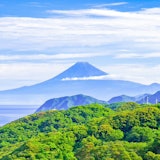
Hello everyone! Matsuzaki Tourism Association here! Matsuzakicho, Kamo District, Shizuoka Prefecture, lies in the southern part of the Izu Peninsula, facing Nishi-Izu Town, Kawazu Town, Shimodacho, and Minami-Izu Town. Sixty-four percent of the town is forested, and with about 6,000 residents it has the smallest population in Shizuoka Prefecture. Away from the hustle and bustle of the city, Matsuzaki in Shizuoka Prefecture offers a peaceful, nature-surrounded retreat. We will share recommended information about the town, so please look forward to it. === Top sightseeing spots in Matsuzaki, Shizuoka Prefecture === Matsuzaki offers many popular attractions we hope you will visit! Experience the traditional Japanese agricultural landscape at the beautiful stone-walled terraced fields of Ishibu Rice Terraces; see works by Irie Chohachi, famed for his late-Edo period plaster paintings, at the Chohachi Art Museum; stroll along Namako Wall Street, where buildings preserve the technique of laying square roof tiles and raising the seams with plaster in a rounded pattern; relax at Matsuzaki Onsen with its day-use baths, guesthouses, and hotels; and visit Inashimo Shrine, whose ginkgo tree on the grounds is about 1,000 years old and designated a prefectural natural monument. Matsuzaki is full of recommended sightseeing spots. The Izu Peninsula, including Matsuzaki, is designated a Japan Geopark because its landforms and geology vividly reflect earth activity such as submarine volcanoes. In Matsuzaki you can feel the power of nature at geospots like Senganmon, Muroiwa Cave, Mt. Eboshi, Ishibu Rice Terraces, and Bentenjima. === Recommended gourmet foods in Matsuzaki, Shizuoka Prefecture === When you visit Matsuzaki, don’t miss the local flavors you can only taste here. Sakuraba-zuke (cherry leaf pickles), a traditional flavor, accounts for about 70 percent of national production and is made in Matsuzaki. Enjoy kawano-ri (river seaweed) with its distinctive taste, grown in the clear waters near the mouth where the Nakagawa and Iwashina River meet; fresh sweetfish caught in the same rivers; Eikyuu Ponkan, a sweet, juicy citrus produced only in Matsuzaki; and Dioscorea japonica (wild yam) grown from the bounty of Matsuzaki’s nature. These delicacies will please food lovers. They also make great souvenirs. === Recommended events in Matsuzaki, Shizuoka Prefecture === Events and festivals held throughout the year are another charm of Matsuzaki. In the agricultural off-season (typically from mid-February to May 5), seven varieties of flowers burst into bloom across rice paddies in the Flower fields in rice paddies; about 1,200 cherry trees line the Nakagawa River and are illuminated during the bloom season along the Cherry trees along the Naka River; and the Osawa Sakura Festival showcases a magnificent cherry tree more than 80 years old in full bloom. These events captivate visitors. On February 23, 2012—Mount Fuji Day—Matsuzaki declared itself "the town where Mount Fuji looks the most beautiful in the world." The grand panorama of Mount Fuji across Suruga Bay is a spectacular sight you must see in person. With seasonal natural beauty, a geopark that reveals the earth’s grandeur, deeply flavored local cuisine, and warm-hearted events, we will continue sharing information to make you fall in love with Matsuzaki, Shizuoka Prefecture. We hope you’ll become captivated by our town!