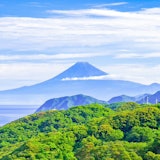

![[Image1]A Short Journey to Bentenjima: Submarine Volcanoes and Coastal Vegetation In the western and souther](https://img.cooljapan-videos.com/files/member_posts/image/3a698677f5b86ad54b94dfd21eec95bc326634bd.jpg)
A Short Journey to Bentenjima: Submarine Volcanoes and Coastal Vegetation
In the western and southern parts of the Izu Peninsula, deposits from ancient submarine volcanoes are widely distributed. After a long age of submarine volcanism, the whole of Izu experienced uplift and erosion, exposing volcanic internal structures that would otherwise have remained buried underground.
A short walk toward the sea brings you to a small hill called Bentenjima. Originally an island known in antiquity as Kyodai-jima, it became connected to the mainland in 1957 after river mouth engineering works.
Walking the roughly 200-meter promenade that circles the islet, you notice the rocky shore is made up of many angular rock fragments. When lava from an underwater eruption flows along the seabed, it cools abruptly in contact with water and shatters into pieces. It resembles what happens when a glass filled with a hot drink is plunged into cold water and cracks. The material formed by this process is called quenched fragmented lava, and it serves as evidence that lava once flowed underwater.
A stand of ubamegashi oak naturally growing on the rocks is another highlight of Bentenjima.
This text has been automatically translated.
Show original text
Show original text