-
Article
-
Travel
-
Region
-
Season
-
Tag
Articles
-
 Video article 2:25
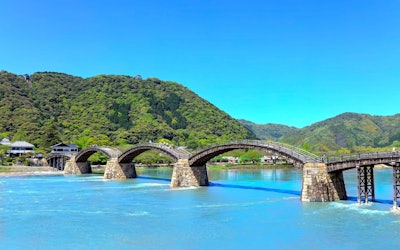
Kintaikyo Bridge in Iwakuni, Yamaguchi. The Mystical Scenery of the 350-Year-Old Bridge Floating Under the Summer Night-Sky, Lit up by Iwakuni Cormorant Fishing, Is a Must-See!
Local PR Art & Architecture Travel- 406 plays
- YouTube
Kintaikyo Bridge & Iwakuni Cormorant Fishing Introductory Video This video is created by "Explore HIROSHIMA: Hiroshima City Regional Area Official Tourism Website" to introduce Yamaguchi prefecture's Kintaikyo Bridge and Iwakuni cormorant fishing. Kintaikyo (Kintai) Bridge, located in Iwakuni, Yamaguchi prefecture in Japan's Chugoku region, is known as one of Japan's "Three famous bridges," and is also one of Japan's "Three strangest bridges." This video will show the beauty of the historic, Japanese bridge "Kintaikyo." Iwakuni cormorant fishing is also introduced towards the end of the video (2:00). Sit back, relax, and enjoy the stunning Kintaikyo bridge. About Kintaikyo Bridge Photo:Kintaikyo Bridge Kintaikyo Bridge is a wooden bridge over the Nishiki Seiryu river located in Iwakuni, Yamaguchi prefecture in the Chugoku region of Japan. The bridge was first built in 1673 by Iwakuni domain's, Kikkawa Hiroyoshi. The bridge is known as one of Japan's "Three famous bridges" followed by Nihonbashi (Chuoku, Tokyo) and Meganebashi (Nagasaki City, Nagasaki). Also, the bridge is known as one of Japan's "Three strange bridges" due to its peculiar structure, followed by Saruhashi (Katsuragawa, Yamanashi) and Aimotobashi (Kurobegawa, Toyama). Kintaikyo Bridge had other names such as "Ryouunbashi," "Goryubashi," "Taiunbashi," "Sorobanbashi." It is now referred to as the "miraculous bridge". The bridge is 193.3 meters long, 5 meters wide, and has a five-layered arch form that stretches across 4 stone piers. The main structure was built without using a single nail, using braided wood joinery techniques such as joints and fittings, and is a very rare piece of architecture. This Japanese craftsmanship can be seen in the video at 0:23. The Kintaikyo Bridge was washed away by floods many times in the past. To solve this issue, the bridge was built in an arch form based on the "Seiko Yuranshi," a Chinese drawing depicting a flock of birds and a bridge. The bridge is made using several kinds of Japanese woods based on their different traits. There is red pine, cypress, zelkova, chestnut, oak and hiba. Although reconstruction has been done numerous times, the stone pier and pavement are still the one's from the original construction. The area around Kintaikyo Bridge is famous for its cherry blossoms, which have been selected as one of the top 100 cherry blossom sites in Japan, and you can also enjoy the autumn colors here. Many tourists visit to see the contrast of the historical bridge and the surrounding natural scenery. Foreign tourists often visit in the cherry blossom season to enjoy Hanami (flower viewing). The entry fee for the bridge is 310 Yen for adults and 150 Yen for children (*2019 Dec.). It's approximately 15-20 mins by bus from JR Iwakuni Station. The Iwakuni Kintaikyo Bridge airport is also nearby, and it has 5 round trip flights/day to Haneda Airport. Iwakuni Cormorant Fishing Photo:Cormorant fishing As shown in the video (~2:00), cormorant fishing is a method used to catch sweetfish. You can watch the cormorant fishing under the summer night sky on a sightseeing boat or from the Kintaikyo bridge. The illuminated bridge, the bonfire on the cormorant boats, and the cormorant fishermen's sophisticated work creates a magical scene. There are package plans that go with lunch and dinner too, so be sure to check them out. Cormorant fishing has a long history. It is listed in two of Japan's oldest historical documents, the "Nihon Shoki," and "Kojiki." This fishing method is still used in places like Nagaragawa (Gifu), Ujigawa (Kyoto), and Kisogawa (Aichi) near Nagoya. Tourist spots near Kintaikyo Bridge Photo:Iwakuni Castle There are several spots you must visit when going to Kintaikyo Bridge in Iwakuni, Yamaguchi. First, cross Kintaikyo Bridge and you'll reach the Iwakuni Castle Ropeway (1:07) in about 10 mins. From there hop on the ropeway to see a beautiful view of Iwakuni and Iwakuni Castle, known as one of Japan's "Top 100 Castles" (1:11). Iwakuni Castle was built by Hiroie Kikkawa, the first lord of the Iwakuni domain in Suo Province. In 1615, only seven years after the castle was built, it was demolished in 1615 in accordance with the Edo shogunate's "One Domain, One Castle" decree, but in 1962, the current castle tower was rebuilt. The whole view of Iwakuni, including Kintaikyo Bridge can be seen from the castle tower. As you can see in the video (1:44), the view is absolutely amazing and makes for a great Instagram location. The embankment has been remade as Kikko Park. Iwakuni also has the Iwakuni White Snake Museum, which was built to raise and protect the lucky white snake that lives only in Iwakuni and is designated as a protected species by the Japanese government. Next to the museum, there's Iwakuni White Snake Temple, a famous temple to receive economic fortune. It was established in 2012 and is also a famous tourist spot. In Iwakuni's biggest event, Iwakuni Festival, a huge paper decorated with white snake is paraded through the city to give people economic fortune. The Nishiki River Fireworks Festival, which shoots off about 6,000 fireworks against the backdrop of the Kintaikyo Bridge, is another popular event where you can enjoy food stalls and Iwakuni drums. Don't forget about food and Onsen to relax on your trip. "Sasakiya Kojiro Shouten" and "Takenosato Musashi" featured on TV and other media is located nearby. At these shops, named after the great swordsmen, Musashi Miyamoto and Kojiro Sasaki, we definitely recommend you taste the ice cream. Near the Kintaikyo Bridge, tourists can enjoy great food, including Japanese cuisine, traditional Japanese candy, udon, tea stores to have lunch at, and other places to eat around. Summary What'd you think of this article introducing Iwakuni's Kintaikyo Bridge and cormorant fishing? After watching the video we hope we've sparked your interest in Yamaguchi. There are more videos to see the amazing scenery of the bridge and cormorant fishing; Be sure to check them out while you get ready for your trip to Iwakuni! ◆Kintaikyo Bridge Facilities◆ 【Address】 Iwakuni, Iwakuni-shi, Yamaguchi Prefecture 741-0062 Japan 【Access】 15 mins walk from Kawanishi Station (Gantoku Line) 【Price】Adults: 310 Yen / Children: 150 Yen (Dec. 2019) 【Hours】All-day 【Closures】None 【Parking】Kintaikyo Shimogawara Parking Area / Yokoyama Kasenjiki Ground Parking Area 【Telephone】0827-29-5107 【Official Website】Yamaguchi Prefecture, Iwakuni City Hall Website https://translate.google.co.jp/translate?sl=ja&tl=en&js=y&prev=_t&hl=ja&ie=UTF-8&u=https%3A%2F%2Fwww.city.iwakuni.lg.jp%2F&edit-text= 【Official Website】Iwakuni City Tourism Promotion Section Website "Iwakuni tabi-no-kakehashi" http://honyaku.j-server.com/LUCIWAKUNI/ns/tl.cgi/http%3a//kankou.iwakuni-city.net/?SLANG=ja&TLANG=en&XMODE=0&XCHARSET=utf-8&XJSID=0 -
 Video article 3:37
Kuwana City in Mie Prefecture - Great for Traveling Alone! Clams, Sukiyaki, Strawberries, and More... This Video Will Have Your Mouth Watering in No Time!
Local PR Food & Drink Travel- 202 plays
- YouTube
About Kuwana City, Mie Prefecture This video is a sightseeing video titled "Kuwana City Sightseeing Video Japanese ver." (桑名市観光動画 日本語ver), that introduces the charm of Kuwana City, Mie Prefecture in Japan's Tokai region. It was produced by the Kuwana City Public Relations Department. Kuwana City is an attractive area dotted with a ton of hole-in-the-wall locations. Check out our recommendations for sightseeing, including historical landmarks and leisure facilities. This video introduces the culture, traditions, and cuisine of Kuwana City in Mie Prefecture from the perspective of a solo traveler. The introduction to the local cuisine of Kuwana City looks especially delicious, and there are many excellent dishes you'll want to try at least once. Things to Do Near Kuwana City, Mie Prefecture Photo:Shichiri no Watashi In Kuwana City, there are many beautiful sightseeing locations, such as Tado Taisha Shrine (多度大社, Tado Taisha), Kasuga Shrine (春日神社, Kasuga Jinja), the statue of Honda Tadakatsu who was a vassal of Tokugawa Ieyasu and his tomb, Rokkaen, as well as the former Moroto Seiroku Residence, and Moroto Garden. The Shichiri no Watashi (Miya-no-Watashi Park) is the former site of Shichiri Marine in Kuwanajuku from Miyajuku (now Nagoya). Tado Taisha Shrine is introduced at 0:37 in the video. This Tado Taisha Shrine is a legendary place where God is said to have descended on a white horse. You can even see a pure white horse in the video. Leisure Facilities and Sightseeing Events in Kuwana City Photo:Illuminations of Nabana no Sato Kuwana City has many entertainment facilities where you can enjoy a special time. Among them, Nagashima Spa Land is popular as one of the largest amusement facilities in Japan. Nagashima Spa Land is introduced at 2:55 in the video, and the roller coasters are a ton of fun! Nearby, Nabana no Sato is an attractive place where you can enjoy beautiful flowers and illuminations. You can also enjoy shopping at Mitsui Outlet Park Jazz Dream Nagashima. Kuwana City also hosts the Kuwana Suigo Fireworks Festival at the end of July every year, which gets packed with tourists. We also recommend the morning market "Sanpachi," held on Teramachi Dori Shopping Street. Delicious Food in Kuwana City Photo:Yasunaga-mochi Kuwana City is also famous for its tasty gourmet cuisine. Above all, the Yasunaga-mochi, sold at the long-established store Nagamo-ya, which has its headquarters located in the city, is a historical confectionary that was loved by travelers visiting Ise long ago. This is shown at 0:59 in the video. You can also eat delicious clams in Kuwana city thanks to it being located near the sea. For souvenirs, we recommend buying boiled clams called "hamaguri no shigure-ni." Kuwana City is also famous for shabu-shabu and sukiyaki shops, as well as spots where you can enjoy strawberry picking. Taste the exquisite local cuisine in Kuwana City. Summary of Kuwana City, Mie Prefecture The culture, natural landscape, history, and gourmet food of Kuwana City introduced in this article are shown in even more detail in the video. In addition, there are still many attractive sightseeing spots in Kuwana City that we can't cover here. Enjoy the charms of Kuwana City through the lovely introductory video! Which sightseeing spots in Kuwana City are you interested in? 【Tripadvisor】Kuwana City https://www.tripadvisor.com/Tourism-g651657-Kuwana_Mie_Prefecture_Tokai_Chubu-Vacations.html -
Video article 3:00
The “Obama Montsuki Festival” in Nihonmatsu City, Fukushima Prefecture: A Festival of Bravery, Where You Can Feel the Power of the Local Residents! Check Out the Attraction of This Traditional Japanese Festival, Along With Its History, and Highlights!
Festivals & Events Local PR Travel- 256 plays
- YouTube
The Obama Montsuki Festival in Nihonmatsu City, Fukushima Prefecture This is a video titled “【Official】Obama Montsuki Festival 2018" (【公式】小浜の紋付祭り2018), that introduces the Obama Montsuki Festival, a traditional Japanese festival in Fukushima Prefecture, created by Matsurism. The Obama Montsuki Festival is a traditional Japanese festival passed down in Nihonmatsu City, Fukushima Prefecture in the Tohoku region. In this article we'll introduce the charm, schedule, and highlights of the traditional Japanese event that has been passed down for generations in Fukushima prefecture. Be sure to follow along with the video, as it has a lot of interesting scenes that you won't be able to see in the article! The History of the Obama Montsuki Festival in Nihonmatsu City, Fukushima Prefecture Source :YouTube screenshot The Obama Montsuki Festival is a traditional Japanese festival held in Nihonmatsu City, Fukushima Prefecture, during the consecutive holidays in October, and is an annual festival of the Shiomatsu Shrine tradition in the Obama district of former Iwashiro town (岩代町, Iwashiro-Cho). It is said that the festival started with a parade of decorated Mikoshi (portable shrines) praying for recovery from the local famine that occurred in the Edo Period (1603 to 1868 AD). The name "Obama Montsuki Festival" comes from the men wearing montsuki hakama (a formal Japanese attire of men with their family crest). The Obama Montsuki Festival, a unique festival with 230 years of history, where festival participants dress in Montsuki Hakama, is definitely a festival that we recommend to tourists looking to see traditional Japanese festivals. The Schedule for the Obama Montsuki Festival in Nihonmatsu City, Fukushima Prefecture! Source :YouTube screenshot At the Obama Montsuki Festival, traditional floats, called “Taikodai,” are prepared from 4 towns. The Ujiko of each town play the Japanese flute and drums while wearing the formal Montsuki Hakama, and walking around the town with traditional floats. The parade of the floats is introduced at 0:26 in the video, and you can hear the sound of beautiful music resonating throughout the city. The Obama Montsuki Festival is held every year on the first day of the consecutive holidays in October. It starts with the evening festival “Yoi-matsuri,” followed by the main festival the next day, and the “Ato-matsuri” on the last day. The main festival is regarded as the most important event at the Shiomatsu Shrine annual festival. At the evening festival “Yoi-matsuri,” there's the Taikodai, and the main festival has a Mikoshi parade, Montsuki Festival, and lantern festival. On the last day of the “Ato-matsuri,” there are lively events such as the water festival, and there's also a chorus. How to Enjoy the Obama Montsuki Festival in Nihonmatsu City, Fukushima Prefecture The Obama Montsuki Festival is held on a three-day holiday schedule including the October Sports Day. Prior to this schedule, a traditional festival called the "Nihonmatsu Lantern Festival," is held in early October. The Lantern Festival is a lively festival where seven Taikodai, decorated with lanterns, parade through the city. Summary of Obama Montsuki Festival in Nihonmatsu City, Fukushima Prefecture Source :YouTube screenshot During the Obama Montsuki Festival, there are food stands along the roadside, so you can enjoy delicious Japanese festival food and the local Fukushima cuisine. Be sure to take some pictures of your visit to the festival. They'll look great on Instagram! In the video, the local people talk about how the Obama Montsuki Festival is a festival made possible by the local residents working together, and about how lively it is. In Japanese festivals, it's common for people to wear Yukata or Happi coats, but at the Obama Montsuki Festival in Nihonmatsu City, Fukushima, men participate while wearing Montsuki Hakama. Be sure to watch the video to see the sights of this rare festival! 【Official Website】Nihonmatsu City Hall Official Website https://www.city.nihonmatsu.lg.jp/page/page002466.html 【Nihonmatsu tourism association 】Obama Montsuki Festival http://www.nihonmatsu-kanko.jp/?page_id=2441 -
Video article 6:27
Nagoya Castle - Discover the Secrets of Japan's First National Treasure Symbolized by Golden Shachihoko Ornaments in Nagoya City, Aichi Prefecture! The Castle, Built on the Site Where the Warring States Period Took a Remarkable Turn, Is Reborn!
Art & Architecture History Travel- 294 plays
- YouTube
Video introduction of Nagoya Castle, a sightseeing spot in Nagoya City, Aichi Prefecture This video, titled "Nagoya Castle Main Tower Keep Promotional Video," was released by "2010Network." Nagoya Castle is a huge castle built in Aichi District (愛知郡), Owari (尾張国), formerly known as "Owari no Kuni," during the Warring States Period (1467-1615 AD). There are many castles in Japan, but the magnificent Nagoya Castle is by far one of the most popular among tourists. Nagoya Castle is a famous landmark housing many national treasures, including the superb castle tower. In 2018, the number of visitors to the castle exceeded 2.2 million. The History of Nagoya Castle Since the Warring States Period Photo:Nagoya Castle, Aichi Prefecture Nagoya Castle was built by Tokugawa Ieyasu, who emerged victorious from the decisive Battle of Sekigahara, and was built in nearby the ruins of Nagoya Castle (那古野城, Nagoya-Jo), said to be the birthplace of Oda Nobunaga. Tension was increasing with the forces of Toyotomi Hideyoshi during this period, and Ieyasu built Nagoya Castle as a key military location. Nagoya Castle served as the residence of the lords of the Owari domain for generations during the Edo period (1603-1868 A.D.) after Yoshinao Tokugawa, the founder of the Owari Tokugawa family. It became the Nagoya Detached Imperial Palace for the use of the imperial family after the Meiji period (1868-1912 A.D.). In the Showa period (1926-1989 A.D.), it was designated as Japan's first National Treasure as a castle building. Since then, it has continued to be open to the public as a highly popular tourist attraction. The Must-See Features of Nagoya Castle Photo:Nagoya Castle, Aichi Prefecture Nagoya Castle is also known as "Kinshachi Castle" (金 "kin" meaning gold) after the golden Shachihoko that decorate the castle tower, which has become a symbol of Nagoya. Besides the main tower keep, the magnificent honmaru (inner citadel) and Shoin Hall are must-see features. The outstanding Stone Walls of Nagoya Castle were built via stonewall construction in various areas, including the Mikawa Bay (三河湾, Mikawa-Wan) area. Kiyomasa Kato played an active role in the construction of the stone walls, and the huge stone said to be the largest stonewall in Nagoya Castle is called "Kiyomasa Stone." Enshu Kobori and Masakiyo Nakai were in charge of the construction of the castle tower. This is detailed at 1:10 in the video. When you visit the Sarumenbogaku Tea House, Yuin Tea House, and shops, you may also want to visit the Oribe-Do, which was built to honor Oribe Furuta. Nagoya Castle's Castle Tower Under Reconstruction! Photo:Nagoya Castle, Aichi Prefecture Since May 2018, the demolition and renovation of Nagoya Castle's castle tower has been carried out as the "War Damaged Wood Restoration Project" (戦災木造復元プロジェクト). The restoration of the wooden castle tower is scheduled to last until December 2022. Everyone is looking forward to seeing the restored castle tower once the restoration is finished. Summary of the Historical Nagoya Castle Photo:Nagoya Castle, Aichi Prefecture As shown in the video, Nagoya Castle is a building of great historical value built during Japan's Warring States Period. The castle is large, but you can enjoy exploring it as there are elevators available and many historical materials are on display. ◆Nagoya Castle Facility Information◆ 【Address】1-1 Honmaru, Naka Ward, Nagoya City, Aichi 460-0031 【Access】Train: 5-minute walk from the "Shiyakusho (City Hall)" Station of the Meijo Line. Bus: 1-minute walk from the "Nagoyajo Seimon-Mae" stop 【Admission fee】500 Yen for adults, Free for junior high school students and younger 【Parking】Payed Parking Lot available 【Official Website】Nagoya Castle Official Website https://www.nagoyajo.city.nagoya.jp/en/ 【Tripadvisor】Nagoya Castle https://www.tripadvisor.com/Attraction_Review-g14127381-d320128-Reviews-Nagoya_Castle-Naka_Nagoya_Aichi_Prefecture_Tokai_Chubu.html -
Video article 2:52
Experience the great outdoors in Kiso-cho, Kiso-gun, Nagano Prefecture! Refresh your mind and body with canoeing and mountain yoga in the forests of Shinshu, a green-filled region in Nagano Prefecture!
Local PR Things to Do Travel- 78 plays
- YouTube
Video introduction of activities in Kiso Town, Kiso County, Nagano Prefecture If you're interested in enjoying fun activities in Nagano prefecture, we highly recommend you check out this video! This video, titled "Tons of Fun in Nagano Prefecture! Kiso Edition" (信州でアクティビティを楽しもう!~木曽 編~), created by "Shinshu Furusato Wari Channel" (信州ふるさと割チャンネル), introduces various activities in the Kiso area. Kiso in Nagano prefecture is gaining popularity as a spot to enjoy various outdoor activities, such as canoeing at the beautiful, yet not-well known, Ontake lake (御岳湖), or taking part in a yoga classes at Mt. Ontake (御嶽山). There's plenty of fun activities for you to try in Kiso, all packed into this short 3 minute long video! Make sure you get the most out of your trip to Nagano prefecture by trying out some of the activities featured in this video! Activities to Try Out at Mt. Ontake Source :YouTube screenshot Kiso is a beautiful town in Nagano prefecture, surrounded by nature and situated at the foot of Mt. Ontake. Mt. Ontake is popular among mountain climbers, and thanks to the Ontake Ropeway (御岳ロープウェイ) beginners can also enjoy the scenery from the top of the mountain. It's the perfect spot to take photos. Don't forget to share them on your Instagram! You can take a look at the scenery from 1:51 in the video. There are several mountain retreats situated halfway up the mountain for those who wish to stay overnight. There are many fun tours and activities to take part in as well, including lunch and yoga on the mountain. For those who wish to be one with nature, we highly recommend taking part in one of the outdoor yoga classes. At 2:21 in the video, you can see students practicing yoga on top of Mt. Ontake under the beautiful blue sky. It provides a great opportunity to refresh both your body and mind. Lake Activities in Kiso, Nagano Source :YouTube screenshot At the foot of Mt. Ontake lies Ontake lake and Lake Shizenko (自然湖). In the village of Otaki (王滝), you can take part in the "Ontake Adventure Shizenko Nature Canoe Tour" (おんたけアドベンチャー自然湖ネイチャーカヌーツアー), and at Ontake lake you can try out "Ontake Lake Canoe Touring" (おんたけ湖カヌーツーリング). Even if you're a complete beginner, you can still take part in the canoe tours as there will be instructors to guide you along the way. Canoeing amidst the beautiful scenery of Nagano prefecture is an experience that you can't afford to miss! You can take a look at the canoe tours from 0:13 in the video. As you can tell from the video, the view of Kiso from the canoe is really something special! There are many tours and activities to enjoy in the beautiful town of Kiso! Summary of Kiso, Nagano The town of Kiso suffered a lot of damage due to the eruption of Mt. Ontake in 2014. However the town is recovering and the number of tourists is increasing every year. There are now many facilities where you can enjoy activities such as those featured in this video. If you haven't yet, be sure to check out the video and take a look at the beautiful scenery Kiso has to offer. After watching the video, you're sure to want to take a trip to Kiso and experience it all for yourself! -
Video article 3:00
Hotel Shoho - A Luxury Hotel Inside a Hot Spring Resort in Matsumoto, Nagano. See the Amazing Facilities and Delicious Cuisine Offered at One of Japan's Top 100 Hotels!
Hotel & Japanese Inn Food & Drink Travel- 241 plays
- YouTube
Shinshu Matsumoto Utsukushi-ga-hara Onsen "Hotel Shoho" in Matsumoto City, Nagano Prefecture Video Introduction Hotel Shoho, introduced in this video, is a famous hot spring hotel in Shinshu (信州, Shinshu) Matsumoto (松本,Matsumoto) in Nagano Prefecture (長野県, Nagano-Ken) Here, you can enjoy Japanese cuisine with excellent ingredients, and spectacular views of the Northern Alps from the open-air baths using natural hot spring water. Hotel Shoho has received high reviews on review and comparison websites. The hotel has also been selected as one of the "Top 100 Hotels and Ryokans" in Japan, as selected by professionals, so we mean it when we say that this hotel is worth the visit. In this article, we will introduce you to the interior facilities of the Japanese modernist (hotel-style ryokan) onsen inn, filled with the rich nature of Shinshu, healing, relaxation, and hospitality. Sit back and enjoy a taste of this luxury hotel style onsen ryokan (Japanese style hot spring inn)! Enjoy Some of the Finest Gourmet Food in Japan at Hotel Shoho Source :YouTube screenshot First, we’ll introduce three restaurants in Hotel Shoho, all of which offer dishes using local ingredients from Shinshu. At ‘Shunsai Dining Shinshu,’ they offer freshly prepared dishes, such as Shinshu beef in an open kitchen, and the guests enjoy the meal in a private room. The second restaurant is the Japanese restaurant ‘Shokusai Kamikochi,’ which boasts a private space that offers freshly cooked Shinshu brand ingredients. We recommend this restaurant for small groups. The third one is the dinner / Izakaya style restaurant ‘Kihachi.’ Here, you can enjoy more than 40 kinds of local Sake. The Japanese cuisine, cooked by the first-class Itamae chef utilizing the bounty of the mountain, served side-by-side with local Shinshu Sake, are beautifully arranged. Be sure to take some pictures for your instagram! The Hotel Spectacular Views of Shoho's Prized Guest Rooms and Splendid Open-Air Baths Source :YouTube screenshot Hotel Shoho has both Japanese-style rooms and western-style rooms, and each room is equipped with an onsen bath. In the VIP room on the top floor, you can enjoy a large panoramic view in the open-air bath. The pride of Hotel Shoho is the open-air bath overlooking the Northern Alps and Matsumoto Castle. You can enjoy the scenic beauty of Matsumoto while soaking in a relaxing hot spring. The open-air bath is open from 3 PM to 11 PM for women and from 6 AM to 11 AM for men. You can also walk around the hotel wearing a Yukata. Sightseeing Around Shinshu Matsumoto ©Suganu0405 Modifying The area around Shinshu Matsumoto is a land surrounded by the Northern Alps, with scenic spots such as Azumino, Kamikochi and the national treasure Matsumoto Castle. Kamikochi is one of Japan's leading mountain resorts, and is a popular tourist sight, with 2 million people visiting the location every year to enjoy mountain climbing and hiking. The water of the rivers and ponds is crystal clear and are famous for their shiny emerald color. If you want to enjoy the great outdoors of Shinshu on your sightseeing tour around Hotel Shoho, you've got to check out Utsukushigahara plateau! Utsukushigahara Onsen has footbath and a one-day bath as well, making it a popular spot where guests at Hotel Shoho can spend their time relaxing. Shinshu is known for its harsh climate, but is blessed with colorful natural scenery, such as cherry blossoms in spring, greenery in summer, autumn leaves in the fall, and beautiful snowscapes in winter, allowing guests to enjoy a variety of beautiful scenery no matter when they visit. Summary of Hotel Shoho The Hotel Shoho official website is updated with day trip plans and other various events. Amenities for children are also provided, making it a great place for family trips as well. Rates vary by plan, season, and day of the week. Due to the popularity of this inn, we recommend booking as soon as possible. The video also gives a look at the atmosphere of Hotel Shoho's rooms, restaurants, and hot springs. We hope this article has inspired you to visit Hotel Shoho; It's definitely worth the visit! There's a free shuttle bus available by the police station near JR Matsumoto Station that will take you to Hotel Shohoho. Remember, when booking your trip, the sooner the better! ◆Hotel Shoho Facility Overview◆ 【Address】527 Yamabe, Matsumoto City, Nagano Prefecture 〒390-0221 【Access】20 minutes by taxi from Matsumoto Station on the JR Chuo Line 【Parking】Available 【Tel】+81 263-38-7711 【Official Website 】Hotel Shoho http://www.hotel-shoho.jp/en/ -
Video article 3:06
Video showing how to enjoy “Hoshino Resort Tomamu” in Yufutsu-gun, Hokkaido, Japan! Activities in the vast grounds can be enjoyed by both children and adults!
Hotel & Japanese Inn Things to Do Travel- 189 plays
- YouTube
Hoshino Resort Tomamu, Yufutsu-gun, Hokkaido, Japan Activity Video Introduction This video, titled "Hoshino Resorts Tomamu Activities," was created by "LHK VISIONWORKS JAPAN." It introduces the appeal of Hoshino Resorts Tomamu in the Hokkaido area. Hoshino Resorts Tomamu is located about 90 minutes from Shin Chitose Airport, in Shimukappu Village. It's gaining popularity as a resort facility where you can spend a relaxing time in luxury. Let's take a look at how you can enjoy the snowy landscape of Hokkaido's Hoshino Resorts Tomamu. In the video, we'll introduce activities that can be enjoyed in the snow and activities at the facilities of Hoshino Resorts Tomamu! After watching the video we have no doubt you'll be putting this on your itinerary for your next visit to Japan! Enjoy the Snowy Hoshino Resorts Tomamu Source:YouTube screenshot Hokkaido, one of the snowiest areas in Japan, is a great place to enjoy winter activities. Hoshino Resorts Tomamu offers cross-country skiing, snowmobile riding, kids' snowmobiles, snow inter-tubing, snow striding, dog sledding, banana boating, ice fishing, day snow camping / night snow camping with tents in the snow, snowshoe downhilling, and more. There's endless fun to be had at Hoshino Resorts Tomamu! There are also limited time events and tours, such as the snowmobile tour, snow buggy tour, a horse riding experience, smelt fishing experience, cross-country skiing experience, and more! There's a ton of activities that can only be enjoyed here! Even small children can enjoy the snowy landscape of Hokkaido through activities such as the snowy field sleigh park and building snowmen. There is also a ski school, so even beginners can try their hand at winter sports. You don't need to worry about bringing your own skis either, as there are plenty of rentals available. These activities can be seen from the start of the video until 1:24. The scenes of both children and adults alike enjoying the beautiful winter wonderland in Hokkaido is truly heartwarming. Hokkaido's Ice Hotel At Hoshino Resorts RISONARE Tomamu, an integrated resort of Hoshino Resorts Tomamu in winter, the Ice Village is available for a limited time. The ice hotel is where the ceilings, floors, and furniture are all made of ice! There is also an open-air ice bath, an ice chapel, and an ice bar counter, so there's plenty of ways for you to enjoy your time. You can see this at 2:30 in the video. Take a moment to admire the fantastic atmosphere. The Gondolas at Hoshino Resort Tomamu! ©Akiko_Kubosawa Modifying You can enjoy the natural snowscape of the magnificent Hidaka Mountains from the terrace that can be accessed by gondola. There's a limited time illumination event as well, so be sure to check it out if you get the chance. You might not feel like getting up early on your vacation, but we recommend waking up early during the summer and riding a gondola to the Sea of Clouds (Unkai Terrace), a terrace located above the clouds. If the weather permits it, you'll get a superb view of the clouds, spanning as far as the eye can see. From the gondola, you can sometimes see a herd of Hokkaido sika deer as well. It's quite a unique experience that you won't find anywhere else in Japan. Enjoying Your Stay at Hoshino Resorts Tomamu Source:YouTube screenshot Hoshino Resorts Tomamu's largest heated indoor swimming pool, Minamina Beach, is one of Japan's most popular spots where you can enjoy summer fun in the middle of winter. You can also enjoy the playground with equipment such as the "Cyber Wheel," as well as paddle boarding and various water activities. The indoor facilities are introduced starting at 1:25. It's a truly luxurious facility where you can enjoy a tropical atmosphere after playing in the snow. Hoshino Resorts Tomamu has a variety of gourmet options, including buffet dining and authentic Italian restaurants, so you won't have to worry about eating out during your stay. We also recommend enjoying the view from "Tomamu the Tower." Summary of Hoshino Resorts Tomamu With a land area the size of approximately 213 Tokyo Domes (~2,500 acres), Hoshino Resorts Tomamu offers many unique experiences. The video also shows many visitors playing at the Hoshino Resort Tomamu, all smiling and enjoying themselves. If you're looking to have the trip of your life in Hokkaido, look no further than Hoshino Resorts Tomamu! ◆Hoshino Resort Tomamu◆ 【Address】〒079-2204 Naka-Tomamu, Shimukappu Village, Yufutsu, Hokkaido 【Access】There is a shuttle bus from Sekishou Line Tomamu Station to each facility 【Admission Fee】It varies depending on the facility used. If you want more information, please check official website. 【Gours】 It varies depending on the facility used. If you want more information, please check official website. 【Closures】Closures vary by facility. Please check the official website for more details. 【Parking】Available 【Phone number】0167-58-111 【Official website】Hoshino Resort Tomam https://www.snowtomamu.jp/summer/en/ -
Video article 6:22
Koyado Enn, Kinosaki Onsen: With Its Amazing Service and Hospitality There's a Reason This Ryokan Is So Popular. Be Sure to Try the Delectable "Tanba-gyu" and Relax at Its Soothing Springs.
Hotel & Japanese Inn Food & Drink Travel- 196 plays
- YouTube
A PR Video for Koyado Enn, Where You Can Enjoy the Kinosaki Hot Springs This video, titled "城崎温泉 但馬牛の宿 小宿 縁 Koyado Enn," produced by "First Tone Inc.," features the attractive points of "Koyado Enn" in Kinosaki Onsen in Hyogo. Koyado Enn is one of the most popular accommodations on travel comparison sites. This video clip includes various information of Kinosaki onsen such as food, hot springs, atmosphere of the town, and the hospitality of the Koyadoen staff, as well as interviews with guests who have stayed at Koyado Enn. If you see this video, you would probably think that you want stay there. Enjoy the sights of Kinosaki Onsen's "Koyado Enn." What Kind of Ryokan Is Koyado Enn? Source :YouTube screenshot It takes 3 minutes to reach Koyado Enn from Kinosaki Onsen Station by foot. This historical ryokan was renovated and reopened in 2013. A sophisticated atmosphere is created by a modern-style, plastered building. There are three types of guest rooms, including Japanese style, Western style, and Japanese-Western style guest rooms. All rooms provide a relaxing experience. There are various options available as well, such as stays without meals, breakfast packages, and the "Tanba-gyu" Dinner plan. Prices start from ¥7700 (~$72 USD). We recommend making a reservation as soon as possible due to the inn's popularity. There is also a business package that isn't offered at most Ryokan. Every guest room has various amenities. According to Seiji Taoka, one of the staff at Koyado Enn, Hyogo's Kinosaki was traditionally likened to a Ryokan (Japanese style inn). It's said that the station is an entrance, the streets are passages, the inn is the guest rooms and outdoor hot spring is a large public bath. Kinosaki consists of a culture centering on hot springs and is a very famous hot spring town where every visitor can feel the Japanese atmosphere. Kinosaki is also promoted as a "Yukata village" because tourists can walk around wearing them. Food Hunting at Koyado Enn Source :YouTube screenshot Guests at Koyado Enn can enjoy delicious Japanese foods including "Tanba-gyu." Koyado Enn has a restaurant, called "Tanba-gyu Irori Dining Mikuni," which specializes in Tanba-gyu and is famous for its high quality meat. All beef served in this restaurant is raised on the contracted farm. You can hear the real voices of guests who ate the delicious Tanba-gyu at Koyado Enn, in this video (1:57). The staff at Koyado Enn strive to maintain the title of Tanba-gyu as the second best food brand in Kinosaki. Second only to crab. Visitors can relax at the café & bar "3rd" on the first floor (4:07). This café/bar serves breakfast, including omelets and salad, as well as beverages like coffee, tea and wine. Kinosaki Onsen's Koyado Enn: Experience Japan Source :YouTube screenshot The most attractive point of Koyado Enn is the hot springs. There are two chartered baths for family such as "Tsukino-yu" and "Hoshino-yu." Every guest can relax in these baths. The minerals in the spring are are natrium, calcium and chloride. It is said that this spring is very effective against various diseases and symptoms Neuralgia rheumatism, gynecological disease, post-sickness recovery stress relief, motor dysfunction, joint pain, muscle pain, stiff shoulders, digestive trouble, neuralgia, bruises, cold sensitivity, etc. Also, we recommend going to the outdoor hot springs such as "Satono-yu," "Jizo-yu," "Yanagi-yu," "Ichino-yu," "Goshono-yu," "Mandarano-yu," and "Kono yu." Wearing a yukata and walking around a town is sure to be an enjoyable time. These outdoor hot springs are also available as one-day spots. Tourist Spots Around Koyado Enn Photo:Kinosaki onsen There are many sightseeing spots around Koyado Enn in Toyooka city, Hyogo. For example, "Kinosaki Onsen Ropeway," "Hyogo Park of the Oriental White Stork," "Kinosaki Marine World," "Uemura Satomi Boken-kan" are popular facilities. There are natural instagrammable sceneries including "Genbudo Park," "Takeno Coast," "Michi-no-Eki Kannabe Kogen," the "Sea of clouds of Cruhi-dake.” Also there are historical spots such as "Izushi Castle Town," "Town of Kinosaki Onsen," "Izushi Eirakukan." If you visit Koyado Enn, be sure to check out some of these popular spots. Summary of Koyado Enn This video titled "Kinosaki Onsen Koyado Enn" (城崎温泉 但馬牛の宿 小宿 縁 Koyado Enn), produced by "First Tone Inc." features the attractive points of "Koyado En" in Kinosaki onsen, Hyogo. Guests at the inn will experience the finest hospitality and services and can enjoy their time as they please. Enjoy spending a wonderful time at the popular ryokan! ◆Information for Koyado Enn◆ 【Address】219 Yushima Kinosaki-cho Toyooka shi Hyogo 669-6101 【Access】20 minutes from Tanba airport by bus 【Parking】Available 【Telephone】0796-32-4870 【Official Website】Koyado Enn, Kinosaki onsen http://www.koyado.net/english// 【Tripadvisor】Koyado Enn https://www.tripadvisor.com/Hotel_Review-g1022822-d6530942-Reviews-Koyado_En-Toyooka_Hyogo_Prefecture_Kinki.html -
Video article 1:03
Spend an Elegant Time on the Cruise Ship Hotel GUNTU; Used in a Commercial for Georgia. Enjoy a Luxury Trip in an Extraordinary Space in Hiroshima!
Hotel & Japanese Inn Transportation Travel- 440 plays
- YouTube
Video About the Seto Inland Sea Cruise Ship, GUNTU “Seto Inland Sea Cruise ship's GUNTU(瀬戸内海 客船旅館 ガンツウ | Seto Inland Sea Cruise ships GUNTU)” is created by “HIGH RESOLUTION TOUR” and it introduces attractions of the small floating hotel, GUNTU. GUNTU became famous through Georgia’s commercial and reviews. It has high reviews that refer to it as gorgeous and people can spend a wonderful time here. It has great reviews on travel comparison sites as well. In this article, attractions of GUNTU are introduced. By watching this video, you'll want to go sightseeing on GUNTU and enjoy beautiful food and hot springs while looking out at the Seto Inland Sea. What Is GUNTU? Source :YouTube screenshot GUNTU is a small hotel and a cruise ship with 19 hotel rooms, that depart and arrive at Bellavista Marina. It was designed by architect Yasushi Horibe and the wood keeps the inboard facilities warm. You can check it out from 0:21 in the video. GUNTU came from the name of a blue small crab, Guntu. It is not as famous as the Japanese blue crab, but it gives nice broth and the local people love it. The cruise ship was named after this crab, so that local people would love it too. There are one night, two night, and three night cruises. Different kinds of routes exist as well. For example, the west circuit goes around Miyajima which is a World Heritage site, and the east circuit goes around Naoshima and Inujima. There are central circuit and special circuit too. At a port of call, you can enjoy activities and sightseeing outboard. Many people enjoy a special time at GUNTU. But there are cases where routes, times, and activities are changed, due to weather. How to Spend Your Time on GUNTU Source :YouTube screenshot There's a hotel room where you can relax, as well as the "Guntu Suite" located at the bow of the ship, and a beautiful view can be seen from the room. There are other rooms as well, such as the grand suite which has a large window and terrace suite with an outside bath. There are other places where you can relax and enjoy as well. The observation deck where you can see the Seto Inland Sea, the bath and sauna where you can feel the warmth of the ship's architecture, and the balcony where you can be calm and enjoy a nice elevated area, are all places we recommend. Also, there is a spa, gym, bar, lounge, shop and different kinds of massages as well. Amenities are available as well. Food on GUNTU Source :YouTube screenshot GUNTU provides delicious Japanese and western food. All of the food is supervised by Shigeyoshi Sato, who is a chef at “Shigeyoshi.” Cuisine of the Seto Inland Sea is used, and the meals fascinate passengers. As you can see from 0:38 in the video, there is a sushi restaurant and fresh seafood can be enjoyed at the counter. The Japanese sweets are amazing as well, and they are made in front of the passengers. You must try these when you stay on the GUNTU. Summary The “Seto Inland Sea Cruise ships' GUNTU” created by “HIGH RESOLUTION TOUR” is an introductory video of the luxury cruise ship GUNTU. Japan has gorgeous and luxurious cruise ships. Watch the video and feel luxury. It's a bit pricey, but it's definitely a trip you won't forget. ◆GUNTU Information◆ 【Address】depart and arrival: 1344-2 Oobiraki Urasakicho Onomichishi, Hiroshima 720-0551, JAPAN 【Address】40 minute car ride from JR Fukuyama Station, 50 minute car ride from Onomichi Station. 【Parking】available 【Telephone No】0120-873-333 【Official Website】GUNTU https://guntu.jp/ -
Video article 8:38
A reproduction VTR produced by the "Idojiri Archaeological Museum" in Suwa-gun, Nagano Prefecture, gives a full picture of life in the Jomon period!Stone tools, earthenware, and other artifacts excavated from the ruins. The artifacts reveal the life of the Jomon people!
History Life & Business Travel- 1.07K plays
- YouTube
Video introduction of a reproduction of the Jomon people's daily life" produced by the "Idojiri Archaeological Museum" in Suwa-gun, Nagano Prefecture. Many tourists come to Japan to enjoy the beautiful shrines, picturesque scenery, delicious food and other uniquely Japanese characteristics. Even Japanese people love to travel to places like Kyoto and Nara where they can enjoy sightseeing at historical buildings and eating delicious food. However, in this article, we'd like to take a break from the standard approach to enjoying Japan and recommend a few lesser-known spots where you can learn about the life of the Jomon people nearly 3,000 years ago. In this article, we'll introduce the Idojiri Archaeological Museum, where you can learn about the life of the Jomon. Be sure to follow along with the video as you read on! Who Were the Jomon People? What Were Their Lives Like? Source :YouTube screenshot The Jomon people lived all over Japan, from Hokkaido to Okinawa, during the Jomon period approximately 16,000 to 3,000 years ago. In world history, this period corresponds to the Mesolithic and Neolithic ages. The Jomon were a people who devised many different ways to survive. They invented tools and objects that were passed down through the Yayoi period and into the modern day to make life easier. For example, it was in the Jomon period that bows were made, making it possible to hunt from a distance. They also invented stone tools and earthenware, which made it possible to cook and store food. It was also during this period that people began to build pit houses and settle in one place, and villages were established. In this way, the Jomon were able to use their wisdom to improve their lives. The Idojiri Archaeological Museum Source :YouTube screenshot The Idojiri Archeological Museum, which can be viewed from 0:27 in the video, is a facility where you can learn about the life and culture of the Jomon people. There are a number of exhibits on display that tell the story of life in the Jomon period, including pottery and other artifacts from the Jomon period. The earthenware and stone tools are arranged according to the age of the Jomon period, and there are also descriptions on the use of each item. There is also a section where you can see what it would have been like to live in a Jomon period dwelling, as well as a reproduction of their diet and clothing. There is also a place where you can learn about the religion and myths of the time, deciphered from the patterns of the earthenware and stone tools. It's a must-see for history buffs! Many stone hoes have been found at the Idojiri ruins as well. They can be seen at 0:38 in the video. About 4,500 years ago, these stone hoes were utilized by the Jomon people. They were a strong agricultural tribe, and used them to plow their fields. In the spring they sowed millet, and in the summer they sowed buckwheat. You can see a reenactment of their agricultural activities at 1:02 in the video. There are also weeding tools on display at the Idojiri Archaeological Museum. Source :YouTube screenshot In the fall, they used stone knives to harvest their grain (2:10). Threshed grains were transferred to a stone mill to remove the shells. The threshed grains would be hulled in a stone mortar and then cooked into porridge using earthenware, and then the whole family would eat together in the pit dwelling. In addition to porridge, the Jomon also ate river fish, wild vegetables, walnuts, and dumplings. You can check out how the tools they used when cooking were made at 4:59 in the video. Jomon pottery was entirely hand made. First, the clay is kneaded and mixed with sand to make a dough, then the dough is piled to create a pattern without any gaps. Each piece was dried for 2-4 weeks before being baked over an open fire. So how were Jomon period tools made? You can see this process at 6:23 in the video. They used oval shaped stones to hit a smaller, flat stone to break of thin pieces that will be used to make the hoes. The hoe and other stone tools of the time are shaped the same way as modern hoes. Women's necklaces and other items were also excavated from various ruins. You can also see how people would have hunted with bows during the Jomon period. The Idojiri Archaeological Museum is an interesting spot to learn about the roots of Japanese people and the lifestyle of the Jomon people. Summary of the Jomon Civilization Source :YouTube screenshot This video was created by "IDOJIRIKOKUKOKAN." We recommend it to anyone interested in learning about Japanese history! By implementing reenacted clips in the video, it's easy to understand the lifestyle of the Jomon people and how they made and used tools. Famous Jomon period ruins include Sannai Maruyama (Aomori), Kamegaoka (Aomori), Omori Kaizuka, (Tokyo), Kasori Shellmounds (Chiba), and Nabatake (Saga). If you're interested in the Jomon period, be sure to stop by! -
Video article 7:07
What kind of spot is Bon Odori Izakaya in Shinjuku, Tokyo, where you can enjoy Bon Odori all year round? Check out this hands-on entertainment izakaya that you should visit at least once!
Things to Do Food & Drink Travel- 93 plays
- YouTube
Video introduction of "Bon Odori Izakaya" in Shinjuku, Tokyo This video, “Bon Odori Izakaya - 盆踊り居酒屋”, was created by “TokyoStreetView - Japan The Beautiful”. This is a 4K video introducing a restaurant where you can experience Japan’s traditional dance. Bon odori is a well-loved traditional dance which has existed in Japan for centuries. Every year, during the Obon season, people in all areas of Japan gather to enjoy doing this traditional dance together. In Tokyo’s Shinjuku area, there is an intriguing place aimed at tourists where bon odori can be enjoyed year-round. Isn’t it strange to imagine enjoying bon odori, normally associated with the stages of summer festivals, in an izakaya of all places? The video introduces the spectacle in 7 minutes. You'll definitely get a sense of the festive atmosphere through this video. What Is Bon Odori? Photo:Image of Bon Odori During the Obon period, which is celebrated in August in Japan (July for places such as Tokyo), there are various events held to pay respects and offerings to ancestors. Bon odori is a type of dance where residents dressed in yukata surround a large stage and dance together. In the middle of the stage is a smaller stage where they perform the festival's music and play Japanese drums, providing the accompaniment to the dance. The exact moves of the dance differ according to each area of Japan, and it is said that there are over 1,000 types of bon odori choreographies throughout Japan. Visit a Summer Festival and Enjoy Bon-Odori! Photo:Siblings at a Japanese Summer Festival Bon odori is commonly held as a part of the summer festivals in Japan. Lanterns are lit in temples and shrines, food stalls are set up, and there is a lively, bustling atmosphere with many visitors. Summer festivals, which can even be said to be Japan’s summer tradition, are definitely a recommended event for visitors who wish to experience Japanese culture. There are many festivals where tourists are heartily welcomed to participate in the dance, so don’t hesitate to give it a try! A Look at the Bon Odori Izakaya! Source :YouTube screenshot Although Bon Odori is a piece of Japanese culture that can only be experienced during the Obon period, at the bon odori izakaya in Shinjuku, you can enjoy bon odori any time of the year. This exciting place is the Shinjuku Sanchoku Yokocho (新宿産直横丁) in Shinjuku’s Kabuki-cho (歌舞伎町) area. The Bon Odori Izakaya is a popular entertainment establishment where you can become immersed in dancing the bon odori. On top of that, the Edo-like atmosphere allows you to experience a piece of Japan’s history. From0:22 in the video is the Tokyo Ondo (東京音頭), and from 1:09 is the Tanko Bushi (炭坑節), traditional dances well-known to the Japanese. Even just watching your video, doesn’t your body start to move to the beat? Summary of the Bon Odori Izakaya Source :YouTube screenshot From 5:46 in the video, visitors are shown thoroughly enjoying dancing the bon odori in the izakaya. We highly recommend the Bon Odori Izakaya for visitors with an interest in Japanese culture, as well as those who just want to have a fun time. Be sure to check out the Bon Odori Izakaya shown in the video if you haven't yet! If this article/video have made you feel like you want to experience the culture of Bon Odori, or if you want to dance while enjoying drinks and food, be sure to visit the Bon Odori Izakaya in Shinjuku, Tokyo! ◆Shinjuku Sanchoku Yokocho◆ 【Address】Tokyo, Shinjuku, Kabukicho 1-27-5 APM Building 6th Floor (東京都新宿区歌舞伎町 1-27-5 APM ビル6階, Tokyo-to Shinjuku-ku Kabukicho 1-27-5 APM biru rokkai) 【Access】Two minute walk from the Seibu Shinjuku Station off the Seibu Shinjuku Line (西武新宿線「西武新宿駅」, Seibu shinjuku sen seibu shinjuku eki) 【Hours】Mon-Thur 11:00~24:00, Fri・Sat 11:00~4:00 the next day, Sun・Public Holidays 11:00~24:00 【Closures】None 【Telephone Number】03-5285-9288 【Things to Note】As opening hours are irregular, be sure to confirm the opening days and hours of the izakaya before visiting. 【Official Website】Bon Odori Izakaya|Experiential Entertainment Izakaya BonOdori IZAKAYA|Tokyo Shinjuku https://bon-odori.net/izakaya/ja/ -
Video article 5:38
Omagari Fireworks" in Daisen City, Akita Prefecture, one of the three major fireworks festivals in Japan! The highlight of the event, the wide starmine, is shown in the video! History and features are also introduced.
Festivals & Events Traditional Culture Entertainment & Music Travel- 301 plays
- YouTube
Video introduction of "Omagari Fireworks" in Daisen City, Akita Prefecture, Japan This time, we would like to introduce a video titled "[4K HDR] Omagari Fireworks Festival Offering Fireworks Suite "Pictures at an Exhibition" 900m Super Wide Starmine 2023" produced by "HANABI". This 5 minutes and 37 seconds video shows the Omagari Fireworks Festival in 2023. The powerful fireworks and music spreading across the night sky, the artistic fireworks set to the "Pictures at an Exhibition" suite, and the powerful wide starmine are breathtaking. Please take a look at the beautiful video first. What are the three major fireworks festivals in Japan? Photo:Omagari Fireworks It is said that there are more than 1,000 fireworks displays held throughout Japan. Among them, the Tsuchiura All Japan Fireworks Competition in Ibaraki Prefecture, the Nagaoka Fireworks Festival in Niigata Prefecture, and the Omagari Fireworks Festival in Omagari in Daisen, Akita, in Japan's Tohoku region, are considered to be the Top 3 Fireworks Festivals in Japan. The official name of the Omagari Fireworks Festival is the "All Japan Fireworks Competition." It is held every year on the last Saturday in August. What is the highlight of the Omagari Fireworks Festival, the "Wide Starmine"? While many fireworks displays are held as local town revitalization events or as summer traditions, the Omagari Fireworks Festival is a competition in which pyrotechnicians from all over the country compete with each other. Therefore, pyrotechnicians carefully prepare for this event with passion and pride. The "Wide Starmine," a 500-meter-long firework that has become a specialty of the event every year, takes as long as a year to produce. Starmine" is a method of setting off a number of fireworks at once at different times, ranging from a few dozen to hundreds of shots. Wide Starmine" is a set of the above "Starmine" fireworks set off at equal intervals. All sets of fireworks can be set off simultaneously or in sequence to create a powerful and dynamic display. The History of the Omagari Fireworks Festival and What Makes It Unique Every year, many people visit the festival to watch the passionate competition between the best pyrotechnicians in Japan, and the 93rd event attracted approximately 750,000 spectators! The city is said to have been flooded with people. Another feature of the Omagari Fireworks Festival is that there is not only a nighttime fireworks display, but also a daytime fireworks display. The daytime fireworks, which are colorfully depicted in the bright sky using multicolored smoke, have been popular among fireworks connoisseurs for many years. Currently, daytime fireworks can only be seen at the Omagari Fireworks Festival. If you are planning to visit the festival, be sure to get there early to see the daytime fireworks as well. What are the dates, times, and bleacher seating for Omagari Fireworks 2024? Date and time: Saturday, August 31, 2024, daytime fireworks: 17:10~ / nighttime fireworks: 18:50~. Tickets for paid spectator seats will be sold directly at the Omagari Chamber of Commerce and Industry, as well as on the Internet. They are available on a first-come, first-served basis, so please check the official website in advance before obtaining tickets. Access and Location of the Omagari Fireworks Festival The Omagari Fireworks Festival is held at the Omono Riverside Ryokuchi Athletic Park in Daisen, Akita. Access to the venue is a 30-minute walk from JR Omagari Station. On the day of the event, traffic will be regulated around the venue due to the large number of people expected to attend the event. Since public transportation is not available, the only way to get there is on foot. If you are coming from other prefectures, it's better to cross the prefectural border before noon. Summary of the Omagari Fireworks Festival, One of the Top Three Fireworks Festivals in Japan Photo:The Omagari Fireworks Festival Have you seen the video of the Omagari Fireworks? If you want to see the Omagari Fireworks Festival, where pyrotechnicians from all over Japan come to compete, be sure to make plans sooner rather than later! With fewer spectator seats available, seating competition is expected to increase. If you're coming from far away on a tour or trip, you'll need to make reservations for hotels and other facilities. The official website also says, "walking is unavoidable on the day of the event," so it's advisable to wear shoes that are easy to walk in and carry minimal luggage. It's said that people who see the Omagari Fireworks Festival often become repeat visitors. Create some lasting end-of-summer memories with this amazing fireworks show in Akita Prefecture! Omagari Fireworks Festival is also held in spring and fall. Omagari's Fireworks -Spring Chapter The event was held on April 27, 2024 under the name of "New Fireworks Collection 2024: Fireworks of the World, Fireworks of Japan". The program includes opening fireworks, competition fireworks, interval fireworks, and finale fireworks, with approximately 8,000 shots. Omagari Fireworks -Autumn Chapter This festival was held on October 7, 2023 under the title of "Fireworks Art Festival. The program includes opening fireworks, presentation of works by local pyrotechnicians, Tsuchiura fireworks, fireworks theater "magic," and finale fireworks, with approximately 8,000 fireworks launched. If you travel to Akita Prefecture in the spring or fall, why not check out the schedule for the spring and fall chapters of "Omagari Fireworks" to see the fireworks? 【TripAdvisor】Omagari Fireworks Festival https://www.tripadvisor.com/Attraction_Review-g1022315-d10019456-Reviews-or10-Omagari_Fireworks-Daisen_Akita_Prefecture_Tohoku.html -
Video article 7:37
Solo campers introduce the charms of "Buubetsu no Mori Campsite" in Shiraoi County, Hokkaido, in a video! What is its charm?
Things to Do Food & Drink Nature Travel- 99 plays
- YouTube
Video introduction of "Buubetsu no Mori Campsite" in Shiraoi-gun, Hokkaido This video, titled "[Hokkaido Women's Camping] Bubetsu Forest Camping Field" (【北海道キャンプ女子】ブウベツの森キャンプ場), was uploaded by "Keco Cam ??ʕ•ᴥ•ʔ" (けこキャン ??ʕ•ᴥ•ʔ). Bubetsu Forest Camping Field: Information About the Campground in Hokkaido, Japan View this post on Instagram This post was shared by Bubetsu Forest Camping Field (@bubetsu.forest.camping.field) Bubetsu Forest Camping Field opened in Hokkaido in July 2020 in Shiraoi, Hokkaido, a town rich in nature. It is a handmade campground that was originally built by professional forestry workers. There are 13 auto-camping sites, 3 pet-friendly sites, 30 free sites, and 2 BIG sites. This cozy campground is popular with a wide range of campers, including beginner campers, solo campers, family campers, and women's campers. Since Bubetsu Forest Camping Field has only been open for a short time, reviews say that facilities such as restrooms and cooking facilities are new and clean. Although it is not a large campground, the quiet forest is comfortable and allows visitors to settle in and enjoy themselves. The ground at the site is covered with a thick layer of volcanic gravel, which is said to prevent puddles from forming. Furthermore, a wood-chopping station is available at the campground, and firewood can be used as much as you like free of charge. You can also enjoy a relaxing campfire. Those who wish to bring their pets camping can also rest assured that there are pet-friendly sites available. Reservations for Bubetsu Forest Camping Field must be made at least one day in advance, so please make reservations online or by phone. Tents, Camping Gear, and Supplies for Women's Solo Camping! View this post on Instagram This post was shared by Tentmark Design (@tentmark2011) Many female campers enjoy solo camping at Bubetsu Forest Camping Field as well. The video creator, Keco Cam, introduces some of her favorite camping gear in the video. One of the best parts about camping is the delicious food. Having useful kitchenware will make your camping experience more enjoyable. Women's Solo Camping Gear ・Tent: tent-Mark Designs CIRCUS TC ・Bedding mat: Hilander Inflator Mat (with pillow) ・Cot: FIELDOOR Wooden outdoor cot ・Rack: Hilander Wooden 3-tier Rack 600 ・Generator: Smart Tap Portable Power Station PowerArQ mini Red ・Cooker: Snow Peak Aluminum Personal Cooker Set, Chums Hot Sandwich Cooker ・Lantern: Snow Peak Hozuki Lantern ・Cutting Board: JUICY Of the above, the most notable is JUICY's cutting board, which is made to order and made from high-quality wood. In the video, the cutting board is used to cut asparagus and other vegetables, and is also used as a potholder for hot dishes. [Video] 6:35 - JUICY Cutting Board By having your favorite camping gear with you, you can create your own original space and enjoy women's solo camping even more. Women's Camping and Delicious Camping Food! Some Quick and Tasty Recipes! This camp meal is an omelet rice! Shiraoi, Hokkaido is famous for its eggs, and in the video they use fresh eggs from an egg vending machine and frozen chicken rice to make a delicious rice omelet. Here's the recipe. [Ingredients] ・Eggs: 2 ・Frozen chicken rice: 1 bag ・Ketchup: to taste 1. Stir-fry frozen chicken rice in a frying pan over heat. 2. Transfer the fried chicken rice to a Sierra cup and pack it in tightly. 3. Put the chicken rice (shaped like the Sierra cup) back in the pan. 4. Pour egg around the chicken rice, and finally pour ketchup over the rice. You can also watch the video to see how to make the simple, yet delicious camping meal. [Video] 5:06 - How to Make A Simple Camping Rice Omelet There are many different kinds of camping food, such as barbecue and curry, but as shown in the video, using frozen food is an easy way to make camping food. There's something about cooking in nature that makes this type of food taste better than it does at home. Also, while it's fun to cook camping meals with friends, the best part of camping solo is that you can cook whatever you want, whenever you want. Is Solo Camping in Japan as a Woman Dangerous? Things to Be Careful Of! Source :YouTube screenshot If you're a woman looking to do some solo camping, we recommend that you choose a location and be thorough with security. Let's look at some points to keep in mind. ・Choose a campsite with a resident caretaker Some campgrounds do not have a resident caretaker. Some campgrounds are not staffed, especially at night, so if you are planning to camp solo, choose a campground with a full-time caretaker. ・Set up your tent in a public place. When setting up your tent, you may be tempted to choose a quiet place to enjoy your time alone, but we recommend that you set up your tent in a place where there is a lot of pedestrian traffic. It's also a good idea to set up as close to family campers as possible to protect yourself from any campers looking for any women camping alone. ・Avoid posting on social networking sites in real time Be careful about social networking sites such as Instagram and YouTube. Posting photos on social networking sites in real time can expose your whereabouts. ・Prepare security goods and locks Always have some emergency supplies, such as a personal alarm, by your bedside, and lock your tent when you go to bed, so that if something should happen, you can immediately warn others of danger. Summary This time we introduced a video about solo camping for women. In winter, Bubetsu Forest Camping Field in Hokkaido is covered with snow and has different scenery in spring and summer. There are also hot springs in the area, so it's a good place to stretch your legs. In addition, there is a barbecue restaurant where you can enjoy Shiraoi beef, a specialty of the area, and a Shiraoi beef store that sells beef directly to customers. With Japan's recent camping boom, women's solo camping has become increasingly popular. The appeal of solo camping is that you can enjoy the luxury of having nature all to yourself with your favorite camping gear. The light of a lantern at night and the sunlight filtering through the lush hardwoods is sure to create a photogenic atmosphere to post on Instagram. Despite all of the enjoyment, women's solo camping can be dangerous. To enjoy camping safely, please keep in mind the precautions we introduced above. Bubetsu Forest Camping Field is a good spot for camping beginners and female solo campers. If you're planning on camping in Hokkaido, consider checking it out! ◆Bubetsu Forest Camping Field◆ 【Address】110-2, Ishiyama, Shiraoi 【Hours】10:00 – 16:00 【Telephone】080-4044-3388 【TripAdvisor】Bubetsu Forest Camping Field https://www.tripadvisor.com/Attraction_Review-g1120904-d21149822-Reviews-Bubetsu_Forest_Campground-Shiraoi_cho_Shiraoi_gun_Hokkaido.html