-
Article
-
Traditional Culture
-
Region
-
Season
-
Tag
Articles
-
 Video article 6:01
The Shibushi Summer Soba Festival in Shibushi, Kagoshima, Celebrates the Earliest Buckwheat Harvest in Japan! At This Tasty Festival, People Eat Fresh Soba Noodles and Pray That They May Live Long and Thin!
Travel Food & Drink Traditional Culture Festivals & Events- 48 plays
- YouTube
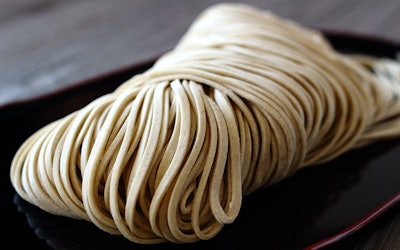
Introducing the Shibushi Summer Soba Festival in Shibushi, Kagoshima This video, titled "【Shibushi Summer Soba Festival】Shibushi City【Official】" (【志布志の夏越しそばまつり】志布志市 【公式】), was uploaded by "Yasuda Movie Laboratory" (安田映像研究所). It introduces the Shibushi Summer Soba Festival of Yamamiya Shrine via a PR video with drone footage. In Shibushi, Kagoshima, located in the Kyushu region of southern Japan, the city takes advantage of its mild climate to grow "Haru no Ibuki," a variety of buckwheat that is sown in late March and harvested in late May or early June. Haru no Ibuki flowers can be seen at 1:22 in the video. The Shibushi Summer Soba Festival is an event where freshly harvested soba noodles are served. This article introduces tourist information for the Shibushi Summer Soba Festival. Be sure to check out the video to see the Shibushi Summer Soba Festival being held on the precincts of Yamamiya Shrine. What Kind of Event is the Shibushi Summer Soba Festival? Photo:The thatched ring used in the purification ceremony The Shibushi Summer Soba Festival in Shibushi, Kagoshima, is held on June 30 at Yamamiya Shrine, home to the National Natural Monument "Shibushi no Okusu" (The Great Camphor of Shibushi). Starting with a purification ceremony in which visitors pass through a "thatched ring" to pray for good health in the precincts of the shrine where the giant camphor, estimated to be 1,300 years old, stands, 1,000 servings of fresh soba, a special aromatic dish made with nihachi soba flour (8 parts buckwheat, 2 parts wheat flour), is served. In addition to soba, visitors can also enjoy conger eel tempura caught in Shibushi Bay as well as fresh green tea. Legend has it that the giant camphor tree, shown at 1:43 in the video, was planted by Emperor Tenchi (Emperor Tenji). Chinowa kuguri, a summer ritual that involves walking through a loop of cogon grass, can be seen at 2:51. The summer buckwheat harvest in Shibushi is the earliest in Japan, and the Shibushi Summer Soba Festival is held to celebrate the opening of the harvest. About the Shibushi Summer Soba Festival in Shibushi, Kagoshima Photo:Soba Summer soba in Shibushi is made with natural underground water rich in minerals that has passed through Shirasu-Daichi, a pyroclastic plateau originating from the Kirishima Mountains. The spring-sown soba has a unique flavor and is served with a sweet katsuoboshi (skipjack)-flavored dipping sauce. The summer soba of Shibushi has been produced since 2010 as part of Shibushi's community development efforts by growers who wish for good health and longevity. Fresh soba is available at nearby restaurants from the day of the Shibushi Summer Soba Festival and is also sold online. Tourist Information for Shibushi Summer Soba Festival 「To get to Yamamiya Shrine, the site of the Shibushi Summer Soba Festival, it's a 10-minute drive from JR Shibushi Station or a 20-minute drive from the Soo Yagoro Interchange. Parking is also available. Nearby are tourist attractions such as Daguri Cape Beach, Osaki Fureai no Sato Park, and Kuni no Matsubara Camping Ground, making it possible for visitors to travel while staying in touch with nature. Summary of the Shibushi Summer Soba Festival of Shibushi, Kagoshima The above video, titled "【Shibushi Summer Soba Festival】Shibushi City【Official】" introduces the Shibushi Summer Soba Festival. Enjoy traditional Japanese festivals and pray for good health by eating delicious soba noodles! -
 Video article 3:30
Experience the Large Weeping Cherry Blossoms at Joenji Temple in All Their Beauty in the Metropolis of Shinjuku, Tokyo! Enjoy Beautiful Cherry Blossoms Lit up to "Sakura Sakura," a Japanese Folk Song!
Art & Architecture Travel Traditional Culture History Nature- 144 plays
- YouTube
Video introduction of Jouenji Temple, a hanami spot in Shinjuku-ku, Tokyo This video, titled "[Sakura] Joenji Temple - Tokyo - 常圓寺 - 4K Ultra HD," was uploaded by "TokyoStreetView - Japan The Beautiful." There are places to view cherry blossoms in Tokyo, and Joenji Temple, located in Nishi-Shinjuku, Shinjuku, Tokyo, in Japan's Kanto region, is one of them. The area around the cherry blossoms is lined with high-rise office buildings and luxury hotels, and the weeping cherry blossom standing majestically in the midst of the metropolitan skyscrapers is a hidden gem for viewing cherry blossoms. From 0:08 in the video, the cherry blossoms can be seen lit up at night, a sight that will make you forget that you're in the middle of a city. Surprisingly, there are many temples and shrines in the Shinjuku area, and once you begin to look for them, you'll find many power spots where the hustle and bustle of the city seems to disappear. The temple shown in the video, Joenji Temple, is located along the busy Ome-Kaido (Ome Highway), but once you set foot on the approach, you'll feel as though you've stepped into another world. Joenji Temple – The History of Shinjuku’s Hidden Gem for Cherry Blossom Viewing Photo:Weeping cherry blossoms at Joenji Temple, Shinjuku, Tokyo Joenji Temple is located just six minutes from Shinjuku Station on foot, and is said to have a history dating back 600 years. The temple was moved from Hatagaya, Shibuya, to its current location in Nishi-Shinjuku on September 13, 1585. The precincts of the temple are approximately 1,100 tsubo (~3,600 Sq. m) in size, and include the main hall, the soshi-do (founder's hall), a large study, Naka-mon Gate, the bell tower hall, the storehouse, and other halls. The large weeping cherry tree that appears in the video is planted near the temple gate, and when it is in full bloom, the cherry blossoms can be seen from the Ome Kaido that runs beside Joenji Temple, attracting many visitors every year. The large weeping cherry tree has been called one of the "Three Trees of Edo" and "One Hundred Cherry Trees of Edo" since the Edo period (1603-1868). Unfortunately, during WW2, most of the temple was destroyed by air raids, but in 1952, thanks to the contributions of the temple's parishioners, the temple was rebuilt after the war. Since Joenji is a Nichiren-Shu temple and its scripture is the Lotus Sutra, the Shoin (temple office) also serves as the Joenji Institute of Nichiren Buddhism, and there are gravesites of historical figures such as Tsutsui Masanori (a historical site designated by Shinjuku Ward) on the temple grounds. The current head priest is Genichi Oikawa, who inherited the Triratna from the 40th head priest of Joenji. Sakura, Sakura – A Traditional Japanese Folk Song Photo:Someiyoshino cherry blossoms The background music used in the video is the folk song "Sakura, Sakura," which any Japanese person knows. (It is commonly known in Japanese as simply "Sakura"). There is a theory that this song was originally written as a Koto exercise, but the author is unknown. It was not until the Meiji Period (1868-1912 A.D.) that the song was popularized as "Sakura Sakura," and in the Showa Period (1926-1989) it was selected as a song for elementary school music lessons. In addition, there are two versions of the lyrics, one written in the Meiji Period (the lyrics used in this video) and the other revised in 1941. The 1941 version seems to be the one adopted in most school education today. The lyrics can be translated as follows: Cherry blossoms, cherry blossoms, In fields, mountains and villages As far as the eye can see. Is it mist, or clouds? Fragrant in the rising sun. Cherry blossoms, cherry blossoms, Flowers in full bloom. Cherry blossoms, cherry blossoms, Across the spring sky, As far as the eye can see. Is it mist, or clouds? Fragrant in the air. Come now, come now, Let's go and see them. (Source: https://en.wikipedia.org/wiki/Sakura_Sakura#Lyrics) The best time to see and see the weeping cherry blossoms at Joenji Temple in Shinjuku The highlight of Joenji's cherry blossoms is "Daishidare-zakura," which usually reaches its peak from late March, but in 2023, it bloomed earlier than usual on March 19th for 4 minutes and was in full bloom on March 19th. The lights will also be lit up according to the best season.The towering buildings and weeping cherry blossoms behind you are a great photo spot.It entertains many people's eyes. Tokyo's cherry blossom forecast for 2014 is March 23.On the official website of Sangwonsa Temple, the blooming status and lighting period of the cherry blossoms are updated from time to time, so please check them out. Summary of Joenji Temple, a Hidden Gem for Cherry Blossoms in Shinjuku, Tokyo Photo:Joenji Temple, Shinjuku, Tokyo Joenji Temple is about a 6-minute walk from Shinjuku Station on the JR and private railway lines. The temple is located along the Ome Kaido, a main highway, making it very accessible. The large weeping cherry trees on the temple grounds are a must-see! Please note that the bloom season is short and there is a slight time lag in updating bloom information on bloom tracking websites. There are many other shrines and temples in the area between Nishi-Shinjuku and Higashi-Shinjuku where Joenji Temple is located, so be sure to check them out when visiting Tokyo, and collect your goshuin stamps! 【TripAdvisor】Joenji Temple https://www.tripadvisor.com/Attraction_Review-g14133673-d8036422-Reviews-Joenji_Temple-Nishishinjuku_Shinjuku_Tokyo_Tokyo_Prefecture_Kanto.html -
Video article 4:59
The "Budo Tourism" Gaining Popularity From Foreign Visitors to Japan! Experience Traditional Karate and Come To Understand the Japanese Spirit!
Sports Travel Traditional Culture- 165 plays
- YouTube
The Martial Arts Tourism Gaining Popularity Among Tourists Visiting Japan This video, titled "[Japan Sports Agency] Foreign Visitors to Japan Taking Interest! A Report on the 'Budo Tourism' That Can Only Be Experienced in Japan" (【スポーツ庁】訪日外国人が注目! 日本でしか体験できない「武道ツーリズム」の現場をレポート), was released by "Japan Sports Agency" (スポーツ庁). Budo Tourism refers to foreign visitors to Japan going on sightseeing trips to experience traditional Japanese martial arts. In addition to sumo, Japan's national sport, Japan has various traditional martial arts, such as kendo, judo, karate, and aikido, which attract a lot of interest from foreign tourists. With Budo Tourism, some foreigners visit Japan to try Kyudo, Shorinji Kempo, Naginata and Iaido. Karate, A Martial Art Gaining Popularity in Budo Tourism Photo:Martial arts Karate, seen from 0:34 in the video, is one of the most popular forms of martials arts in Budo Tourism, and has also officially been made into an event at the 2021 Tokyo Olympics. It is said that there are around 130 million karate enthusiasts around the world, and the number of foreign tourists visiting to experience karate through Budo Tourism is increasing year after year. There are various theories about the origin of karate, but it is believed that the history of Japanese karate begins with the self-defense techniques of the Ryukyu Kingdom, which can be seen in the video. The Chinese martial art "Toude," which was introduced to the Ryukyu Kingdom, later become what we know as traditional Okinawan karate. Eventually, karate was divided into several schools, and performances and matches began to be held throughout the country. The Appeal of Budo Tourism Photo:Karate The fascinating experience of practicing in a dojo while wearing traditional uniforms typical of Japanese martial arts is not something you can easily experience outside of Japan. What kind of experience are foreign tourists looking for when training in classes held at traditional martial arts dojos? One reason is that Japanese martial arts place a large importance on etiquette and many people feel that they can experience spiritual growth through these experiences. Japanese martial arts have the idea of "Shin-Gi-Tai" (心技体: heart, technique, strength) This is a term that refers to the three qualities of a martial artist: mental strength (心, heart), skill (技, technique), and physical strength (体, body). It is said that training the mind and body in a well-balanced manner is the most important thing to consider when practicing martial arts. Summary of Japan's Budo Tourism Photo:Karate, kata As mentioned before, the number of foreign tourists interested in traditional Japanese martial arts, such as karate and kendo, is increasing year after year. Many Japanese people and foreign tourists are looking forward to seeing traditional martial arts at the Tokyo Olympics. Going forward, Budo Tourism will become a bridge between Japan and the rest of the world. -
Video article 3:43
Saiho-ji Temple (Koke-ji Temple) in Kyoto in autumn is beautiful with moss and autumn leaves! Visiting this famous temple with its wonderful buildings is by appointment only!
Nature Travel Traditional Culture- 487 plays
- YouTube
Video introduction to Saiho-ji Temple (Koke-ji Temple) in Kyoto City, Kyoto Prefecture, Japan Photo:The garden at Saiho-ji, a moss temple in Kyoto This video, titled "[8K] Autumn Leaves at Saiho-ji (Moss Temple)" ([8K] 西芳寺(苔寺)と紅葉 Saihoji Temple (moss temple) and autumn leaves), was uploaded by "AQUA Geo Graphic." Be sure to enjoy the beauty of Saiho-ji, a kokedera (moss temple) in Kyoto, and the breathtaking scenery of the temple in autumn. Saiho-ji Temple History Photo:The garden at Saiho-ji, a moss temple in Kyoto Saiho-ji Temple, also known as a "kokedera" (moss temple), is located in Nishikyo, Kyoto, in Japan's Kansai region. The temple was built by the Japanese Buddhist priest Gyoki at the order of Emperor Shomu during the Nara Period (710-794 A.D.), and is a famous temple with more than 1,300 years of history, whose grounds are covered with more than 120 varieties of moss. Throughout its long history, and changes in religious denominations, people throughout the ages have been captivated by the temple's beauty. During the Kamakura period (1185-1333 A.D.), it was a temple of the Jodo sect of Buddhism, but was destroyed by warfare. However, in 1339, the temple was restored as a Zen Buddhist temple by the famous Buddhist monk, calligrapher, poet, and master gardener Muso Kokushi. The garden at Saiho-ji Temple has served as a model for the gardens at Kinkakuji (the Golden Pavilin) and Ginkakuji (the Silver Pavilion) in Kyoto. The Beautiful Garden of Saiho-ji Temple, a Moss Temple and World Cultural Heritage Photo:The garden at Saiho-ji, a moss temple in Kyoto The main attraction of Saiho-ji Temple is, as the name "moss temple" implies, the moss that covers the temple grounds, and the garden created by the master gardener Muso Kokushi. The upper section is a dry landscape garden, while the lower section is a strolling pond garden. The upper level, however, is currently closed to the public. Visitors often pray at the temple after reciting sutras and then stroll around the garden. The main attraction of the lower section of the garden at Saiho-ji Temple is Golden Pond (黄金池, Ogonchi), also called "Shinji-ike" (心字池, Heart-shaped Pond) because it's shaped like the Japanese character for "heart" (心). When the autumn leaves are at their best, the contrast between the temple's green moss and the autumn leaves dancing over the pond creates a beautiful scene. The teahouse Shonan-tei (湘南亭) is one of the highlights of the lower section, and is said to have been rebuilt by Sen no Shoan, the second son of Sen no Rikyu, a renowned Japanese tea master. The view of Golden Pond from the tsukimidai (月見台, moon-viewing platform) overhanging the north side of the teahouse is truly spectacular. Shonan-tei is also designated as an Important Cultural Property by the government of Japan. The upper section of the garden is not open to the public, but in Shitoan, a hall dedicated to the temple's founder, are enshrined the tablets of the founder Gyoki, Takaoka Shinno (a Japanese prince), and Muso Kokushi, as well as wooden statues of various prominent Japanese figures. On the upper level, there is a dry landscape garden. The dry landscape garden is a place where visitors can experience the history of the garden, as the masonry remains unchanged the temple was created by Muso Kokushi in 1339. The best time to see the lush moss at Saiho-ji Temple is during the rainy season, and the best time to see the autumn leaves is in November. Photo:The garden at Saiho-ji, a moss temple in Kyoto The best time to enjoy the contrast of moss and autumn leaves is from mid to late November, and the best time to see the 120-plus species of moss turn lush shades of green is typically from June to July, during Japan's rainy season. Saiho-ji Temple's Instagram page provides daily updates on the changing beauty of the garden. Be sure to check it out at @saihoji_daily before visiting! Saiho-ji Temple: Reservations, Admission Fees, Etc. Photo:The garden of Saiho-ji, a moss temple in Kyoto Saiho-ji Temple used to be open to visitors at any time, but as the number of visitors increased, so did the littering, noise, etc. As a result, the temple adopted reservation system in 1977 that allowed only a small number of visitors to visit the temple. Those who wish to visit when sightseeing in Kyoto should first decide on the day of their visit in advance and then apply for a reservation. There are two ways to make reservations to visit Saiho-ji Temple: by return postcard or online application. Application by return postcard Acceptance period: 2 months to 1 month prior to the date of application (postmarked) Number of people: Up to 2 people per couple Entrance fee: 4,000 yen or more per person Online application Application period: 2 months prior to the date of application - 23:59 the day before the date of application Number of people: Up to 2 people per couple Entrance fee: 4,000 yen or more per person The application period differs depending on the application method. The above information is current as of March 2024. Please check the official website for the latest information and apply in advance. Translated with www.DeepL.com/Translator (free version) If you're planning on making a reservation to see the autumn leaves at the temple, keep in mind that the reservation for this period is currently only available in Japanese. If using Google Chrome, we recommend using the browser's automatic translation feature by right clicking the page and click the "translate to …" button. If you're using a different browser, such as Firefox, you'll need to first download an addon from the Firefox browser addons page to do this. If you're looking to make a reservation from November and beyond, there is an English reservation page where you can sign up. Signing up also requires that you create an account, regardless of which season you choose. As the above-mentioned fees and application periods differ, be sure to check the official website and apply in advance. ※Please note that all visitors must be 13 years of age or older at the time of the visit. Winter at Saiho-ji Temple Photo:Saihoji Temple, Kyoto The garden is closed to the public during the winter to allow the garden to recuperate, but visitors can still enjoy a different view of Saiho-ji Temple during the winter months. Visitors can enter the temple through the main gate, which is normally closed to the public, and view the fusuma paintings surrounding the Amitabha Buddha, the temple's principal object of worship, in full view in the main hall. Enjoy the unique charm of this Zen temple in the dignified winter air. Summary of Saiho-ji, a Moss Temple in Kyoto Photo:The garden at Saiho-ji, a moss temple in Kyoto Kyoto's Saiho-ji Temple is listed as a UNESCO World Heritage Site and a "Historic Monument of Ancient Kyoto". Saiho-ji Temple is unique not only for its spectacular views but also for its shuin stamps. Visitors are asked to present their shuin stamp book before paying the entrance fee, and they will receive a magnificent two-page spread of shuin stamps. Access to Saiho-ji Temple is best accessed by bus rather than train. By train, the temple is a short distance from Matsuo Station. If visiting the temple by bus, it's a short 3-minute walk from the bus stop "Koke-dera/Suzumushidera" (苔寺・すず虫寺). From Kyoto Station, you can get to Saiho-ji Temple in about 45 minutes. First, take the Tokaido-Sanyo Line towards Aboshi and get off at Katsuragawa Station. From there, take the bus to the Matsuo Dairicho (松尾大利町) bus stop, and then walk to the temple. You'll also find Suzumushidera Temple, which is a popular temple said to grant visitors one wish. Saiho-ji Temple is a place where you can enjoy the unique culture and nature of Kyoto in a tranquil setting. It's an opportunity to discover both Kyoto and a new side of yourself. 【Official Website】Saiho-ji Temple 【TripAdvisor】Saiho-ji Temple -
Video article 7:55
A Tour of Kinosaki Onsen's Soto-Yu via Video! Learn About the Seven Detached Hot Springs + Recommended Accommodations, Things to See and Do, and Delicious Dining Experiences at the Hot Spring in Hyogo Prefecture!
Travel Hotel & Japanese Inn Traditional Culture- 291 plays
- YouTube
Kinosaki Onsen Soto-yu Tour: Video Introduction This video, titled "Kinosaki Onsen Soto-yu Tour - Experience the Bathhouses With a Stroll" (城崎温泉外湯巡り~散策しながら外湯を堪能しました~), was created by "fukuchiyama." The video introduces seven soto-yu (a type of public bathhouse which is not part of the facilities of a hotel or inn), while going into detail on the origins of each, as well as introducing the ryokan (a Japanese style hotel) the video creator stayed in. We especially recommend this video if you happen to be planning a trip to Kinosaki Onsen. Check it out above! Kinosaki Onsen – A Tourist Destination and Hot Spring Town With 1300 Years of History! Origins, Characteristics and Recommended Cuisine Photo:Kinosaki Onsen Located in the northern part of Hyogo on the coast of the Sea of Japan, Kinosaki Onsen, located in the city of Toyooka, is one of the many hot spring towns dotting Japan's Kansai region. This hot spring resort has a long history too, dating back to the Nara period (710–794 AD). Used as a healing hot spring in the past, the resort is also known for the list of famous authors and poets known to have visited it. In 2020 a host of special events were held to commemorate the 1300th anniversary of Kinosaki Onsen's opening. Kinosaki Onsen's popularity isn't limited to domestic tourists either; the Michelin Green Guide gives it two stars, stating "If you're in the area, you should make a detour to visit." This hugely popular tourist spot goes by the slogan "The whole town is an onsen ryokan." Kinosaki Onsen Station (城崎温泉駅, kinosakionsen-eki) is the front door; the streets its corridors. Imagining each individual inn to be a guest room and the soto-yu as the "daiyokujo" (the large communal bathing area found in most onsen ryokan), the residents of the area band together to entertain visitors whilst protecting the traditions of old, giving the resort a lively feel. And then there's the cuisine. Kinosaki Onsen's famed "kani" (crab) is a winter delight. Snow crabs caught at the nearby Tsuiyama Fishing Harbor (津居山漁港, Tsuiyama gyoko) are known as Tsuiyama-gani (津居山ガニ, lit. "Tsuiyama crab"), and are said to be amongst the best quality snow crabs you can eat. Crab season comes in the colder months, and tourists descend upon the town to get a taste of fresh crab, as well as enjoy the hot springs. We're sure plenty of you will be checking lists of crab restaurants in search of the best crab dishes out there. Kinosaki Onsen Soto-yu Tour – Opening Hours, Origins, and Characteristics of the Seven Bathhouses + Recommendations Photo:Kinosaki Onsen's Yanagi yu Kinosaki Onsen is famous for its "soto-yu" bathhouses. "Soto-yu" (外湯, lit. "outside bath") refers to a communal bathing space that is "outside" the facilities of an inn or hotel. In Kinosaki, there are seven soto-yu within walking distance, each with its own unique charm. The waters contain sodium and calcium, and are supposedly effective against nerve pain, muscular pain, bruising and digestive problems. If you're planning to spend the day at the hot springs, you can save money with the soto-yu tour pass, "Yumepa"! For 1,300 yen (650 yen for minors), you can use the soto-yu as many times as you like for as long as you want for one day. In Kinosaki Onsen, where yukata (a casual summer kimono) and geta (traditional Japanese wooden sandals) blend seamlessly into the scenery, why not don a kimono yourself, grab a map, and take a stroll through the ancient townscape whilst immersing yourself in the onsen mood? Next, we'll walk you through the characteristics and origins of each of the seven soto-yu, following the order in which they appear in the video. ● Jizo yu (地蔵湯) Upon leaving Kinosaki Onsen station, head straight down the main road in front of the station to find "Jizo yu." This soto-yu has been a popular spot of the locals since the Edo period (CE 1603-1868). It gets its name from tales that Jizo (the Buddhist guardian deity of children) once appeared from its waters. The building has the most modern Japanese appearance of all the soto-yu, with hexagonal windows that echo the shape of Japanese lanterns and the nearby Genbu Cave (玄武洞, genbu-do). 【Hours】7:00 a.m. - 11:00 p.m. 【Closures】Fridays [Video] 1:35 - A large stone lantern marks "Jizo yu" public bathhouse ● Sato no yu (さとの湯), a Hot Spring Inside a Station Located right next to Kinosaki Onsen station, Sato no yu is also known affectionately as "Station Onsen" (駅舎温泉, ekisha onsen). Of the seven soto-yu, Sato no yu's facilities were built the most recently, and the hot spring offers the latest equipment, giving the onsen a spa-like vibe. As well as the open air bath from which you can gaze upon the Maruyama River (円山川, maruyama-gawa), there is a full complement of saunas of various types. There's even a footbath at the entrance that's free to use. Best of all, its proximity to the station makes it ideal for a quick dip while you're waiting for your train. 【Hours】1:00 p.m. - 9:00 p.m. 【Closures】Mondays [Video] 2:12 - Sato no yu, Right by Kinosaki Onsen Station ● Yanagi yu (柳湯) Running through the heart of Kinosaki Onsen is the Otani River (大溪川, otani-gawa). The sight of the willow trees ("yanagi" in Japanese) that line the river are a defining image of Kinosaki Onsen, and holds a beauty that the famous Japanese writer Naoya Shiga is said to have held close to his heart. The name "Yanagi yu" comes from the onsen's source, bubbling up from beneath the roots of a willow tree transplanted from China's renowned Xi Lake. Although this is the smallest of the soto-yu, the minimalistic wood-construction bath has an atmosphere all its own. Here, too, there are free footbaths - both out front and in the back - which can be enjoyed as part of a leisurely stroll. 【Hours】3:00 p.m. - 11:00 p.m. 【Closures】Thursdays [Video] 3:20 - Yanagi yu as Seen From the Bank of the Otani River Photo:Kinosaki Onsen's Soto-yu tour, Ichi no Yu ● Ichi no yu (一の湯) Ichi no yu stands close to the center of Kinosaki, in front of Obashi Bridge (王橋, lit. "King's Bridge"), as it crosses the Otani River. In the mid-Edo Period, Ichi no yu was known as "Ara yu" (新湯). However, in renowned doctor Shutoku Kagawa's book, "Ippondo Yakusen," the onsen is described as "tenka ichi," meaning "the best under the heavens." Thanks to this, Ara yu's name was changed to "Ichi no yu" (一の湯, lit. "best hot spring") taking the "ichi" from "tenka ichi." With its striking facade resembling a Kabuki Theatre, its stand-out feature is the cave-like bath, hewn from natural bedrock. 【Hours】7:00 a.m. - 11:00 p.m. 【Closures】Wednesdays [Video] 4:24 - Ichi no yu With its Kabuki Theatre-esque Building ● Mandara yu (まんだら湯) Mandara yu is where Kinosaki Onsen began. Just off the main road, it is situated at one end of the peaceful Kiyamachi Street. The story goes that when, in the year 717, Dochi Shonin, the founder of Kinosaki's Onsenji Temple (温泉寺) chanted the Hachimandara sutra (八曼荼羅経, hachimandarakyo) for one-thousand days, his prayer was answered and an onsen burst forth from the ground, marking the beginning of Kinosaki Onsen. This is a relatively compact soto-yu, but with its location in the foothills of a mountain it's definitely an atmospheric place, and you can enjoy the view of the mountain whilst taking a dip in the open-air bath. 【Hours】3:00 p.m. - 11:00 p.m. 【Closures】Wednesdays [Video] 5:43 - Mandara yu, With Its Impressive Vivid Emerald Green Roof and Karahafu (Curved Gable) Entrance ● Gosho no yu (御所の湯) This soto-yu takes its name, Gosho no yu, from a text in the Nanbokucho period (CE 1337–1392) historical tale "Masukagami," stating that Emperor Go-Horikawa's elder sister, "Anka Monin" bathed there in 1267. Its imposing style - which imitates that of the Imperial Palace in Kyoto - makes it stand out, even when compared to the other soto-yu. Reopening in 2020 following renovation work, it has been reinvented as a spacious, fully open-air bath. Also known as "Bijin no Yu" (美人の湯, lit. Beauty Spring), the facility is fully equipped with an onsen mist sauna with skin beautifying properties. This soto-yu has found favor particularly amongst female visitors. 【Hours】7:00 a.m. - 11:00 p.m. 【Closures】Thursdays [Video] 6:48 - Goshono yu, With Its Architecture Reminiscent of Kyoto's Imperial Palace」 ● Ko no yu (鴻の湯) Although not featured in the video, Ko no yu is also one of the seven soto-yu. Its open-air bath surrounded by nature is its stand-out feature. a href="https://www.tripadvisor.com/Attraction_Review-g1022822-d2364311-Reviews-Ko_no_Yu-Toyooka_Hyogo_Prefecture_Kinki.html" target="_blank" class="textlink">Ko no yu gets its name from a story that long ago, a wounded stork (コウノトリ, "konotori" in Japanese) went there to soothe its wounds. Upon inspection, an onsen was found to be welling up from the place it had been standing. 【Hours】7:00 a.m. - 11:00 p.m. 【Closures】Tuesdays Must Bring Items and Need to Know Manners for Visiting the Soto-yu Photo:A woman touring the hot springs at Kinosaki Onsen If you're planning to spend the day touring the soto-yu at Kinosaki Onsen, you're probably wondering what you'll need to take with you. And it goes without saying that proper use of manners from each visitor is an important aspect of enjoying the soto-yu. Allow us to guide you through the most important items to bring and necessary manners for your soto-yu tour. ・Towels The soto-yu do not have free bath towels or face towels available to use, so it's a good idea to bring your own with you. You can also pay to rent bath towels and purchase face towels at the reception at any of the soto-yu. ・Valuables When staying over, you can leave your valuables at your hotel or inn, but this solution isn't useful if you're only visiting for the day. Fortunately, Kinosaki Onsen Station has coin-operated lockers which can be used even for larger luggage, so we recommend depositing your valuables in one of them. ・Yukata If you want to tour the soto-yu in a yukata, we'd recommend visiting a yukata rental store where you can borrow geta and other accessories together as a package. ・Amenities Each soto-yu provides shampoo, conditioner and body soap. Like any regular public bathhouse hairdryers are also available, but don't forget to bring your own skincare products. ・Bathing Etiquette Onsen are public places. In addition to using the shower area and baths in a hygienic manner, behavior such as soaking towels in the bath and placing personal objects somewhere in an attempt to reserve a shower space should be avoided. The opening times and days vary between the soto-yu. To avoid wasting your time and turning up at a soto-yu only to find it closed, be sure to check the opening times and plan out your route in advance. Recommended Cuisine and Accommodation in Kinosaki Onsen Photo:Tajima Beef Whilst crab is the first thing to come to mind when talking about Kinosaki, Tajima beef is also popular. Brand name "wagyu" (high quality Japanese beef) such as Matsuzaka beef, Kobe beef, Omi beef and others trace their roots back to Tajimi beef. Sampling such quality ingredients as crab and Tajima beef in one place is something you can only do in Kinosaki. Make sure you get a bite to eat as you explore the onsen district from one of the shops in the area. Crab sticks from the tempura specialist "Hokyuan" (汸臼庵) or Tajima beef "menchikatsu" (a fried cake of minced meat) from "Gyusho Ueda" (牛匠 上田) are also good choices. If you want to enjoy Kinosaki Onsen at your own pace, why not stay at one of the historical ryokan in the town? ● Yutoya (ゆとうや) Founded in 1688, and situated in the center of Kinosaki's hot spring district, Yutoya's premises include a gorgeous Japanese garden spanning more than 1.5 acres, which is visible from all of the guest rooms. The Japanese style architecture has been designated as a Tangible Cultural Heritage by the government of Japan. Eikitei (one of Yutoya's guest rooms), with its curved gabled roof similar to those used on shrines, once played host to Emperor Showa and (his wife) Empress Kojun. [Video] 4:58 - Historical ryokan "Yutoya," with its imposing facade ● Tsukimotoya Ryokan (月本屋旅館) Founded in 1869, Tsukimotoya Ryokan sits in the heart of Kinosaki Onsen, a convenient location for those planning to tour the soto-yu. It underwent a renovation in October 2021, and the interior has been re-imagined in modern Japanese style. Heading into the coming season, you can get a full course crab dinner included in certain price plans at this extremely popular inn. Kinosaki Onsen Soto-yu Tour: Roundup Loved by some of Japan's literary greats, Kinosaki is not only a hot spring resort, but also a place with a deep connection to the literary arts, dotted with monuments related to literature. Take a trip to see the monuments and lose yourself in the world of classic Japanese literature. A healing atmosphere, delicious cuisine, unique literature; Kinosaki Onsen has them all amongst its history-steeped streets. Whether it be a girls' trip to the top Instagrammable spots, a relaxing ryokan stay with family or close friends, or a crab tasting tour, why not plan a trip to this atmospheric and enchanting hot spring resort for your winter vacation? [TripAdvisor] Kinosaki Onsen -
Video article 2:26
Bungotakada – A Historic Japanese Town of Sunflowers and Festivals in Oita Prefecture
Travel Festivals & Events Traditional Culture- 101 plays
- YouTube
Bungotakada, Oita: Video Introduction This video, titled "Bungotakada City," was uploaded by "Bungotakada City Official Channel" (豊後高田市公式チャンネル). Bungotakada is a pleasant town with abundant nature and a mild climate in Oita Prefecture, in Japan's Kyushu region. The city has a culture that has remained unchanged for millennia, as well as many fascinating places of interest, and is currently attracting attention as a town from the Showa period (1926-1989). You can see the beautiful nature of Bungotakada and its exciting festivals in this powerful video. Bungotakada – A Showa-Retro City in Oita, Japan Photo:A Showa-retro shopping street, Bungotakada, Oita Prefecture Bungotakada in Oita Prefecture is home to many photogenic, Showa-retro tourist attractions. The atmosphere of the city is somewhat nostalgic for Japanese people who grew up in the Showa period and refreshing for young people, who can enjoy the historic atmosphere, allowing different generations to enjoy the city together. Bungotakada has also been selected as one of the "Top 3 Countryside Towns to Live in" for 10 consecutive years. The secret of its popularity lies in its immigration support system, which is one of the best in the country, and its excellent environment for raising children. In fact, between 2010 and 2015, the number of people moving into the city exceeded the number of people moving out by 180, resulting in a population increase. Enjoying the Showa-Retro Style of Bungotakada In Bungotakada, where the streets of Showa-period Japan still remain, visitors can have an extraordinary experience, as if they've gone back in time. In particular, the shopping street that recreates the streets of the 1930s is a popular tourist attraction that attracts approximately 400,000 visitors a year. It has also been used as a filming location for popular Japanese movies. Visitors can also enjoy delicious food and snacks at the retro candy store Yume Hakubutsukan (夢博物館, Dream Museum). It's a great way to experience what Japan was like in the past, as visitors can see many products that are hard to find nowadays. Visitors can also ride in the bonnet buses that were used in those days. You can experience what is was like back then with the retro interior of the buses. However, please note that the bonnet buses are not air-conditioned, so be careful to dress appropriately for the heat or cold. Recommended sightseeing spot "Nagasaki Hana" What is the best time to see rape blossoms and sunflowers? Photo:Kumano Magaibutsu, Oita Prefecture At the Nagasakibana Resort Campground, seasonal flowers can be seen blooming throughout the year. In spring, you can see rape blossoms blooming all over the area. The rape blossoms are usually at their best from mid-March to April. During the best time to see them, the "Rape Blossom Festa" is held, which includes a photo contest and other events. If the timing is right, visitors can enjoy the collaboration of approximately 300 cherry trees and 22 million rape blossoms. Also, in summer, the terraced fields of sunflowers offer a spectacular view of the blooming sunflowers. The best time to see sunflowers is usually from mid-August to early September. If you are planning to visit in 2024, please check the SNS. Particularly in August, visitors can enjoy the breathtaking view of approximately 1.5 million sunflowers. [Video] 0:37 - Sunflowers at Nagasakibana Beach Resort Recommended tourist spot "Kumano Magaibutsu" has stairs made by demons? Kumano Magaibutsu (Kumano Magaibutsu) is one of the largest Magaibutsu in Japan, and is a nationally designated important cultural property believed to have been created in the late Heian period. There are 99 rough and steep stone steps that are said to have been built by demons in a single night. The Kumano Magaibutsu is located at the top of the steps. The statue blends naturally into the surrounding landscape as if it had been there for a long time. The Buddha statues carved into the rock face are approximately 6.8 meters high for the Dainichi Nyorai statue and 8 meters high for the Fudo Myoo statue. Further up the mountain is the Kumano Shrine, which tells the story of the union of Shintoism and Buddhism. Fireworks, Bon Festivals, and other Fascinating Seasonal Events to Enjoy Photo:Horan Enya, Bungotakada, Oita Prefecture The Nagasakibana Summer Festival is held every summer on the beach at Nagasakibana Resort Campground. This summer festival is filled with events that both children and adults can enjoy. For the finale, a huge fireworks display of 2,000 fireworks lights up the night sky. [Video] 0:18 - Fireworks at Nagasakibana Summer Festival The Takada Tourism Bon Odori Competition (高田観光盆踊り大会, Takada Kanko Bon Odori Taikai) is an annual summer event in Bungotakada. However, in recent years it has been cancelled in order to prevent the spread of the novel coronavirus. The event is so popular that there are more than 600 dancers, from children to adults, from schools and organizations in the city. The video shows people enjoying the Bon dances in a variety of costumes. [Video] 0:42 - The Bon Odori Competition at the Nagasakibana Summer Festival Horan Enya is an event to pray for a good catch of fish and aviation safety, and is a gallant event involving men of the sea. Young men in loincloths board boats decorated with large flags and shout out in joy as they sail from Kotohira-gu Shrine at the mouth of the Katsura River upstream to Wakamiya Shrine upstream. [Video] 1:49 - Horan Enya Wakamiya Shrine's autumn festival, held every year around November, is one of the Top 3 'Naked' Festivals in Japan and is a traditional event with a history dating back more than 900 years. Young men dressed in loincloths called "shimekomi," enter the Katsura River while carrying a portable shrine and carry it across to the other side of the river. The sound of drums, young men shouting, and the splashing of water are the highlights of the festival. [Video] 1:17 - Wakamiya Shrine's Autumn Festival Summary of Sightseeing in Bungotakada Photo:Zaru soba If you haven't already watched the video that shows the charms of Bungotakada, be sure to check it out! If you have a chance to visit Bungotakada in Oita Prefecture, we recommend trying one of the delicious dishes you can find there. That is, soba, a specialty of the city! Every year around June and November, you can taste freshly harvested soba at certified soba stores in Bungotakada. Kaimon Onsen, located in the city, is a famous hot spring that boasts some of the best spring water in Oita, a prefecture known for its hot springs. Enjoy the hot springs at a hotel near Kaimon Onsen and recover from the fatigue of your travels. 【Official Website】Bungotakada City Hall Website, Oita Prefecture http://www.city.bungotakada.oita.jp/ 【TripAdvisor】Bungotakada, Oita https://www.tripadvisor.com/Attractions-g1023439-Activities-Bungotakada_Oita_Prefecture_Kyushu.html -
Video article 6:50
The famous Nanao Castle, located in Nanao City, Ishikawa Prefecture, was renowned as an "impregnable and impregnable amphitheater! The secret of Nanao Castle, where the famous warlord "Uesugi Kenshin" was forced to fight an uphill battle, is revealed!
Art & Architecture History Travel Traditional Culture- 98 plays
- YouTube
Nanao Castle" in Nanao City, Ishikawa Prefecture, one of the 100 best castles in Japan, video introduction This video, titled "Nanao Castle in ISHIKAWA, JAPAN / #34 of the Top 100 Castles of Japan|4K" (【石川/日本100名城】七尾城/難攻不落の天宮 4K - Nanao castle in ISHIKAWA, JAPAN / The Top 100 Castles in Japan No.34 -), was uploaded by "channel WASABI." Introduces the ruins of Nanao Castle, a mountain castle in Nanao, Ishikawa, in Japan's Koshinetsu region, in beautiful 4K quality! Nanao Castle, one of the Top 100 Castles of Japan and a Nationally Designated Historic Site, is located at an elevation of 300m, overlooking Nanao Bay and the Noto Peninsula from the honmaru (inner citadel). Nanao Castle was considered an impregnable fortress during its prime, and you can still see the stone walls where the major parts of the castle were previously located. In this article, we'll introduce tourist information and travel tips for anyone planning to visit Nanao Castle. The video introduces the breathtaking scenery of Nanao Castle, a vast area located on a mountain ridge in the forests of Japan. For those who have studied or are interested in Japanese history, it paints a good picture of what the Sengoku Period (Japan's warring states period; around 1467 - 1615 AD) was like. Exploring the History of Nanao Castle Photo:Nanao Castle inner bailey ruins, Nanao, Ishikawa Nanao Castle is a mountain castle with a "kuruwa" (castle wall) on each of the seven ridges: Matsuo, Takeo, Umeo, Kikuo, Kameo, Torao, Tatsuo. There are still references that show it was also referred to as "Matsuo Castle," written both "松尾城" and "末尾城" (same pronunciation different kanji/spelling). Nanao Castle was built in the first half of the 16th century as the residence of the Hatakeyama Clan, a Japanese samurai clan who governed the province of Noto. It is a fortified castle that is said to be one of the Five Great Mountain Castles of Japan, and it fell after a roughly year-long battle with Uesugi Kenshin's forces. After that, Oda Nobunaga appointed Maeda Toshiie as Lord of Noto giving him the castle, however, after Toshiie moved to Kanazawa Castle, Nanao Castle was abandoned. Nanao Castle - Highlights and Tourist Information Photo:The view from Nanao Castle, Nanao, Ishikawa Nanao Castle is a large mountain castle. Highlights of Nanao Castle include the many stone walls that remain in nearly the same condition they were in hundreds of years ago, as well as the scenery of Nanao Bay and the Noto Peninsula which can be seen from the top of the mountain. The climbing route to reach Nanao Castle is covered with wood chips, but we recommended wearing shoes that are easy to walk in. If you want to climb from the foot of the mountain, you can use the Nanao Castle Trailhead Parking Lot (七尾城登山口駐車場), or you can park your car in the parking lot of the Nanao Castle History Museum and purchase a Nanao Castle Seal Stamp or a memorial stamp of the Top 100 Castles of Japan before starting your hike. At the Nanao Castle History Museum, visitors can explore exhibits such as excavated items related to Nanao Castle and reconstructions of Nanao Castle via computer generated architecture. In addition, the Nationally Registered Cultural Property "Kaikokan" (the former Iida family residence), which is adjacent to the museum, is another tourist attraction worth checking out. The time required to climb the mountain is about ~40 minutes from the parking lot of the Nanao Castle History Museum, following the formerly used road to the honmaru (inner citadel) ruins. There is also a 150-minute course for those looking to really explore and conquer the vast grounds of Nanao Castle. Photo:Nanao Station If you visit Nanao Castle via public transportation, you can reach the Nanao Castle History Museum from "Nanao Station" on the JR Nanao Line by taking the city circuit bus "Marin-go" (まりん号) and getting off at "Joyama no Sato" (城山の里). From there it's about a 60-minute walk. The stone wall of the Sakurababa Bailey Ruins above Chodo-maru (a former weapon's warehouse) is shown at 0:40 in the video, and the stone wall of the Honmaru Ruins at 2:42 are some of the highlights of Nanao Castle. There's also a shrine in the honmaru, and the scenery you can see from the Nanao Joyama Observatory, which is known to have been praised by Uesugi Kenshin, is shown at 3:52 in the video. Summary of the Nanao Castle Ruins This video, titled "Nanao Castle in ISHIKAWA, JAPAN / #34 of the Top 100 Castles of Japan|4K," introduces Nanao Castle, a formerly impregnable mountain castle in Ishikawa Prefecture, in beautiful 4K. Be sure to refer to this article and visit Nanao Castle if you're planning on traveling in Noto! 【TripAdvisor】Nanao Castle Ruins https://www.tripadvisor.com/Attraction_Review-g1021236-d1424256-Reviews-Nanao_Castle_Ruins-Nanao_Ishikawa_Prefecture_Hokuriku_Chubu.html -
Video article 2:19
Video introduction of "Toyokawa Inari Yolmode 2022" in Toyokawa City, Aichi Prefecture! The fantastic beauty of the event attracts viewers and brings vitality and liveliness to the community! Ticket information and highlights!
News Festivals & Events Travel Traditional Culture Things to Do History- 78 plays
- YouTube
Toyokawa Inari Yolmowde" Toyokawa City, Aichi Prefecture, Japan Video Introduction This video, titled "A Temple Visit at Night With a Fantastical Atmosphere|Using Technology to Prevent Infection|Toyokawa Inari, Aichi (2022/7/25)" (幻想的な雰囲気の中で「夜の参拝」を 感染対策には驚きの演出も 愛知・豊川稲荷(2022/7/25)), was uploaded by "CBC News [CBC TV Official]" (CBCニュース【CBCテレビ公式】). Toyokawa Inari x NAKED YORU MO-DE, which began last July, is a safe and secure, new-style nighttime worship event that focuses on preventing infection. Be sure to check out the video as it shows Toyokawa Inari and the photogenic light art, illuminated approach, and many other attractions that can be seen at YORU MO-DE. Toyokawa Inari - Is It a Temple or Shrine? Photo:Reiko-Zuka, the Hill of Foxes at Toyokawa Inari, Aichi Prefecture Toyokawa Inari, located in Toyokawa, Aichi, in Japan's Tokai region, is a temple officially called Enpukuzan Myogonji Temple and is one of the three major Inari shrines in Japan. The reason it is called Toyokawa Inari is that it enshrines a deity called "Toyokawa Dakini Shinten," a god astride a white fox (Inari shrines are dedicated to foxes), who is believed to bring prosperity to business and safety to one's family. It is said that this may be due to the fact that the shrine is also associated with the Inari faith. Toyokawa Inari is famous for offering four types of shuin stamps. The summer-only shuin stamps with cool designs are quite popular. In addition, a variety of good luck charms are available, including some with cute foxes on them. Toyokawa Inari has branch temples throughout Japan. Toyokawa Kaku Myogonji Temple in Akasaka, Tokyo, also known as Toyokawa Inari Betsuin, is a popular urban power spot. The fortune-telling service at Toyokawa Inari Betsuin is particularly popular due to its accuracy, causing there to often be a queue of people waiting to receive their fortunes. Ticket and Event Information for Toyokawa Inari YORU MO-DE 2022 Source :YouTube screenshot Toyokawa Inari YORU MO-DE 2022 is from July 22 to August 6. This is a limited-time event to enjoy a nighttime temple visit, and tickets must be purchased in order to participate. Tickets can be purchased at the on-site reception during the event period, or in advance on ticket websites. Admission is 1,500 yen for adults. Elementary school students and younger can enter free of charge. During YORU MO-DE, visitors can enjoy a variety of illuminated artworks in the precincts of Toyokawa Inari, which attract a lot of attention due to how photogenic they are. In addition to the approach to the temple being lit up, this year the light-up area has been expanded even further! Reiko-Zuka, the Hill of Foxes, where approximately 1,000 fox statues are enshrined, will be illuminated with light and sound effects, creating an even more beautiful and mysterious atmosphere. In addition, the colorful flower-shaped mikuji that have become popular on Japanese social media will add color and delight visitors. Summer is also the best time for yukata! The FOX MASK, available in limited quantities, goes perfectly with yukata, and allows visitors to take memorable photos! Also, the "Tsukubai," a stone wash basin used to purify oneself, emits disinfectant when hands are held near it and projects motifs of goldfish and fireworks. In addition, the light patterns on the lanterns allow visitors to maintain safe social distancing while enjoying the attractions. How Crowded is Toyokawa Inari YORU-MODE 2022? Source :YouTube screenshot With the number of people infected with the new coronavirus on the rise, one concern people have inevitably expressed is how crowded the event will be. At this year's YORU MO-DE, in addition to infection prevention measures, such as alcohol disinfection and lanterns that allow people to naturally maintain distance from other visitors, as mentioned above, a new system has also been introduced. On the day of the event, visitors will obtain a digital numbered ticket by scanning a QR code before entering, and will receive a message on via LINE when it's time to enter. Through this system, the number of visitors allowed into the temple grounds per hour is limited to 1,500 to prevent crowding and to prevent the spread of the virus. Until you can enter with a digital numbered ticket, you can fill your stomach at the food stalls and stores in the shopping area. This system allows visitors to make good use of their time while waiting instead of just standing in line until they can enter. Delicious Food to Try at Toyokawa Inari! When you visit Toyokawa Inari, be it for sightseeing or to pray, there's one food that you've got to try. That is, Toyokawa Inari Sushi! Named after Inari Okami's favorite abura-age, this sushi is a must-try. We recommend Okitsune Honpo (おきつね本舗) if you want to try it! They also offer take-out, so it is perfect for eating while you walk around. The "Okitsune Burger," which uses fried tofu instead of buns, is also popular according to reviews. Consider giving it a try! Summary of YORU MO-DE at Toyokawa Inari If you haven't already seen the video introducing the precincts of the temple and other areas decorated with light effects, be sure to check it out. When visiting the event, although a large parking lot is available, we recommend using public transportation instead of a car, as parking is expected to be crowded during the event. Toyokawa Inari YORU MO-DE is a festival where visitors can enjoy beautiful art with the aim of revitalizing the local community. There are many hotels and other lodging facilities in the area. If you're visiting Aichi for sightseeing, definitely give YORU MO-DE a thought, it's a fantastic summer-only event!