• Poster
  • Image
  • Share
  • Region
  • Tag

Community Posts

Isehara Tourism Association
Jul. 18, 2024
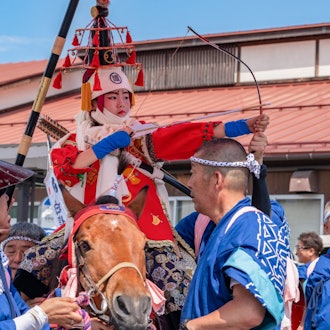
Reiwa 6 Summer Mountain Opening at Ōyama On Saturday, July 27, the summer mountain opening took place, and the climbing gate of Ōyama Afuri Shrine Lower Shrine at the trailhead was opened! This event has continued since the Genroku era, and it is customary for the climbing gate to be opened by “Ohana-kō,” one of the Ōyama pilgrim groups from Nihonbashi, Kodenmacho, Tokyo “Sange, sange (flower scattering), rokkon shōjō (purification of the six roots) — the mountain is clear skies, rokkon shōjō,” as they chant the hanging nenbutsu while ascending straight from the temple lodging to the lower shrine, followed by the gate-opening ritual (from 8:30). Sange… scattering flowers to purify Rokkon… the six human senses: eyes, ears, nose, tongue, body, and mind Venue: Ōyama Afuri Shrine Lower Shrine Contact: Ōyama Afuri Shrine Office 0463-95-2006 On July 13, ahead of the summer mountain opening, Ōyama Tourism Promotion Association carried out trail cleaning. Local residents and others swept away dead leaves with brooms and rakes, and sprayed pesticide to control leeches (yamahiru), preparing the trails to welcome those who will come for summer mountain climbing! The summer mountain season starts now. Enjoy your climb safely and with fun! *Image from the 2023 summer mountain opening Image of the 2024 leech-control pesticide spraying
… View More
  • Japan
  • Kanagawa Prefecture
  • Isehara
  • Summer
  • Oyama Afuri Shrine
  • Mt. Oyama-Tanzawa Mountains
  • Sightseeing
  • Traditional culture
  • Tourism Association
Suwa Tourism Association
Jul. 17, 2024
Summer tradition About 300 glass wind chimes were displayed in the concourse in front of the ticket gates at JR Kami‑Suwa Station. The wind chimes 🎐 are painted with fireworks 🎇, sunflowers 🌻 and morning glory flowers, and their cool, soothing tones delight visitors to Suwa and local residents. The wind chimes will remain on display through early August. Please do come to Suwa!
… View More
  • Suwa
  • Nagano Prefecture
  • Sightseeing
  • Travel
  • Local PR
  • Japan
  • Suwa Travels
  • Instagrammable
  • Good things about Suwa
  • Photogenic
  • ...and 10 others
Miyazaki Gokase Tourism Association
Jul. 16, 2024
July 15 (Mon) Gion Shrine Summer Festival⛩️✨ On Monday, July 15, the Gion Shrine in the Kuraoka area held its summer annual festival, affectionately known as “Gion-san.”🎉 The day opened with the Morimaki ritual, followed by a ceremony, kagura performances, the sacred procession, and dance presentations—there was so much to enjoy.😊🎶 Although the weather brought rain at first, true to the spirit of “Gion-san,” a break in the clouds appeared by the time the sacred procession ended.☀️ Despite the rain, people from the neighborhood, across the prefecture and beyond, and even from overseas, came out early in the morning to enjoy the festival.🌍✨ It’s wonderful to see a community festival cherished by locals becoming known to and enjoyed by so many people.😌👏 We hope this tradition will continue to be passed on carefully into the future.
… View More
  • Gokase
  • Miyazaki Prefecture
  • Festival
  • Traditional entertainment
  • Traditional culture
  • Tradition
  • Shrine
  • Sightseeing
  • Travel
  • Local PR
  • ...and 7 others
Fukui Ikeda Farm Village Tourist Association
Jul. 16, 2024
Held again this year! Sunday, August 11 (National Holiday) “Noh Village Ikeda Hazuki Takigoi” Enjoy a rich program that brings together local folk performing arts and Noh and Kyogen performed by a Living National Treasure✨ See them all at once for a memorable experience 😊 Please visit Ikeda Town this summer! Program - Dengaku from Suikai’s dance repertoire Dengaku “Karasu Tobi” and Noh dance “Kureha” - Iwami Kagura from Kado Kagura Troupe “Jinrin” and “Orochi” - O-kura School Kyogen “Kaminari (Thunder)” Performers: Shigeyama Shichigosume, Shigeyama Munenobu, and others - Kongo School Noh “Tamura Nagashogi” Performers: Kongo Eikin, Kongo Ryukin, and others Advance ticket outlets - Pia Tickets web [P code: 527-559] - Ikeda Town (Kotte Kote Ikeda, etc.) - Fukui City (Pario, Bell) - Sakai City (Al Plaza Ami, Heartpia Harue) - Ono City (Vio) - Sabae City (Al Plaza Sabae) - Echizen City (Takefu Rakuichi, Shipi, Imadate Art Museum)
… View More
  • Ikeda, Fukui Prefecture
  • Sightseeing
  • Summer
  • Local PR
  • History
  • Shrine
  • Traditional culture
  • Countryside
Fukui DMO Sakai Tourist Bureau
Jul. 10, 2024
🐋 Prayer for the opening of the sea and the safety of the sea The long-awaited summer has arrived ✨ At two beaches in Mikuni Town, Fukui Prefecture, a sea opening ceremony was held 🌅 to pray for safety Use also conducts water rescue drills to protect the safety of all users, and the Bathing in the sea season is in full swing! 🏖 Mikuni Mr./Ms. Set Beach ・ The shallow and wide beach is Popular with Families! ・ Marine sports are popular 🏄 ・ Held in Mikuni Fireworks Festival on 8/11 Sun! ⁡ Famous as a Spot to watch the sunset. 🏖 Hamachi Beaches ・ It features beautiful sandy beaches and highly transparent seawater! You may be able to observe the fish. ・ In the vicinity, there are plenty of leisure facilities such as Echizen Matsushima Aquarium and Shibamasa World This year is expected 😖 to be hotter than last year You can come to cool off or play to your heart's content! Be sure 🍽️ to stop by the surrounding Sightseeing spots This summer, I'm coming to visit the sea of Mikuni~ ☺️ ࿐·˖✶࿐·˖✶࿐·˖✶࿐·˖✶࿐·˖✶࿐·˖✶࿐·˖✶ In the middle 💘 of the charm of Fukui Prefecture Check out our past posts!
… View More
  • Fukui Prefecture
  • Sakai, Fukui Prefecture
  • Coast/Beach/Sea
  • Nature
  • Sightseeing
  • The skies
  • Local PR
  • Travel
  • Japan
  • Summer
  • ...and 9 others
Isehara Tourism Association
Jul. 8, 2024
Hinata Mushiokuri Join us for the Mushiokuri! Mushiokuri, a traditional ritual dating back to the Edo period, prays for a bountiful harvest, the driving away of crop pests, and protection from disease. Torchlight reflects on the rice paddies’ water, creating an eerie, otherworldly scene. Date and time: Saturday, July 20, 2024, 5:00 PM– Meeting point: Hinata Yakushi From Odakyu Line Isehara Station North Exit, Kanachu Bus platform 3 Take the “Hinata Yakushi” bus for about 20 minutes and get off at the Hinata Yakushi terminal; walk 15 minutes along the approach to the temple. Participation fee: Free. If you carry a torch, an additional fee of 500 yen applies (junior high school students and older). Contact: Hinata Mushiokuri Preservation Society Office 0463-95-0234 (Yamaguchi)
… View More
  • Isehara
  • Nature
  • Sightseeing
  • Events
  • Travel
  • Traditional culture
  • Tourism Association
  • Odakyu Line
Miyazaki Gokase Tourism Association
Jul. 4, 2024
Traditional Performing Arts of Gokasecho, Miyazaki Prefecture — Usu-daiko Dance The Usu-daiko dance performed at the autumn grand festival of Gion Shrine was once offered on the lunar calendar date of September 9, so it is also called the "kunchi dance," and it has been passed down for more than 400 years. It is said to have begun when members of the defeated Taira clan, driven from Kyoto and wandering in exile, reached the mountain hamlet of Shiiba on their way to safety and, while remembering the glittering capital, danced in the village of Kuraoka. The dance shows a poised, dignified movement within its grace, evoking the hearts of people from the capital, and it is offered each year at Gion Shrine’s autumn festival. <Legendary Events>-------------------------------------------------------------------------------------- In the first year of Bunji (1185), near the end of the Genpei conflicts, remnants of the Taira clan who were defeated at the Battle of Dan-no-ura fled into the interior to evade the Genji pursuit. They reached the village of Kuraoka and, on their way to Mt. Shiiba, left the weak, women, and children in the mountains near Kuraoka Hakki because of the steep, treacherous roads. In Genkyu 2, the Kamakura shogunate did not ease its pursuit of the Taira remnants and ordered Nasu Daihachiro Munenaga to hunt down the clan that had fled into the Kyushu Mountains. Receiving the order, Nasu Daihachiro's party entered Kuraoka intending to head for Shiiba, and finding the Taira fugitives in Kuraoka lacking the will to fight, they staged a dance of shared company to comfort them after the long journey, setting aside the victors' arrogance to show compassion for the defeated. ---------------------------------------------------------------------------------------------------------------- The dance described above became the foundation of the Kuraoka Usu-daiko dance, which, after cycles of prosperity and decline and several relocations over the ages, is said to have survived in its present form. Dancing to the beat of drums and bells, performers display dignified movements within an overall elegance. In recent years, the Gion Shrine Usu-daiko Dance Preservation Society, with the cooperation of children from Gokase Nature School and local parishioners, has carried on the dance. Schedule for the Usu-daiko dance: every year on October 9.
… View More
  • Gokase
  • Miyazaki Prefecture
  • Traditional entertainment
  • Tradition
  • Traditional culture
  • Sightseeing
  • History
  • Shrine
  • Local PR
  • Instagrammable
  • ...and 5 others
Miyazaki Gokase Tourism Association
Jul. 4, 2024
Traditional Performing Arts of Gokasecho, Miyazaki Prefecture: Kuraoka Staff Technique The Kuraoka staff tradition follows the Ōkuruma school, said to be a martial art founded by Marume Kurando (one of the four greats of the Shinkage tradition) from the Higo Sagara domain. Also called Shinkage Ōkuruma Musō-ryū, documents show the earliest mention of Kuraoka in the early Edo period. After that, the art passed through Mamimahara and Omae in Shiiba Village before returning to practitioners in Kuraoka at the local end of the line. Kuraoka staff techniques use two kinds of staff: the long staff, 6 shaku 2 sun (about 188 cm), and the short staff, 3 shaku (about 91 cm). The forms are basically defensive. There are over thirty paired forms, including long staff versus short staff and staff versus sword. Forms that employ the sword are commonly called shiraha (white-blade). The Kuraoka Staff Preservation Society offers a shiraha dedication at the summer grand festival of Gion Shrine and provides instruction to students at Kuraoka Junior High School.
… View More
  • Gokase
  • Miyazaki Prefecture
  • Traditional entertainment
  • Tradition
  • Traditional culture
  • Sightseeing
  • History
  • Shrine
  • Local PR
  • Instagrammable
  • ...and 5 others
Miyazaki Gokase Tourism Association
Jul. 4, 2024
Traditional Performing Arts of Gokasecho, Miyazaki Prefecture: Murono Yoi Kagura The Murono Yoi Kagura at Mikasho Shrine is said to have been handed down during the Meiji era from the Iwato Kagura lineage, specifically the Kuwanouchi Shrine Kagura and the Furudono Shrine Kagura. The sake-straining dance has become a merry performance portraying a farming couple. In the mid-Meiji period, Minosuke Kai, the first head of the Murono district, brought kagura from Furudono to the Konpira-yama festival, central to the Murono and Akatani districts, and passed it down to the present day. The tradition once died out, but it was reformed when kagura was requested for the Tsuhana Tunnel breakthrough ceremony in 1972 (Showa 47). Murono Yoi Kagura schedule: the second Saturday in December
… View More
  • Gokase
  • Miyazaki Prefecture
  • Traditional entertainment
  • Traditional culture
  • Tradition
  • History
  • Shrine
  • Sightseeing
  • Local PR
  • Instagrammable
  • ...and 5 others
Miyazaki Gokase Tourism Association
Jul. 4, 2024
[Miyazaki Prefecture Gokasecho Traditional Performing Arts] Kuraoka Gion Kagura Kuraoka Gion Kagura is a kagura preserved at Kuraoka’s Gion Shrine. Its origins are said to trace back to dances performed in the broad courtyard of the ancient Kogamure Shrine recorded in the Engishiki. In Genryaku 2 / Juei 4 (1185), after the Heike clan’s defeat at the Battle of Dan-no-ura, members of the Heike fled through the Kyushu mountains and reached Kuraoka, then pressed further into the remote mountains toward Shiiba. At that time, court entertainments and sacred music from Kyoto—gigaku, gagaku—and Ise-style kagura that the Heike brought with them blended into the existing local kagura, and over time this fusion developed into a distinctive form. The kagura’s sound is said to have been shaped by a drum made from the trunk of a walnut tree grown in the hidden recesses of Mt. Shiraiwa, stretched with deerhide taken from the remote mountains and bound at both ends with hemp twine; a flute made from bamboo with holes bored in it; and graceful, capital-style rhythms and hand clapping. These elements combined into the unique musical pulse of the Kuraoka kagura. In July 2023, the Kuraoka Gion Kagura Preservation Society revived this ancient kagura drum. Kuraoka Gion Kagura schedule: mid-July (Gion Shrine), early October (Gion Shrine), mid-November (Amanatsu Shrine)
… View More
  • Gokase
  • Miyazaki Prefecture
  • Traditional entertainment
  • Traditional culture
  • Tradition
  • Shrine
  • History
  • Sightseeing
  • Local PR
  • Instagrammable
  • ...and 5 others
Miyazaki Gokase Tourism Association
Jul. 4, 2024
Miyazaki Prefecture Gokasecho Traditional Performing Arts: Kuwanouchi Shrine Kagura Kuwanouchi Kagura is believed to have begun in the early Meiji era. A surviving costume is dated Meiji 3, and the shrine’s relocation to Habu in the same year suggests the kagura started around that time. The masks used are mainly the hannya mask, more frequently employed than in other kagura, and the performance is characterized by a faster tempo. The whole community works together to pass the tradition to future generations, putting great effort into training successors. In spring and autumn, the kagura is offered at the Kuwanouchi Shrine grand festival. In January, a night-long kagura dedication prays for a bountiful harvest and the well-being of residents. Kuwanouchi Shrine Night Kagura Schedule…Every year on the second Saturday of January
… View More
  • Gokase
  • Miyazaki Prefecture
  • Traditional entertainment
  • Traditional culture
  • Tradition
  • Shrine
  • History
  • Sightseeing
  • Local PR
  • Instagrammable
  • ...and 5 others
Miyazaki Gokase Tourism Association
Jul. 4, 2024
[Miyazaki Prefecture Gokasecho Traditional Performing Arts] Furutono Shrine Kagura During the Muromachi period, local jinkagura and Iwato kagura were offered together here for rites, but through several revivals Ise kagura became blended in, producing a slower-tempo (roku-choshi) kagura that continues to the present day. The origin of this kagura is the “Amano-Iwato Opening,” and it was performed to pray for a bountiful harvest and household safety. From Taisho 6 (1917) it also included prayers to calm fires; today it additionally includes traffic safety prayers, and a night kagura festival is held every January. Furutono Shrine night kagura schedule…mid-January
… View More
  • Gokase
  • Miyazaki Prefecture
  • Traditional entertainment
  • Tradition
  • Traditional culture
  • Shrine
  • History
  • Sightseeing
  • Local PR
  • Instagrammable
  • ...and 5 others
Miyazaki Gokase Tourism Association
Jul. 4, 2024
Traditional Performing Art of Gokasecho, Miyazaki Prefecture: Ara-Odori (UNESCO Intangible Cultural Heritage) The Ara-Odori of Gokase is a style of elegant festival dance that was designated a National Important Intangible Folk Cultural Property on January 8, 1987 (prefectural designation: May 15, 1962). In February 2021, a group of 41 nationwide “furyu odori” (elegant festival dances), including Gokase’s Ara-Odori, was selected as a candidate for inscription on the UNESCO Intangible Cultural Heritage list. A nomination dossier was submitted to UNESCO in March of the same year, and the dances were officially inscribed on November 30, 2022. “Furyu odori” embodies the spirit of flamboyance and eye-catching elegance. Performers wear elaborate costumes and carry decorative props as they dance to songs and the sound of flutes, drums, and small gongs. Across Japan, 42 furyu odori entries (covering 25 prefectures and 43 municipalities) are designated National Important Intangible Folk Cultural Properties. In Miyazaki Prefecture, Gokase’s Ara-Odori is the only designated example. These dances carry prayers from local communities for protection from calamities, memorials for the dead, prosperous harvests, and rain. Villagers of all ages take part during festivals and annual events. Each locality’s history and natural environment are reflected in its performance, and the dances serve as a vital source of community energy. The Ara-Odori of Gokase is said to have begun in the Tensho era (1573–1592) when Sakamoto Iga no Kami Masayuki, lord of Sakamoto Castle (upstream of the Mikasho River), started the dance to raise his troops’ morale before going to war. Later, in the Keicho era (1596–1615), his grandson Sakamoto Yamashiro no Kami Nyudo Kyukaku established a ritual code for offering the dance to the guardian deity Futakami Daimyojin (now Mikasho Shrine). At that time, it is said that a successor from the temple called shinbochi oversaw funerary rites, and a monkey kept at the temple was also made to join the dance. One theory holds that the dance originated in Sakamoto, in Ōmi Province (modern Shiga Prefecture). However, the Nisshu Takachiho Kokon Jiran-ki (collected in Volume 4 of the Hyuga Local Historical Materials) records that descendants of Sasaki Rokkaku Takayori from Ōmi fled to Takachiho and served the Mitai clan; their descendants later took the names Saho, Sakamoto, and Masaki. The Sakamoto mentioned here is not the Sakamoto of Sakamoto Castle but the Sakamoto from Mukoyama to Kanegase, a separate lineage with its own origins distinct from the Minamoto, Oogami, or Fujiwara clans. Ara-Odori schedule: every year on the fourth Sunday of September
… View More
  • Gokase
  • Miyazaki Prefecture
  • Cultural Property
  • Traditional entertainment
  • Tradition
  • Traditional culture
  • History
  • Shrine
  • Sightseeing
  • Local PR
  • ...and 6 others
Fukui DMO Sakai Tourist Bureau
Jul. 2, 2024
This Spring Renewal 📢 "Wind Forest" Located on a small hilltop in Mikuni Town, Sakai City, Fukui Prefecture, it is a popular inn as a tourist base.•* ̈* 🍀 The wallpaper in the Inside the Museum uses precious Katsugaya stone, which is also used for the tiles of Maruoka Castle, and Echizen washi paper, which is counted as one of the three Daiwa papers in Japan. The interior of the newly renovated guest room 1 room has a glossy lacquered floor and Echizen washi wallpaper. 💎 It has 😌🪄 a profound and modern Japanese atmosphere The orange sunset that can be seen from the guest room is sure 🌅👌🏻✨ to heal your tired mind and body Restrooms available are large public baths with open-air baths and Roux with semi-open-air baths ♨️ For dinner, we recommend 🍴✨ eating out courses that you can choose from miyoshiro teppanyaki, S'Amuser French, Birdland Italian, Ushiwakamaru yakiniku, etc. You can 👍🏻✨choose from a wide variety of partner stores that Representative the gourmet Towns︎ ́- 𓂃◌𓈒𓐍𓂃◌𓈒𓐍𓂃◌𓈒𓐍𓂃◌𓈒𓐍𓂃◌𓈒𓐍𓂃◌𓈒𓐍𓂃◌𓈒𓐍 Forest of the Wind 〒913-0048 4-5-16 Midorigaoka, Sakai City Mikuni Town, Fukui TEL:0776-97-9880 Reservations 9:00~19:00 Check-in/15:00 Check-out/10:00 Parking: Free 8 cars All rooms are equipped with WIFI ◈ Japanese modern 12 tatami Roux 1 room new! ◈ Roux with double semi-open-air bath 1 room ◈Japanese-style room 12 tatami Roux 4 rooms 𓂃◌𓈒𓐍𓂃◌𓈒𓐍𓂃◌𓈒𓐍𓂃◌𓈒𓐍𓂃◌𓈒𓐍𓂃◌𓈒𓐍𓂃◌𓈒𓐍
… View More
  • Sakai, Fukui Prefecture
  • Fukui Prefecture
  • Mikuni Minato
  • Sightseeing
  • Travel
  • Traditional Japanese Food
  • Gourmet
  • Local PR
  • History
  • Architecture
  • ...and 3 others
Toyooka Village Tourism Association
Jun. 26, 2024
◆Origin of the Otegata Suwa Shrine and the Otegata Stone◆ The origin of the Otegata Stone lies in the large handprint found on a huge rock enshrined at Suwa Shrine. Long ago, a messenger came from Takamagahara, the heavenly plain where the eight million gods gather, to Izumo to urge Okuninushi to submit. Okuninushi immediately agreed and surrendered, but his young son, Takeminakata, refused, breaking off negotiations and eventually fighting with Takemikazuchi from Takamagahara. Takeminakata was defeated and fled, but Takemikazuchi pursued him relentlessly and finally caught up with him in the area of Sahara. Takeminakata surrendered, pressed his hand onto a nearby stone as a pledge of submission, and peace was made between the two deities. This place came to be called "Ooinokubo" (the Chase Hollow). The stone is said to have been formed because Takemikazuchi chased Takeminakata here.
… View More
  • Nagano Prefecture
  • Toyooka, Nagano Prefecture
  • Shinshu
  • Toyooka travel time
  • Toyooka Village Tourism Association
  • Minami-Shinshu, Minami-Shinshu area
  • Sightseeing
  • Travel
  • Traditional culture
  • History
  • ...and 2 others
Abhi Sen
Jun. 26, 2024
no season is offseason for Japan. In summer there are so many thing to see and do here in Kawagoe. Kawagoe is a historical town known as coedo or little edo. It is a edo period warehouse district. Tokinokane or the bell tower which is the landmark of Kawagoe can be seen nicely. This couple was enjoying the traditional and historical city in a traditional fashion. The old style house and bell tower in the background makes the atmosphere more beautiful.
… View More
  • Photo Contest
  • History
  • Japan
  • Great view
  • Travel
  • Photography
  • Sightseeing
  • Tokyo
  • Kanto region
  • Summer
  • ...and 10 others
Nishiizu Tourism Association
Jun. 25, 2024
Sanami Shrine Sanbanjo - Held in in November Dedication to the Autumn Festival, the old-fashioned rich Shikisanban is unusual in that three people handle one doll, and the head of the doll used was made in 1820~1860, making it an excellent work of craft. It is performed every year on November 2nd and 3rd in the autumn Festival. 7 p.m. ~ on the 2nd / 8 a.m. on the 3rd~ ■Address Nishi-Izu Town Nishina Sawada, Nishi-Izu Town, Kamo-gun, Shizuoka
… View More
  • Nishiizu
  • Dogashima Beach
  • Izu Peninsula/Izu Archipelago
  • Shizuoka Prefecture
  • Traditional events,annual events
  • Traditional entertainment
  • Traditional culture
  • Doll
  • Tokai region
  • Japan
  • ...and 1 others
Toyooka Village Tourism Association
Jun. 25, 2024
Mibusawa Fudo Falls A beautiful waterfall with a drop of about 17 meters that plunges in a straight line. Revered as sacred water since ancient times, it has long served as a place for ascetic training and ritual purification. The Fudo Myoo statue standing to the left of the falls is said to have been invited from Naritasan in Shimousa Province in Kyōhō 18 (1733). Along with the waterfall, it drew the devotion of many people, and festivals once attracted large numbers of worshippers from nearby villages. A rainmaking legend is also associated with the site. The two stone Buddhist figures standing in front of the Fudo Myoo statue are Kongara Doji (left) and Seitaka Doji (right). They were erected in Shōwa 9 (1934) to commemorate the 200th anniversary of the statue’s enshrinement. At the same time, a silkworm-dedication deity (Kintama-hime), a stone monument inscribed with a poem by Matsuo Taseko, and a commemorative monument engraved by Chizan Kitahara were also installed. A gift of Senior Fifth Rank: a poem by Matsuo Taseko Manse mo taenu nagare ya Mibusawa no Taki no shiraito kurikaeshitsu (The river’s flow goes on through the ages; the white threads of Mibusawa Falls repeat themselves) Details for Mibusawa Fudo Falls Parking A few cars can park on the roadside shoulder Toilets None Other It is about a five-minute walk along a footpath from the parking area. Contact Toyooka Travel Time (0265-49-3395)
… View More
  • Nagano Prefecture
  • Shinshu
  • Toyooka, Nagano Prefecture
  • Toyooka travel time
  • Toyooka Village Tourism Association
  • Minami-Shinshu, Minami-Shinshu area
  • Sightseeing
  • Travel
  • Nature
  • Great view
  • ...and 10 others
かずみさKazMisa
Jun. 14, 2024
"Sawajiri's Terraced Rice Fields" in Marumori Towns, Miyagi Prefecture Masonry, which is rare in Tohoku, is a historic terraced rice field that was developed from the Edo period to the Showa period. It has been selected as one of the "100 Best Terraced Rice Fields in Japan" and was certified as a "Tsunagu Terraced Rice Heritage" by the Ministry of Agriculture, Forestry and Fisheries in the 4th year of Reiwa. I hope that we will always be able to see the original scenery of Japan, which has such a long history.
… View More
  • History
  • Photo Contest
  • Japan
  • Tohoku region
  • Great view
  • Nature
  • Sightseeing
  • Miyagi Prefecture
  • Countryside
  • Rural scenery
  • ...and 8 others
Suwa Tourism Association
Jun. 14, 2024
Kankōchi Suwa!!! Introducing the Takashima Castle Festival! May 26, 2024 — held every year on the fourth Sunday of May. We held the 55th Takashima Castle Festival. This year, 19 acts performed on stage. There were hip-hop dance routines, traditional Japanese dance, taiko drumming, singers, cheerleading, and the Matsumoto Castle matchlock gun corps. The matchlock team left a powerful impression. Even in Japan, this is something you rarely see. The matchlock firearms date back about 430 years, and few groups still maintain and use functioning examples. The Matsumoto Castle matchlock gun corps preserves these guns and passes on the tradition. As a result, you can see matchlock demonstrations at events like those at Matsumoto Castle. The team brought several types of matchlocks. To an amateur eye, I saw two kinds: first a bantsutsu infantry gun, then a chūtutsu medium cannon. They fired blank shots in several formations. The blast was tremendous! At the end, a shooter from Suwa fired the chūtutsu. The sound ripped through the space where we stood. It was truly loud and spectacular!! There were taiko performances and children’s hip-hop dances, with families coming to watch. At the festival you could also buy food stalls and specialties from sister and friendship cities, and try tree climbing!!! Blessed with good weather, many citizens attended. If you have the chance to come to the Takashima Castle Festival, be sure to come and enjoy it!
… View More
  • Japan
  • Nagano Prefecture
  • Suwa
  • Travel
  • Sightseeing
  • Local PR
  • Suwa Travels
  • Good things about Suwa
  • Photogenic
  • History
  • ...and 7 others
Toyooka Village Tourism Association
Jun. 13, 2024
◆Myojin Stone◆ The Myojin Stone is a giant boulder shaped like an ellipsoid, about 2.5 meters in its long axis, 1.8 meters in its short axis, and 1.2 meters tall. No one knows exactly how long it has rested here, but it is thought to have come from the Ina Mountain Range during an ancient flood of the Mibuzawa River. This rock has long been revered by local people as a mysterious stone that, while easily moved by a child’s strength, does not budge even in major floods. At some unknown point in time it became enclosed by a tamagaki fence and has been regarded as a sacred spot serving as a place for worship of Suwa Taisha from a distance. The origin of the name is unclear, but it is said to have begun when the deity Suwa Daimyojin was invited from Suwa Taisha and, until the shrine building (Mibuzawa Suwa Shrine) was completed, the sacred object was enshrined on this rock and rituals were performed. Since then, whenever the shrine has been rebuilt or renovated, it has become customary to use this rock as a temporary resting place for the sacred object. ●Details of Myojin Stone ・A request to visitors Local residents cherish this stone. When entering among the stones and pushing them, please take care not to break the shimenawa ropes or sakaki decorations. ・Facilities There are stairs with handrails. ・Toilet None. ・Parking None (please use the parking lot in front of nearby Mibuzawa Suwa Shrine). ・Contact Toyooka Tabijikan (0265-49-3395)
… View More
  • Nagano Prefecture
  • Toyooka, Nagano Prefecture
  • Toyooka travel time
  • Toyooka Village Tourism Association
  • Shinshu
  • Sightseeing
  • Travel
  • Nature
  • Minami-Shinshu, Minami-Shinshu area
  • Shrine
  • ...and 3 others

Recommended Articles