-
Article
-
Channel
-
Region
-
Season
-
Tag
Articles
-
 Video article 1:12
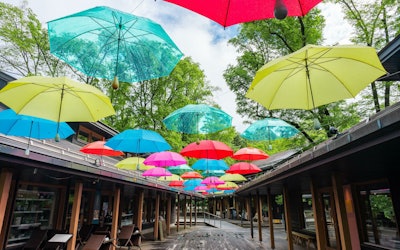
Art that shines in the rain! Video highlights of the Karuizawa Umbrella Sky in Kitasaku County, Nagano Prefecture! Also, how to enjoy Harunire Terrace, where the whole area is buzzing with installations!
Travel Shopping Art & Architecture- 66 plays
- YouTube
Video introduction of Harunire Terrace "Karuizawa Umbrella Sky" in Kitasaku-gun, Nagano Prefecture, Japan. This video, titled "Hoshino area of Karuizawa | Karuizawa Umbrella Sky 2019"(軽井沢星野エリア|軽井沢アンブレラスカイ2019), was uploaded by "Hoshino Resorts." This video shows the 2019 Karuizawa Umbrella Sky event, held every year during Japan's rainy season at Harunire Terrace in the Hoshino area of Karuizawa. The view of colorful umbrellas floating above the wooden deck connecting the different buildings in the area makes it a popular spot for Japanese Instagrammers. From June to early July, you can see many photos of the event on Instagram. This article provides easy-to-understand information about popular events. Be sure to check out the photogenic event in the video. What is Karuizawa Umbrella Sky? Photo:Karuizawa Umbrella Sky, Harunire Terrace Karuizawa Umbrella Sky is an event held in the Hoshino area of Karuizawa, operated by Hoshino Resorts in Karuizawa, Nagano, in Japan's Koshin'etsu region. 2023 will mark the 8th year the event is held. Here, we'll take a look at some things to see during the event. ●Umbrella Arcade The main attraction of the event is the "Umbrella Arcade" which features more than 100 colorful umbrellas floating above the deck of Harunire Terrace. Soap bubbles can be seen floating through the air three times a day, creating an exciting atmosphere for people of all ages. "Rainy Art," a pattern that appears on the wooden deck only on rainy days, and the reflection of umbrellas on the wet wooden deck are two more must-see attractions. [Video] 0:38 - Umbrellas Reflected on the Rainy Wooden Deck ●Bubbles and Umbrella Making Workshops (Held on Weekends) At the plaza next to "Hoshino Onsen Tombo no Yu" (Hoshino Onsen), bubble blowing workshops and umbrella making workshops are held for children to have fun with their parents. ●Exclusive Seasonal Beverages to Go With Japan's Rainy Season Drinks inspired by the colorful Karuizawa Umbrella Sky are also sold during the event. The Rainbow-colored Lemonade, a limited-quantity drink from Café Hungry Spot, is filled with colorful jelly and is the perfect drink for the event. Consider purchasing one and snapping some photos of the colorful drink with the lush greenery in the surrounding area. Karuizawa Umbrella Sky 2023: Event Schedule & Hours The 2023 Karuizawa Umbrella Sky event schedule is as follows: Event Period: June 2 - July 9 Hours: 8:00 pm - 10:00 pm Illumination Hours: 6:00 pm - 10:00 pm Bubbles: 10:00 am, 4:00 pm, 8:00 pm The event will be held at Harunire Terrace, a facility with a variety of restaurants and lifestyle stores in the Hoshino area of Karuizawa. The event is a great way to beat the blues brought on by Japan's rainy season, so definitely consider checking it out. Things to Do at Harunire Terrace at Karuizawa Hoshino Resorts Photo:Karuizawa Umbrella Sky at night Harunire Terrace was named after the more than 100 Harunire (Japanese elm) trees that used to grow in the area. There are restaurants, cafes, sweets, and lifestyle & relaxation stores, all connected via a wooden deck. You can see a video of Harunire Terrace after the sun sets in the video. [Video] 0:47 - Harunire Terrace at Night You can enjoy shopping or even just window shopping at the various shops in the area, all the while enjoying Karuizawa Umbrella Sky, or just relax and enjoy a meal or tea time at a café. Pets are welcome on the terrace as well, so it's not uncommon to see people with their dogs. Before visiting Harunire Terrace, we recommend checking to see if there are any events being held in the area when you're planning on visiting. Harunire Terrace hosts the Umbrella Sky during the rainy season in Japan (early June to mid-July), illuminations around Christmas, and Halloween-related events in autumn. In addition, there are many trendy shops and specialty stores to browse, so you might consider making a list of the shops you want to take a look at before visiting if you have limited time. Restaurants, Cafes, and Souvenir Shops at Harunire Terrace Photo:Chairs at Harunire Terrace, Karuizawa Harunire Terrace features 16 restaurants, cafes, and other eateries, as well as furniture and even souvenir shops. Sawamura is a bakery/restaurant that is popular on Japanese social media. They offer takeout, but many people sit in for lunch. The pasta lunch comes with delicious bread, and the juicy hamburgers are to die for! After grabbing some lunch, you can relax on the terrace and enjoy a delicious cup of coffee from Maruyama Coffee. There's also a bookstore attached to the restaurant, so you can relax while reading. Kawakamian is known for its delicious soba noodles as well as shrimp tempura, etc. If you visit the restaurant in the evening, consider indulging in some delicious sake with various dishes, such as grilled duck and their tasty pork tatsuta-age (a marinated, fried pork dish). MORIASOBI is a shop that sells furniture and sundries, but it also serves meals and is open for tea time. We recommend trying the hot chocolate here, a popular drink on Japanese Instagram, which is made with foamed milk and melted chocolate. Izumiya (和泉屋) is a great shop for souvenirs and is popular for its delicious Japanese- and Western-style confections. The cheesecake, called "Hanjuku Cake," has an irresistible soufflé-like texture. The shop also offers a lineup of cute products for sale. Other Things to Do in Karuizawa Here are a few places to check out in the Karuizawa area: Karuizawa Shiraito Falls From Nakakaruizawa Station, the closest station to Harunire Terrace, you can take a train to Karuizawa Station. From there, there are regularly schedules buses that will take you to the Shiraito no Taki Bus Stop (白糸の滝). It's an approximately 25-minute bus ride to the base of the trail, and then a 5-10-minute hike to the waterfall itself. Hours: Open 24 hours. ※Shops at the base of the trail: 9:00 am - 4:00 pm (Some shops may be closed in the case of inclement weather) Admission Fee: Free Karuizawa Prince Shopping Plaza An outlet mall at Karuizawa Station with a number of shops, cafes, and restaurants selling everything from brand-name goods like Prada to snowboarding gear, such as Burton. The plaza features a large pond at its center making it feel like a Japanese strolling pond garden. Hours: 10:00 am - 7:00 pm Admission Fee: 720 yen (bus fee) Tombo no Yu Located just up the road from Harunire Terrace, Tombo no Yu (Tonbo no Yu) is a hot spring that opened in 1915. It's a great place to relax after a long day of sightseeing. Be aware that there can be long lines to enter during holidays, such as Golden Week. Hours: 10:00 am - 10:00 pm Admission Fee: Adults: 1,350 yen, Children (Ages 3 - Elementary school students): 800 yen Additionally, if you're looking to get some exercise and enjoy the weather on a sunny day, you can rent a bike from a bike rental shop and ride around the Karuizawa area exploring the scenery, visiting shops, etc. The bike rental shops in the area have guidebooks with biking routes of various lengths to help you navigate the area according to your schedule as well. Keep in mind that the bikes can be fully rented out during holiday seasons, so it's a good idea to make a reservation in advance. A Brief Introduction to Karuizawa Karuizawa, located in the mountains of south-eastern Nagano, inside Joshin'etsu Kogen National Park, sits at an elevation of 850 to 1,000 meters above sea level and is a popular summer resort in Japan. Karuizawa has long been popular as a vacation home for many famous and wealthy people because of its easy accessibility (approximately 1 hour from central Tokyo). Summary of Karuizawa Harunire Terrace, Umbrella Sky The Hoshino area of Karuizawa also offers accommodations and hot springs, so you can enjoy the upscale Karuizawa lifestyle in a relaxing setting surrounded by nature. Japan's rainy season has a tendency to make people feel gloomy, but Karuizawa's Harunire Terrace will welcome you with colorful umbrellas, lush greenery, and flowers. If you're feeling down this rainy season, consider visiting Harunire Terrace to cheer yourself up. You're sure to feel refreshed! [Official website] Harunire Terrace - The Hoshino Area of Karuizawa [TripAdvisor] Harunire Terrace -
![Mimurotoji Temple – Kyoto's Hydrangea Temple | Hydrangea Garden Light-Up 2026: When Is Peak Bloom? Dates & Admission Fees – Complete Guide [Uji, Kyoto]](/img/dot.gif) Video article 1:52
Video article 1:52Mimurotoji Temple – Kyoto's Hydrangea Temple | Hydrangea Garden Light-Up 2026: When Is Peak Bloom? Dates & Admission Fees – Complete Guide [Uji, Kyoto]
Nature Travel- 198 plays
- YouTube
What Kind of Place Is Mimurotoji Temple, the Hydrangea Temple? Watch the Magical Night Light-Up in 4K This video, titled "【4k】Hydrangea of Mimurodo temple: Kyoto" (【4k】三室戸寺・あじさい園-Hydrangea of Mimurodo temple:Kyoto), was uploaded by "Anna Film Production." Mimurotoji Temple (三室戸寺, Mimurotoji, also read as Mimurodoji), located in Uji, Kyoto, is one of Japan's most celebrated hydrangea destinations, affectionately known as the "Hydrangea Temple." With approximately 20,000 hydrangeas of 50 varieties blanketing a sprawling 5,000-tsubo (roughly 4-acre) garden, the sight is simply breathtaking. This stunning 4K video captures every detail of the garden's magical evening light-up in vivid clarity. [Video] 0:36 - Illuminated Hydrangeas at Mimurotoji Temple What Kind of Temple Is Mimurotoji? Its 1,200-Year History and Deep Connection to The Tale of Genji Photo:Mimurotoji Temple, Kyoto Mimurotoji Temple, an important temple in Western Japan, dates back to the Nara period (710–794 AD). According to temple legends, it was founded by a high-ranking Buddhist monk at the request of Emperor Konin in 770 AD, approximately 1,200 years ago. Mimurotoji Temple was originally written "御室戸寺" in Chinese characters, but after it served as a detached palace for Emperor Konin, Emperor Kazan, and Emperor Shirakawa, the first character "御" was replaced with "三" (three), to honor the three emperors, giving us the name "三室戸寺" (Mimurotoji). After many ups and downs throughout history, the current main hall was rebuilt in 1814 during the late Edo period by the monk Honyo. The temple is also considered to be the model for the mountain temple depicted in Uji Jujo (The Ten Chapters of Uji), one of the final sections of The Tale of Genji. The name "Ukifune" is engraved on a bell cast approximately 350 years ago, and also on an ancient stone monument nearby. These inscriptions suggest that Mimurotoji Temple has been cherished as a site connected to The Tale of Genji since at least the early Edo period (circa 1603 to 1700 AD). When Is the Best Time to See the Hydrangeas at Mimurotoji Temple in 2026? A Complete Guide to Light-Up Dates and Admission Fees Photo:Hydrangeas at Mimurotoji Temple, Kyoto Visitors to the temple can enjoy the sight of 20,000 hydrangeas of 50 different varieties, including Western hydrangeas, lacecap hydrangeas, oakleaf hydrangeas, and the rare Shichidanka (七段花), known as the "phantom hydrangea." The best time to visit is from early June to early July. The official Mimurotoji Temple Instagram and X (formerly Twitter) regularly post updates on the blooming status, so be sure to check them before heading out. We highly recommend that visitors planning to see the 2026 hydrangeas check the temple's official social media for the latest bloom information in advance. Along with the illuminated hydrangeas, another beloved highlight is the heart-shaped hydrangea. Popularized by Iwai Seika, a teahouse operating within the temple grounds, it has become famous as the origin of the "heart hydrangea that brings happiness." Keep your eyes peeled for it as you wander through the enchanting illuminated garden. [Video] 0:29 - A Heart-Shaped Hydrangea Heart-shaped amulets and Ema (絵馬, votive plaques) are also available. In addition, there are 4 types of regular goshuin (御朱印, temple stamps) and seasonal limited editions, so stamp collectors should be sure to check them out. ●Hydrangea Garden (Daytime) May 31 – July 5, 2026 Hours: 8:30 – 15:10 (last entry 15:40) ●Hydrangea Garden (Light-Up) Saturdays and Sundays only, June 13 – 28, 2026 Hours: 19:00 – 21:00 (registration closes at 20:30) Daytime and evening sessions operate on a separate-entry basis. Admission is 1,000 yen for adults and 500 yen for children for both sessions. Is Mimurotoji Temple Also a Famous Power Spot? Experience a Boost in Fortune with the Guardian Rabbit, Snake, and Ox Photo:Ugashin, the guardian snake of Mimurotoji Temple, Kyoto Unlike most temples that feature komainu (guardian lion-dogs), Mimurotoji Temple has stone statues of a guardian rabbit (Fukutoku-usagi) and a guardian ox (Hosho-ushi) near the main hall, as well as a guardian snake (Ugashin) beside the stone steps. Ugashin is a striking statue with a human head and snake body. Rubbing it is said to bring good fortune and financial luck. The guardian rabbit statue stands 1.5 meters tall (~5 ft.) and holds a large ball. Legend has it that if the egg-shaped stone inside the ball stands upright, your wish will come true. Stroking the guardian ox is said to bring victory and good luck as well. Note that the main hall area is not accessible during the evening light-up, so be sure to pay your respects and seek a fortune boost during your daytime visit. Is There More to Mimurotoji Temple Than Hydrangeas? A Guide to Four Seasons of Flowers and Year-Round Highlights Photo:Azaleas at Mimurotoji Temple, Kyoto The temple sits on a 5,000-tsubo (approximately 4-acre) plot of land, and in addition to the hydrangea garden, the grounds also feature an azalea garden and a weeping plum garden. The Shidare Ume (weeping plum) Garden is home to 250 weeping plum trees in red and white. In 2026, the garden will be open from February 14 to March 22, from 8:30 to 15:10. The azalea garden features approximately 20,000 azalea plants, including Kurume azaleas and Hirado azaleas. In 2026, the Kurume Azalea Garden will be open from April 11 to April 26, and the Hirado Azalea Garden from April 18 to May 10, with both open from 8:30 to 15:10. Peak bloom typically falls around the Golden Week holiday period. In front of the main hall is a lotus garden with 250 pots of lotus flowers in bloom. The garden is typically open from late June to early August, offering a scene that feels like a glimpse of paradise. In July, when the lotus flowers are at their peak, the temple also hosts a "Lotus Wine Drinking Party" (Hasu-zake wo Tanoshimu Kai), where visitors pour sake into lotus leaves and drink it through the stem. Believed to be beneficial for health and longevity, it's a truly unique experience worth trying. Admission to the azalea garden, weeping plum garden, and lotus garden is 1,000 yen for adults and 500 yen for children. Please note that the grounds include steep slopes and stairs, so allow plenty of time for your visit. Things to do Near Mimurotoji Temple Here are a few places you should consider checking out if you're planning on visiting Mimurotoji Temple: Tale of Genji Museum The Tale of Genji Museum, which opened in 1998, introduces the world of The Tale of Genji through various models and videos. The museum hosts regular lectures and features a collection of more than 3,000 books for visitors to enjoy. Approximately 15 minutes on foot from Mimurotoji Temple. Hours: 9:00 am – 5:00 pm (last entry 4:30 pm) Admission Fee: Adults 500 yen, Children 250 yen. ※Discounts available for groups of 30 or more. Daikichiyama Observation Deck An observation deck offering scenic views of the natural landscape of Uji, Kyoto. From the Tale of Genji Museum, it's about a 2-minute walk to the base of the mountain. From there, it's an approximately 15-minute climb to the observatory along a gently winding path that is manageable for most visitors. Hours: Open 24 hours Admission Fee: Free Byodoin Temple Byodoin Temple is one of the most famous temples in Japan. Built during the Heian period, it boasts a long history and stunning architecture. The Phoenix Hall is particularly photogenic and not to be missed. Visitors can explore the temple murals, stroll through the garden, and enjoy a cup of tea at the temple teahouse. Approximately 20 minutes on foot from Mimurotoji Temple. Hours: Garden: 8:30 am – 5:30 pm (last entry 5:15 pm), Phoenix Hall: 9:30 am – 4:10 pm (max 50 entrants per 20-min slot), Temple Museum: 9:00 am – 5:00 pm (last entry 4:45 pm), Museum Shop: 9:00 am – 5:00 pm, Tea Room "Sabo Toka": 10:00 am – 4:30 pm (last order 4:00 pm). Admission Fee: Byodoin Temple Garden and Museum: Adults 600 yen, Junior high and high school students 400 yen, Elementary school students 300 yen. ※Discounts available for groups of 25 or more. The Tale of Genji Museum and Daikichiyama Observation Deck are located between Mimurotoji Temple and Byodoin Temple, so we recommend the following route: Mimurotoji Temple → Tale of Genji Museum → Daikichiyama Observation Deck → Byodoin Temple You could also start at Byodoin Temple and work your way towards Mimurotoji Temple. A Brief Introduction to Uji, Kyoto Located south of Kyoto, Uji is a city in Japan known for its delicious tea and its ties to The Tale of Genji. The city is home to a number of historic attractions, including Byodoin Temple, an architectural masterpiece, and Ujigami Shrine, believed to be the oldest surviving Shinto shrine in Japan. Both are registered UNESCO World Heritage Sites. If you're looking to explore Japan's ancient culture, history, and traditions, Uji is well worth a visit and is highly recommended as a destination on any Japan travel itinerary. What Should You Know Before Visiting Mimurotoji Temple in 2026? Summary We've introduced everything you need to know about the hydrangea garden at Mimurotoji Temple, an ancient temple in Uji, Kyoto. Beyond its fame as a flower temple, Mimurotoji is also cherished as a power spot. As you climb the stone steps, the smiling guardian rabbit welcomes you — stroke its large ears to receive its blessing of good fortune. In addition to the hydrangea garden, Mimurotoji Temple also offers a beautiful weeping plum garden and azalea garden. Visiting during each flower's respective season is sure to reveal a whole new side of this remarkable temple. The 2026 hydrangea garden light-up is scheduled for Saturdays and Sundays only, from June 13 to June 28. Check the official website and social media for the latest bloom updates, and plan your visit to catch the hydrangeas at their most magnificent. [TripAdvisor] Mimurotoji Temple -
Video article 8:16
What is the highlight of the hydrangea temple in Kyoto? A relaxing spot during the rainy season where you can enjoy colorful flower hand-watering.
Nature Travel Art & Architecture- 150 plays
- YouTube
Hydrangea video introduction of “Yangtani-dera”, Yanagitani Kannon in Nagaokakyo City, Kyoto Prefecture, Japan. This video, titled "Hydrangea and Yanagidanikannon Youkoku-ji Temple"(【京都の紫陽花】柳谷観音(楊谷寺):hydrangea and Yanagidanikannon Youkoku-ji Temple/花手水)) was uploaded by "Kawaii Kyoto." Located deep in the mountains, approximately 10 minutes from the city center of Nagaokakyo in Kyoto via car, sits Yanagidani Kannon (Yokokuji Temple), a temple with a variety of interesting sights throughout the year. A temizuya or chozuya is a basin at a temple or shrine where water is available for washing and purifying the hands and mouth before visiting the temple or shrine. It is often located alongside the approach to the temple/shrine. Yokokuji Temple is said to be the birthplace of hanachozu (花手水), which are chozuya filled with flowers. During hydrangea week, the temple grounds are filled with colorful hydrangeas. The color of hydrangeas, a cool light blue, is said to refresh the body and mind and relieve stress. Enjoy the beautiful images of Yokokuji Temple to the sound of birds chirping, along with the flower pots, the hydrangeas blooming on the temple grounds, and the lush greenery of the garden. Introduction to Yokokuji Temple, Kyoto, One of the Most Famous Ancient Temples in Japan Photo:Yanagidani Kannon (Yokokuji Temple), Kyoto Located in Nagaokakyo, Kyoto, Yokokuji Temple is an ancient temple that was opened in the early Heian Period (794 - 1185 AD). The principal deity is the eleven-faced, thousand-armed, thousand-eyed Kannon (Goddess of Mercy), who is said to cure people of eye diseases. The temple is open to the public on the 17th of every month, so be sure to remember that if you're planning on stopping by for a visit. The temple is also home to a spring water called "Okouzui," which is believed to be a holy water for healing eye diseases, and attracts many visitors. The Seasonal Faces of the Flower Pots at Yokokuji Temple Photo:Hanachozu at Yanagidani Kannon (Yokokuji Temple), Kyoto Yokokuji Temple, rich in natural beauty, offers different views in each season. These include Hydrangea Week from early June to early July, when the hydrangeas are at their best, and Momiji Week from mid-November to mid-December, when the autumn leaves are at their best. The hanachozu (the water basins filled with flowers) are highly popular on Japanese social media. In addition to the hydrangeas, there are cherry blossoms in spring, sunflowers and dahlias in summer, and colorful autumn leaves in the fall, all of which can be seen decorating the flower pots in their respective season. Be sure to check out the official Instagram page for Yokokuji Temple (@yanagidanikannon) to see the seasonal flowers floating in the flower basins. In the summer of 2022, the temple grounds were also decorated with pinwheels and wind chimes. Hydrangea Week at Yokokuji Temple Photo:Hydrangeas at Yanagidani Kannon (Yokokuji Temple), Kyoto Hydrangea Week at Yokokuji Temple is usually held around early June to early July, the best time to view the hydrangeas. The official website confirms that the hydrangeas will be in full bloom on June 23 in 2023. There are approximately 5,000 hydrangeas at Yokokuji Temple, making it the largest hydrangea temple in Kyoto. If you're thinking about visiting during the full bloom period, be sure to check the official website or Instagram to see the blooming conditions before you visit. Moreover, crowds can be expected during the Hydrangea Festival and Momiji Week. There are several parking lots available, but please note that the parking lots in front of the gate fill up quickly during the high season. Hands-on Classes at Yokokuji Temple Yanagidani Kannon/Yokokuji Temple also offers a variety of hands-on classes. In addition to seal making using pressed flowers, which is held on the 17th of every month, bead bracelet making and other classes are held occasionally as well. If you're interested, be sure to follow their social media accounts to find out when these classes are held. They also have a variety of regular classes as well. Colorful Autumn Leaves at Yokokuji Temple Photo:Autumn leaves in a hanachozu at Yanagidani Kannon (Yokokuji Temple), Kyoto In autumn, Yokokuji Temple is actually a great spot for viewing the autumn foliage. The entire mountain is beautifully colored and you can enjoy the autumn leaves from the temple precincts. The best time to view the autumn leaves is from November to mid-December. In 2022, the best time to view the leaves was in late November, so you can expect the same in 2023. It's a lesser-known tourist attraction, so it's possible to avoid the crowds here to a degree in a relaxed and quiet atmosphere. The inner shrine approach and Ganriki Inari (眼力稲荷) shrine area of the precincts of the temple, as well as Kamishoin (上書院) and Meisho Garden (名勝庭園, Meisho Teien), which is open to the public only on the 17th of each month, are also highlights of the autumn foliage season. During Momiji Week, the garden is illuminated brilliantly at night, creating a wonderful atmosphere. Why not capture the beautiful scenery with your camera at Yokokuji Temple, where there are many scenic spots to view the autumn leaves? How to Get to Yanagidani Kannon (Yokokuji Temple) Unfortunately, Yokokuji Temple is not the most accessible attraction. The easiest way to get to the temple if you don't have your own vehicle is by taxi from Nagaokakyo Station, Nagaoka-Tenjin Station, or Nishiyama-Tennozan Station (Approximately 10 mins.). Even by bus, from the nearest bus stop it's a 40-minute walk to the temple. If you like hiking or just want to explore a lesser-known tourist attraction in Japan, we definitely recommend making the hike. Other Temples to Visit in Kyoto Being the ancient capital of Japan, Kyoto is home to an estimated 3,000 temples. Below are 3 temples you should visit when traveling to Kyoto: Kiyomizudera A UNESCO World Heritage Site famous for its elevated stage with beautiful seasonal views. The temple is also home to a 3-story pagoda overlooking the city of Kyoto. Kinkakuji Also known as the golden pavilion, the temple, covered in golden leaf, was built in the 14th century and is located inside of a beautiful Japanese garden. It is also a registered UNESCO World Heritage Site. Ryoanji Temple A Zen temple in northwest Kyoto that was founded during the Onin War (1467 - 1477 AD). On top of being a UNESCO World Heritage Site, the temple features a lovely dry rock garden. Summary of Yanagidani Kannon (Yokokuji Temple) Kyoto's Yanagidani Kannon, aka Yokokuji Temple, is a healing spot where you can have a wonderful time throughout the year. The flowers in the flower pots remind visitors of the changing seasons in Japan. When you visit Kyoto on a trip, be sure to stop by Yokokuji Temple! [TripAdvisor] Yokokuji Temple -
Video article 5:41
Explore Shinonome No Sato, One of the Largest Hydrangea Gardens in Japan, via Video! Go for a Leisurely Stroll and Enjoy the 4 Seasons of Japan at This Garden in Kagoshima!
Nature Travel- 84 plays
- YouTube
Hydrangeas at Shinonome no Sato: Video Introduction This video, titled "Hydrangeas at Shinonome no Sato (Izumi, Kagoshima) [4K]"(紫陽花(アジサイ) 東雲の里(鹿児島県出水市) 【4K】) was uploaded by "Doronpi." Shinonome no Sato was created by taking advantage of the rolling hills of the mountain. This video shows what it's like to take a stroll through the garden while viewing the different varieites of hydrangeas. The video also features bird's eye views, so you can see what Shinonome no Sato is like from the skies, with hydrangeas extending as far as the eye can see. It's a beautiful scene that can only be seen during the rainy season in Japan. You can really feel the radiance of the hydrangeas as the flow in the sunlight in this 4K video. Be sure to take your time to viewing the hydrangeas Shinonome no Sato in the video, before reading along. A Beautiful Hydrangea Garden Made From Scratch: An Introduction to Shinonome no Sato Photo:Shinonome no Sato, Izumi, Kagoshima Shinonome no Sato is a garden located in Izumi, Kagoshima, in Japan's Kyushu region. The owner of the garden cleared a desolate mountainside, and opened the garden in 1995. The garden is a large area of about 40,000 tsubo (~32.5 acres) that takes advantage of the rolling hills of the mountain, and is planted with hydrangeas and other flowers and trees that reflect the four seasons of Japan. The Hydrangea Festival held in June attracts many tourists each year. The hydrangea blooming on both sides of the promenade are highly praised for being within arms' length. The owner of the garden is also a potter and there is a corner in the park where he exhibits his ceramic works. The works can be purchased as well, so if you're looking for a new coffee cup or souvenirs, you're sure to find something among his one-of-a-kind works. Hydrangea Bloom Periods and the Best Time to Visit Shinonome no Sato Photo:Hydrangeas at Shinonome no Sato, Izumi, Kagoshima The Hydrangea Festival at Shinonome no Sato is generally held from early June to coincide with the blooming of the hydrangeas. It is scheduled to take place from late May to late June 2025.The festival features 100,000 hydrangeas of 160 varieties, making it one of the most populated hydrangea spots in Japan. This is a rare event where visitors can see many different varieties of hydrangeas blooming in a variety of colors all at once. Usually, admission to Shinonome no Sato is free, but during the Hydrangea Festival and Autumn Leaves Festival, there's a 500 yen admission fee for junior high school students and older (free for elementary school students and younger). Shinonome no Sato is well known for its hydrangeas and spacious grounds that allow visitors can stroll around at their leisure. Enjoy Tasty Soba Noodles at Shinonome no Sato Within the spacious grounds of Shinonome no Sato is Nama Soba Kusanoi, a soba restaurant selling delicious, handmade soba noodles. The owner is very particular about the seeds used to make the soba, making it a popular place to eat. Dishes made by the owner owner of Shinonome no Sato, are decorated with seasonal flowers and plants. It's well known for its tasteful appearance highlighting the seasons as well as its flavor. A café menu including cake sets is also available, making it a great place to take a break after a stroll through the garden. The architecture, which is in the style of a traditional Japanese residence, is carefully decorated and furnished to provide a relaxing atmosphere. Eating delicious soba and viewing the beautiful hydrangeas makes it a place that will stimulate all five of your senses. Experience the 4 Seasons of Japan at Shinonome no Sato Photo:Weeping cherry blossoms In addition to the hydrangeas in June, Shinonome no Sato also features a variety of seasonal views: in April, there's colorful weeping cherry blossoms, and in November, guests can enjoy the beauty of autumn as the leaves change color. A visit to Shinonome no Sato is a great way to get away from the hustle and bustle of the city and recharge in nature. Things to Do Near Shinonome no Sato Shinonome no Sato is located 25 minutes from the city of Izumi by car. Because of this, there isn't much to do in the immediate area surrounding the hydrangea garden. That being said, if you make your way back to Izumi, there are a few places we recommend checking out. Izumi-Fumoto Samurai Residences & the Izumi Historical Museum The samurai residences in Izumi were built some 400 years ago and today the area remains one of the largest samurai villages in Japan. Visitors to the Izumi-Fumoto Samurai Residences can enjoy learning about the history of the area and the Satsuma Domain, while seeing samurai armor and weapons and learning how people lived back then. There is also an ox carriage tour that takes you on a 25-minute-long tour of the area. Located right next to the Izumi-Fumoto Samurai Residences, the Izumi Historical Museum features a variety of exhibits with which to learn about the history of Izumi and the Satsuma Domain, including exhibits on traditional Japanese archery practiced by samurai, and the historical significance of Izumi. Hours: 9:00 am - 5:00 pm (Last entry 4:30 pm) Admission Fee: High school students and older: 510 yen (460 yen) Elementary and junior high school students: 300 yen (260 yen) ※Brackets indicate prices for groups of 20 or more. Izumi Crane Museum and Park As the largest crane migration grounds in Japan, each year Izumi sees more than 10,000 cranes between October and December, which migrate there all the way from Serbia. At the museum, visitors can learn about different varieties of cranes and see what they look like in their natural habitats. Hours: 9:00 am - 5:00 pm (Last entry 4:30 pm). Closed: Every Monday from April to October (or the following day if Monday is a national holiday) Admission Fee: Adults: 330 yen (260 yen), University and High school students: 220 yen (170 yen), Middle and elementary school students: 110 yen (80 yen) ※Brackets indicate prices for groups of 20 or more. Summary of Shinonome no Sato Known for its hydrangeas, Shinonome no Sato is highly rated on Google Maps reviews as a place to enjoy beautiful scenery and food. It's a healing spot where seasonal flowers and plants gently greet visitors. The expansive grounds are perfect for those looking to take a leisurely stroll and forget about the passage of time. If you've got the time, drop by to enjoy the flowers, the delicious food, and handmade ceramics! ◆Shinonome no Sato◆ 【Address】2881 Kami-Okawauchi, Izumi City, Kagoshima Prefecture 【Admission】Junior high school students and older: 500 yen, Elementary school students and younger: free ※Admission is free outside of the Hydrangea Festival and Autumn Leaves Festival event periods 【Hours】9:30 am - 4:30 pm 【Access】From Fukuoka: Minami-Kyushu Expressway Tsunaki IC→National Route 3→National Route 447→Shinonome no Sato From the Kyushu Longitudinal Expressway→Kurino IC→Route 267→Route 447→Shinonome no Sato 【Parking】Available 【Official Website】Welcome to the Website of Shinonome no Sato|Izumi City 【TripAdvisor】Shinonome no Sato