-
Article
-
Nature
-
Region
-
Season
-
Tag
Articles
-
 Video article 6:20
Houtokuji Temple - Discover the Beautiful Autumn Leaves at This Temple in Kiryu, Gunma!
Travel Art & Architecture History Nature- 117 plays
- YouTube
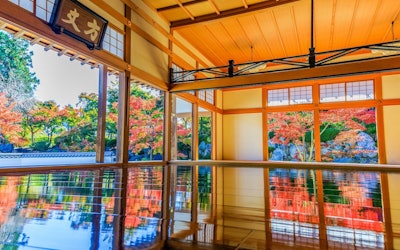
Autumn Leaves in the Floor of Houtokuji Temple: Video Introduction This video, titled "Houtokuji Temple "Peaceful days, and Supreme Happiness" A Tour of the Main Hall Precincts" (宝徳寺「日々平穏、これに勝る幸せなし」本堂境内案内), was uploaded by "Houtokuji Temple Official Channel" (宝徳寺Houtokuji公式チャンネル). In the video, you can enjoy the precincts of the temple, beautiful maple trees in different seasons, an aerial view of the Japanese dry rock garden, and the lovely and smiling Jizo statues. Be sure to check it out. Peonies, Green Foliage, and Illuminated Autumn Leaves - The Seasonal Beauty of Houtokuji Temple Photo:Wind chimes at Houtokuji Temple Houtokuji Temple is a temple of the Rinzai sect of Buddhism located in Kiryu, Gunma, in Japan's Kanto region, where there is plenty of natural scenic beauty. It was founded during Japan's Muromachi period by Lord Kiryu-Sano Masatsuna, a feudal lord of Kiryu. More than 500 peonies are planted on the temple grounds, and visitors can enjoy lovely scenery in spring. You can see lush green maples reflecting off the mirror-like floor. The collaboration of colorful fresh green foliage and peonies is one of the highlights of the temple. In addition, a Wind Chime Festival (風鈴まつり) is held at the temple during summer, where visitors write their wishes on strips of paper attached to wind chimes and walk through a tunnel of approximately 3,000 wind chimes to pray for happiness. The main attraction of the temple is the reflection of the autumn leaves on the floor. While there are several spots in Kyoto where you can see maple leaves like this, it's a rare opportunity in Japan's Kanto region. In autumn, around mid-November each year, more than 100 maple trees on the temple grounds are lit up, creating a beautifully divine atmosphere. The temple offers a wide variety of colorful expressions. Unique Shuin Stamps at Houtokuji Temple In addition to standard shuin stamps, Houtokuji offers a unique variety of shuin stamp that changes monthly. This unique shuin stamp has a different design each month, and is popular for its seasonal illustrations and designs. If you're a collector, be sure to check these out. In addition, there are also shuin stamps of the amabie, a deity that prays for the end of the novel coronavirus. In addition, original shuin stamp booklets are available for limited periods, and designs with cute Jizo and dragons are also available. Other Highlights of Houtokuji Temple Photo:The dry landscape garden at Houtokuji Temple The main hall of Houtokuji Temple is called Souryu-den, and three bodhisattvas, including a statue of the Gautama Buddha, are enshrined in it. On either side of the main hall are ink wash paintings of dragons, the Four Heavenly Kings of Buddhism, sea dragons, and cloud dragons, flanking the main image. It's a must-see for dragon lovers! There are also tenugui hand towels with twin dragons. There is also a Japanese dry rock garden at Houtokuji Temple. The video shows an aerial view of the garden. [Video] 1:20 - Japanese Dry Rock Garden The path of calm Jizo statues within the precincts of Houtokuji Temple is lined with various types of Jizo statues, all of which will bring a smile to your face. [Video] 5:17 - Jizo Statues Access & Area Information [Access by Train] ・Nearest station: Aioi Station or Akagi Station By taxi: 15 minutes By bus: Take the bus bound for Fukiage and get off at Houtokuji Temple (宝徳寺入口, Houtokuji Iriguchi). 20-25 minutes ※The Tobu Limited Express Ryomou from Asakusa Station to Akagi Station takes less than 2 hours, so it's possible to make a day trip from Tokyo. [Access by Car] ・Approximately 30 minutes from the Ota-Kiryu IC or Isesaki IC There are two parking lots at Houtokuji Temple. Summary of Houtokuji Temple - A Temple Where Autumn Leaves Are Reflected on the Floor Photo:Autumn colors at Houtokuji Temple Located in Kiryu, Gunma, Houtokuji Temple is a historic temple where visitors can enjoy the changing scenery of Japan's four seasons. One of the reasons for its popularity is that early morning zazen (zen meditation) sessions are held free of charge on the first Sunday of every month. Participating could be an opportunity to get away from daily life and do some self-reflection in a quiet environment. There is also a large bell in the bell tower, and a New Year's Eve bell ringing ceremony is held on New Year's Eve. The area around Houtokuji Temple is also worth visiting for the spectacular views from Akagi Shrine and Mt. Akagi. When you go sightseeing in Gunma, consider stopping by Houtokuji Temple to see the verdant green maple leaves in spring and the colorful autumn leaves in fall. It's a great place to take Instagram photos as well! 【TripAdvisor】Houtokuji Temple https://www.tripadvisor.com/Attraction_Review-g1021165-d6614474-Reviews-Hotoku_ji_Temple-Kiryu_Gunma_Prefecture_Kanto.html -
 Video article 13:28
Video introduction of "Hakone Glass Forest Art Museum" in Ashigarakami-gun, Kanagawa Prefecture! Venetian glass that looks like art. What are the highlights and recommended spots?
Travel Things to Do Art & Architecture Nature- 185 plays
- YouTube
Hakone Glass Forest Museum, Ashigarakami-gun, Kanagawa, Japan This video, titled "[Hakone Venetian Glass Museum] A Popular Sightseeing Attraction in Hakone / Enchantingly Beautiful Venetian Glass" (【ガラスの森美術館】箱根おすすめ観光地/美しいヴェネチアンガラスにうっとり❤Venetian Glass,Garasunomori Museum,Hakone,Japan[SUB]), was uploaded by "MaYu_diary." This vlog introduces the highlights and must-see spots at the Hakone Venetian Glass Museum, with its beautiful Venetian glass works, as well as the café attached to the museum. Be sure to check out the beauty of the Hakone Venetian Glass Museum, a popular tourist attraction in Hakone. Highlights of the Hakone Venetian Glass Museum + Average Time Spent There Photo:The Hakone Venetian Glass Museum, Kanagawa The Hakone Venetian Glass Museum, a tourist attraction in Hakone, is Japan's first museum dedicated to Venetian glass. Facilities include a Venetian Glass Museum, a contemporary glass museum, a hands-on workshop, and a café/restaurant. The Venetian Glass Museum exhibits Venetian glass made from modern times to the present day in a building designed in the image of an aristocratic mansion. The Venetian Modern Glass Museum displays artistic glass works created by modern glass artisans for the enjoyment of visitors. The entire Hakone Venetian Glass Museum can be viewed in one to one and a half hours, or two to three hours if you include lunch and a hands-on workshop. Gardens Decorated With Beautiful Glasswork and Seasonal Flowers Photo:An Illumination at the Hakone Venetian Glass Museum, Kanagawa Glass monuments and glassworks are arranged in the garden of the Hakone Venetian Glass Museum. Especially famous is the "Corridor of Light" on the path leading to the Venetian Glass Museum. The 9-meter-tall, 10-meter-long arch is covered with approximately 160,000 pieces of crystal glass, which sparkle and shine in the sunlight, creating a magical sight. During autumn, when the leaves change color, the sunlight and wind make the arches glow even brighter, making them a photogenic spot that further accentuates the beauty of the garden and is popular amongst instagrammers. The garden is planted with seasonal flowers, and visitors can also see beautifully blooming hydrangeas and roses. In addition, mallard ducks in the ponds provide comfort to visitors with their amiability. Also popular in winter are the Christmas trees made of crystal glass in various sizes. Visitors can also enjoy a fantastic crystal illumination. Lunch at a Café Inside the Hakone Venetian Glass Museum The gardens are home to the famous café/restaurant "La Canzone," where guests can enjoy a special lunch menu, cappuccinos, and seasonal sweets. Particularly famous are the croissants. Many people visit for the croissants, but other popular items include sandwiches, gelato, and chiffon cakes. Although it's currently closed, you can also enjoy listening to canzone music at this very popular café/restaurant. Create Lasting Memories at Various Hands-on Workshops! As mentioned above, the Hakone Venetian Glass Museum offers hands-on workshops. There is a "Sandblasting Workshop" where you can engrave your desired patterns on glass, and a "Fusing Workshop" where you can make one-of-a-kind original accessories using glass. In the spring of 2022, a "Venice Mask Making Workshop" was held as well. Reservations for each hands-on workshop are recommended at least one day in advance. Tickets and Souvenirs! Summary of the Hakone Venetian Glass Museum Photo:Hakone Venetian Glass Museum, Kanagawa Be sure to check out the video showing the museum if you haven't already. At the Hakone Venetian Glass Museum, you can also obtain discount tickets on the official website and receive discounts through group reservations. Be sure to check in advance. You can also purchase glassware, glasses, and tableware as souvenirs at the museum store, which are a great way to remember your trip. There are also hot springs, hotels, and other accommodations in the area, which are all conveniently accessible. Admission to the Hakone Venetian Glass Museum, located in Hakone, the pride of Kanagawa and a hot spring resort, is 1,800 yen for adults (see below for details), closed for 11 days from the day after Coming of Age Day, and pets are prohibited. With the strong summer sun, parasol rentals are free, so consider planning a trip to see the beauty of the cooling Venetian glass and the beautiful scenery of Sengokuhara. ◆Hakone Venetian Glass Museum◆ 【Address】940-48 Sengokuhara, Hakone, Ashigarashimo District, Kanagawa 250-0631 【Telephone】0460-86-3111 【Hourse】10:00 - 17:30 (Admission until 17:00) 【Admission Fee】Adults ¥1,800, High School Students ¥1,300, Elementary School Students ¥600 【Access】 Public Transportation: Tokyo Station [Tokaido Shinkansen] 40 min → Odawara Station [Hakone Tozan Bus] (bound for Togendai) 40 min → Hakone Venetian Glass Museum Shinjuku Station [Odakyu Romancecar] 90 minutes → Hakone-Yumoto Station [Hakone Tozan Bus] (bound for Togendai) 25 minutes → Hakone Venetian Glass Museum Hakone-Yumoto Station [Hakone Tozan Railway] 40 minutes → Gora Station [Hakone Tozan Bus] (S or M route) 20 minutes → Hakone Venetian Glass Museum Shinjuku Express Bus Terminal (Busta Shinjuku) [Odakyu Express Bus] 130 minutes → Hakone Venetian Glass Museum Car: From Tomei Gotemba I.C., take Route 138 toward Hakone (approx. 20 min.) 【Official Website】Hakone Venetian Glass Museum https://www.hakone-garasunomori.jp/entrance/english/ 【TripAdvisor】 https://www.tripadvisor.com/Attraction_Review-g298171-d1412184-Reviews-Hakone_Venetian_Glass_Museum-Hakone_machi_Ashigarashimo_gun_Kanagawa_Prefecture_K.html -
Video article 3:30
Experience the Large Weeping Cherry Blossoms at Joenji Temple in All Their Beauty in the Metropolis of Shinjuku, Tokyo! Enjoy Beautiful Cherry Blossoms Lit up to "Sakura Sakura," a Japanese Folk Song!
Art & Architecture Travel Traditional Culture History Nature- 147 plays
- YouTube
Video introduction of Jouenji Temple, a hanami spot in Shinjuku-ku, Tokyo This video, titled "[Sakura] Joenji Temple - Tokyo - 常圓寺 - 4K Ultra HD," was uploaded by "TokyoStreetView - Japan The Beautiful." There are places to view cherry blossoms in Tokyo, and Joenji Temple, located in Nishi-Shinjuku, Shinjuku, Tokyo, in Japan's Kanto region, is one of them. The area around the cherry blossoms is lined with high-rise office buildings and luxury hotels, and the weeping cherry blossom standing majestically in the midst of the metropolitan skyscrapers is a hidden gem for viewing cherry blossoms. From 0:08 in the video, the cherry blossoms can be seen lit up at night, a sight that will make you forget that you're in the middle of a city. Surprisingly, there are many temples and shrines in the Shinjuku area, and once you begin to look for them, you'll find many power spots where the hustle and bustle of the city seems to disappear. The temple shown in the video, Joenji Temple, is located along the busy Ome-Kaido (Ome Highway), but once you set foot on the approach, you'll feel as though you've stepped into another world. Joenji Temple – The History of Shinjuku’s Hidden Gem for Cherry Blossom Viewing Photo:Weeping cherry blossoms at Joenji Temple, Shinjuku, Tokyo Joenji Temple is located just six minutes from Shinjuku Station on foot, and is said to have a history dating back 600 years. The temple was moved from Hatagaya, Shibuya, to its current location in Nishi-Shinjuku on September 13, 1585. The precincts of the temple are approximately 1,100 tsubo (~3,600 Sq. m) in size, and include the main hall, the soshi-do (founder's hall), a large study, Naka-mon Gate, the bell tower hall, the storehouse, and other halls. The large weeping cherry tree that appears in the video is planted near the temple gate, and when it is in full bloom, the cherry blossoms can be seen from the Ome Kaido that runs beside Joenji Temple, attracting many visitors every year. The large weeping cherry tree has been called one of the "Three Trees of Edo" and "One Hundred Cherry Trees of Edo" since the Edo period (1603-1868). Unfortunately, during WW2, most of the temple was destroyed by air raids, but in 1952, thanks to the contributions of the temple's parishioners, the temple was rebuilt after the war. Since Joenji is a Nichiren-Shu temple and its scripture is the Lotus Sutra, the Shoin (temple office) also serves as the Joenji Institute of Nichiren Buddhism, and there are gravesites of historical figures such as Tsutsui Masanori (a historical site designated by Shinjuku Ward) on the temple grounds. The current head priest is Genichi Oikawa, who inherited the Triratna from the 40th head priest of Joenji. Sakura, Sakura – A Traditional Japanese Folk Song Photo:Someiyoshino cherry blossoms The background music used in the video is the folk song "Sakura, Sakura," which any Japanese person knows. (It is commonly known in Japanese as simply "Sakura"). There is a theory that this song was originally written as a Koto exercise, but the author is unknown. It was not until the Meiji Period (1868-1912 A.D.) that the song was popularized as "Sakura Sakura," and in the Showa Period (1926-1989) it was selected as a song for elementary school music lessons. In addition, there are two versions of the lyrics, one written in the Meiji Period (the lyrics used in this video) and the other revised in 1941. The 1941 version seems to be the one adopted in most school education today. The lyrics can be translated as follows: Cherry blossoms, cherry blossoms, In fields, mountains and villages As far as the eye can see. Is it mist, or clouds? Fragrant in the rising sun. Cherry blossoms, cherry blossoms, Flowers in full bloom. Cherry blossoms, cherry blossoms, Across the spring sky, As far as the eye can see. Is it mist, or clouds? Fragrant in the air. Come now, come now, Let's go and see them. (Source: https://en.wikipedia.org/wiki/Sakura_Sakura#Lyrics) The best time to see and see the weeping cherry blossoms at Joenji Temple in Shinjuku The highlight of Joenji's cherry blossoms is "Daishidare-zakura," which usually reaches its peak from late March, but in 2023, it bloomed earlier than usual on March 19th for 4 minutes and was in full bloom on March 19th. The lights will also be lit up according to the best season.The towering buildings and weeping cherry blossoms behind you are a great photo spot.It entertains many people's eyes. Tokyo's cherry blossom forecast for 2014 is March 23.On the official website of Sangwonsa Temple, the blooming status and lighting period of the cherry blossoms are updated from time to time, so please check them out. Summary of Joenji Temple, a Hidden Gem for Cherry Blossoms in Shinjuku, Tokyo Photo:Joenji Temple, Shinjuku, Tokyo Joenji Temple is about a 6-minute walk from Shinjuku Station on the JR and private railway lines. The temple is located along the Ome Kaido, a main highway, making it very accessible. The large weeping cherry trees on the temple grounds are a must-see! Please note that the bloom season is short and there is a slight time lag in updating bloom information on bloom tracking websites. There are many other shrines and temples in the area between Nishi-Shinjuku and Higashi-Shinjuku where Joenji Temple is located, so be sure to check them out when visiting Tokyo, and collect your goshuin stamps! 【TripAdvisor】Joenji Temple https://www.tripadvisor.com/Attraction_Review-g14133673-d8036422-Reviews-Joenji_Temple-Nishishinjuku_Shinjuku_Tokyo_Tokyo_Prefecture_Kanto.html